Visualizar na parede
 Compartilhar
 Compartilhar
 Detalhes
 Guia
Guia

 Baixar imagem
 Semelhantes
 Raio X
 Ver diaporama
 Q&A
Q&A Estatísticas
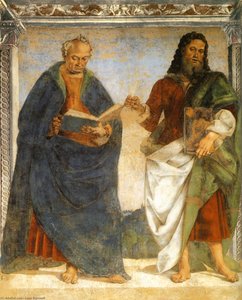
St Augustine Altarpiece (left wing)
 Oil On Canvas
- WallArt
- High Renaissance
 1498
1498 146.0 x 76.0 cm
 Museus Estatais de Berlim
 Ler mais
Giclée / Impressão de Arte
Impressão giclée ou em tela de qualidade de museu, com produção rápida e opções flexíveis de acabamento. ( Comprar pintura feita à mão Alternar para Imagem Digital)




P118B €10

P118H €10

P118W €10

P438Z €10

P508JH €12

P508YH €12

P805H €10

P805Z €10

P919BZ €10

P919G €10

P919XJ €10

P959ZH €10

P968JZ €12

W106C €8

W218G €10

W218JH €8

W218Y €10

W307PJ €10

W316G €10

W316PJ €8

W316Y €10

W398PJ €8

W4111J €10

W500HY €15

W500JH €15

W692G €12

W849H €8

W940BG €15

W953PJ €8




Escolha entre os nossos tamanhos pré-definidos que respeitam as proporções originais da obra de arte.

Insira a largura e a altura desejadas para se ajustarem à sua moldura ou parede. Uma impressão pode ser apenas cortada, nunca ampliada além da imagem original; portanto, um tamanho com proporções diferentes resultará na perda de parte da imagem. Enviamos uma maquete digital para sua aprovação antes de realizarmos a impressão. A imagem exibida nesta página não mostra o corte real — apenas a maquete o faz.
Entrega mundial () em 2 semanas, em vez das 4/5 semanas padrão. (28 Outubro)

Envio expresso gratuito para todo o mundo

Tela de Linho de Alta Qualidade

Seguro de transporte completo

Garantia de Reembolso de Impostos Alfandegários

Garantia de Fidelidade Cromática

Política de Devolução em 100 Dias (Apenas para Defeitos)

Garantia de reembolso de 100%

Oferta de desconto por quantidade
 A opção de vidro está disponível apenas para tamanhos inferiores a 110 cm

St Augustine Altarpiece (left wing)
Giclée / Impressão de Arte
Tamanho da Reprodução
-


Preço Total
€ 71
Luca Signorelli’s St Augustine Altarpiece (Left Wing): A Window into Renaissance Devotion
The left wing of Luca Signorelli's “St Augustine Altarpiece,” completed in 1498 for the Bichi Chapel within the church of Sant’Agostino in Siena, is more than just a beautiful painting; it’s a profound meditation on faith, charity, and the intertwined destinies of earthly and divine figures. Measuring a modest 146 x 76 centimeters, this panel offers an intimate glimpse into the artistic sensibilities of a master navigating the complexities of late Renaissance Italy. Signorelli, already establishing himself as a draftsman of exceptional skill – evidenced by his early work in Arezzo and Castelli – here demonstrates a remarkable ability to imbue a seemingly simple scene with layers of meaning and emotional resonance.
The composition immediately draws the eye to the central trio: three women draped in rich crimson robes, their gestures conveying both solemnity and profound compassion. The woman on the left cradles a baby, a potent symbol of innocence and new life – a direct reference to Mary holding infant Jesus. Beside her stands another woman, supporting a child, mirroring the Virgin’s protective embrace. The third figure, positioned slightly further back, gazes downwards with an expression of quiet contemplation, perhaps reflecting on the spiritual journey or offering solace to those she observes. These women are not merely decorative elements; they represent key figures in Christian iconography – Mary Magdalene, Saint Catherine of Siena, and Saint Jerome, each embodying a specific virtue and contributing to the altarpiece’s overarching theme of divine grace.
Adding depth to this devotional tableau are two men, subtly integrated into the scene. One stands near the center, engaged in conversation with the women, while the other is positioned on the left side, seemingly observing the proceedings. Their presence suggests a community united by faith and shared devotion – a microcosm of Renaissance society reflecting upon spiritual matters. Signorelli’s masterful use of foreshortening, a technique he honed during his time in Florence under Piero della Francesca, creates a sense of spatial realism, drawing the viewer into this intimate tableau. The figures appear to be caught in a moment of genuine interaction, their expressions conveying a palpable sense of warmth and connection.
Technique and Style: High Renaissance Refinement
Signorelli’s style within this altarpiece is firmly rooted in the High Renaissance, yet it possesses a distinctly Italian character. He skillfully blends classical influences with his own innovative approach to composition and color. The use of *sfumato*, a technique popularized by Leonardo da Vinci, softens the edges of the figures and creates an atmospheric haze that enhances the sense of depth and realism. The rich crimson robes are rendered with meticulous detail, their textures suggesting luxurious fabrics while simultaneously conveying a sense of solemnity. Signorelli’s palette is restrained yet vibrant, dominated by earthy tones – ochres, siennas, and umbers – punctuated by flashes of red and gold.
Signorelli's mastery of drawing is immediately apparent in the precise rendering of the figures’ anatomy and drapery. He demonstrates a deep understanding of human form, capturing both its beauty and vulnerability with remarkable accuracy. The subtle gradations of light and shadow – *chiaroscuro* – further enhance the sense of realism, creating a three-dimensional effect that draws the viewer into the scene. The composition is carefully balanced, with each figure occupying a specific space within the frame, contributing to the overall harmony and visual impact of the work.
Historical Context: Siena and the Renaissance
To fully appreciate the “St Augustine Altarpiece,” it’s crucial to understand its historical context. Siena in the late 15th century was a thriving center of commerce, art, and religious devotion. The Bichi Chapel, where the altarpiece resided, served as a focal point for community life, reflecting the city's wealth and piety. The commission itself underscores the importance of religious patronage during this period – wealthy families like the Piccolominis sought to demonstrate their faith through lavish displays of art and architecture.
Signorelli’s work reflects the broader trends of the High Renaissance, which emphasized humanism, classical learning, and a renewed interest in naturalism. However, unlike some of his contemporaries who embraced Mannerist styles characterized by elongated figures and distorted perspectives, Signorelli maintains a sense of balance and clarity. His altarpiece embodies a harmonious blend of tradition and innovation, reflecting the artistic sensibilities of a master navigating the complexities of his time.
A Timeless Reflection on Faith and Humanity
The “St Augustine Altarpiece (Left Wing)” is more than just a beautiful painting; it’s a poignant meditation on faith, charity, and the enduring power of human connection. Signorelli's masterful composition, skillful technique, and profound understanding of religious iconography combine to create an image that continues to resonate with viewers centuries after its creation. Reproductions capture the essence of this work, allowing us to experience its beauty and emotional depth in our own homes. It serves as a reminder of the enduring legacy of Renaissance art – a testament to the power of human creativity to express profound spiritual truths.
Perguntas e Respostas
"St Augustine Altarpiece (left wing)", de Luca Signorelli é uma pintura, um desenho ou uma gravura?
"St Augustine Altarpiece (left wing)" é uma obra de WallArt.
Para qual ambiente "St Augustine Altarpiece (left wing)", de Luca Signorelli é recomendado?
O espaço recomendado para "St Augustine Altarpiece (left wing)", de Luca Signorelli é uma Living Room. A sugestão pode, naturalmente, ser adaptada ao seu interior.
Posso ver "St Augustine Altarpiece (left wing)", de Luca Signorelli sob diferentes luzes?
A página Raio X de "St Augustine Altarpiece (left wing)", de Luca Signorelli é um visualizador interativo que permite percorrer onze camadas ópticas da imagem da obra, incluindo uma visualização em estilo raio-X.
Biografia do Artista
Luca Signorelli (c. 1450-1523) – A Titan of Fresco Painting
Luca Signorelli, born around 1441/1445 in Cortona, Tuscany, stands as one of the most influential figures within the Italian Renaissance artistic landscape. His mastery of disegno—drawing—combined with an unparalleled understanding of perspective and anatomy cemented his place among the foremost painters of his era, leaving behind a breathtaking corpus of monumental frescoes that continue to inspire awe centuries later. While precise biographical details remain elusive due to incomplete archival records, Signorelli’s formative years were steeped in the artistic fervor of Perugia, where he absorbed the stylistic nuances of artists like Benedetto Bonfigli and Pinturicchio—influences that would profoundly shape his distinctive approach to artmaking.Early Training and Apprenticeship
Giorgio Vasari recounts Signorelli's apprenticeship under Piero della Francesca by his maternal uncle, Lazaro Vasari, marking a pivotal moment in establishing his artistic foundation. This association instilled within him the principles of classical observation and meticulous detail—traits that would become hallmarks of Signorelli’s oeuvre. The young Signorelli honed his skills diligently, demonstrating an innate talent for capturing human form with remarkable accuracy and conveying emotion through subtle shading techniques. His early works reveal a preoccupation with idealized beauty and a fascination with humanist ideals prevalent during the Renaissance.Notable Works: A Symphony of Vision
Signorelli’s artistic output is characterized by ambitious projects that pushed the boundaries of artistic innovation. Perhaps his most celebrated achievement is “The Last Judgment,” executed between 1499 and 1503 for Orvieto Cathedral—a colossal fresco cycle depicting the apocalyptic vision of Judgement Day with unparalleled grandeur and psychological depth. The sheer scale of this undertaking, coupled with Signorelli’s masterful manipulation of perspective and chiaroscuro, established him as a pioneer in monumental painting and solidified his reputation as one of the greatest artists of his time. Equally impressive is “The Polyptych of St. Medard,” completed in 1507 for the Museo San Medardo in Arcevia—a testament to Signorelli’s meticulous attention to detail and his ability to convey spiritual contemplation through exquisitely rendered figures and landscapes.Technique and Artistic Innovation
Signorelli's artistic genius resided not merely in his technical prowess but also in his groundbreaking conceptual innovations. He championed the use of foreshortening—a technique that dramatically compressed spatial dimensions—creating an illusionistic depth that captivated viewers and revolutionized painting conventions. Signorelli’s meticulous anatomical studies, informed by humanist scholarship, ensured that his figures possessed a palpable sense of realism and conveyed profound emotional resonance. Furthermore, he skillfully employed chiaroscuro—the dramatic interplay between light and shadow—to sculpt forms with remarkable subtlety and to heighten the expressive power of his compositions.Legacy and Influence
Luca Signorelli’s impact on subsequent generations of artists is undeniable. His unwavering commitment to disegno and his masterful execution of monumental frescoes established him as a cornerstone of Renaissance art, influencing painters like Fra Angelico and shaping artistic trends throughout Europe. Today, Signorelli's works continue to inspire admiration for their beauty, psychological complexity, and technical brilliance—serving as enduring symbols of the humanist spirit and artistic excellence that defined the Italian Renaissance. His legacy persists in museums worldwide, where visitors can contemplate masterpieces that encapsulate the pinnacle of artistic achievement during a transformative period in Western history.
Luca Signorelli
1450 - 1523 , Itália
Dados Rápidos
- Artistic Movement Or Style: Renascimento
- Artists Or Movements Influenced By This Artist: ['Impressionismo']
- Artists Who Influenced This Artist:
- Piero della Francesca
- Fra Angelico
- Date Of Death: 16 outubro 1523
- Full Name: Luca di Egidio di Ventura Signorelli
- Nationality: Italiano
- Notable Artworks:
- Último Julgamento
- Escola de Pan
- Place Of Birth: Cortona, Itália
Artigos Relacionados

The Enduring Muse: Women as Subject & Symbol in Art History
Explore the rich history of women in art – from iconic muses to groundbreaking artists. Discover feminist movements, global perspectives & reclaim female narratives with OriginalUniqueArt.
Sacred Expressions: A Journey Through Devotional Art Across Cultures & Eras
Explore the rich history of devotional art across cultures & eras with expert insights! Discover iconic masterpieces, symbolism, and artistic techniques. A guide for collectors & enthusiasts.
Sacred Expressions: A Journey Through Devotional Art Across Cultures & Eras
Explore the rich history of devotional art across cultures & eras. Discover iconic masterpieces, symbolism, and artistic techniques. Expert insights for collectors & enthusiasts.

The Enduring Muse: Women as Subject & Symbol in Art History
Explore the rich history of women in art – from archetypal representations to contemporary voices challenging norms. Discover iconic artists & movements, and learn about reclaiming female narratives through painting and beyond.

Sacred Narratives on Canvas: Exploring Devotional Imagery Across Art History
Explore the rich history of devotional art! Discover iconic masterpieces, symbolism & techniques from antiquity to the Renaissance. Expert insights for collectors & enthusiasts at OriginalUniqueArt.