

 Visualizar em escala
 Enviar
 Compartilhar
 Ver detalhes
 Guia de Obras do Aluno

 Baixar imagem
 Semelhantes
 Raio X
 Apresentação de slides
 Estatísticas
Suriname
 1982
1982 91.0 x 61.0 cm
 Ver mais
A obra de arte exibida nesta página é protegida por leis de direitos autorais, o que significa que não podemos criar ou vender legalmente uma reprodução idêntica. Esta proteção é aplicada por meio de acordos internacionais, tais como a Convenção de Berna e pelas leis nacionais, incluindo as estabelecidas por Lei de Direitos Autorais dos EUA - Título 17.
Este método cumpre plenamente as regulamentações de direitos autorais, pois não envolve a cópia ou duplicação da obra protegida. Em vez disso, trata-se de uma reinterpretação criativa — uma nova pintura que é influenciada pela original, mas não idêntica a ela.
Giclée / Impressão de Arte
Impressão giclée ou em tela de qualidade de museu, com produção rápida e opções flexíveis de acabamento. ( Encomendar reprodução pintada à mão Ver Imagem Digital)




































Escolha entre os nossos tamanhos pré-definidos que respeitam as proporções originais da obra de arte.

Digite a largura e a altura de que necessita, para se ajustar à sua moldura ou à sua parede. Uma impressão só pode ser cortada, nunca ampliada além da imagem original, pelo que um tamanho com uma proporção diferente perderá parte da imagem. Enviamos-lhe uma maquete digital para aprovação antes de imprimirmos qualquer coisa. A imagem apresentada nesta página não mostra o corte real — apenas a maquete o faz.
Entrega mundial () em 2 semanas, em vez das 4/5 semanas padrão. (21 Outubro)

Envio expresso gratuito para todo o mundo

Tela de Linho Premium

Seguro de transporte total

Garantia de Reembolso de Impostos Alfandegários

Garantia de Fidelidade de Cor

Política de Devolução em 100 Dias (Apenas para Defeitos)

Garantia de reembolso de 100%

Desconto para múltiplas unidades
 A opção de vidro está disponível apenas para tamanhos inferiores a 110 cm

Suriname
Giclée / Impressão de Arte
Dimensões da Reprodução
-


Preço Total
€ 70
Understanding the Artist's Vision
Lois Mailou Jones was a prominent figure in the Harlem Renaissance, known for her diverse artistic styles and techniques. Her work often blended elements of African, French, and American cultures, reflecting her extensive travels and experiences. Suriname is a testament to her innovative approach to art, showcasing a unique blend of colors and shapes that evoke a sense of energy and movement. Key Features of the Painting:- Geometric patterns: The painting features a complex arrangement of triangles, squares, and rectangles, creating a dynamic visual effect.
- Vibrant colors: The use of bold, vibrant colors such as red, yellow, orange, and blue adds to the overall energy and vibrancy of the piece.
- Cultural influences: The artwork reflects Lois Mailou Jones's exposure to various cultures, including African and French influences.
Appreciating the Artistic Value
Suriname is not only a visually stunning piece but also holds significant artistic value. It represents Lois Mailou Jones's contribution to the abstract art movement and her ability to experiment with different styles and techniques. For art enthusiasts and collectors, this painting is a rare gem that showcases the artist's skill and creativity. To learn more about Lois Mailou Jones and her artwork, visit /art/list/?Filter=AS7S5P-Lois-Mailou-Jones-Suriname or explore the Smithsonian American Art Museum's collection at https://Wikipedia.org/wiki/Smithsonian_American_Art_Museum.For those interested in purchasing a handmade oil painting reproduction of Suriname, https://OriginalUniqueArt.com offers high-quality reproductions that capture the essence and beauty of the original artwork.
Perguntas e Respostas
Lois Mailou Jones, criador(a) de "Suriname", é conhecido(a) por outros nomes?
Lois Mailou Jones aparece sob os nomes alternativos Loïs Mailou Jones, Lois Jones, Lois Jones Pierre-Noël.
Que harmonia de cores apresenta "Suriname" de Lois Mailou Jones?
"Suriname" de Lois Mailou Jones apresenta uma harmonia de cores Strong Color Unity.
Para qual tom se inclina "Suriname"?
Um tom Amber to Saffron percorre "Suriname" de Lois Mailou Jones.
Biografia do Artista
A Life Immersed in Color and Culture
Lois Mailou Jones, a name synonymous with groundbreaking artistry and unwavering dedication to African American representation, was born in Boston, Massachusetts, on November 3, 1905. From her earliest years, she was nurtured in an environment that valued creativity; her parents, Thomas Vreeland Jones, a lawyer, and Carolyn Adams Jones, a cosmetologist, encouraged her innate talent for drawing and painting, particularly with the fluid grace of watercolors. Summers spent on Martha's Vineyard proved formative, introducing young Lois to a constellation of influential figures – sculptor Meta Warrick Fuller, composer Harry T. Burleigh, and novelist Dorothy West – who would subtly shape her artistic sensibilities. This early exposure instilled in her not only an appreciation for art but also a sense of cultural pride and the importance of mentorship, values she would carry throughout her life. Her formal education began at the High School of Practical Arts in Boston (1919-1923), followed by night classes at the Boston Museum of Fine Arts, secured through a hard-earned scholarship. A pivotal apprenticeship with costume designer Grace Ripley further broadened her artistic horizons, sparking an early fascination with African masks and their potential for symbolic expression. Even as a teenager, Jones demonstrated remarkable ambition, holding her first solo exhibition on Martha’s Vineyard at the age of seventeen. She continued to hone her skills at the School of the Museum of Fine Arts in Boston (1923-1927), consistently winning the Susan Minot Lane Scholarship, and supplemented her studies with courses at the Boston Normal Art School, culminating in a graduate degree in design from the Design Art School of Boston in 1928.From Textile Design to Artistic Independence
Jones’s initial professional path led her into the world of textile design, working for both F. A. Foster Company in Boston and Schumacher Company in New York City. However, a transformative summer at Harvard University in 1928 ignited a deeper desire – to fully dedicate herself to painting. This decision coincided with the burgeoning Harlem Renaissance, an intellectual and artistic movement that profoundly impacted her work. The influence of artist Aaron Douglas became particularly significant; his stylized depictions of African American life and incorporation of African motifs resonated deeply with Jones’s own emerging aesthetic vision. Her seminal work, The Ascent of Ethiopia, stands as a testament to this period, reflecting both Douglas's stylistic influence and her growing commitment to celebrating African heritage. She explored the interplay between geometric abstraction and organic forms, mirroring the dynamism of Caribbean culture and drawing inspiration from the vibrant patterns of Haitian art—a passion fueled by her marriage to Louis Vergniaud Pierre-Noël in 1953. Her artistic evolution wasn’t merely about stylistic experimentation; it was driven by a profound conviction that art could serve as a vehicle for social commentary and cultural affirmation.A Pioneer's Enduring Impact
Throughout her prolific career, Jones consistently championed the recognition of African American artists and their contributions to the broader art world. She faced considerable obstacles due to gender bias and racial prejudice—challenges she confronted with unwavering resilience and determination. Despite these difficulties, she persevered in pursuing her artistic ambitions, establishing herself as a respected educator and mentor who nurtured the talents of countless aspiring artists. Notably, she founded the art department at Palmer Memorial Institute in North Carolina in 1928, demonstrating versatility beyond painting by coaching basketball, teaching folk dancing, and providing musical accompaniment for church services. Her appointment to Howard University’s faculty in 1930 under James Vernon Herring marked a pivotal moment—a partnership that would endure for over forty years and solidify her role as a beacon of artistic excellence within the Black community. At Howard, Jones instilled in her students a commitment to social justice and encouraged them to explore themes of identity, heritage, and empowerment. Her legacy extends far beyond her own artwork; it resides in the countless individuals she inspired to pursue their creative passions and advocate for inclusivity within the arts. Jones’s artistic style evolved over time—beginning with Impressionistic tendencies and progressing toward a more expressive blend of Cubist elements and abstraction. She skillfully combined geometric precision with organic textures, creating canvases that pulsed with color and conveyed profound emotional depth. Her distinctive approach to composition and technique distinguished her from many of her contemporaries, establishing her as a singular voice within the American art landscape. Her paintings—including iconic works like Jeune Fille Française, Les Fétiches, and Initiation, Liberia—continue to captivate audiences with their vibrant hues, intricate patterns, and evocative symbolism. These pieces serve as powerful reminders of Jones’s unwavering dedication to portraying the beauty and complexity of African American experience. Her work is now housed in prominent museums across the United States and internationally, ensuring that her artistic vision will endure for generations to come. Lois Mailou Jones passed away peacefully in Washington, D.C., on June 9, 1998, leaving behind an indelible mark on art history—a testament to a life devoted to creativity, scholarship, and unwavering advocacy for cultural understanding.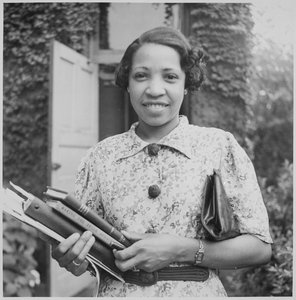
Lois Mailou Jones
1905 - 1998 , Estados Unidos
Informações Rápidas
- Artistic Movement Or Style: Impressionismo
- Artists Or Movements Influenced By This Artist: ['David Driskell']
- Artists Who Influenced This Artist:
- Aaron Douglas
- Meta Warrick Fuller
- Date Of Birth: November 3, 1905
- Full Name: Lois Mailou Jones
- Nationality: Americana
- Notable Artworks:
- Jeune Fille Française
- Les Fétiches
- Initiation, Liberia
- Place Of Birth: Boston, USA