
 Visualizar na parede
 Compartilhar
 Compartilhar
 Detalhes
 Guia
Guia

 Baixar imagem
 Semelhantes
 Raio X
 Ver diaporama
 Q&A
Q&A Estatísticas
Brother Brown

- 47.0 x 34.0 cm

 Ler mais
Obtenha um arquivo pronto para impressão que vai muito além da visualização na web. Cada imagem digital que vendemos provém de um arquivo mestre de alta resolução em nosso banco de dados — geralmente entre 5.000 e 15.000 pixels de largura — para que você possa imprimir em grandes formatos, realizar cortes precisos ou reproduzir detalhes minuciosos com total confiança.
Nenhum arquivo sai do nosso estúdio sem passar por um cuidadoso processo de revisão. Um especialista digital verifica as cores em relação à pintura original e as corrige se necessário, aumentando então a clareza e o detalhe com ferramentas profissionais de retoque — sempre mantendo a fidelidade às pinceladas e ao estilo do artista. O resultado é uma imagem que se assemelha à pintura, e não a um scan com filtros.
Aprovação antes da finalização: nosso especialista enviará a imagem por e-mail em até 72 horas para sua revisão. Não ficou satisfeito? Solicite melhorias ou correções, ou peça o reembolso caso a qualidade não atenda às suas expectativas.
Esta é a qualidade em que confiam editoras, estúdios de design, galerias e gráficas.
Imagem Digital
Baixe um arquivo de alta resolução para exibição pessoal, impressão e projetos criativos. ( Alternar para Impressão Comprar pintura feita à mão)
Incluído em cada compra de imagem digital
Entrega Digital Especializada e Garantida
Ao escolher o OriginalUniqueArt.com, você não está apenas adquirindo uma imagem — você está recebendo uma obra de arte digital profissionalmente aprimorada, elaborada com precisão e com garantia de satisfação. Aqui está tudo o que acompanha seu pedido, automaticamente:

Entrega rápida por e-mail
O seu arquivo de imagem digital em alta resolução será enviado por e-mail em até 72 horas após o pedido — pronto para uso imediato.

Arquivo Digital com IA Otimizado
Sua obra de arte é otimizada profissionalmente por meio de ferramentas avançadas de IA e edição manual, garantindo o máximo de detalhes, clareza e precisão de cores.

Reenvio gratuito vitalício
Apagou ou perdeu o seu ficheiro acidentalmente? Não se preocupe – nós reenviamos para si a qualquer momento, gratuitamente.

Sem Taxas de Importação - Sempre
Desfrute da sua obra de arte instantaneamente, sem taxas alfandegárias, impostos ou custos de entrega — downloads digitais são sempre isentos de taxas.

Garantia de Fidelidade de Cores
Garantimos que sua imagem digital reflita as cores originais com a maior fidelidade possível, utilizando ferramentas profissionais e gerenciamento de cores.

Garantia de satisfação de 100 dias
Se não estiver satisfeito com a sua imagem digital, nós a revisaremos ou reembolsaremos 100% dentro de 100 dias — sem perguntas.

Garantia de Reembolso 100%
Não está satisfeito? Receba o reembolso total em até 100 dias após o recebimento do seu arquivo digital — sem perguntas.

Descontos para pedidos em lote
Compre 3 imagens, economize 10% - Compre 5, economize 15% - Compre 10+, economize 20%. Ideal para projetos criativos, galerias e agências.
Artist Background
Lois Mailou Jones was a prominent figure in the Harlem Renaissance movement, known for her unique style that blended elements of Post-Impressionism and Fauvism. Her personal brush style produces a captivating scene, as seen in Brother Brown. This painting is an early example of Jones' regionalism work, showcasing her ability to capture the essence of everyday life.Painting Details
The painting measures 47 x 34 cm and is executed in watercolor. The scene depicts a man sitting on a bench under a tree, wearing a straw hat and holding a cane. The background features several trees, with one large tree dominating the left side of the painting. A building can also be seen in the distance, adding to the overall atmosphere of the scene.- The use of watercolor in Brother Brown creates a sense of delicacy and intimacy.
- The composition of the painting is well-balanced, with the man positioned near the center of the scene.
- The artist's brush style is characterized by bold, expressive strokes, adding to the emotional impact of the painting.
The Smithsonian American Art Museum is home to an extensive collection of American art, including works by prominent artists like Lois Mailou Jones. To learn more about the museum and its collections, visit /en/art/show/art-aqzgty-en/
For a deeper understanding of Brother Brown and its significance in the art world, I recommend exploring the Wikipedia page on Lois Mailou Jones and her artwork.
Perguntas e Respostas
As cores de "Brother Brown" são vibrantes ou suaves?
A cor de "Brother Brown" apresenta Balanced Soft de saturação e Balanced de intensidade.
"Brother Brown" é mais claro ou mais escuro no geral?
"Brother Brown", de Lois Mailou Jones apresenta um brilho de balanced, com uma luminância de Gentle Luminance.
Como posso obter uma versão digital de "Brother Brown", de Lois Mailou Jones?
Para obter uma versão digital de "Brother Brown", de Lois Mailou Jones, peça download de imagem digital em alta resolução em sua página Imagem Digital de Alta Resolução.
Biografia do Artista
A Life Immersed in Color and Culture
Lois Mailou Jones, a name synonymous with groundbreaking artistry and unwavering dedication to African American representation, was born in Boston, Massachusetts, on November 3, 1905. From her earliest years, she was nurtured in an environment that valued creativity; her parents, Thomas Vreeland Jones, a lawyer, and Carolyn Adams Jones, a cosmetologist, encouraged her innate talent for drawing and painting, particularly with the fluid grace of watercolors. Summers spent on Martha's Vineyard proved formative, introducing young Lois to a constellation of influential figures – sculptor Meta Warrick Fuller, composer Harry T. Burleigh, and novelist Dorothy West – who would subtly shape her artistic sensibilities. This early exposure instilled in her not only an appreciation for art but also a sense of cultural pride and the importance of mentorship, values she would carry throughout her life. Her formal education began at the High School of Practical Arts in Boston (1919-1923), followed by night classes at the Boston Museum of Fine Arts, secured through a hard-earned scholarship. A pivotal apprenticeship with costume designer Grace Ripley further broadened her artistic horizons, sparking an early fascination with African masks and their potential for symbolic expression. Even as a teenager, Jones demonstrated remarkable ambition, holding her first solo exhibition on Martha’s Vineyard at the age of seventeen. She continued to hone her skills at the School of the Museum of Fine Arts in Boston (1923-1927), consistently winning the Susan Minot Lane Scholarship, and supplemented her studies with courses at the Boston Normal Art School, culminating in a graduate degree in design from the Design Art School of Boston in 1928.From Textile Design to Artistic Independence
Jones’s initial professional path led her into the world of textile design, working for both F. A. Foster Company in Boston and Schumacher Company in New York City. However, a transformative summer at Harvard University in 1928 ignited a deeper desire – to fully dedicate herself to painting. This decision coincided with the burgeoning Harlem Renaissance, an intellectual and artistic movement that profoundly impacted her work. The influence of artist Aaron Douglas became particularly significant; his stylized depictions of African American life and incorporation of African motifs resonated deeply with Jones’s own emerging aesthetic vision. Her seminal work, The Ascent of Ethiopia, stands as a testament to this period, reflecting both Douglas's stylistic influence and her growing commitment to celebrating African heritage. She explored the interplay between geometric abstraction and organic forms, mirroring the dynamism of Caribbean culture and drawing inspiration from the vibrant patterns of Haitian art—a passion fueled by her marriage to Louis Vergniaud Pierre-Noël in 1953. Her artistic evolution wasn’t merely about stylistic experimentation; it was driven by a profound conviction that art could serve as a vehicle for social commentary and cultural affirmation.A Pioneer's Enduring Impact
Throughout her prolific career, Jones consistently championed the recognition of African American artists and their contributions to the broader art world. She faced considerable obstacles due to gender bias and racial prejudice—challenges she confronted with unwavering resilience and determination. Despite these difficulties, she persevered in pursuing her artistic ambitions, establishing herself as a respected educator and mentor who nurtured the talents of countless aspiring artists. Notably, she founded the art department at Palmer Memorial Institute in North Carolina in 1928, demonstrating versatility beyond painting by coaching basketball, teaching folk dancing, and providing musical accompaniment for church services. Her appointment to Howard University’s faculty in 1930 under James Vernon Herring marked a pivotal moment—a partnership that would endure for over forty years and solidify her role as a beacon of artistic excellence within the Black community. At Howard, Jones instilled in her students a commitment to social justice and encouraged them to explore themes of identity, heritage, and empowerment. Her legacy extends far beyond her own artwork; it resides in the countless individuals she inspired to pursue their creative passions and advocate for inclusivity within the arts. Jones’s artistic style evolved over time—beginning with Impressionistic tendencies and progressing toward a more expressive blend of Cubist elements and abstraction. She skillfully combined geometric precision with organic textures, creating canvases that pulsed with color and conveyed profound emotional depth. Her distinctive approach to composition and technique distinguished her from many of her contemporaries, establishing her as a singular voice within the American art landscape. Her paintings—including iconic works like Jeune Fille Française, Les Fétiches, and Initiation, Liberia—continue to captivate audiences with their vibrant hues, intricate patterns, and evocative symbolism. These pieces serve as powerful reminders of Jones’s unwavering dedication to portraying the beauty and complexity of African American experience. Her work is now housed in prominent museums across the United States and internationally, ensuring that her artistic vision will endure for generations to come. Lois Mailou Jones passed away peacefully in Washington, D.C., on June 9, 1998, leaving behind an indelible mark on art history—a testament to a life devoted to creativity, scholarship, and unwavering advocacy for cultural understanding.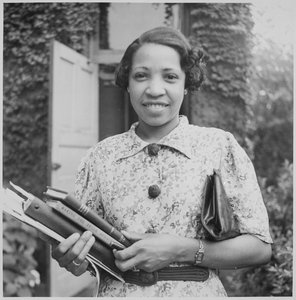
Lois Mailou Jones
1905 - 1998 , Estados Unidos
Breve Biografia
- Artistic Movement Or Style: Impressionismo
- Artists Or Movements Influenced By This Artist: ['David Driskell']
- Artists Who Influenced This Artist:
- Aaron Douglas
- Meta Warrick Fuller
- Date Of Birth: November 3, 1905
- Full Name: Lois Mailou Jones
- Nationality: Americana
- Notable Artworks:
- Jeune Fille Française
- Les Fétiches
- Initiation, Liberia
- Place Of Birth: Boston, USA