

 Visualizar em escala
 Enviar
 Compartilhar
 Ver detalhes
 Guia de Obras do Aluno

 Baixar imagem
 Semelhantes
 Raio X
 Apresentação de slides
 Estatísticas
Corneta


 Ver mais
Giclée / Impressão de Arte
Impressão giclée ou em tela de qualidade de museu, com produção rápida e opções flexíveis de acabamento. ( Encomendar reprodução pintada à mão Ver Imagem Digital)




P118B €10

P118H €10

P118W €10

P438Z €10

P508JH €12

P508YH €12

P805H €10

P805Z €10

P919BZ €10

P919G €10

P919XJ €10

P959ZH €10

P968JZ €12

W106C €8

W218G €10

W218JH €8

W218Y €10

W307PJ €10

W316G €10

W316PJ €8

W316Y €10

W398PJ €8

W4111J €10

W500HY €15

W500JH €15

W692G €12

W849H €8

W940BG €15

W953PJ €8




Escolha entre os nossos tamanhos pré-definidos que respeitam as proporções originais da obra de arte.

Digite a largura e a altura de que necessita, para se ajustar à sua moldura ou à sua parede. Uma impressão só pode ser cortada, nunca ampliada além da imagem original, pelo que um tamanho com uma proporção diferente perderá parte da imagem. Enviamos-lhe uma maquete digital para aprovação antes de imprimirmos qualquer coisa. A imagem apresentada nesta página não mostra o corte real — apenas a maquete o faz.
Entrega mundial () em 2 semanas, em vez das 4/5 semanas padrão. (25 Outubro)

Envio expresso gratuito para todo o mundo

Tela de Linho Premium

Seguro de transporte total

Garantia de Reembolso de Impostos Alfandegários

Garantia de Fidelidade de Cor

Política de Devolução em 100 Dias (Apenas para Defeitos)

Garantia de reembolso de 100%

Desconto para múltiplas unidades
 A opção de vidro está disponível apenas para tamanhos inferiores a 110 cm

Corneta
Giclée / Impressão de Arte
Dimensões da Reprodução
-


Preço Total
€ 70
Uma Sinfonia em Metal: Uma Reprodução Impressionista de Trompetes por Johann Nepomuk Maelzel
Este estudo fotográfico meticuloso captura uma trombeta antiga, obra do renomado inventor alemão Johann Nepomuk Maelzel, pintada em 1813. Mais do que apenas um instrumento musical, esta peça artística representa um momento significativo na história da arte e da inovação técnica. O trabalho de Maelzel demonstra uma profunda compreensão da estética impressionista, buscando transmitir não apenas a aparência física da trombeta, mas também suas vibrações sonoras e o ambiente em que ela está inserida.- Estilo Impressionista: A pintura adota as características marcantes do movimento impressionista, caracterizado pela busca por capturar os efeitos fugazes da luz e da atmosfera. Os artistas impressionistas rejeitavam a precisão detalhada da pintura acadêmica tradicional em favor de pinceladas rápidas e soltas que enfatizam a percepção sensorial do observador.
- Técnica: Maelzel empregou uma técnica inovadora para o seu tempo, utilizando pigmentos cuidadosamente selecionados para criar uma tonalidade azul profunda que reflete o céu da época em que foi pintado. As pinceladas são aplicadas com maestria, criando uma textura rica e dinâmica que convida o olhar a explorar os detalhes do instrumento.
- Contexto Histórico: O trabalho de Maelzel surge em um período de grande transformação intelectual e artística na Europa, marcado pelo despertar da ciência moderna e pela influência das ideias filosóficas iluministas. A pintura reflete essa atmosfera de curiosidade científica e desejo por compreender o mundo natural através dos sentidos.
- Reprodução de Alta Qualidade: Nossa equipe utiliza técnicas avançadas de impressão para garantir que a reprodução seja tão fiel possível à obra original, utilizando papel especial que preserva as cores vibrantes e a textura característica da pintura.
- Ideal para Decoração: Uma peça como esta pode adicionar um toque sofisticado e artístico a qualquer ambiente interno, criando uma atmosfera inspiradora e convidativa. Além disso, ela é uma excelente opção para colecionadores de arte que desejam exibir obras significativas e emblemáticas do período impressionista.
Perguntas e Respostas
Onde posso encontrar estatísticas sobre "Corneta" de Johann Nepomuk Maelzel?
A página Estatísticas de "Corneta" de Johann Nepomuk Maelzel apresenta estatísticas de visitas públicas: visitas mensais desta obra, uma comparação com as obras mais visualizadas do artista e a origem dos seus visitantes.
Como o movimento e a época se encontram em "Corneta" de Johann Nepomuk Maelzel?
Em "Corneta" de Johann Nepomuk Maelzel, o movimento Dutch Landscape Realism encontra a era 19th Century.
"Corneta" de Johann Nepomuk Maelzel é uma pintura, um desenho ou uma gravura?
No catálogo, "Corneta" de Johann Nepomuk Maelzel está registrado como Arte de Parede. A categoria ajuda a encontrar obras semelhantes.
Biografia do Artista
Samuel Scott: A Pioneer of Dutch Landscape and Maritime Art
Samuel Scott, a name perhaps less familiar than some of his contemporaries, stands as a pivotal figure in the development of Dutch landscape and marine painting during the 18th century. Born around 1702 in London, he embarked on an artistic journey that ultimately led him to establish himself as a respected artist working primarily in the Netherlands. Scott’s career was marked by a fascinating evolution from maritime scenes – capturing the drama of naval engagements – to a more contemplative engagement with the natural world, reflecting a shift within Dutch art towards greater realism and atmospheric depth. Scott's early training remains somewhat shrouded in mystery; records indicate he began his artistic pursuits around 1720 without documented formal instruction. This self-taught approach fostered an independent spirit and allowed him to develop a distinctive style heavily influenced by the works of Willem van de Velde the Younger, a master of naval painting known for his dynamic compositions and meticulous detail. Scott’s initial focus was on depicting ships at sea – men-of-war engaged in battle, merchant vessels navigating treacherous waters – all rendered with a remarkable sense of movement and realism. These early works demonstrate a keen eye for observation and a skillful command of brushwork, capturing the textures of water, sailcloth, and timber with impressive accuracy. Notably, he collaborated with George Lambert on a series of paintings illustrating scenes from the East India Company’s voyages, showcasing his ability to combine technical skill with narrative storytelling.The Transition to Landscape and the Influence of London
Around the early 1740s, a significant shift occurred in Scott's artistic practice. He began dedicating himself to landscape painting, driven by observations of the burgeoning cityscape of London. The construction of landmarks like Westminster Bridge provided him with an endless source of inspiration, and he meticulously documented these changes through a series of paintings that offer invaluable insights into the visual culture of the era. These works are characterized by their atmospheric quality – Scott skillfully employed light and shadow to create a sense of depth and perspective, capturing the mood and character of the city. His depictions of London Bridge, particularly those painted in the late 1740s and early 1750s, stand as remarkable achievements, accurately portraying the bridge’s structure and the surrounding environment before its eventual demolition. The influence of Canaletto, a Venetian painter renowned for his urban views, is evident in Scott's approach to landscape painting. Like Canaletto, Scott sought to capture not just the physical appearance of a scene but also its overall atmosphere and character. Furthermore, Scott’s artistic journey was intertwined with social circles; he posed for Thomas Hudson, a prominent portrait painter, around 1732, solidifying his position within London's artistic community.A Journey to the River Medway and Early Collaborations
In 1732, Scott embarked on a significant excursion – a “Five Days’ Peregrination” along the River Medway and the Isle of Sheppey in company with William Hogarth and other notable figures. This journey provided him with an unparalleled opportunity to study coastal landscapes, shipbuilding techniques, and maritime activities firsthand. The resulting account, published in 1782, documented this experience and included drawings by Hogarth and Scott themselves. This collaborative effort not only showcased Scott’s artistic talent but also highlighted his ability to work effectively within a group setting. His meticulous observations during the trip are reflected in subsequent landscape paintings that demonstrate an increased understanding of natural forms and atmospheric effects.Later Years and Legacy
Scott continued to paint throughout his life, producing a substantial body of work encompassing both maritime scenes and landscapes. He exhibited works at the Society of Artists of Great Britain until 1761, demonstrating his ongoing commitment to artistic practice. His later years saw him embracing Romanticism, incorporating more dramatic storytelling and evoking emotional responses in his viewers. Despite facing periods of relative obscurity, Samuel Scott’s contributions to Dutch art are now recognized as significant. He played a crucial role in bridging the gap between earlier maritime painting traditions and the rise of landscape painting, establishing a foundation for future generations of artists. His meticulous observation, skillful technique, and atmospheric rendering continue to resonate with viewers today, offering a captivating glimpse into 18th-century Dutch society and its relationship with the natural world. Scott’s legacy lies not only in his individual works but also in his pioneering role as a landscape painter who brought a new level of realism and emotional depth to the genre.
Johann Nepomuk Maelzel
1772 - 1838 , Germany
Informações Rápidas
- Full Name: Jan Maurits Quinkhard
- Nationality: Dutch
- Date Of Birth: 1772
- Date Of Death: 1838
- Place Of Birth: Reims, Germany
- Notable Artworks:
- Familiar scenes
- Allegorical works
- Mythological paintings
- Artistic Movement Or Style: Portraiture, History, Mythology
- Artists Who Influenced This Artist:
- Julius Quinkhardt the elder
- Arnold van Boonen
- Artists Or Movements Influenced By This Artist: ['Amsterdam Museum']
Artigos Relacionados

Os 10 Mestres da Paisagem Romântica: Arte para Inspirar a Sua Casa
Descubra os 10 quadros mais emblemáticos da Paisagem Romântica! Explore a história de Turner, Friedrich e outros mestres. Encontre reproduções de arte exclusivas para inspirar sua decoração em OriginalUniqueArt.com.

Jan van Goyen: Master of Dutch Landscape & Atmospheric Perspective
Discover Jan van Goyen, the master of Dutch landscape painting. Explore his subtle technique, atmospheric realism & lasting influence on art history. Learn about this 17th-century pioneer at OriginalUniqueArt.

Golden Light & Dutch Skies: The Timeless Magic of Dutch Golden Age Landscapes
Discover the breathtaking beauty of Dutch Golden Age landscapes. Explore the mastery of light, chiaroscuro, and 17th-century realism through an expert art history lens, celebrating the enduring legacy of the Dutch Masters for discerning collectors and art lovers.
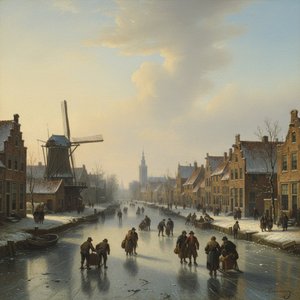
Charles Leickert: Capturing the Dutch Golden Age Light – A Comprehensive Study of Technique, Context, and Legacy
Explore the captivating winter landscapes of Charles Leickert, a master of Dutch Golden Age light & atmosphere. Discover his techniques, symbolism, and lasting legacy – a comprehensive study for art enthusiasts and collectors.

Golden Light & Dutch Skies: Bringing the Magic of Dutch Golden Age Landscapes into Your Home
Transform your home with the breathtaking light of Dutch Golden Age landscapes. Discover how hand-painted oil reproductions of masterworks like Ruisdael and Vermeer bring timeless elegance, atmosphere, and soulful texture to modern interiors. Elevate your space with museum-quality art.
