
 Comprar impressão Comprar imagem em alta resolução
 Enviar
 Compartilhar
 Detalhes da obra
 Adicionar aos favoritos

 Baixar
 Semelhantes
 Raio X
 Slideshow
Farmhouse
 Oil On Canvas
- WallArt
- Rococo Style
 1750
1750- Early Modern
 130.0 x 212.0 cm
 Museu do Louvre
 Ver mais
Reprodução em Óleo Feita à Mão
Óleo sobre tela pintado à mão no seu tamanho e moldura, feito sob encomenda pelos nossos artistas.




P118B $10

P118H $10

P118W $10

P438Z $10

P508JH $12

P508YH $12

P805H $10

P805Z $10

P919BZ $10

P919G $10

P919XJ $10

P959ZH $10

P968JZ $12

W106C $8

W218G $10

W218JH $8

W218Y $10

W307PJ $10

W316G $10

W316PJ $8

W316Y $10

W398PJ $8

W4111J $10

W500HY $15

W500JH $15

W692G $12

W849H $8

W940BG $15

W953PJ $8




Escolha entre os nossos tamanhos pré-definidos que respeitam as proporções originais da obra de arte.

Pode inserir as suas próprias dimensões para se adequar a uma moldura ou espaço específico. Se o tamanho selecionado não corresponder às proporções da imagem original, iremos cortar a obra de arte ou estender a pintura com elementos adicionais pintados à mão. Um esboço digital será enviado para sua aprovação antes do início da produção.
Tenha em atenção que a pré-visualização no ecrã não reflete o corte ou extensão real. Apenas o esboço mostrará com precisão a composição final.
Embora tamanhos personalizados estejam disponíveis, recomendamos selecionar uma dimensão da lista predefinida para preservar as proporções originais.
Após o pedido, a equipa OriginalUniqueArt.com enviará um e-mail ao cliente para solicitar instruções e fornecer uma prévia do esboço.
Entrega Mundial () em 3 a 4 semanas, em vez das 5 semanas padrão. (22 Julho). Sem comprometer a qualidade.

Envio Expresso Gratuito para todo o Mundo

Tela de Linho Premium

Seguro de envio completo

Garantia de Reembolso de Impostos Alfandegários

Garantia de Fidelidade de Cores

Política de Devolução de 60 Dias (Apenas para Defeitos)

Garantia de 100% de Reembolso

Desconto para múltiplas unidades
 A opção de vidro está disponível apenas para tamanhos inferiores a 110 cm

Farmhouse
Técnica de Reprodução
Dimensões da Reprodução
-


Preço Total Final
-
Descrição da Obra
A Pastoral Dream in Rococo Hues
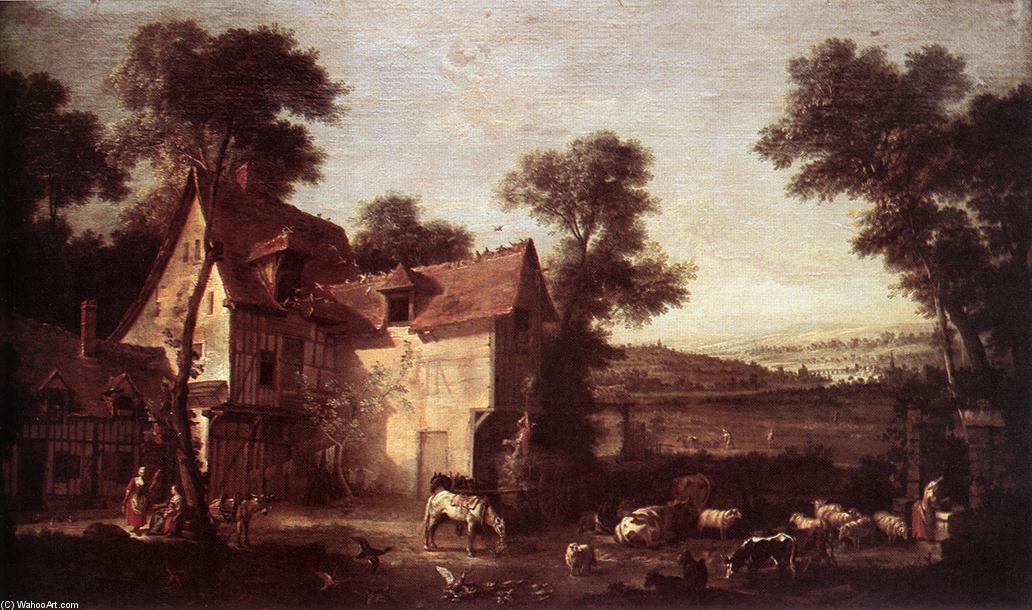
To gaze upon Jean-Baptiste Oudry's "Farmhouse" is to step directly into an idealized vision of 18th-century French rural life. This painting, executed in 1750, transcends a mere depiction of farmstead; it is a carefully orchestrated symphony of light, color, and pastoral tranquility. The Rococo style, with its inherent lightness and elegant exuberance, bathes the entire scene in a soft, almost dreamlike glow. One feels an immediate sense of calm wash over the viewer as the eye wanders from the rustic farmhouse, crowned with its thatched roof, across the fertile expanse of farmland stretching toward the horizon.
Mastery of Light and Detail
Oudry’s technical brilliance is immediately apparent in every meticulously rendered element. His handling of light is nothing short of masterful; it seems to emanate naturally from the scene itself, highlighting the textures of the wood, the softness of the sheep's wool, and the delicate folds of the clouds overhead. The composition is a study in balance, framed beautifully by lush trees that flank both sides, lending an almost theatrical depth to the foreground. Notice the scattered life—the contented cows grazing near the structure, the busy chickens pecking at the earth. These animals are not mere props; they imbue the scene with palpable vitality, suggesting the rhythm of daily existence.
Symbolism of Abundance and Harmony
Beyond its surface beauty, "Farmhouse" carries deep symbolic weight. It speaks to an era's idealized relationship with nature—a time when agricultural bounty was celebrated as a source of both sustenance and aesthetic pleasure. The combination of the thriving farmland, the sheltering farmhouse, and the gentle presence of human figures engaged in labor suggests themes of harmony, prosperity, and settled domestic bliss. Even the inclusion of farm implements hints at a life lived in respectful partnership with the land.
Bringing the Countryside Home
For the collector or designer seeking to infuse a space with timeless elegance, this piece offers unparalleled depth. The warm palette, dominated by rich earth tones punctuated by soft pastels, ensures that "Farmhouse" can anchor any room, whether it be a grand salon yearning for rustic charm or a sunlit breakfast nook desiring an air of cultivated serenity. Owning a reproduction allows one to possess not just a painting, but a tangible piece of 18th-century French artistry—a window into a bygone era of idyllic simplicity and exquisite craftsmanship.
Biografia do Artista
Jean-Baptiste Oudry: A Life in Art
Jean-Baptiste Oudry, born March 17, 1686, in the heart of Paris, France, was a luminary of the Rococo artistic movement—a painter whose meticulous observation and masterful technique elevated animal depictions to unparalleled levels of beauty and realism. His artistic journey began within an influential family; his father, Jacques Oudry, himself a respected artist and dealer, instilled in him a deep appreciation for visual artistry from a young age. Nicole Papillon, Oudry’s mother, possessed connections to Jean-Baptiste-Michel Papillon, the celebrated engraver—a lineage that foreshadowed Oudry's own dedication to artistic excellence. Early Training and Foundations His formative years were spent at the Académie de Saint-Luc, where he honed his skills under the tutelage of Nicolas de Largillière from 1707 to 1712. Largillière’s influence proved decisive, shaping Oudry's initial approach to portraiture—a genre characterized by tenderness and an astute understanding of human psychology. More importantly, Largillière imparted invaluable knowledge regarding color theory and composition—principles that would permeate Oudry’s subsequent artistic endeavors. This foundational period cemented Oudry’s commitment to meticulous detail and a profound respect for the natural world. Artistic Development: From Portraiture to Animal Painting Initially drawn to portraiture, Oudry swiftly expanded his repertoire to encompass still lifes—particularly those featuring fruits and animals—a decision that would define his artistic legacy. His style evolved towards the Rococo aesthetic—a movement synonymous with elegance, playful ornamentation, and a celebration of aristocratic leisure. Oudry’s canvases pulsed with vibrant hues and captured the subtle textures of animal fur and feathers with breathtaking precision. He possessed an extraordinary talent for blending painting and design, seamlessly transitioning between easel paintings and tapestry creations—a skill that cemented his position as one of France's foremost decorative artists. Notable Achievements: Tapestries and Royal Patronage Oudry’s fame ascended to new heights through his involvement in monumental tapestry projects commissioned by the Royal Beauvais Manufactory and Gobelins. The *Amusements Champêtres* series—a breathtaking panorama of rural life and hunting—became an emblem of Rococo artistry, showcasing Oudry's ability to convey both grandeur and intimacy simultaneously. Equally impressive were his designs for Louis XV’s hunts—a testament to the King’s fascination with the natural world and Oudry’s unparalleled skill in capturing movement and atmosphere on fabric. Furthermore, Oudry served as inspector general of Gobelins from 1736, overseeing the production of countless tapestries that adorned royal palaces and elevated French artistic standards. His commissions extended beyond decorative art; he was entrusted with painting portraits of deceased game—a task demanding anatomical accuracy and compositional mastery—solidifying his reputation as a true virtuoso of animal painting. Legacy and Influence Jean-Baptiste Oudry’s influence resonated throughout the eighteenth century, shaping the tastes and sensibilities of European aristocracy. His meticulous attention to detail and his unwavering devotion to naturalism established him as an exemplar for subsequent generations of artists—particularly those specializing in animal painting and tapestry design. Oudry's work continues to inspire admiration for its beauty, technical brilliance, and profound engagement with the spirit of the Rococo era—a testament to his enduring contribution to French artistic heritage. He died April 30, 1755, leaving behind a legacy that transcends time—a legacy enshrined in masterpieces of painting and tapestry that captivate audiences worldwide.
Jean-Baptiste Oudry
1686 - 1755 , França
Informações Rápidas
- Artistic Movement Or Style: Rococo
- Artists Who Influenced This Artist: ['Nicolas de Largillière']
- Date Of Birth: 17 Mar 1686
- Full Name: Jean-Baptiste Oudry
- Nationality: Francês
- Notable Artworks:
- Les Amusements Champêtres
- Louis XV Hunting a Deer in the Forest of Saint-Germain
- Place Of Birth: Paris, França
Artigos Relacionados

Léon Augustin L'Hermitte: Capturing the Soul of French Rural Life
Discover the captivating realist paintings of Léon Augustin L'Hermitte, masterfully depicting French rural life. Explore his technique, influences & legacy – a cornerstone of 19th-century art.
Idyllic Visions: Exploring the Pastoral Tradition in Western Art – Themes, Techniques & Enduring Appeal
Explore the rich history of pastoral art from classical Arcadia to contemporary interpretations. Discover key artists, themes & collecting tips at OriginalUniqueArt.

Daniel Ridgway Knight: A Study in Victorian Genre Painting & Rural Idealism
Explore the captivating world of Daniel Ridgway Knight, a master of Victorian genre painting. Discover his serene rural scenes, realistic technique & lasting influence on American Impressionism. Learn about his life, art, and collectibility.
Cultivating Visions: Rural Life & Social Commentary in Art History
Explore the rich history of rural life in art! Discover masterpieces from Dutch Masters to Van Gogh & Courbet. Uncover artistic movements, social significance & expert collecting insights at OriginalUniqueArt.
Jules Breton: Capturing the Poetic Soul of French Rural Life
Explore the captivating world of Jules Breton, master of French Realism. Discover his iconic paintings of rural life, learn about his artistic journey, and find high-quality reproductions to elevate your art collection at OriginalUniqueArt.


