Menu
Visualizar na parede Visualizar em RA Alternar para Impressão Alternar para Imagem Digital Compartilhar
Detalhes Guia Adicionar aos favoritos Baixar imagem Semelhantes Raio X Ver diaporama Estatísticas

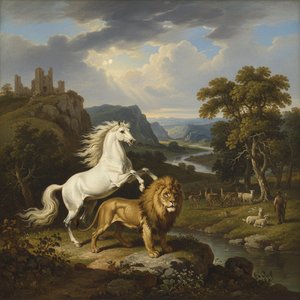
Gordale Scar

James Ward's 'Gordale Scar' captures the dramatic Yorkshire landscape with towering cliffs and figures amidst a stormy sky. A monumental oil painting, it showcases nature’s beauty & evokes a sense of sublime wonder.

"meta_description": "James Ward (1769-1859) foi um renomado pintor britânico, conhecido por seus vibrantes animais em paisagens românticas e retratos expressivos. Suas obras, como 'Gordale Scar', marcam a transição do neoclassicismo ao romantismo na arte inglesa."

Reprodução em Óleo Feita à Mão

Óleo sobre tela pintado à mão no tamanho e moldura de sua escolha, feito sob encomenda pelos nossos artistas. ( Alternar para Impressão Alternar para Imagem Digital)

Corner sample of the P118B picture frame: poliestireno moldado, 5 cm wide and 3 cm thick
P118B €10
Corner sample of the P118H picture frame: poliestireno moldado, 5 cm wide and 3 cm thick
P118H €10
Corner sample of the P118W picture frame: poliestireno moldado, 5 cm wide and 3 cm thick
P118W €10
Corner sample of the P438Z picture frame: poliestireno moldado, 5.5 cm wide and 3.5 cm thick
P438Z €10
Corner sample of the P508JH picture frame: poliestireno moldado, 7 cm wide and 3.5 cm thick
P508JH €12
Corner sample of the P508YH picture frame: poliestireno moldado, 7 cm wide and 3.5 cm thick
P508YH €12
Corner sample of the P805H picture frame: poliestireno moldado, 5 cm wide and 3.5 cm thick
P805H €10
Corner sample of the P805Z picture frame: poliestireno moldado, 5 cm wide and 3.5 cm thick
P805Z €10
Corner sample of the P919BZ picture frame: poliestireno moldado, 7 cm wide and 3.5 cm thick
P919BZ €10
Corner sample of the P919G picture frame: poliestireno moldado, 7 cm wide and 3.5 cm thick
P919G €10
Corner sample of the P919XJ picture frame: poliestireno moldado, 7 cm wide and 3.5 cm thick
P919XJ €10
Corner sample of the P959ZH picture frame: poliestireno moldado, 5 cm wide and 3 cm thick
P959ZH €10
Corner sample of the P968JZ picture frame: poliestireno moldado, 6 cm wide and 4 cm thick
P968JZ €12
Corner sample of the W106C picture frame: madeira maciça, 5 cm wide and 3 cm thick
W106C €8
Corner sample of the W218G picture frame: madeira maciça, 5 cm wide and 3 cm thick
W218G €10
Corner sample of the W218JH picture frame: madeira maciça, 5 cm wide and 3 cm thick
W218JH €8
Corner sample of the W218Y picture frame: madeira maciça, 5 cm wide and 3 cm thick
W218Y €10
Corner sample of the W307PJ picture frame: madeira maciça, 6 cm wide and 3 cm thick
W307PJ €10
Corner sample of the W316G picture frame: madeira maciça, 6 cm wide and 3 cm thick
W316G €10
Corner sample of the W316PJ picture frame: madeira maciça, 6 cm wide and 3 cm thick
W316PJ €8
Corner sample of the W316Y picture frame: madeira maciça, 6 cm wide and 3 cm thick
W316Y €10
Corner sample of the W398PJ picture frame: madeira maciça, 5 cm wide and 3 cm thick
W398PJ €8
Corner sample of the W4111J picture frame: madeira maciça, 6.5 cm wide and 3.5 cm thick
W4111J €10
Corner sample of the W500HY picture frame: madeira maciça, 7 cm wide and 5 cm thick
W500HY €15
Corner sample of the W500JH picture frame: madeira maciça, 7 cm wide and 5 cm thick
W500JH €15
Corner sample of the W692G picture frame: madeira maciça, 8 cm wide and 4 cm thick
W692G €12
Corner sample of the W849H picture frame: madeira maciça, 5 cm wide and 3 cm thick
W849H €8
Corner sample of the W940BG picture frame: madeira maciça, 7.5 cm wide and 4.5 cm thick
W940BG €15
Corner sample of the W953PJ picture frame: madeira maciça, 6 cm wide and 3.5 cm thick
W953PJ €8

Tamanho padrão
personalizado
CM
INCH

Escolha entre os nossos tamanhos pré-definidos que respeitam as proporções originais da obra de arte.

largura
altura

Insira a largura e a altura desejadas para se ajustarem à sua moldura ou parede. Como esta obra é pintada à mão, para um tamanho com proporções diferentes, o artista poderá pintar um pouco mais ao redor da imagem ou reduzir ligeiramente a composição — você escolhe. Enviamos uma maquete digital para sua aprovação antes de iniciar a pintura. A imagem exibida nesta página não representa o resultado real — apenas a maquete mostra o resultado final.

Exemplos do que pode ser personalizado: Substituir o rosto pela foto do cliente; Adicionar um animal de estimação (ex: substituir gato por cão); Incluir uma mensagem oculta no fundo; Alterar a paisagem ou elementos do fundo.
Após o pedido, a equipa OriginalUniqueArt.com enviará um e-mail ao cliente para solicitar instruções e fornecer uma prévia do esboço.

Entrega mundial () em 3 a 4 semanas, em vez das 5 semanas padrão. (27 Outubro). Sem comprometer a qualidade.

Envio expresso gratuito para todo o mundo
Tela de Linho de Alta Qualidade
Seguro de transporte completo
Garantia de Reembolso de Impostos Alfandegários
Garantia de Fidelidade Cromática
Política de Devolução em 100 Dias (Apenas para Defeitos)
Garantia de reembolso de 100%
Oferta de desconto por quantidade

Preço Total

€ 264

Gordale Scar

Técnica de Reprodução

Tamanho da Reprodução

-

Preço Total

€ 264

Informações Rápidas

  • Movement: Romanticism
  • Subject or theme: Yorkshire scenery
  • Dimensions: 332 x 421 cm
  • Influences:
    • Morland
    • John Bull
  • Notable elements: Dramatic landscape
  • Title: Gordale Scar

Quiz de Arte

Cada pergunta possui apenas uma resposta correta.

Pergunta 1:
What is the primary subject of James Ward’s ‘Gordale Scar’?
Pergunta 2:
In what year was James Ward’s ‘Gordale Scar’ painted?
Pergunta 3:
The painting 'Gordale Scar' is considered an example of which artistic movement?
Pergunta 4:
What technique did James Ward primarily employ in ‘Gordale Scar’ to emphasize the scale of the landscape?
Pergunta 5:
Who commissioned James Ward to paint ‘Gordale Scar’?

A Dramatic Vision of the Yorkshire Landscape

James Ward’s “Gordale Scar” isn't merely a depiction of a Yorkshire ravine; it’s an immersive experience, a carefully constructed drama rendered in oil on canvas. Completed in 1814, this monumental work captures a pivotal moment within the Romantic movement – a time when artists sought to elevate nature beyond mere representation, imbuing it with profound emotional and spiritual significance. The painting immediately commands attention with its sheer scale; measuring over three by four feet, it invites the viewer into the heart of Gordale Scar, drawing them into a world of towering cliffs, cascading waterfalls, and brooding skies.

Ward’s skill lies not just in his technical prowess – evident in the meticulous detail of the rock formations and the subtle play of light on the water – but also in his ability to evoke atmosphere. The palette is dominated by cool blues and greys, reflecting the dampness and shadow that perpetually cling to this dramatic gorge. Yet, flashes of ochre and umber hint at the warmth of the sun struggling to penetrate the clouds, creating a dynamic tension between light and darkness. The composition itself is carefully orchestrated; the receding cliffs draw the eye into the depths of the ravine, while the figures scattered throughout the scene serve as anchors, grounding the viewer in this wild and untamed landscape.

The Commission and its Context

“Gordale Scar” was commissioned by Lord Ribblesdale, a prominent landowner in the region, who sought to immortalize his estate’s most striking feature. This commission reflects the broader trend of landowners investing in art to enhance their prestige and demonstrate their connection to the land. However, Ward's painting transcends mere vanity; it speaks to a deeper appreciation for the sublime – that feeling of awe and terror inspired by the grandeur and power of nature. The Napoleonic Wars were ongoing at the time of its creation, and many artists sought solace and inspiration in the enduring beauty of England’s countryside, viewing it as a bastion of stability amidst political turmoil.

The inclusion of figures within the landscape is particularly significant. These aren't simply incidental additions; they represent humanity’s smallness and vulnerability when confronted with the overwhelming scale of nature. They are dwarfed by the cliffs, seemingly lost in the vastness of the ravine, prompting a contemplative response from the viewer. The presence of a bull on the right side of the painting is often interpreted as a symbol of John Bull, representing England itself, guarding this natural treasure.

Technique and Romantic Ideals

Ward’s technique is characterized by a loose, expressive brushstroke – a hallmark of the Romantic style. He eschews precise detail in favor of capturing the overall mood and atmosphere of the scene. The cliffs are rendered with a sense of ruggedness and dynamism, their surfaces textured with layers of paint that suggest both solidity and movement. The waterfalls are depicted as powerful torrents of water, cascading down the rock face with impressive force. Noticeably, Ward employed a technique called ‘atmospheric perspective’ – using lighter colors and softer edges to represent objects further away, creating a sense of depth and distance.

“Gordale Scar” is more than just a landscape painting; it's a testament to the Romantic ideal of connecting with nature on an emotional level. It invites us to contemplate our place within the natural world, reminding us of both its beauty and its power. Reproductions of this iconic work offer a remarkable opportunity to bring this dramatic vision into your home or office, capturing the spirit of the Yorkshire countryside and the enduring legacy of James Ward.

Perguntas e Respostas

"Gordale Scar", de James Ward é uma obra de arte conhecida?

O nível de popularidade registrado para "Gordale Scar", de James Ward é Iconic.

Como o movimento e a época se encontram em "Gordale Scar", de James Ward?

Em "Gordale Scar", de James Ward, o movimento Romantic Landscape encontra a era Idade Moderna Inicial.

Existem obras semelhantes a "Gordale Scar"?

Obras semelhantes a "Gordale Scar" estão listadas na página de Obras semelhantes desta obra.


Biografia do Artista

James Ward: Um Mestre da Pintura Animal e Paisagens Românticas Britânicas

James Ward (1769-1859) foi um pintor inglês de grande destaque, reverenciado por suas pinturas de animais cativantes, paisagens românticas e retratos perspicazes. Embora muitas vezes ofuscado por contemporâneos mais renomados, seu estilo único e habilidade influenciaram significativamente o desenvolvimento da arte britânica no século XIX.

Primeiros Anos e Formação

Nascido em 23 de outubro de 1769, na vibrante cidade de Londres, Inglaterra, James Ward era o irmão mais jovem do gravador William Ward. Desde cedo, suas inclinações artísticas foram nutridas em um ambiente familiar criativo e estimulante. Embora tenha recebido alguma instrução formal, seu desenvolvimento artístico foi impulsionado principalmente pela observação atenta e pela prática constante – uma dedicação que moldaria sua visão singular.

Desenvolvimento Artístico e Influências

A carreira de Ward pode ser dividida em dois períodos distintos, marcados por influências distintas. Inicialmente, até cerca de 1803, suas obras exibiam uma forte semelhança com a de seu cunhado, George Morland, caracterizada por cenas do cotidiano e um foco na vida simples. No entanto, a partir dessa época, ele foi profundamente inspirado pelo mestre barroco Peter Paul Rubens, adotando uma composição mais dinâmica, uma paleta de cores rica e um uso dramático da luz e sombra – elementos que dariam vida às suas pinturas.

Obras Notáveis e Estilo Único

O estilo singular de Ward o distinguiu de muitos contemporâneos. Ele se destacou em diversos gêneros, incluindo pintura histórica, retrato, paisagem e arte animal. Algumas de suas obras mais celebradas incluem:

  • Gordale Scar (1814/15): Considerada sua obra-prima, esta representação dramática do desfilvo escocês de Gordale exemplifica as qualidades sublimes da pintura romântica inglesa. A cena, com suas rochas imponentes e a atmosfera melancólica, evoca um senso de admiração e temor diante da natureza selvagem.
  • The Deer Stealer (1823): Comissionada pelo Theophilus Levett, esta pintura demonstra a habilidade de Ward em narrar histórias e representar animais com precisão e sensibilidade. A cena captura o momento de perseguição com dinamismo e emoção, revelando a relação complexa entre o homem e a natureza.
  • John Levett Hunting at Wychnor, Staffordshire (1817): Um retrato do seu patrono, John Levett, que demonstra a capacidade de Ward em capturar tanto a semelhança física quanto a atmosfera geral de uma cena. A pintura transmite um senso de movimento e aventura, revelando o estilo de vida da aristocracia inglesa no início do século XIX.

Suas pinturas são caracterizadas por um detalhe meticuloso, especialmente na representação dos animais, combinado com uma sensibilidade romântica que enfatiza a beleza e o poder da natureza. Ward demonstra um profundo conhecimento anatômico e comportamental dos animais, capturando sua graça, força e individualidade em cada pincelada.

Comissões e Exposições

Ward recebeu inúmeras comissões de figuras proeminentes da época, como Theophilus Levett, o que lhe permitiu desenvolver uma carreira lucrativa. Ele regularmente expôs suas obras na Royal Academy, ganhando reconhecimento por sua habilidade e originalidade. Sua admissão na Academia em 1811 solidificou sua posição no cenário artístico britânico.

Vida Tardia e Legado

Ward continuou a pintar com vigor até o ataque que sofreu em 1855, que limitou sua capacidade de trabalhar. Ele faleceu em 17 de novembro de 1859, em relativa pobreza apesar do sucesso anterior. No entanto, seu impacto na arte britânica permanece inegável, e suas obras continuam a inspirar e encantar admiradores até hoje.

Significado Histórico

James Ward ocupa uma posição significativa na transição da pintura neoclássica para o romantismo na arte inglesa. Ele conectou os estilos tradicionais de gênero com o crescente interesse em paisagens e naturalismo, deixando um legado de obras cativantes que moldaram a direção da arte britânica no século XIX. Sua habilidade em capturar a beleza e o poder da natureza, combinada com sua sensibilidade emocional, o estabeleceu como um dos pintores mais importantes de sua época.

James Ward

James Ward

1769 - 1859 , Reino Unido

Dados Rápidos

  • Artistic Movement Or Style: Romantismo
  • Artists Or Movements Influenced By This Artist:
    • Morland
    • Rubens
  • Artists Who Influenced This Artist:
    • George Morland
    • Rubens
  • Date Of Birth: 23 Out 1769
  • Date Of Death: 17 Nov 1859
  • Full Name: James Ward
  • Nationality: Britânico
  • Notable Artworks:
    • Gordale Scar
    • O Caçador de Veados
  • Place Of Birth: Londres, Reino Unido
Explore obras de arte organizadas por temas, estilos e características.