

 Visualizar na parede
 Compartilhar
 Compartilhar
 Detalhes
 Guia
Guia

 Baixar imagem
 Semelhantes
 Raio X
 Ver diaporama
 Q&A
Q&A Estatísticas
Apollo and Daphne


 Ler mais
Giclée / Impressão de Arte
Impressão giclée ou em tela de qualidade de museu, com produção rápida e opções flexíveis de acabamento. ( Comprar pintura feita à mão Alternar para Imagem Digital)




P118B €10

P118H €10

P118W €10

P438Z €10

P508JH €12

P508YH €12

P805H €10

P805Z €10

P919BZ €10

P919G €10

P919XJ €10

P959ZH €10

P968JZ €12

W106C €8

W218G €10

W218JH €8

W218Y €10

W307PJ €10

W316G €10

W316PJ €8

W316Y €10

W398PJ €8

W4111J €10

W500HY €15

W500JH €15

W692G €12

W849H €8

W940BG €15

W953PJ €8




Escolha entre os nossos tamanhos pré-definidos que respeitam as proporções originais da obra de arte.

Insira a largura e a altura desejadas para se ajustarem à sua moldura ou parede. Uma impressão pode ser apenas cortada, nunca ampliada além da imagem original; portanto, um tamanho com proporções diferentes resultará na perda de parte da imagem. Enviamos uma maquete digital para sua aprovação antes de realizarmos a impressão. A imagem exibida nesta página não mostra o corte real — apenas a maquete o faz.
Entrega mundial () em 2 semanas, em vez das 4/5 semanas padrão. (30 Outubro)

Envio expresso gratuito para todo o mundo

Tela de Linho de Alta Qualidade

Seguro de transporte completo

Garantia de Reembolso de Impostos Alfandegários

Garantia de Fidelidade Cromática

Política de Devolução em 100 Dias (Apenas para Defeitos)

Garantia de reembolso de 100%

Oferta de desconto por quantidade
 A opção de vidro está disponível apenas para tamanhos inferiores a 110 cm

Apollo and Daphne
Giclée / Impressão de Arte
Tamanho da Reprodução
-


Preço Total
€ 71
The Myth Made Manifest: Gian Lorenzo Bernini’s “Apollo and Daphne”
Gian Lorenzo Bernini's "Apollo and Daphne," housed within the opulent Galleria Borghese in Rome, isn’t merely a sculpture; it’s a visceral embodiment of Ovid’s timeless tale. Completed between 1622 and 1625, this monumental work transcends its marble materiality to capture a fleeting, dramatic moment – the precipice of transformation where the god Apollo, consumed by desire, attempts to seize the nymph Daphne, who desperately flees into becoming a laurel tree. Bernini’s genius lies not just in his technical mastery but in his ability to infuse stone with an astonishing sense of movement and emotional intensity, creating a scene that feels perpetually caught in the throes of action.

Baroque Drama: Sculpture as Living Motion
Bernini, a pivotal figure in the transition from Renaissance to Baroque art, rejected the static formality of earlier sculpture. Instead, he embraced dynamism, capturing figures in mid-gesture, imbued with palpable emotion. “Apollo and Daphne” exemplifies this approach perfectly. The sculptor masterfully manipulates marble to convey an astonishing sense of movement – Apollo’s outstretched hand, poised to grasp Daphne; her fleeing form, limbs transforming into branches; the billowing drapery that seems to ripple around them both. The sculpture isn't a depiction of a static event but rather a frozen moment of intense pursuit and desperate escape. The use of *contrapposto*, where Apollo’s weight shifts slightly to one leg, adds further to the illusion of movement.
Bernini’s technique is breathtakingly sophisticated. He employed a complex system of scaffolding and supports within the marble itself, allowing him to create an outward appearance of lightness and fluidity. The surface of the stone is polished to a luminous sheen, reflecting light and enhancing the sense of volume and depth. The details are exquisite – the delicate texture of Daphne’s hair transforming into leaves, the intricate folds of her drapery, the subtle expression of panic on her face.
Mythic Symbolism: Love, Flight, and Transformation
The story of Apollo and Daphne is rich in symbolic meaning. Apollo, representing divine power and beauty, embodies relentless pursuit and unyielding desire. Daphne, a symbol of innocence and resistance, represents the preservation of virtue and the rejection of worldly temptations. Her transformation into a laurel tree – a plant closely associated with Apollo himself – signifies her ultimate victory over his advances, becoming a symbol of both beauty and resilience. The myth itself explores themes of love, loss, and the conflict between desire and freedom.
The sculpture’s placement within the Borghese Gallery is also significant. Originally intended to be viewed from a specific angle, it highlights the dramatic interplay between Apollo's forceful pursuit and Daphne's desperate flight. The surrounding architecture of the gallery further enhances this effect, creating an immersive experience for the viewer.
A Legacy of Emotion: Bernini’s Enduring Impact
“Apollo and Daphne” stands as a testament to Bernini’s unparalleled skill and his profound understanding of human emotion. It is not simply a representation of a classical myth but a powerful exploration of the human condition – the struggle between desire and resistance, the triumph of virtue over temptation, and the enduring power of transformation. Bernini's work continues to captivate audiences centuries later, demonstrating the timeless appeal of this dramatic narrative and solidifying his place as one of art history’s greatest masters. Reproductions of this masterpiece offer a remarkable opportunity to bring this extraordinary sculpture into any space, evoking the drama and emotion of Bernini’s original vision.
Perguntas e Respostas
A que fase da carreira de Gian Lorenzo Bernini pertence "Apollo and Daphne" (1622)?
Dada a sua data de 1622, "Apollo and Daphne" insere-se no período Early Baroque de Gian Lorenzo Bernini.
De que forma o estilo de "Apollo and Daphne" se relaciona com a época de seu criador?
Em "Apollo and Daphne", de Gian Lorenzo Bernini, o movimento Baroque Sculpture encontra a era Idade Moderna.
Onde deve ser pendurada uma reprodução de "Apollo and Daphne", de Gian Lorenzo Bernini?
O formato (Tall) e o ambiente recomendado (Living Room) são as duas informações de posicionamento registradas para "Apollo and Daphne", de Gian Lorenzo Bernini.
Biografia do Artista
A Roman Genius: The Life and Legacy of Gian Lorenzo Bernini
Gian Lorenzo Bernini, a name synonymous with the Baroque era, was more than just a sculptor; he was an architect, painter, stage designer, and a true *uomo universale* – a universal man. Born in Naples in 1598, his journey to becoming one of history’s most celebrated artists began within a family steeped in artistic tradition, ultimately shaping the very landscape of Rome and influencing generations of creatives. His father, Pietro Bernini, was a respected sculptor himself, providing Gian Lorenzo with an early foundation in the craft, but it was the vibrant atmosphere of Rome – its classical heritage and burgeoning artistic scene – that truly ignited his prodigious talent. Bernini’s formative years were spent absorbing the masterpieces housed within the Vatican collections, meticulously studying the forms and principles of ancient Greek and Roman sculpture. This deep immersion wasn't merely academic; it instilled in him a profound understanding of proportion, anatomy, and the power of idealized beauty – elements he would later master with unparalleled skill. Even as a young boy, his ability to sculpt surpassed that of his father, hinting at the revolutionary force he was destined to become. Cardinal Maffeo Barberini, who would ascend to the papacy as Urban VIII, recognized this extraordinary potential and became Bernini’s most influential patron, providing him with unprecedented opportunities and shaping not only his career but also the aesthetic direction of Rome itself.Sculpting Emotion: The Birth of Baroque Drama
Bernini is unequivocally considered the preeminent sculptor of the Baroque period, a style characterized by its dynamism, emotional intensity, and sheer grandeur. He didn’t simply sculpt figures; he breathed life into marble, capturing moments of profound psychological depth and dramatic narrative with unparalleled skill. Where Renaissance sculpture often prioritized idealized form and static beauty, Bernini embraced movement, theatricality, and the raw power of human emotion. His work moved beyond mere representation to evoke a visceral response in the viewer. Key elements define his distinctive style: a masterful ability to convey complex emotions through facial expressions and body language; an astonishing technical proficiency that allowed him to render textures – flowing hair, delicate fabrics, smooth skin – with breathtaking realism; and above all, a commitment to dramatic narrative, depicting moments of intense action or spiritual climax. The Ecstasy of Saint Teresa, housed in the Cornaro Chapel, remains perhaps his most iconic achievement – a swirling composition of marble, bronze, and light that captures a mystical experience with an almost overwhelming emotional force. The interplay of textures, the contorted poses, and the dramatic lighting create a scene that is both intensely spiritual and profoundly human. Other masterpieces like Apollo and Daphne and David showcase this same dynamic energy, transforming stone into fleeting moments of transformation and poised tension.Beyond Sculpture: Architecture and Urban Visions
Bernini’s genius extended far beyond the realm of sculpture. He was a remarkably versatile artist who made significant contributions to architecture and urban planning, fundamentally reshaping the cityscape of Rome. His architectural designs were never conceived in isolation; they were always integrated with his sculptural work, creating unified artistic experiences that blurred the boundaries between disciplines. The monumental Baldacchino above the high altar of St. Peter’s Basilica is a testament to this holistic approach – a soaring bronze canopy that dominates the space and draws the eye upwards in awe. He also played a pivotal role in redesigning several Roman piazzas, transforming them into vibrant public spaces. The Fountain of the Four Rivers in Piazza Navona, with its allegorical figures representing major rivers from different continents, is a prime example of his ability to create dynamic and engaging urban environments. His work on St. Peter’s Basilica, including the expansive colonnade that embraces visitors as they approach, dramatically altered the basilica's appearance and created a grand ceremonial space befitting the heart of Christendom.A Lasting Influence: Bernini’s Historical Significance
Gian Lorenzo Bernini profoundly impacted the course of Western art. His innovative approach to sculpture established the Baroque style as a dominant force in European art for over a century, influencing generations of artists with his dramatic compositions and technical virtuosity. He wasn't merely an imitator of classical forms; he synthesized them with a new sense of dynamism and emotional intensity, creating something entirely original. His integration of sculpture, architecture, and painting into unified artistic experiences set a new standard for artistic expression, demonstrating the power of art to engage all the senses and evoke profound emotions. As Howard Hibbard eloquently noted, Bernini’s impact was so significant that he stands as “the greatest sculptor of the 17th century.” His works continue to inspire awe and admiration, solidifying his place as one of history’s most important artists – a true *uomo universale* whose legacy continues to resonate today.Family & Further Achievements
- Pietro Bernini: Gian Lorenzo’s father, a sculptor who provided early training and guidance.
- Cardinal Scipione Borghese: An early patron whose commissions allowed Bernini to develop his signature style.
- Pope Urban VIII: Bernini’s most significant patron, providing extensive opportunities for architectural and sculptural projects in Rome.
- Architectural Projects: Beyond St. Peter’s Basilica, Bernini designed churches like Sant’Andrea al Quirinale and contributed to the design of Palazzo Barberini.
- Theatrical Designs: He was also a playwright and stage designer, creating elaborate sets and machinery for theatrical productions.

Gian Lorenzo Bernini
1598 - 1680 , Itália
Dados Rápidos
- Artistic Movement Or Style: Barroco
- Artists Or Movements Influenced By This Artist:
- Barroco escultura
- Arte europeia
- Artists Who Influenced This Artist:
- Pietro Bernini
- Michelangelo
- Date Of Birth: 7 de dezembro 1598
- Date Of Death: 28 de novembro 1680
- Full Name: Gian Lorenzo Bernini
- Nationality: Italiano
- Notable Artworks:
- Êxtase de Santa Teresa
- Apollo e Dafne
- David
- Baldachino
- Fontes
- Place Of Birth: Nápoles, Itália
Artigos Relacionados
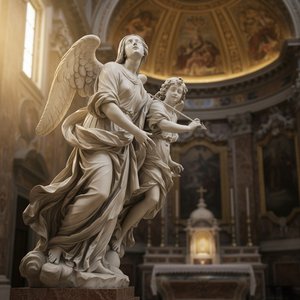
Gian Lorenzo Bernini: Sculpting Baroque Emotion & the Roman Imagination
Explore the life & revolutionary art of Gian Lorenzo Bernini, the master sculptor of the Baroque era. Discover his iconic works like David and Ecstasy of Saint Teresa – a journey into Roman artistic genius.

The Enduring Allure of Marble in Art History: From Classical Sculpture to Modern Abstraction
Explore the captivating history of marble sculpture from ancient Greece to modern art. Discover renowned artists like Canova & Michelangelo, carving techniques, and investment insights at OriginalUniqueArt.

The Enduring Form: Exploring Themes & Techniques in Sculpture Across Historical Periods
Explore the rich history of sculpture from ancient masterpieces to contemporary innovations. Discover key techniques, influential artists & investment potential for discerning art collectors.

The Enduring Form: Sculpture Across History, Technique & Emotional Resonance
Explore the rich history of sculpture with OriginalUniqueArt. Discover key techniques, influential artists & investment potential for discerning collectors. Expert insights into valuing and collecting timeless masterpieces.

Esculturas em Bronze Icônicas: 10 Obras que Revolucionaram a Arte | OriginalUniqueArt
Descubra as 10 esculturas em bronze mais icônicas da história! Explore a arte de Rodin, Michelangelo e outros mestres. Encontre reproduções de alta qualidade para sua casa em OriginalUniqueArt.com.
