Architectural Drafting
DEVELOPMENT SCHEMES. Existing buildings / development as currently intended / development as it should be intended (Franz Ehrlich)
Franz Ehrlich (1907–1984) criou DEVELOPMENT SCHEMES. Existing buildings / development as currently intended / development as it should be intended. Pertence ao movimento Architectural Drafting. É feito em Acrylic On Canvas. Está conservada no Fundação Bauhaus Dessau, em Dessau-Roßlau, Alemanha. Mede 47 × 36 cm.
- Acrylic On Canvas
- 47 × 36 cm
- Fundação Bauhaus Dessau, Dessau-Roßlau

 Visualizar na parede

 Pintura a Óleo Feita à Mão
 Compartilhar
 Compartilhar
 Ficha técnica


 Baixar imagem
 Semelhantes
 Raio X
 Ver diaporama
 Perguntas e Respostas

 Estatísticas
DEVELOPMENT SCHEMES. Existing buildings / development as currently intended / development as it should be intended, em resumo
- Título
- DEVELOPMENT SCHEMES. Existing buildings / development as currently intended / development as it should be intended
- Artista
- Franz Ehrlich (1907–1984)
- Artista nascido em
- Reuth, Alemanha
- Técnica
- Acrylic On Canvas
- Dimensões
- 47 × 36 cm
- Onde ver
- Fundação Bauhaus Dessau, Dessau-Roßlau, Alemanha
- Movimento
- Architectural Drafting
- Tema
- urban planning, blueprint, architecture, grid layout, technical illustration, geometric shapes
O que DEVELOPMENT SCHEMES. Existing buildings / development as currently intended / development as it should be intended retrata?
Franz Ehrlich’s Development Schemes: A Blueprint for Vision
This meticulously crafted architectural drawing by Franz Ehrlich, dated unknown but originating from the mid-20th century, transcends mere technical documentation; it embodies a profound reflection of modernist ideals and the ambition to reshape urban landscapes. Executed in black ink on paper—a testament to traditional drafting techniques—the artwork presents a striking visual narrative that speaks volumes about its creator’s artistic sensibilities and intellectual engagement with the burgeoning field of architectural planning.- Subject Matter: The drawing focuses squarely on urban development, depicting detailed plans for constructing new buildings alongside existing structures. It's not simply about construction; it’s about reimagining spaces and integrating them harmoniously into the broader cityscape.
- Style & Technique: Ehrlich adheres to a distinctly architectural drafting style—characterized by orthogonal projection and prioritizing dimensional accuracy over artistic embellishment. The use of hatching patterns subtly conveys depth and shading, lending an illusion of realism to the schematic representation. Precise lines delineate building outlines and structural elements, reflecting the meticulous attention to detail demanded by professional architects.
- Historical Context: Produced during a period marked by significant architectural experimentation—particularly influenced by the Bauhaus movement—the drawing embodies the modernist ethos of functionality, simplicity, and rational design. The Bauhaus’s emphasis on uniting art and craft aimed to liberate architecture from ornamentation and elevate it to a higher level of aesthetic expression.
- Composition & Visual Elements: The image is dominated by three horizontal rows of building designs arranged in a grid format—a deliberate choice that underscores the systematic planning inherent in urban development schemes. A rectangular border frames the artwork, reinforcing its formal character and conveying a sense of seriousness.
- Symbolism & Emotional Impact: Beyond its technical precision, the drawing evokes a powerful feeling of order, control, and optimism—reflecting the belief that architecture could contribute to creating more efficient and aesthetically pleasing environments. It’s a visual manifesto for shaping cities according to enlightened principles.
Detailed Examination of Drawing Techniques
Ehrlich's masterful use of hatching is particularly noteworthy. Rather than relying on shading gradients, he employs dense lines to simulate tonal variations within the building facades—a technique that maximizes clarity and minimizes visual distortion. The density of hatching corresponds directly to the perceived level of illumination, creating a convincing illusion of depth without resorting to perspective conventions. This deliberate stylistic choice underscores Ehrlich’s commitment to conveying spatial information accurately while maintaining an understated aesthetic sensibility.Exploring Connections to Bauhaus Ideals
The drawing's stylistic lineage can be traced directly back to the Bauhaus school in Dessau, where Ehrlich honed his artistic skills during a formative period of experimentation and innovation. Like other Bauhaus architects, Ehrlich championed the concept of “Gesamtkunstwerk”—a holistic approach to design that integrates various art forms into a unified aesthetic experience—rejecting the decorative excesses of Victorian architecture. This commitment to functionality and simplicity aligns perfectly with the drawing’s core message: architecture should serve humanity's needs while elevating its visual beauty.A Legacy of Precision and Vision
Franz Ehrlich’s “Development Schemes” remains a compelling exemplar of modernist architectural drafting—a testament to his artistic talent and intellectual curiosity. Its enduring appeal lies not only in its technical accuracy but also in its ability to communicate a powerful vision for shaping urban spaces—a vision rooted in the belief that architecture could contribute meaningfully to improving human life and fostering a more harmonious relationship between art and society.Em qual museu se encontra DEVELOPMENT SCHEMES. Existing buildings / development as currently intended / development as it should be intended?
Fundação Bauhaus Dessau
Dessau-Roßlau, Alemanha
A Alma do Inovador: A Bauhaus Dessau Foundation No coração de Dessau-Roßlau, na Alemanha, ergue-se um edifício que transcende a mera arquitetura – o Bauhaus Dessau Building, lar da Bauhaus Dessau Foundation. Mais do que um museu, este é um portal para um universo de ideias revolucionárias, onde a funcionalidade se encontra com a beleza, e a experimentação molda o futuro do design. A Fundação, fundada em 1994 pelo governo alemão, não apenas preserva a memória da escola pioneira, mas também a reinterpreta para os desafios contemporâneos, tornando-se um farol de criatividade e inovação.


Imagens em alta resolução de DEVELOPMENT SCHEMES. Existing buildings / development as currently intended / development as it should be intended

Protected by copyright: these files are for personal reference, not a licence to republish.
Franz Ehrlich, DEVELOPMENT SCHEMES. Existing buildings / development as currently intended / development as it should be intended, Fundação Bauhaus Dessau.
Perguntas sobre DEVELOPMENT SCHEMES. Existing buildings / development as currently intended / development as it should be intended respondidas
Onde "DEVELOPMENT SCHEMES. Existing buildings / development as currently intended / development as it should be intended", de Franz Ehrlich está em exibição hoje?
"DEVELOPMENT SCHEMES. Existing buildings / development as currently intended / development as it should be intended", de Franz Ehrlich está em exibição no Fundação Bauhaus Dessau, Dessau-Roßlau, Alemanha. A referência ao museu diz respeito à obra original, não a reproduções.
De que técnica é feita a obra "DEVELOPMENT SCHEMES. Existing buildings / development as currently intended / development as it should be intended"?
A técnica de "DEVELOPMENT SCHEMES. Existing buildings / development as currently intended / development as it should be intended", de Franz Ehrlich é Acrylic On Canvas. As reproduções visam reproduzir a aparência desta técnica.
Quais são as dimensões da obra original "DEVELOPMENT SCHEMES. Existing buildings / development as currently intended / development as it should be intended", de Franz Ehrlich?
"DEVELOPMENT SCHEMES. Existing buildings / development as currently intended / development as it should be intended" mede 47 x 36 cm em sua forma original. As dimensões originais são uma referência útil ao escolher o tamanho de uma reprodução.
O que representa "DEVELOPMENT SCHEMES. Existing buildings / development as currently intended / development as it should be intended"?
"DEVELOPMENT SCHEMES. Existing buildings / development as currently intended / development as it should be intended", de Franz Ehrlich retrata: urban planning, blueprint, architecture, grid layout, technical illustration, geometric shapes, schematic design.
A imagem de "DEVELOPMENT SCHEMES. Existing buildings / development as currently intended / development as it should be intended", de Franz Ehrlich pode ser reproduzida livremente?
Informação de direitos autorais para "DEVELOPMENT SCHEMES. Existing buildings / development as currently intended / development as it should be intended", de Franz Ehrlich: a obra está em ainda protegido por direitos autorais. Isso determina se reproduções da imagem podem ser feitas livremente.
Quem criou "DEVELOPMENT SCHEMES. Existing buildings / development as currently intended / development as it should be intended"?
O artista por trás de "DEVELOPMENT SCHEMES. Existing buildings / development as currently intended / development as it should be intended" é Franz Ehrlich. A obra está catalogada sob o nome de Franz Ehrlich.
A qual movimento artístico pertence "DEVELOPMENT SCHEMES. Existing buildings / development as currently intended / development as it should be intended", de Franz Ehrlich?
"DEVELOPMENT SCHEMES. Existing buildings / development as currently intended / development as it should be intended" é uma obra do Architectural Drafting. O movimento indica a tradição artística da qual a obra faz parte.
A que fase da trajetória de Franz Ehrlich "DEVELOPMENT SCHEMES. Existing buildings / development as currently intended / development as it should be intended" pertence?
Dentro da trajetória de Franz Ehrlich, "DEVELOPMENT SCHEMES. Existing buildings / development as currently intended / development as it should be intended" pertence ao período Bauhaus Era. Esta fase permite compará-la com outras obras do artista.
Por que o status de direitos autorais de "DEVELOPMENT SCHEMES. Existing buildings / development as currently intended / development as it should be intended" é como é?
O status de direitos autorais de "DEVELOPMENT SCHEMES. Existing buildings / development as currently intended / development as it should be intended" - ainda protegido por direitos autorais - decorre do falecimento do artista em 1984.
Sobre o artista, Franz Ehrlich
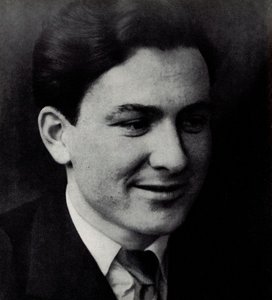
1907–1984, Alemanha
Franz Ehrlich
vida inicial e educação Franz Ehrlich, um renomado arquiteto alemão, calígrafo e designer gráfico, nasceu em 1907. Seus anos formativos foram marcados por uma inclinação inata pelas artes, o que o levou a se matricular na Bauhaus em Dessau de 1927 a 1930. Esta prestigiada instituição desempenhou um papel fundamental na moldagem da perspectiva artística de Ehrlich, apresentando-lhe aos movimentos de vanguarda da época. carreira artística e filiação comunista A filiação de Ehrlich ao Partido Comunista teve um impacto profundo em sua vida e carreira.
Também de Franz Ehrlich
 3º ANDAR
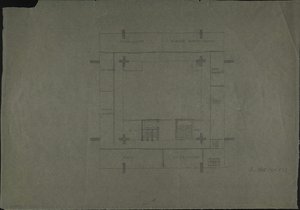
 LBH BUILDING MACHINERY WOODWORKING MACHINERY HALL 5 (Leipzig Trade Fair, plan view exhibition stand)1949
 4 cadeiras. 1 banco.
 Livro Hauptstraße / Secção transversal (FDGB Livraria Gutenberg Dresden)1949
Ensaios sobre DEVELOPMENT SCHEMES. Existing buildings / development as currently intended / development as it should be intended
 The Silent Language of Line: Mastering Hatching and Cross-Hatching for Depth and TextureMaster the art of hatching and cross-hatching with our expert guide. Explore the historical evolution from Renaissance masters like Dürer t…
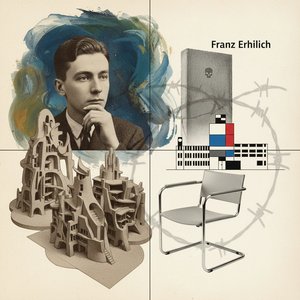 Franz Ehrlich: Bridging Expressionism, Bauhaus & the Shadows of HistoryExplore the life of Franz Ehrlich, a pivotal Bauhaus architect whose career spanned Expressionism, resistance during Nazi Germany, and GDR …
 De Stijl and Bauhaus: Distinguishing Two Pillars of Modern DesignMaster the distinctions between De Stijl and Bauhaus design. Explore the history of these modern pillars now.