
 Visualizar na parede
 Compartilhar
 Compartilhar
 Detalhes
 Guia
Guia

 Baixar imagem
 Semelhantes
 Raio X
 Ver diaporama
 Perguntas e Respostas
 Estatísticas
St Lucy


 Ler mais
Giclée / Impressão de Arte
Impressão giclée ou em tela de qualidade de museu, com produção rápida e opções flexíveis de acabamento. ( Comprar pintura feita à mão Alternar para Imagem Digital)




P118B €10

P118H €10

P118W €10

P438Z €10

P508JH €12

P508YH €12

P805H €10

P805Z €10

P919BZ €10

P919G €10

P919XJ €10

P959ZH €10

P968JZ €12

W106C €8

W218G €10

W218JH €8

W218Y €10

W307PJ €10

W316G €10

W316PJ €8

W316Y €10

W398PJ €8

W4111J €10

W500HY €15

W500JH €15

W692G €12

W849H €8

W940BG €15

W953PJ €8




Escolha entre os nossos tamanhos pré-definidos que respeitam as proporções originais da obra de arte.

Insira a largura e a altura desejadas para se ajustarem à sua moldura ou parede. Uma impressão pode ser apenas cortada, nunca ampliada além da imagem original; portanto, um tamanho com proporções diferentes resultará na perda de parte da imagem. Enviamos uma maquete digital para sua aprovação antes de realizarmos a impressão. A imagem exibida nesta página não mostra o corte real — apenas a maquete o faz.
Entrega mundial () em 2 semanas, em vez das 4/5 semanas padrão. (8 Novembro)

Envio expresso gratuito para todo o mundo

Tela de Linho de Alta Qualidade

Seguro de transporte completo

Garantia de Reembolso de Impostos Alfandegários

Garantia de Fidelidade Cromática

Política de Devolução em 100 Dias (Apenas para Defeitos)

Garantia de reembolso de 100%

Oferta de desconto por quantidade
 A opção de vidro está disponível apenas para tamanhos inferiores a 110 cm

St Lucy
Giclée / Impressão de Arte
Tamanho da Reprodução
-


Preço Total
€ 72
A Portrait of Mystery: Unveiling Domenico Beccafumi’s *St Lucy*
Domenico di Pace Beccafumi's 1521 painting, *St Lucy*, is not merely a portrait; it’s an enigmatic encounter. This captivating work, depicting a woman with flowing hair and a serene gaze, immediately draws the viewer into a world of quiet contemplation. The subject, identified as Saint Lucy – a figure renowned for her martyrdom and association with light and vision – presents a compelling study in restrained elegance and burgeoning Mannerist sensibilities. Beccafumi’s approach, rooted in the traditions of Siena yet infused with a distinctly personal vision, reveals a pivotal moment in the evolution of Renaissance art, bridging the stylistic shifts between High Renaissance idealism and the increasingly complex explorations of emotion and form that would characterize the later years of the 16th century.
Technical Mastery and Sienese Roots
- Oil on Panel: Executed in oil paint on a wooden panel, a technique common at the time, allows for rich color saturation and subtle gradations of tone – hallmarks of Beccafumi’s skill.
- Detailed Rendering: The artist demonstrates meticulous attention to detail, particularly evident in the rendering of the woman's hair, fabric folds, and the delicate plate she holds. This precision reflects his training with Mechero, a local Sienese artist who instilled in him a strong foundation in traditional portraiture.
- Compositional Balance: The composition is carefully balanced, utilizing the black frame as a dramatic device that not only defines the subject but also creates a sense of depth and spatial recession. This technique was influenced by developments in perspective during this period.
Symbolism and Religious Context
The identification of the sitter as Saint Lucy is crucial to understanding the painting’s deeper meaning. Lucy, a martyr who famously refused to marry and sacrificed her eyes for her faith, became associated with light, vision, and protection from evil. The plate she holds – a recurring motif in depictions of the saint – symbolizes her severed eyes, serving as a potent reminder of her unwavering devotion. The woman’s direct gaze invites the viewer into a spiritual dialogue, prompting reflection on themes of sacrifice, faith, and the pursuit of enlightenment. The overall effect is one of solemn beauty and profound religious significance.
A Bridge Between Styles
*St Lucy* exemplifies Beccafumi’s transitional style. While retaining elements of High Renaissance clarity and grace – particularly in his rendering of the figure's anatomy and drapery – he introduces a subtle distortion of form, a hallmark of Mannerism. The elongated proportions of the woman’s hands, for example, and the slightly unsettling gaze contribute to an atmosphere of psychological intensity that anticipates the stylistic innovations of artists like Pontormo and Bronzino. This blending of traditional techniques with emerging artistic trends makes *St Lucy* a significant work in its own right, offering a valuable glimpse into the evolving landscape of Italian Renaissance art.
Capturing the Essence: A Hand-Painted Reproduction
OriginalUniqueArt offers meticulously crafted hand-painted reproductions of Domenico Beccafumi’s *St Lucy*, ensuring that you possess an authentic representation of this remarkable artwork. Our skilled artisans employ traditional techniques and archival materials to faithfully recreate every detail, color nuance, and textural element of the original painting. Whether for your private collection or interior design project, a OriginalUniqueArt reproduction of *St Lucy* will bring a touch of Renaissance elegance and profound artistic contemplation to any space.
Perguntas e Respostas
Como é descrita a atmosfera de "St Lucy", de Domenico Di Pace Beccafumi?
"St Lucy" possui uma atmosfera Elegant.
Qual tamanho de reprodução é sugerido para "St Lucy", de Domenico Di Pace Beccafumi?
Recomenda-se o tamanho de impressão Large para "St Lucy". Outros tamanhos estão disponíveis com as mesmas proporções.
A imagem de "St Lucy", de Domenico Di Pace Beccafumi pode ser reproduzida livremente?
Informação de direitos autorais para "St Lucy", de Domenico Di Pace Beccafumi: a obra está em em domínio público — seus direitos autorais expiraram. Isso determina se reproduções da imagem podem ser feitas livremente.
Biografia do Artista
Domenico Beccafumi (1486 – 1551): A Sienese Visionary
Domenico di Pace Beccafumi, a name that resonates less immediately than those of his Florentine contemporaries, nonetheless occupies a pivotal position in the narrative of Italian Renaissance art. Born around 1486 in Montaperto, near Siena, Beccafumi’s artistic journey was one of remarkable development, culminating in a style that bridged the High Renaissance and the burgeoning complexities of Mannerism. His story isn't simply about technical skill; it is about a deeply individual vision—a sensibility steeped in the traditions of his Sienese heritage yet boldly reaching towards new expressive possibilities. His origins were humble: the son of Giacomo di Pace, a peasant who worked for Lorenzo Beccafumi, his talent was recognized by Lorenzo Beccafumi, who adopted him and provided for his initial artistic training with Mechero, a local Sienese artist. This early grounding in the Sienese school would prove foundational, even as he ventured beyond its established conventions. The Sienese tradition, already diverging from the classical ideals embraced elsewhere in Italy, fostered an environment where emotional intensity and decorative detail were valued, qualities that would become hallmarks of Beccafumi’s unique style.Early Influences and Artistic Training
Domenico's formative years instilled within him a profound appreciation for Sienese artistic sensibilities—a preference for expressive color palettes and intricate ornamentation that distinguished it from the more restrained aesthetic of Florence during this period. Recognizing his exceptional aptitude, Lorenzo Beccafumi took on Domenico as his protégé, securing him instruction with Mechero, a respected Sienese painter who honed his skills in mastering traditional techniques. This mentorship proved crucial in shaping Beccafumi’s artistic approach—one characterized by meticulous observation and an unwavering commitment to faithfully conveying the emotional essence of his subjects. The influence of Fra Bartolommeo and Pacchiarotto, prominent figures within Siena's artistic landscape, further enriched Domenico’s understanding of visual expression, encouraging him to explore innovative compositional strategies and stylistic nuances.Rome: Encountering Renaissance Giants
Around 1509, Domenico embarked on a transformative journey to Rome—a pivotal moment exposing him to the epicenter of artistic innovation during the High Renaissance. He encountered the monumental works of Raphael and Michelangelo firsthand, absorbing their groundbreaking advancements in anatomy, perspective, and dramatic staging. Unlike many artists of his generation who sought to emulate these masters with slavish imitation, Beccafumi skillfully synthesized Roman influences through his own distinctive lens—a process that resulted in a style markedly different from prevailing trends. He didn’t merely *copy* the grandeur of St. Peter's Basilica or the idealized beauty of Raphael’s Madonnas; he filtered these inspirations through the bedrock of Sienese tradition, resulting in an aesthetic that retained its provincial character while simultaneously embracing new expressive horizons. This careful balance—a fusion of classical ideals with medieval sensibilities—became a defining feature of Beccafumi's oeuvre.The Flourishing Style: Mannerism Takes Root
Beccafumi’s artistic style evolved rapidly during his Roman sojourn, transitioning from the harmonious elegance of High Renaissance painting to the unsettling dynamism and psychological complexity of Mannerism. This stylistic shift manifested in a deliberate rejection of classical balance—favoring distorted figures, exaggerated poses, and jarring color combinations that conveyed emotional turmoil rather than serene contemplation. Artists like Il Sodoma and Peruzzi had already begun experimenting with these techniques during Beccafumi’s time in Rome, but Domenico pushed Mannerist principles to their furthest limits—creating images that defied conventional expectations and challenged viewers' perceptions of reality. His paintings pulsated with an inner energy—a palpable sense of unease and psychological depth—reflecting a profound engagement with the anxieties of his era. This stylistic innovation cemented Beccafumi’s reputation as one of the most daring and influential artists of his time, securing his place among the vanguard of Mannerist aesthetics.Monumental Frescoes and Artistic Legacy
Domenico Beccafumi's artistic legacy rests primarily upon his monumental frescoes—particularly those adorning the Oratory of St. Benedict in Siena—which stand as enduring testaments to his mastery of technique and expressive vision. The Trinity Triptych, housed in the Pinacoteca Nazionale di Siena, exemplifies Beccafumi’s ability to convey religious devotion with both grandeur and intimacy—a feat achieved through masterful use of color and composition. Similarly, *The Annunciation*, also at the Pinacoteca Nazionale, showcases his distinctive stylistic approach—characterized by a subtle distortion of perspective and an evocative depiction of emotion. However, Domenico's most ambitious undertaking was undoubtedly his direction of the pavement for Siena Cathedral between 1517 and 1544—a project that spanned over half a century and involved intricate designs inlaid with marble and mosaics. He skillfully employed innovative techniques to depict biblical narratives—Ahab, Elijah, Melchisedec, Abraham, and Moses—creating images that captivated audiences and solidified Siena’s artistic prestige. Domenico Beccafumi died in Siena in 1551, marking a symbolic end to the city's illustrious tradition of painting. He remains a compelling figure—a testament to the enduring power of individual vision within the broader currents of art history, securing his place as one of the last undiluted representatives of the Sienese School and profoundly influencing subsequent generations of artists.
Domenico Di Pace Beccafumi
1486 - 1551 , Itália
Dados Rápidos
- Artistic Movement Or Style: Mannerismo
- Artists Who Influenced This Artist:
- Raphael
- Michelangelo
- Date Of Birth: c. 1486
- Date Of Death: May 18, 1551
- Full Name: Domenico di Pace Beccafumi
- Nationality: Italiano
- Notable Artworks:
- Trinity Triptych
- The Annunciation
- Place Of Birth: Montaperto, Itália
Artigos Relacionados

The Enduring Legacy of Fine Art Prints: Technique, History & Aesthetic Impact
Explore the rich history & techniques of fine art prints. Discover investment potential, assess authenticity, and learn how to preserve your collection with expert guidance. Trusted insights for discerning collectors.
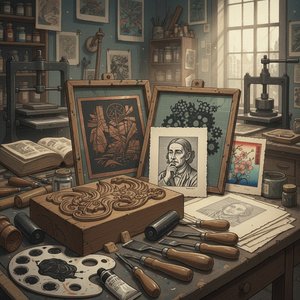
The Enduring Legacy of Printmaking: Techniques, Themes & Artistic Innovation Across Centuries
Explore the rich history of printmaking with OriginalUniqueArt. Discover techniques from intaglio to lithography, learn about collecting valuable prints & find museum-quality reproductions. Expert insights for art enthusiasts and collectors.

Golden Glow: How to Use Metallic Gold Artworks to Elevate Your Home Decor with Timeless Luxury
Discover how to elevate your home with the timeless elegance of metallic gold artworks. From sculptural metal pieces to gilded oil paintings, learn expert interior design tips for integrating luxurious gold accents into your space with sophistication and grace.

Giclée Prints: Archival Quality & Aesthetic Nuances for the Discerning Collector
Explore the world of giclée prints with OriginalUniqueArt. Learn about archival quality, aesthetic nuances & investment potential. Expert guidance for discerning art collectors seeking museum-quality reproductions and lasting value.

Echoes of Time: Exploring the Enduring Appeal & Historical Context of Vintage Art Prints
Explore the captivating world of vintage art prints! Discover their history, collecting tips & enduring appeal. Expert insights on chromolithography and building a legacy collection with OriginalUniqueArt.

