Menu

() ·

A painting made for you, by hand

Penélope

Reprodução em Óleo Feita à Mão

Óleo sobre tela pintado à mão no tamanho e moldura de sua escolha, feito sob encomenda pelos nossos artistas. ( Alternar para Impressão Alternar para Imagem Digital)

Descrição do Item

"{ \"meta_description\": \"Uma obra-prima de Domenico Beccafumi que retrata uma mulher vestida em roupas gregas antigas, simbolizando virtude e beleza clássica. Explore esta pintura fascinante na Galeria Virtual da Arte.\""

Biografia do Artista

Domenico Beccafumi (1486-1551) foi um pintor sienês inovador do Maneirismo, conhecido por suas pinturas dramáticas e detalhes ornamentados, especialmente em afrescos como "O Massacre dos Inocentes" e a decoração da Catedral de Siena.

from ·

Chapter 1

How large should it be?

Slide to change the size; the picture on the left shows the frame at its real width. The proportions of the original are kept.

Tamanho padrão
personalizado
CM
INCH

Escolha entre os nossos tamanhos pré-definidos que respeitam as proporções originais da obra de arte.

largura
altura

Insira a largura e a altura desejadas para se ajustarem à sua moldura ou parede. Como esta obra é pintada à mão, para um tamanho com proporções diferentes, o artista poderá pintar um pouco mais ao redor da imagem ou reduzir ligeiramente a composição — você escolhe. Enviamos uma maquete digital para sua aprovação antes de iniciar a pintura. A imagem exibida nesta página não representa o resultado real — apenas a maquete mostra o resultado final.

Chapter 2

How should it arrive?

Choose the edges of the stretched canvas

Choose your frame

Corner sample of the WhiteWrap canvas edge finish, stretched on madeira maciça bars
White €1
Corner sample of the BlurSideWrap canvas edge finish, stretched on madeira maciça bars
Blurside €1
Corner sample of the ExtendedWrap canvas edge finish, stretched on madeira maciça bars
Extended €1
Corner sample of the P118B picture frame: poliestireno moldado, 5 cm wide and 3 cm thick
P118B €10
Corner sample of the P118H picture frame: poliestireno moldado, 5 cm wide and 3 cm thick
P118H €10
Corner sample of the P118W picture frame: poliestireno moldado, 5 cm wide and 3 cm thick
P118W €10
Corner sample of the P438Z picture frame: poliestireno moldado, 5.5 cm wide and 3.5 cm thick
P438Z €10
Corner sample of the P508JH picture frame: poliestireno moldado, 7 cm wide and 3.5 cm thick
P508JH €12
Corner sample of the P508YH picture frame: poliestireno moldado, 7 cm wide and 3.5 cm thick
P508YH €12
Corner sample of the P805H picture frame: poliestireno moldado, 5 cm wide and 3.5 cm thick
P805H €10
Corner sample of the P805Z picture frame: poliestireno moldado, 5 cm wide and 3.5 cm thick
P805Z €10
Corner sample of the P919BZ picture frame: poliestireno moldado, 7 cm wide and 3.5 cm thick
P919BZ €10
Corner sample of the P919G picture frame: poliestireno moldado, 7 cm wide and 3.5 cm thick
P919G €10
Corner sample of the P919XJ picture frame: poliestireno moldado, 7 cm wide and 3.5 cm thick
P919XJ €10
Corner sample of the P959ZH picture frame: poliestireno moldado, 5 cm wide and 3 cm thick
P959ZH €10
Corner sample of the P968JZ picture frame: poliestireno moldado, 6 cm wide and 4 cm thick
P968JZ €12
Corner sample of the W106C picture frame: madeira maciça, 5 cm wide and 3 cm thick
W106C €8
Corner sample of the W218G picture frame: madeira maciça, 5 cm wide and 3 cm thick
W218G €10
Corner sample of the W218JH picture frame: madeira maciça, 5 cm wide and 3 cm thick
W218JH €8
Corner sample of the W218Y picture frame: madeira maciça, 5 cm wide and 3 cm thick
W218Y €10
Corner sample of the W307PJ picture frame: madeira maciça, 6 cm wide and 3 cm thick
W307PJ €10
Corner sample of the W316G picture frame: madeira maciça, 6 cm wide and 3 cm thick
W316G €10
Corner sample of the W316PJ picture frame: madeira maciça, 6 cm wide and 3 cm thick
W316PJ €8
Corner sample of the W316Y picture frame: madeira maciça, 6 cm wide and 3 cm thick
W316Y €10
Corner sample of the W398PJ picture frame: madeira maciça, 5 cm wide and 3 cm thick
W398PJ €8
Corner sample of the W4111J picture frame: madeira maciça, 6.5 cm wide and 3.5 cm thick
W4111J €10
Corner sample of the W500HY picture frame: madeira maciça, 7 cm wide and 5 cm thick
W500HY €15
Corner sample of the W500JH picture frame: madeira maciça, 7 cm wide and 5 cm thick
W500JH €15
Corner sample of the W692G picture frame: madeira maciça, 8 cm wide and 4 cm thick
W692G €12
Corner sample of the W849H picture frame: madeira maciça, 5 cm wide and 3 cm thick
W849H €8
Corner sample of the W940BG picture frame: madeira maciça, 7.5 cm wide and 4.5 cm thick
W940BG €15
Corner sample of the W953PJ picture frame: madeira maciça, 6 cm wide and 3.5 cm thick
W953PJ €8
Corner sample of the H24-GOLD picture frame: madeira entalhada com gesso, 10 cm wide and 6 cm thick
H24-GOLD €30
Corner sample of the H24-SILVER picture frame: madeira entalhada com gesso, 10 cm wide and 6 cm thick
H24-SILVER €30
Corner sample of the H36-GOLD picture frame: madeira entalhada com gesso, 15 cm wide and 6.5 cm thick
H36-GOLD €45
Corner sample of the H36-SILVER picture frame: madeira entalhada com gesso, 15 cm wide and 6.5 cm thick
H36-SILVER €45
Prévia da moldura
Com moldura

Moulding: . Overall size with the frame: .

Chapter 3

Who paints it, and should anything change?

Examples of what can be changed: Replace face with customer photo; Add pet (e.g., replace cat with dog); Include hidden message in background; Change background landscape or elements.
After order, OriginalUniqueArt.com team will email client for instructions and provide a mockup preview

Entrega mundial () em 3 a 4 semanas, em vez das 5 semanas padrão. (30 Outubro). Sem comprometer a qualidade.

Chapter 4

The finishing touches

A nameplate, as in a museum?

Detalhes da Placa de Bronze Gravada

This elegant plaque features the artist's name and the title of the artwork, finely engraved for a timeless presentation.

It is made from bronze with a refined, elegant finish. The text is precisely laser-engraved for a sharp and permanent result. Measuring 9x2 cm, the plaque is compact yet easy to read. It's built to be durable and scratch-resistant, offering a professional, museum-quality look. Mounting is simple thanks to the included adhesive backing.

Detalhes da Placa de Acrílico Transparente

The plaque includes essential engraved details such as the artist's name, the title of the artwork, the date it was created, the type of media used-like oil on canvas or watercolor-a brief description of the piece, and a QR code that links to the complete artwork information.

It is crafted from clear acrylic, offering a sleek, modern appearance. The text is UV-engraved in black to ensure strong visual contrast. With a size of 10x15 cm, it ensures optimal readability. It comes equipped with two metal hooks for secure wall mounting. The plaque is designed to be weather-resistant, making it suitable for various environments, and it includes interactive features that work seamlessly with smartphone scanning.

Detalhes da Placa de Acrílico Preto

This elegant plaque includes engraved information such as the artist's name, the title of the artwork, the date it was created, the type of media used (like oil on canvas or watercolor), a short description of the artwork, and a QR code for quick access to more information.

The plaque itself is made from refined black acrylic with a premium finish. The text is laser-engraved in white for high contrast and readability. Its size is 10x15 cm, designed to be easy to read. It comes with two metal hooks for professional mounting. The design is sleek and fits any interior style. It is also weather-resistant and durable, with built-in digital integration for mobile compatibility.

A protective varnish?

When do you need it?

Chapter 5

Your painting, as you ordered it

Penélope

Técnica de Reprodução

Tamanho da Reprodução

-

Artista Sênior de Elite

Mais detalhes, refinamento e tempo de produção adicional

-

Moldura para Reprodução

-

-

Para obras de arte ou reproduções com mais de 105 cm (aproximadamente 41 polegadas) em qualquer um dos lados, a moldura será enviada como um kit desmontado. Este método garante uma entrega segura e evita danos durante o transporte.

Montagem profissional necessária — este não é um produto DIY (faça você mesmo).
O kit deve ser montado e a tela esticada por um profissional de molduraria experiente, utilizando cola de madeira (não inclusa), um alicate de esticar tela e grampos para manter as travessas alinhadas enquanto a cola seca. A montagem incorreta ou a tensão desigual da tela podem danificar permanentemente a obra de arte e não estão cobertas pela nossa garantia.

  • Todas as barras de madeira maciça estão incluídas, precisamente cortadas ao tamanho certo.

  • Montado com os parafusos fornecidos, além de cola para madeira para as junções dos cantos, que não está inclusa e deve ser providenciada pelo seu moldurista.

  • São necessárias ferramentas profissionais não incluídas: um alicate de estiramento de tela (esticador) e grampos para manter as ripas alinhadas enquanto a cola seca.

Importante:
As junções dos cantos requerem cola para madeira, as ripas devem ser mantidas com grampos até que a cola esteja completamente seca, e o estiramento da tela na moldura montada requer um alicate de esticar tela. Nenhum destes itens está incluído no kit. Por favor, certifique-se de contar com um profissional de molduraria experiente antes de encomendar este tamanho.

Etiqueta de identificação

-

-

Verniz de Proteção

Verniz brilhante (realça as cores e protege contra a luz e a umidade)

-

Personalizar minha obra

Exemplos de alterações possíveis: Substituir o rosto por uma foto do cliente; Adicionar um animal de estimação (ex.: substituir gato por cachorro); Incluir uma mensagem oculta no fundo; Alterar a paisagem ou os elementos do fundo.

-

Urgente

Entrega mundial () em 3 a 4 semanas, em vez das 5 semanas padrão. (30 Outubro). Sem comprometer a qualidade.

-

Envio Expresso

Entrega mundial para em 5 semanas. (6 Novembro).

Com envio incluído

Preço Total

€ 266

Preço Total € 266

A opção de vidro está disponível apenas para tamanhos inferiores a 110 cm

Included with every order

  • Envio expresso gratuito para todo o mundo
  • Tela de Linho de Alta Qualidade
  • Seguro de transporte completo
  • Garantia de Reembolso de Impostos Alfandegários
  • Garantia de Fidelidade Cromática
  • Política de Devolução em 100 Dias (Apenas para Defeitos)
  • Garantia de reembolso de 100%
  • Oferta de desconto por quantidade

Uma Voz Silenciada da Virtude Antiga: Domenico Beccafumi e Penelope

Domenico di Pace Beccafumi, um nome que talvez não ressoe tão imediatamente quanto os de seus contemporâneos florentinos, permanece uma figura essencial na história da arte renascentista italiana. Nascido por volta de 1486 na pequena cidade toscana de Montaperto, próximo à Siena, Beccafumi trilhou um caminho artístico marcado por desenvolvimento extraordinário, culminando em um estilo que conectava o Alto Renascimento ao crescente complexo da Manierismo. Sua trajetória não se limita à mera maestria técnica; ela é uma expressão profunda de visão individual – uma sensibilidade impregnada pelas tradições da escola sienesa, mas ousadamente aberta às novas possibilidades expressivas. Sua origem humilde: filho de um camponês, Giacomo di Pace, seu talento foi reconhecido por Lorenzo Beccafumi, que o adotou e garantiu sua formação inicial com Mechero, um artista local. Essa primeira ligação às raízes sienesas seria fundamental, mesmo enquanto ele explorava horizontes artísticos mais amplos.
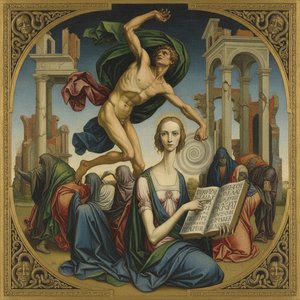
  • Sobre a Obra: Penelope é uma pintura que retrata uma mulher vestida em trajes antigos gregos, posicionada ao lado de um pilar com sua mão sobre ele. Seu olhar está direcionado para cima, possivelmente em direção ao céu ou a algum objeto acima dela. O vestido da figura apresenta detalhes dourados e ela usa uma coroa adornada na cabeça. Além do retrato principal, outros personagens compõem a cena, incluindo uma pessoa que se encontra atrás da mulher e duas outras figuras localizadas mais distante no fundo. Uma ave está visível no canto superior esquerdo da imagem, adicionando um elemento de beleza natural à composição geral.
  • Estilo e Técnica: Beccafumi empregou uma abordagem meticulosa na pintura, caracterizada por linhas suaves e cores vibrantes que evocam a atmosfera dos templos gregos antigos. Sua técnica demonstra domínio sobre o uso da perspectiva e do chiaroscuro, criando profundidade e drama na imagem.
  • Contexto Histórico: Pintada em 1514, Penelope reflete o espírito da época renascentista italiana, onde artistas buscavam inspiração nas obras clássicas gregas e romanas para transmitir valores morais elevados e celebrar a beleza idealizada. Esta obra faz parte de uma série de pinturas que celebram mulheres virtuosas da antiguidade, demonstrando o interesse pela cultura greco-romana na época.
  • Simbolismo: O uso do ouro no vestido da protagonista simboliza riqueza espiritual e virtude moral, elementos centrais na filosofia renascentista. A coroa representa poder divino e dignidade feminina, reforçando a mensagem de força interior e beleza transcendental.
  • Impacto Emocional: Penelope transmite uma sensação de serenidade e contemplação, convidando o espectador a refletir sobre temas como amor verdadeiro, fidelidade e busca pela perfeição estética. É uma obra que celebra a beleza feminina e a influência da mitologia grega na arte renascentista.

Uma Celebração da Beleza Idealizada

Beccafumi não apenas dominou as técnicas tradicionais da pintura, mas também conseguiu capturar um estado emocional profundo – uma expressão artística que busca transmitir valores humanos universais. Penelope é mais do que uma simples imagem; ela é um convite à contemplação e à apreciação da beleza como instrumento de elevação espiritual.

Detalhes Técnicos

A pintura apresenta uma composição equilibrada, onde a figura feminina ocupa o centro da atenção, enquanto os elementos arquitetônicos e naturais contribuem para criar uma atmosfera envolvente. O uso habilidoso do chiaroscuro permite que Beccafumi destaque os detalhes importantes da imagem e estabeleça uma relação entre luz e sombra que reforça o impacto emocional da obra.

Inspiração na Cultura Grega Antiga

Penelope é um testemunho da influência da mitologia grega na arte renascentista italiana, onde artistas como Beccafumi buscavam inspiração nas histórias épicas dos antigos para criar obras que celebrassem valores morais elevados e exaltassem a beleza idealizada. Esta pintura permanece relevante hoje como uma expressão artística poderosa e inspiradora.

Perguntas e Respostas

Em qual museu se encontra a obra original de "Penélope"?

A obra original "Penélope", de Domenico Di Pace Beccafumi encontra-se no Seminario Patriarcale, Venice, Italy. Uma reprodução permite que a obra seja exibida em sua casa.

Que humor e emoção se unem em "Penélope"?

A atmosfera de "Penélope", de Domenico Di Pace Beccafumi é Dramático, e seu tom emocional é Melancólico.

Quem é o artista por trás de "Penélope"?

"Penélope" é atribuída a Domenico Di Pace Beccafumi.

More about this painting

Visualizar na parede Visualizar em RA Alternar para Impressão Alternar para Imagem Digital Compartilhar
Detalhes Guia Adicionar aos favoritos Baixar imagem Semelhantes Raio X Ver diaporama Q&A Estatísticas

In numbers

  • 1514the year it was painted
  • 29frames to choose from
  • standard sizes, in its own proportions
  • 5weeks to paint and deliver it
Domenico Di Pace Beccafumi

Domenico Di Pace Beccafumi

1486 - 1551, Itália

Quick facts about Domenico Di Pace Beccafumi

  • Artistic Movement Or Style: Mannerismo
  • Artists Who Influenced This Artist:
    • Raphael
    • Michelangelo
  • Date Of Birth: c. 1486
  • Date Of Death: May 18, 1551
  • Full Name: Domenico di Pace Beccafumi
  • Nationality: Italiano
  • Notable Artworks:
    • Trinity Triptych
    • The Annunciation
  • Place Of Birth: Montaperto, Itália

Biografia do Artista

Domenico Beccafumi (1486 – 1551): A Sienese Visionary

Domenico di Pace Beccafumi, a name that resonates less immediately than those of his Florentine contemporaries, nonetheless occupies a pivotal position in the narrative of Italian Renaissance art. Born around 1486 in Montaperto, near Siena, Beccafumi’s artistic journey was one of remarkable development, culminating in a style that bridged the High Renaissance and the burgeoning complexities of Mannerism. His story isn't simply about technical skill; it is about a deeply individual vision—a sensibility steeped in the traditions of his Sienese heritage yet boldly reaching towards new expressive possibilities. His origins were humble: the son of Giacomo di Pace, a peasant who worked for Lorenzo Beccafumi, his talent was recognized by Lorenzo Beccafumi, who adopted him and provided for his initial artistic training with Mechero, a local Sienese artist. This early grounding in the Sienese school would prove foundational, even as he ventured beyond its established conventions. The Sienese tradition, already diverging from the classical ideals embraced elsewhere in Italy, fostered an environment where emotional intensity and decorative detail were valued, qualities that would become hallmarks of Beccafumi’s unique style.

Early Influences and Artistic Training

Domenico's formative years instilled within him a profound appreciation for Sienese artistic sensibilities—a preference for expressive color palettes and intricate ornamentation that distinguished it from the more restrained aesthetic of Florence during this period. Recognizing his exceptional aptitude, Lorenzo Beccafumi took on Domenico as his protégé, securing him instruction with Mechero, a respected Sienese painter who honed his skills in mastering traditional techniques. This mentorship proved crucial in shaping Beccafumi’s artistic approach—one characterized by meticulous observation and an unwavering commitment to faithfully conveying the emotional essence of his subjects. The influence of Fra Bartolommeo and Pacchiarotto, prominent figures within Siena's artistic landscape, further enriched Domenico’s understanding of visual expression, encouraging him to explore innovative compositional strategies and stylistic nuances.

Rome: Encountering Renaissance Giants

Around 1509, Domenico embarked on a transformative journey to Rome—a pivotal moment exposing him to the epicenter of artistic innovation during the High Renaissance. He encountered the monumental works of Raphael and Michelangelo firsthand, absorbing their groundbreaking advancements in anatomy, perspective, and dramatic staging. Unlike many artists of his generation who sought to emulate these masters with slavish imitation, Beccafumi skillfully synthesized Roman influences through his own distinctive lens—a process that resulted in a style markedly different from prevailing trends. He didn’t merely *copy* the grandeur of St. Peter's Basilica or the idealized beauty of Raphael’s Madonnas; he filtered these inspirations through the bedrock of Sienese tradition, resulting in an aesthetic that retained its provincial character while simultaneously embracing new expressive horizons. This careful balance—a fusion of classical ideals with medieval sensibilities—became a defining feature of Beccafumi's oeuvre.

The Flourishing Style: Mannerism Takes Root

Beccafumi’s artistic style evolved rapidly during his Roman sojourn, transitioning from the harmonious elegance of High Renaissance painting to the unsettling dynamism and psychological complexity of Mannerism. This stylistic shift manifested in a deliberate rejection of classical balance—favoring distorted figures, exaggerated poses, and jarring color combinations that conveyed emotional turmoil rather than serene contemplation. Artists like Il Sodoma and Peruzzi had already begun experimenting with these techniques during Beccafumi’s time in Rome, but Domenico pushed Mannerist principles to their furthest limits—creating images that defied conventional expectations and challenged viewers' perceptions of reality. His paintings pulsated with an inner energy—a palpable sense of unease and psychological depth—reflecting a profound engagement with the anxieties of his era. This stylistic innovation cemented Beccafumi’s reputation as one of the most daring and influential artists of his time, securing his place among the vanguard of Mannerist aesthetics.

Monumental Frescoes and Artistic Legacy

Domenico Beccafumi's artistic legacy rests primarily upon his monumental frescoes—particularly those adorning the Oratory of St. Benedict in Siena—which stand as enduring testaments to his mastery of technique and expressive vision. The Trinity Triptych, housed in the Pinacoteca Nazionale di Siena, exemplifies Beccafumi’s ability to convey religious devotion with both grandeur and intimacy—a feat achieved through masterful use of color and composition. Similarly, *The Annunciation*, also at the Pinacoteca Nazionale, showcases his distinctive stylistic approach—characterized by a subtle distortion of perspective and an evocative depiction of emotion. However, Domenico's most ambitious undertaking was undoubtedly his direction of the pavement for Siena Cathedral between 1517 and 1544—a project that spanned over half a century and involved intricate designs inlaid with marble and mosaics. He skillfully employed innovative techniques to depict biblical narratives—Ahab, Elijah, Melchisedec, Abraham, and Moses—creating images that captivated audiences and solidified Siena’s artistic prestige. Domenico Beccafumi died in Siena in 1551, marking a symbolic end to the city's illustrious tradition of painting. He remains a compelling figure—a testament to the enduring power of individual vision within the broader currents of art history, securing his place as one of the last undiluted representatives of the Sienese School and profoundly influencing subsequent generations of artists.

Informações Rápidas

  • Meio: Pintura
  • Tema: Mitologia Grega Antiga
  • Ano: 1514
  • Influências: Sienese
  • Estilo Artístico: Expressivo
  • Artista: Domenico di Pace Beccafumi

Quiz de Arte

Cada pergunta possui apenas uma resposta correta.

Pergunta 1:
¿Qual es o estilo artístico predominante na obra "Penelope"?
Pergunta 2:
¿Em qué ciudad nació Domenico Beccafumi?
Pergunta 3:
¿Qué elemento simbólico importante está presente en la composición de la pintura?
Pergunta 4:
¿Quién fue Lorenzo Beccafumi y qué papel desempeñó en la formación artística de Domenico?
Pergunta 5:
¿Qué tipo de vestido lleva la mujer representada en el cuadro?
Explore obras de arte organizadas por temas, estilos e características.