

 Visualizar na parede
 Compartilhar
 Compartilhar
 Detalhes

 Baixar imagem
 Semelhantes
 Raio X
 Slideshow
 Estatísticas
The twelfth

 Ler mais
Adquira uma imagem digital de alta resolução e aprimorada, muito superior à prévia online.
Cada arquivo é meticulosamente preparado por nossos especialistas internos, utilizando ferramentas avançadas e retoques manuais de alta precisão. Garantimos que cada imagem apresente clareza excepcional, fidelidade de cores e detalhes minuciosos.
O arquivo final é entregue por e-mail em até 72 horas, otimizado para uso imediato em ambientes profissionais, editoriais e de impressão. Esta é a mesma qualidade utilizada por estúdios de design de alto nível, editoras e galerias.
Imagem Digital
Baixe um arquivo de alta resolução para exibição pessoal, impressão e projetos criativos. ( Alternar para Impressão Comprar pintura feita à mão)
Incluído em cada compra de imagem digital
Entrega Digital Especializada e Garantida
Ao escolher o OriginalUniqueArt.com, você não está apenas adquirindo uma imagem — você está recebendo uma obra de arte digital profissionalmente aprimorada, elaborada com precisão e com garantia de satisfação. Aqui está tudo o que acompanha seu pedido, automaticamente:

Entrega rápida por e-mail
O seu arquivo de imagem digital em alta resolução será enviado por e-mail em até 72 horas após o pedido — pronto para uso imediato.

Arquivo Digital com IA Otimizado
Sua obra de arte é otimizada profissionalmente por meio de ferramentas avançadas de IA e edição manual, garantindo o máximo de detalhes, clareza e precisão de cores.

Reenvio gratuito vitalício
Apagou ou perdeu o seu ficheiro acidentalmente? Não se preocupe – nós reenviamos para si a qualquer momento, gratuitamente.

Sem Taxas de Importação - Sempre
Desfrute da sua obra de arte instantaneamente, sem taxas alfandegárias, impostos ou custos de entrega — downloads digitais são sempre isentos de taxas.

Garantia de Fidelidade de Cores
Garantimos que sua imagem digital reflita as cores originais com a maior fidelidade possível, utilizando ferramentas profissionais e gerenciamento de cores.

Garantia de Satisfação de 100 Dias
Se não estiver satisfeito com a sua imagem digital, nós a revisaremos ou reembolsaremos 100% dentro de 100 dias — sem perguntas.

Garantia de Reembolso 100%
Não está satisfeito? Receba o reembolso total em até 100 dias após o recebimento do seu arquivo digital — sem perguntas.

Descontos para pedidos em lote
Compre 3 imagens, economize 10% - Compre 5, economize 15% - Compre 10+, economize 20%. Ideal para projetos criativos, galerias e agências.
A Celebration of Color and Observation: Exploring David Hockney's "The Twelfth"
David Hockney’s “The Twelfth,” painted in 1973, stands as a testament to his unwavering commitment to capturing the essence of place and experience through vibrant color palettes and simplified forms. More than just an aesthetically pleasing composition, it embodies a profound philosophical stance—a belief that art should strive for directness and immediacy, mirroring the way we perceive the world around us. This painting exemplifies Hockney’s signature style, which emerged from his formative years at Royal College of Art and solidified his position as one of Britain's most influential artists.The Style and Technique: Hockney's Approach to Abstraction
Hockney’s technique is characterized by a deliberate reduction of detail—a process he termed “joinery.” He meticulously observes the environment, often capturing scenes from Yorkshire landscapes or interiors bathed in sunlight. Rather than attempting to reproduce every nuance of reality, he isolates key elements and renders them with bold strokes of color and simplified geometric shapes. The resulting images possess an uncanny sense of presence, conveying not just what is seen but also how it feels—the warmth of the sun, the stillness of a garden vista. This approach contrasts sharply with academic painting traditions that prioritized meticulous realism, reflecting Hockney’s desire to liberate art from constraints imposed by illusionism.Historical Context: The Rise of British Pop Art
“The Twelfth” emerged during the burgeoning British Pop Art movement of the early 1970s—a reaction against the perceived elitism and intellectual seriousness of Abstract Expressionism. Artists like Hockney, Peter Blake, and Eduardo Paolozzi drew inspiration from popular culture—advertising billboards, comic books, and television—incorporating these visual languages into their artworks. This stylistic shift signaled a democratization of artistic expression, prioritizing accessibility and engaging with contemporary concerns. The painting’s celebration of color and its rejection of traditional representational conventions aligned perfectly with the movement's ethos, establishing Hockney as a pivotal figure in redefining British art for a new generation.Symbolism Within Simplicity: Circles and Light
Despite its apparent simplicity, “The Twelfth” is laden with symbolic significance. The prominent circles—one dominating the left side of the canvas and another positioned near the center—represent wholeness and unity—a visual metaphor for Hockney’s belief in capturing the totality of experience. They also evoke references to celestial bodies—the sun and moon—underscoring the painting's preoccupation with light and its transformative power. Light, as depicted in “The Twelfth,” isn’t merely illumination; it’s an active force that shapes perception and imbues objects with vibrancy. Hockney skillfully utilizes color gradients to convey this sense of luminosity, creating a captivating interplay between hues and textures.Emotional Impact: A Moment Frozen in Time
Ultimately, “The Twelfth” succeeds in conveying a profound emotional resonance—a feeling of serene contemplation and joyful appreciation for beauty. The painting captures a fleeting moment—perhaps the dappled sunlight filtering through leaves—transforming it into an enduring image of tranquility. Hockney’s masterful handling of color and form invites viewers to immerse themselves in the scene, fostering a connection with both the visual realm and the inner landscape. It serves as a reminder that art can transcend mere decoration, offering solace and inspiration—a testament to Hockney's enduring legacy as an artist who dared to embrace spontaneity and celebrate the transformative power of observation.Biografia do Artista
A Life Painted in Light: The World of David Hockney
David Hockney, born July 9, 1937, in Bradford, England, is more than simply a painter; he’s a visual polymath whose career has spanned painting, drawing, printmaking, stage design, and photography. His story begins amidst the grit and determination of Bradford, a landscape that instilled within him a keen observational eye, even as his father, Kenneth Hockney, fostered a spirit of independent thought through conscientious objection during World War II. This early environment shaped a young artist who would consistently challenge conventions and forge his own path. Formal education at Wellington Primary School and Bradford Grammar School laid the foundation for a career that would redefine British art in the 20th and 21st centuries, culminating in studies at Bradford College of Art and later, the prestigious Royal College of Art in London. It was during these formative years that Hockney began to articulate a unique artistic voice, one that blended Pop sensibilities with a distinctly British perspective.The Rise of a Pop Icon and Beyond
The 1960s witnessed Hockney’s ascent as a pivotal figure within the burgeoning Pop Art movement. However, unlike some contemporaries who wholeheartedly embraced American commercial culture, Hockney brought a uniquely British sensibility to the genre. His work exploded with vibrant color and bold lines, depicting scenes that were both familiar and subtly subversive. A Bigger Splash (1966), perhaps his most iconic early piece, encapsulates this perfectly – a seemingly simple depiction of a swimming pool becomes a meditation on Californian leisure, artifice, and the very act of seeing. This wasn’t merely representation; it was an exploration of how we perceive reality. Critics noted Hockney's masterful use of color theory, mirroring the influence of Bauhaus principles. His double portraits, like American Collectors (Fred and Marcia Weisman), demonstrate his remarkable ability to capture not just likeness but also the essence of personality and relationship—a technique that foreshadowed later explorations into psychological portraiture. Hockney’s artistic vision was profoundly shaped by artists such as Francis Bacon and Lucian Freud, whose unflinching depictions of human emotion served as inspiration for his own work.Experimentation, Innovation, and The Rescue Of Painting
Hockney's artistic curiosity has never been confined to a single medium. Throughout his career, he relentlessly experimented with new technologies and approaches. From his early embrace of lithography and etching to his later explorations of photography – particularly his use of Polaroid composites in the 1980s – Hockney consistently pushed the boundaries of what art could be. He famously declared painting wasn’t dead but needed “rescuing” from its own conventions, leading him to develop innovative techniques like perspective distortions and fragmented viewpoints. This desire to revitalize painting led to ambitious projects such as Pearblossom Hwy., 11–18th April 1986, a complex photomontage that challenged traditional notions of space and representation—a bold statement against the prevailing artistic trends of the time. His stage designs for opera, including sets for Mozart's The Magic Flute and Stravinsky’s The Rake’s Progress, further demonstrate his versatility and ability to translate his visual language into a different artistic realm.Recognition, Legacy, And Enduring Influence
David Hockney’s contributions to the art world have been widely recognized throughout his illustrious career. He was appointed Order of the Companion of Honour (CH) in 2018, a testament to his profound impact on British culture—a prestigious honor bestowed upon him for his lifetime achievements. Prior to that, he was elected a Fellow of the Royal Society (FRS) in 2003 and received the Laureate of the Praemium Imperiale for Painting in 2000—acknowledging his exceptional artistic talent and intellectual curiosity. His works are held in major museum collections worldwide, ensuring his art continues to inspire new generations. Hockney’s influence extends beyond the visual arts; he has become a cultural icon, celebrated for his wit, intelligence, and unwavering commitment to artistic exploration. He remains an active force in the art world, continually challenging expectations and inspiring artists across disciplines—a figure who embodies the spirit of innovation and artistic freedom.- Notable Works: Including *A Bigger Splash*, *American Collectors (Fred and Marcia Weisman)*, *Pearblossom Hwy., 11–18th April 1986*
- Influences: Artists like Francis Bacon and Lucian Freud profoundly impacted Hockney’s artistic vision.
- Techniques: Hockney pioneered innovative techniques such as perspective distortions and fragmented viewpoints, redefining how artists approached representation.
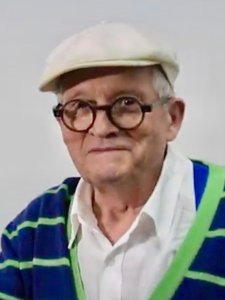
David Hockney
1937 - , Reino Unido
Breve Biografia
- Artistic Movement Or Style: Pop Art
- Artists Or Movements Influenced By This Artist: ['']
- Artists Who Influenced This Artist:
- Pauline Boty
- Francis Bacon
- Date Of Birth: 9 Jul 1937
- Full Name: David Hockney
- Nationality: British
- Notable Artworks:
- A Bigger Splash
- Portrait of an Artist
- We Two Boys Together
- Place Of Birth: Bradford, UK