Visualizar na parede
 Compartilhar
 Compartilhar
 Detalhes
 Guia
Guia

 Baixar imagem
 Semelhantes
 Raio X
 Ver diaporama
 Estatísticas
Self-Portrait
 Oil On Canvas
- WallArt
- Neoclassical Style
 1775
1775 102.0 x 77.0 cm
 Museu Hermitage
 Ler mais
Giclée / Impressão de Arte
Impressão giclée ou em tela de qualidade de museu, com produção rápida e opções flexíveis de acabamento. ( Comprar pintura feita à mão Alternar para Imagem Digital)




P118B €10

P118H €10

P118W €10

P438Z €10

P508JH €12

P508YH €12

P805H €10

P805Z €10

P919BZ €10

P919G €10

P919XJ €10

P959ZH €10

P968JZ €12

W106C €8

W218G €10

W218JH €8

W218Y €10

W307PJ €10

W316G €10

W316PJ €8

W316Y €10

W398PJ €8

W4111J €10

W500HY €15

W500JH €15

W692G €12

W849H €8

W940BG €15

W953PJ €8




Escolha entre os nossos tamanhos pré-definidos que respeitam as proporções originais da obra de arte.

Insira a largura e a altura desejadas para se ajustarem à sua moldura ou parede. Uma impressão pode ser apenas cortada, nunca ampliada além da imagem original; portanto, um tamanho com proporções diferentes resultará na perda de parte da imagem. Enviamos uma maquete digital para sua aprovação antes de realizarmos a impressão. A imagem exibida nesta página não mostra o corte real — apenas a maquete o faz.
Entrega mundial () em 2 semanas, em vez das 4/5 semanas padrão. (28 Outubro)

Envio expresso gratuito para todo o mundo

Tela de Linho de Alta Qualidade

Seguro de transporte completo

Garantia de Reembolso de Impostos Alfandegários

Garantia de Fidelidade Cromática

Política de Devolução em 100 Dias (Apenas para Defeitos)

Garantia de reembolso de 100%

Oferta de desconto por quantidade
 A opção de vidro está disponível apenas para tamanhos inferiores a 110 cm

Self-Portrait
Giclée / Impressão de Arte
Tamanho da Reprodução
-


Preço Total
€ 70
A Window into Baroque Reflection: Examining Mengs’ “Self Portrait”
Anton Raphael Mengs' "Self Portrait," completed in 1775, stands as a pivotal emblem of the burgeoning Neoclassical movement while simultaneously retaining the dramatic chiaroscuro characteristic of Baroque artistry. Executed during a period marked by intellectual ferment – the Enlightenment – this painting transcends mere likeness; it embodies a profound meditation on artistic identity and the pursuit of classical ideals amidst stylistic upheaval. The artwork resides within the esteemed Hermitage Museum in St. Petersburg, Russia, ensuring its preservation for generations to come.- Subject Matter: The portrait depicts Mengs himself seated three-quarters to right on a chair draped with opulent damask fabric—a deliberate choice reflecting the grandeur of aristocratic patronage prevalent at the time. His gaze is directed intently outwards, suggesting contemplation or perhaps focused engagement in scholarly pursuits.
- Style & Technique: Mengs skillfully employs Baroque techniques blended with Neoclassical principles. The dramatic lighting – a hallmark of chiaroscuro – sculpts the figure’s form and emphasizes his facial features, creating an atmosphere of solemn seriousness. Brushstrokes are visible, demonstrating meticulous attention to detail and conveying textural richness.
- Historical Context: Mengs' oeuvre emerged during a crucial juncture in European art history. The Baroque era was waning, superseded by the ascendance of Neoclassicism championed by figures like Jacques-Louis David. This painting represents a conscious effort to reconcile stylistic traditions—the expressive dynamism of Baroque with the rational clarity and idealized beauty associated with antiquity.
- Symbolism: Beyond its visual representation, “Self Portrait” carries symbolic weight. The chair symbolizes stability and authority, mirroring Mengs’ position as a respected artist within European intellectual circles. The portfolio held by Mengs signifies his dedication to artistic scholarship and the dissemination of classical knowledge—a core tenet of Enlightenment thought.
- Emotional Impact: The painting evokes a sense of introspection and quiet dignity. Mengs' gaze conveys both confidence and vulnerability, inviting viewers to contemplate themes of self-awareness and artistic ambition. Its subdued palette contributes to an overall feeling of contemplative solemnity.
Further Exploration & Artistic Inspiration
Mengs’ “Self Portrait” serves as a compelling reminder that artistic innovation often arises from honoring the legacies of past masters. Consider how artists today can draw inspiration from classical ideals—particularly the emphasis on proportion, balance, and harmonious composition—while simultaneously experimenting with contemporary techniques to achieve expressive depth. The Hermitage Museum's masterful reproduction offers an unparalleled opportunity to experience this iconic artwork firsthand.Resources for Collectors & Interior Designers
Interested in acquiring a high-quality replica of Mengs’ “Self Portrait”? Explore OriginalUniqueArt.com for exceptional prints and canvases crafted with archival pigments—guaranteeing enduring beauty and authenticity. Furthermore, consider incorporating elements reminiscent of the painting's palette and textural qualities into interior design schemes to create spaces imbued with serenity and intellectual curiosity.Perguntas e Respostas
As cores de "Self-Portrait" parecem intensas ou suaves?
A intensidade de cor de "Self-Portrait" é Balanced. A intensidade descreve o quão vibrantes as cores parecem ser.
Que sentimento transmite "Self-Portrait", de Anton Raphael Mengs?
A atmosfera de "Self-Portrait", de Anton Raphael Mengs é Classic, e seu tom emocional é Reflective.
Como posso visualizar "Self-Portrait", de Anton Raphael Mengs em formato de apresentação de slides?
O diaporama de "Self-Portrait" pode ser visualizado na página Apresentação de imagens da obra.
Biografia do Artista
Uma Ponte Entre Mundos: A Vida e a Arte de Anton Raphael Mengs
Anton Raphael Mengs emergiu durante um período fascinante da arte europeia, uma época em que os ornamentos rebuscados do Rococó começavam a ceder lugar a uma renovada apreciação pelos ideais clássicos. Nascido em 1728, em Ústí nad Labem, Boêmia – região que hoje integra a República Tcheca – sua jornada artística foi profundamente moldada tanto por sua linhagem quanto pelas correntes intelectuais do Iluminismo. Seu pai, Ismael Mengs, um pintor dinamarquês que encontrou patrocínio na corte de Dresden, reconheceu precocemente o talento excepcional do jovem Anton. Esse reconhecimento levou a uma mudança crucial em 1741: uma mudança para Roma, onde o artista iniciante mergulhou no estudo de obras-primas antigas e nos trabalhos de mestres do Renascimento, como Rafael. Foi essa exposição que marcaria indelévelmente sua sensibilidade estética, instilando nele uma profunda reverência pela forma clássica, clareza e composição – qualidades que se tornariam as marcas registradas de seu estilo maduro. Seus primeiros anos foram dedicados à cópia meticulosa, não apenas como um exercício de técnica, mas como um profundo ato de peregrinação artística, absorvendo a essência do gênio de Rafael.De Dresden a Madrid: Uma Carreira Entre Cortes
A carreira de Mengs desenrolou-se através de várias cortes europeias proeminentes, cada uma deixando sua marca única em seu desenvolvimento artístico. Em 1749, ele conquistou uma posição prestigiosa como pintor da corte de Frederico Augusto, Eleitor da Saxônia, um papel que lhe proporcionou tanto estabilidade financeira quanto a liberdade de manter uma base em Roma – o epicentro de sua inspiração artística. No entanto, foram seus afrescos que verdadeiramente estabeleceram sua reputação. O Parnasso na Villa Albani, em Roma, concluído por volta de 1761, tornou-se um sucesso instantâneo, louvado por sua composição harmoniosa, figuras elegantes e uma evocação sutil, porém poderosa, da mitologia clássica. Esta obra não era meramente um floreio decorativo; era uma declaração – uma tentativa deliberada de sintetizar a grandeza Barroca com os princípios emergentes do Neoclassicismo. Outros encargos seguiram-se, incluindo o deslumbrante afresco que adorna a cúpula da Igreja de Sant'Eusebio, em Roma, demonstrando seu domínio sobre a decoração monumental e a ilusão espacial. Talvez sua empreitada mais ambiciosa tenha surgido com um convite da corte espanhola em 1761. Ele viajou para Madrid, onde foi encarregado de decorar vários palácios reais, culminando no magnífico teto do Salão de Banquetes do Palácio Real – uma obra considerada um de seus maiores feitos, demonstrando uma habilidade notável de fundir a elegância italiana com a sensibilidade espanhola.A Conexão Winckelmann: Moldando o Pensamento Neoclássico
A evolução artística de Mengs não foi impulsionada apenas pelo estudo visual; ela estava profundamente entrelaçada com o discurso intelectual. Um ponto de viragem crucial ocorreu com sua estreita amizade e colaboração com Johann Joachim Winckelmann, o historiador da arte pioneiro cujos escritos se tornariam fundamentais para o movimento Neoclássico. Winckelmann defendia um retorno à pureza e simplicidade percebidas na arte grega antiga, advogando por uma estética baseada na razão, ordem e formas idealizadas. Mengs não estava apenas ilustrando as teorias de Winckelmann; ele estava ativamente engajado em moldá-las, traduzindo conceitos abstratos em expressões artísticas tangíveis. Juntos, eles acreditavam que a verdadeira beleza não residia na ornamentação superficial, mas nos princípios subjacentes de harmonia e proporção encontrados na antiguidade clássica. Essa parceria estendeu-se para além das discussões teóricas; manifestou-se nas próprias pinturas de Mengs, que refletiam cada vez mais a ênfase de Winckelmann na nobre simplicidade e na emoção contida. A influência era recíproca: os escritos de Winckelmann forneceram uma estrutura filosófica para os empreendimentos artísticos de Mengs, enquanto a arte de Mengs serviu como prova visual da viabilidade – e da beleza – dos ideais Neoclássicos.Legado e Influência: Um Pioneiro de Seu Tempo
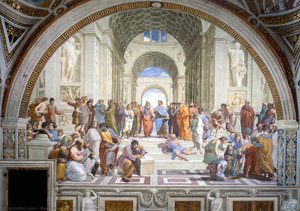
Anton Raphael Mengs faleceu em Roma, em 1779, deixando um legado que se estendeu muito além de seu impressionante corpo de obras. Ele foi mais do que apenas um pintor; foi uma figura central na transição de uma era artística para outra. Embora enraizado na tradição Barroca – evidente em seu uso dramático de luz e sombra e em seu domínio das técnicas ilusionistas – Mengs abraçou corajosamente os princípios emergentes do Neoclassicismo, abrindo caminho para artistas como Jacques-Louis David e Antonio Canova. Sua ênfase nos ideais clássicos, combinada com sua virtuosidade técnica, estabeleceu-o como uma força de liderança na formação da arte do século XVIII. A Escola de Atenas, pintada para o Duque de Northumberland, permanece como um testemunho de sua capacidade de sintetizar o precedente histórico com as sensibilidades artísticas contemporâneas. Além de suas pinturas e afrescos, a influência de Mengs estendeu-se à educação; ele serviu como diretor da Escola de Pintura do Vaticano, nutrindo uma nova geração de artistas imbuídos de princípios clássicos. Ele era uma figura complexa – um católico devoto que também dialogava com o pensamento iluminista, um artista que equilibrava tradição e inovação. Sua vida e obra representam uma intersecção fascinante de habilidade artística, curiosidade intelectual e circunstância histórica, consolidando seu lugar como um verdadeiro pioneiro da arte Neoclássica. Seu impacto ressoa ainda hoje, lembrando-nos do poder duradouro dos ideais clássicos para inspirar e transformar a expressão artística.
Anton Raphael Mengs
1728 - 1779 , República Checa
Dados Rápidos
- Artistic Movement Or Style: Neoclassicism
- Artists Or Movements Influenced By This Artist:
- David
- Canova
- Artists Who Influenced This Artist:
- Raphael
- Winckelmann
- Date Of Birth: 12 Mar. 1728
- Date Of Death: 29 Jun. 1779
- Full Name: Anton Raphael Mengs
- Nationality: German
- Notable Artworks:
- The School of Athens
- Parnassus
- Place Of Birth: Ústí nad Labem, Bohemia
Artigos Relacionados

The Enduring Legacy of Fine Art Prints: Technique, History & Aesthetic Impact
Explore the rich history & techniques of fine art prints. Discover investment potential, assess authenticity, and learn how to preserve your collection with expert guidance. Trusted insights for discerning collectors.

Giclée Prints: Archival Quality & Aesthetic Nuances for the Discerning Collector
Explore the world of giclée prints with OriginalUniqueArt. Learn about archival quality, aesthetic nuances & investment potential. Expert guidance for discerning art collectors seeking museum-quality reproductions and lasting value.

The Dramatic Flourish: Exploring the Baroque Movement's Enduring Legacy in Art History
Explore the dramatic world of Baroque art! Discover iconic artists like Caravaggio & Rubens, defining techniques, and its lasting impact on art history. Expert insights for collectors & enthusiasts at OriginalUniqueArt.

Os 10 Mestres do Barroco: Obras-Primas que Moldaram a Arte e Decoram o Lar
Descubra os 10 maiores ícones do Barroco! Explore a história, técnica e emoção por trás de Caravaggio, Rembrandt, Bernini e outros mestres. Encontre reproduções de arte barroca para decorar seu lar com luxo em OriginalUniqueArt.com.

The Visceral Stage: Exploring Dramatic Narratives & Emotional Intensity in Baroque Art
Explore the dramatic world of Baroque art! Discover iconic masters like Caravaggio & Rembrandt, their techniques, and the movement's lasting impact. Expert insights for collectors & enthusiasts at OriginalUniqueArt.