Portret Wilhelm Leibl

67 najsłynniejszych obrazów artysty Wilhelm Leibl – wybór z galerii

Aktualizacja: Listopad 2026 · ranking według naszego wskaźnika popularności (liczba wyszukiwań, wizyt i zamówień dla każdego dzieła) · 67 dzieł Wilhelm Leibl w naszym katalogu

W skrócie

Spośród wszystkich dzieł oryginalnych, które pozostawił Wilhelm Leibl, najsłynniejszym jest Trzy kobiety w kościele, znajdujący się w kolekcji Hamburger Kunsthalle w Hamburg. Tuż za nimi znajdują się Interior (1897) oraz Portrait of a boy with a large ruff (1869). Nasz katalog zawiera 67 dzieł autorstwa Wilhelm Leibl; galeria zachowała 67 najbardziej podziwianych na świecie prac, z których każda została przedstawiona wraz z datą powstania, informacją o muzeum oraz jej historią.

1844 – 1900, Kolonia Realism Najwięcej dzieł: Bawarskie Państwowe Zbiory Malarstwa

10 najlepszych obrazów artysty Wilhelm Leibl: wybór galerii

1
Trzy kobiety w kościele autorstwa Wilhelm Leibl

Trzy kobiety w kościele

Obraz olejny na płótnie · Hamburger Kunsthalle, Hamburg

To wyborne dzieło malarskie uchwyciło cichą, kontemplacyjną chwilę trzech kobiet oddanych lekturze w spokojnym, kościelnym otoczeniu. Scena ta emanuje poczuciem czci i introspekcji, zapraszając widzów do refleksji nad głęboką prostotą codziennego życia oraz duchowej pobożności. Artysta po mistrzowsku oddał wyraz twarzy i gesty kobiet, podkreślając ich wewnętrzne światy oraz wspólną chwilę cichej wspólnoty.

2
Interior (1897) autorstwa Wilhelm Leibl

Interior

1897 · Oil On Panel · Bawarskie Państwowe Zbiory Malarstwa, Monachium

A heavy, somber stillness settles over the room, where the air feels thick with the scent of old wood and damp earth. To the right, a woman stands partially swallowed by deep, velvety shadows, her presence felt more through the sudden brightness of her white apron than through any sharp detail of her features. She exists in a moment of profound solitude, a solitary figure caught in the dimness of…

3
Portrait of a boy with a large ruff (1869) autorstwa Wilhelm Leibl

Portrait of a boy with a large ruff

1869 · Oil On Canvas · Germanisches Nationalmuseum, Norymberga

In this oil on canvas, titled Portrait of a boy with a large ruff, the artist Wilhelm Leibl presents a quiet study of youth. Created about 1869, the work captures a specific moment of stillness through a careful application of paint. The scale of the piece, measuring 75.8 x 61.0cm, allows for an intimate encounter with the subject, inviting a close observation of the textures present on the surface.

5
The Painter Julius Bodenstein (1876) autorstwa Wilhelm Leibl

The Painter Julius Bodenstein

1876 · Oil On Canvas · Lenbachhaus, Monachium

A formal, realistic portrait of a man, rendered in a traditional academic style. The subject is positioned slightly off-center, facing towards the viewer's right while his gaze is directed forward. A dark, somber background and clothing provide a stark contrast to the warm, natural flesh tones of the face. The composition is a bust-length portrait, capturing the subject with a direct, eye-level perspective that establishes an immediate connection.

6
Portrait of Ernst Schoenlin (?) (1866) autorstwa Wilhelm Leibl

Portrait of Ernst Schoenlin (?)

1866 · Oil On Canvas · Staatliche Kunsthalle Karlsruhe, Karlsruhe

A somber, three-quarter view portrait emerges from a dark, indistinct background, focusing on the head and upper torso of a middle-aged man. The composition relies heavily on chiaroscuro, with light entering from the upper left to strike the subject's forehead and hands, leaving the remainder of the figure in deep shadow. This directional lighting creates a profound sense of three-dimensional volume, carving the man's features out of the gloom. He…

7
Dachau Woman and Child (1873) autorstwa Wilhelm Leibl

Dachau Woman and Child

1873 · Oil On Panel · Alte Nationalgalerie, Berlin

The painting titled Dachau Woman and Child is a significant work by the German realist Wilhelm Leibl. Created around 1873 or 1874, this oil on panel work captures a quiet, intimate moment from the Bavarian countryside. The subjects are not anonymous figures of a generic scene, but rather the miller’s wife of Plon, depicted with a directness that defines the artist's approach to his subjects.

8
Farmboy (1876) autorstwa Wilhelm Leibl

Farmboy

1876 · Oil On Canvas · Alte Nationalgalerie, Berlin

In this intimate portrait titled Farmboy, the artist Wilhelm Leibl presents a quiet, unadorned moment from the late 19th century. Created about 1876, the work captures a sense of stillness that feels both immediate and deeply personal. The subject is a shy boy, appearing somewhat awkward and vulnerable as he slouches in a chair that seems slightly too large for his frame. There is a certain heaviness to his posture,…

9
Man in a Top Hat (1870) autorstwa Wilhelm Leibl

Man in a Top Hat

1870 · Oil On Canvas · Ernest Zmeták Art Gallery, Nové Zámky

In "Man in a Top Hat" by Wilhelm Leibl, a middle-aged or elderly man meets the viewer's gaze from an eye-level perspective. The subject's head and shoulders fill most of the frame in a close-up bust portrait, creating an immediate sense of presence. He wears a top hat that casts a soft shadow over his features, while a full beard covers his weathered face. His expression remains somber and contemplative,…

Kontynuacja zestawienia Wilhelm Leibl, od 11 do 67

11The Critics (1868) autorstwa Wilhelm LeiblThe Critics1868 12Head Portrait of a Young Man (1866) autorstwa Wilhelm LeiblHead Portrait of a Young Man1866 13Portrait of a Lady in Black Dress with White Ruff (1870) autorstwa Wilhelm LeiblPortrait of a Lady in Black Dress with White Ruff1870 · Staatliche Kunsthalle Karlsruhe 14Portrait of Lina Kirchdorffer (1871) autorstwa Wilhelm LeiblPortrait of Lina Kirchdorffer1871 · Bawarskie Państwowe Zbiory Malarstwa 15The Painter Sattler with dogge (1870) autorstwa Wilhelm LeiblThe Painter Sattler with dogge1870 · Bawarskie Państwowe Zbiory Malarstwa 16Pastoral Scene (after Rubens) (1870) autorstwa Wilhelm LeiblPastoral Scene (after Rubens)1870 · Bawarskie Państwowe Zbiory Malarstwa 17Portrait of Mrs Gedon (1869) autorstwa Wilhelm LeiblPortrait of Mrs Gedon1869 · Bawarskie Państwowe Zbiory Malarstwa 18Portrait of Johann Heinrich Pallenberg (1871) autorstwa Wilhelm LeiblPortrait of Johann Heinrich Pallenberg1871 · Wallraf-Richartz-Museum 19The Painter Victor Müller (1870) autorstwa Wilhelm LeiblThe Painter Victor Müller1870 · Wallraf-Richartz-Museum 20Young Parisian woman (1869) autorstwa Wilhelm LeiblYoung Parisian woman1869 · Wallraf-Richartz-Museum 21Rosine Fischler, Countess Treuberg (1877) autorstwa Wilhelm LeiblRosine Fischler, Countess Treuberg1877 22The painter Johann Sperl (1872) autorstwa Wilhelm LeiblThe painter Johann Sperl1872 · Wallraf-Richartz-Museum 23Portrait of Freiherr Max von Perfall auf Greifenstein (1814-1877) (1877) autorstwa Wilhelm LeiblPortrait of Freiherr Max von Perfall auf Greifenstein (1814-1877)1877 · Bawarskie Państwowe Zbiory Malarstwa 24The painter Jean Paul Selinger (1880) autorstwa Wilhelm LeiblThe painter Jean Paul Selinger1880 · Bawarskie Państwowe Zbiory Malarstwa 25a Farmer couple (1879) autorstwa Wilhelm Leibla Farmer couple1879 26Head of a youth (1879) autorstwa Wilhelm LeiblHead of a youth1879 27Head of a Man (1879) autorstwa Wilhelm LeiblHead of a Man1879 · Harvard Art Museums 28The Newspaper Reader (1891) autorstwa Wilhelm LeiblThe Newspaper Reader1891 29Peasant Boy (1888) autorstwa Wilhelm LeiblPeasant Boy1888 30In a farmhouse interior (1890) autorstwa Wilhelm LeiblIn a farmhouse interior1890 · Bawarskie Państwowe Zbiory Malarstwa 31Julius Mayr (1890) autorstwa Wilhelm LeiblJulius Mayr1890 · Neue Pinakothek 32Boy's Head (1896) autorstwa Wilhelm LeiblBoy's Head1896 · Lenbachhaus 33Portrait of a Young Man with Hat on Green Background (1896) autorstwa Wilhelm LeiblPortrait of a Young Man with Hat on Green Background1896 34Head of peasant girl (1897) autorstwa Wilhelm LeiblHead of peasant girl1897 35Girl standing at a window (1899) autorstwa Wilhelm LeiblGirl standing at a window1899 · Wallraf-Richartz-Museum 36Portrait of the Artist's Sister, Katharina (later Frau Kirchdorffer) autorstwa Wilhelm LeiblPortrait of the Artist's Sister, Katharina (later Frau Kirchdorffer)Staatliche Kunsthalle Karlsruhe 37Left Hand (1867) autorstwa Wilhelm LeiblLeft Hand1867 · Staatliche Kunsthalle Karlsruhe 38Head of a Blind Man autorstwa Wilhelm LeiblHead of a Blind ManLenbachhaus 39The Chemist J Jais autorstwa Wilhelm LeiblThe Chemist J JaisNationalmuseum 40The Painter Fritz Paulsen (1870) autorstwa Wilhelm LeiblThe Painter Fritz Paulsen1870 · Alte Nationalgalerie 41Death's-head Hawkmoth with Mushroom on White Cloth (1868) autorstwa Wilhelm LeiblDeath's-head Hawkmoth with Mushroom on White Cloth1868 · Staatliche Kunsthalle Karlsruhe 42Skull with Shroud (1868) autorstwa Wilhelm LeiblSkull with Shroud1868 · Staatliche Kunsthalle Karlsruhe 43Portrait of the Painter Louis Eysen (1870) autorstwa Wilhelm LeiblPortrait of the Painter Louis Eysen1870 · Städel Museum 44Left Hand of the "Girl with the Carnation" (1880) autorstwa Wilhelm LeiblLeft Hand of the "Girl with the Carnation"1880 · Staatliche Kunsthalle Karlsruhe 45Right Hand of the "Girl with the Carnation" (1880) autorstwa Wilhelm LeiblRight Hand of the "Girl with the Carnation"1880 · Staatliche Kunsthalle Karlsruhe 46Peasant Girl with a White Headcloth (1885) autorstwa Wilhelm LeiblPeasant Girl with a White Headcloth1885 · Metropolitan Museum of Art 47Two Hands with Red Cloth on Blue Apron (1890) autorstwa Wilhelm LeiblTwo Hands with Red Cloth on Blue Apron1890 48Frauenportr. autorstwa Wilhelm LeiblFrauenportr. 49Portrait of a boy autorstwa Wilhelm LeiblPortrait of a boy 50head of a girl autorstwa Wilhelm Leiblhead of a girl 51Friedrich rauert autorstwa Wilhelm LeiblFriedrich rauert 52early spring (study) autorstwa Wilhelm Leiblearly spring (study) 53Big Portrait Privy Councillor Seeger autorstwa Wilhelm LeiblBig Portrait Privy Councillor Seeger 54Savoyard boy sleeping autorstwa Wilhelm LeiblSavoyard boy sleepingErmitaż 55Portrait Of Mrs Helene Auspitz autorstwa Wilhelm LeiblPortrait Of Mrs Helene Auspitz 56Die Spinnerin autorstwa Wilhelm LeiblDie Spinnerin 57Countess Rosine Treuberg autorstwa Wilhelm LeiblCountess Rosine Treuberg 58Portrait of Carl Schuch autorstwa Wilhelm LeiblPortrait of Carl SchuchBawarskie Państwowe Zbiory Malarstwa 59The Old Farmer autorstwa Wilhelm LeiblThe Old Farmer 60Girl With A White Headscarf autorstwa Wilhelm LeiblGirl With A White HeadscarfBawarskie Państwowe Zbiory Malarstwa 61The Village Politicians autorstwa Wilhelm LeiblThe Village Politicians 62Kopf eines Bauernmaedchens autorstwa Wilhelm LeiblKopf eines BauernmaedchensStaatliche Kunstsammlungen Dresden 63The Dissimilar Couple autorstwa Wilhelm LeiblThe Dissimilar CoupleStädel Museum 64Portrait of Pal Szinyei Merse autorstwa Wilhelm LeiblPortrait of Pal Szinyei MerseSzépművészeti Múzeum 65The Veterinarian Dr. Reindl in an Arbor autorstwa Wilhelm LeiblThe Veterinarian Dr. Reindl in an ArborLenbachhaus 66Head of a Peasant Girl autorstwa Wilhelm LeiblHead of a Peasant Girl 67The spinner autorstwa Wilhelm LeiblThe spinner

Słynne obrazy Wilhelm Leibl epoka po epoce

Tematy, które przyciągnęły wzrok Wilhelm Leibl

Cztery motywy najczęściej powracające w tych oryginałach, z których każdy doczekał się swojego najdoskonalszego przykładu.

Muzea przechowujące oryginały Wilhelm Leibl

8 muzeów, w których znajduje się najwięcej obrazów z tej strony.

Muzea Miasto Dzieła artysty Wilhelm Leibl Obrazy z tej listy
Bawarskie Państwowe Zbiory Malarstwa, MonachiumBawarskie Państwowe Zbiory Malarstwa Monachium 11 Interior, Portrait Study of a Young Bearded Man, Portrait of Lina Kirchdorffer
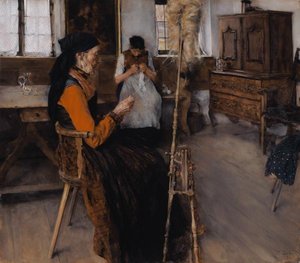
Staatliche Kunsthalle Karlsruhe, KarlsruheStaatliche Kunsthalle Karlsruhe Karlsruhe 8 Portrait of Ernst Schoenlin (?), Portrait of a Lady in Black Dress with White Ruff, Portrait of the Artist's Sister, Katharina (later Frau Kirchdorffer)
Wallraf-Richartz-Museum, KoloniaWallraf-Richartz-Museum Kolonia 5 Portrait of Johann Heinrich Pallenberg, The Painter Victor Müller, Young Parisian woman
Alte Nationalgalerie, BerlinAlte Nationalgalerie Berlin 4 Women from Dachau (Girl with a black headscarf), Dachau Woman and Child, Farmboy
Lenbachhaus, MonachiumLenbachhaus Monachium 4 The Painter Julius Bodenstein, Boy's Head, Head of a Blind Man
Städel Museum, Frankfurt nad MenemStädel Museum Frankfurt nad Menem 2 Portrait of the Painter Louis Eysen, The Dissimilar Couple
Hamburger Kunsthalle, HamburgHamburger Kunsthalle Hamburg 1 Trzy kobiety w kościele
Germanisches Nationalmuseum, NorymbergaGermanisches Nationalmuseum Norymberga 1 Portrait of a boy with a large ruff

Wilhelm Leibl dekada po dekadzie: oryginały definiujące każdy okres

Dzieła według dekad

Wybierz dekadę, aby zobaczyć dzieło, które ją definiuje.

Pytania kolekcjonerów o obrazy Wilhelm Leibl

Z jakiego dzieła najbardziej znany jest Wilhelm Leibl?Odkryj odpowiedź

Trzy kobiety w kościele, Hamburger Kunsthalle, Hamburg. Następne są Interior (1897) oraz Portrait of a boy with a large ruff (1869).

Jakie są dziesięć najsłynniejszych obrazów, których autorem jest Wilhelm Leibl?Odkryj odpowiedź

Trzy kobiety w kościele, Interior, Portrait of a boy with a large ruff, Women from Dachau (Girl with a black headscarf), The Painter Julius Bodenstein, Portrait of Ernst Schoenlin (?), Dachau Woman and Child, Farmboy, Man in a Top Hat i Portrait Study of a Young Bearded Man. Powyższy ranking zawiera rok powstania oraz muzeum dla każdego z nich.

Ile obrazów pozostawił po sobie Wilhelm Leibl?Odkryj odpowiedź

Nasz katalog zawiera 67 dzieł artysty Wilhelm Leibl, datowanych od 1866 do 1899.

W których muzeach znajdują się arcydzieła Wilhelm Leibl?Odkryj odpowiedź

W większości znajdują się w Bawarskie Państwowe Zbiory Malarstwa (Monachium), Staatliche Kunsthalle Karlsruhe (Karlsruhe) i Wallraf-Richartz-Museum (Kolonia). Powyższa tabela muzeów zawiera ich pełną listę.

W których latach Wilhelm Leibl namalował swoje najsłynniejsze dzieła?Odkryj odpowiedź

W 1870s: 20 z 67 dzieł na tej stronie powstało w tym czasie, w tym Women from Dachau (Girl with a black headscarf).

Jakie są pierwsze i ostatnie słynne oryginały Wilhelm Leibl?Odkryj odpowiedź

Na tej stronie najwcześniejszy to Portrait of Ernst Schoenlin (?) (1866), a najpóźniejszy Girl standing at a window (1899).

Jakie tematy Wilhelm Leibl wybierał najczęściej?Odkryj odpowiedź

Man (23), Portrait (20) i Woman (15), w ramach 67 dzieł na tej stronie.

Której techniki Wilhelm Leibl używał najczęściej?Odkryj odpowiedź

Oil On Canvas, dla 27 z 67 dzieł na tej stronie.

Do jakiego nurtu artystycznego należy Wilhelm Leibl?Odkryj odpowiedź

Realism, sądząc po oryginałach na tej stronie.

Które dzieła Wilhelm Leibl znajdują się w Bawarskie Państwowe Zbiory Malarstwa?Odkryj odpowiedź

Interior, Portrait Study of a Young Bearded Man i Portrait of Lina Kirchdorffer: Bawarskie Państwowe Zbiory Malarstwa, Monachium posiada 11 dzieł widocznych na tej stronie.

Wilhelm Leibl: życie i twórczość

Życie zakorzenione w realizmie: Wilhelm Leibl i obrazowanie bawarskiej egzystencji

Wilhelm Maria Hubertus Leibl, urodzony w Kolonii w 1844 roku, wyłonił się jako kluczowa postać niemieckiego malarstwa w czasach, gdy sztuka zmagała się z poszukiwaniem własnej tożsamości. Stanowisko jego ojca, dyrektora chóru katedry, zaszczepiło w nim wczesne poczucie dyscypliny i szacunek do formy, jednak ścieżka Leibla nie od razu prowadziła ku płótnu. Zanim podjął formalną edukację artystyczną u Hermanna Beckera w 1861 roku, odbył praktykę u ślusarza, co stanowiło pragmatyczny fundament przed oddaniem się pasjom twórczym. To wczesne doświadczenie mogło wpłynąć na solidność i bezpośredniość, które później stały się znakiem rozpoznawczym jego dzieł. W 1864 roku wszedł do Akademii Monachijskiej, zanurzając się w ugruntowanym świecie sztuki, lecz szybko zaczął szukać alternatyw dla dominujących wówczas wrażliwości romantycznych. Choć studia u artystów takich jak Carl Theodor von Piloty zapewniły mu solidne podstawy techniczne, to dopiero przybycie Gustave'a Courbeta do Monachium około 1869 roku okazało się dla niego prawdziwym przełomem.

Wpływ Courbeta i dążenie do techniki „alla prima”

Wystawa Courbeta oraz jego demonstracje malarstwa alla prima – polegające na pracy bezpośrednio z natury za pomocą odważnych, natychmiastowych pociągnięć pędzla – głęboko poruszyły Wilhelma Leibla oraz grupę młodych niemieckich artystów. To podejście wyzwoliło ich z okowów skrupulatnego, akademickiego stylu, który wówczas dominował w sztuce, zachęcając do nawiązania bardziej instynktownej, wręcz wizceralnej więzi z podejmowaną tematyką. Dotychczasowa fascynacja Leibla holenderskimi mistrzami dawnych lat, a w szczególności ich biegłością w operowaniu światłem i kreowaniu charakteru postaci, zyskała nowy wyraz pod wpływem twórczości Courbeta. Styl jego malarstwa zaczął nabierać swobody; artysta zaczął stosować grubsze warstwy farby na ciemniejszych tłach, chwytając ulotne chwile z niespotykaną dotąd bezpośredniością. Krótki pobyt w Paryżu w 1869 roku, za radą Courbeta, zapoznał Leibla z Édouardem Manetem, co jeszcze bardziej poszerzyło jego artystyczne horyzonty. Jednak wybuch wojny francusko-pruskiej zmusił go do przedwczesnego powrotu do Niemiec w 1870 roku, przerywając okres, który mógł stać się długotrwałą, twórczą immersją w paryskiej atmosferze.

Bawarskie krajobrazy i esencja chłopskiego życia

W 1873 roku Wilhelm Leibl świadomie wycofał się z artystycznego centrum Monachium, szukając samotności i autentyczności na odizolowanej bawarskiej prowincji. Moment ten stał się punktem zwrotnym w jego karierze. Poświęcił się przedstawianiu życia lokalnych chłopów, nie poprzez romantyczną idealizację, lecz z bezkompromisowym realizmem. Unikał sentymentalizmu i anegdotycznej narracji, skupiając się zamiast tego na uchwyceniu godności oraz trudów wpisanych w ich codzienną egzystencję. Szkicowa swoboda jego wcześniejszych dzieł ustąpiła miejsca większej precyzji i skrupulatnej dbałości o rysunek. Mieszkając w Berbling w latach 1878–1882, stworzył jedne ze swoich najsłynniejszych płócien, w tym Trzy kobiety w kościele, znajdujące się obecnie w Kunsthalle w Hamburgu. To arcydzieło stanowi kwintesencję jego intensywnie realistycznego stylu, przywołując na myśl klarowność i psychologiczną głębię charakterystyczną dla twórczości Hansa Holbeina.

Dziedzictwo realizmu: Krąg Leibla i trwałe dziedzictwo

Niezłomne oddanie Wilhelma Leibla w ukazywaniu rzeczywistości taką, jaką ją postrzegał – bez zbędnych upiększeń czy pozoru – przyniosło mu zasłużone uznanie jako jednej z czołowych postaci niemieckiej sztuki. Stał się on centralną inspiracją dla grupy znanej jako „Leibl-Kreis” (Krąg Leibla), w skład której wchodzili tacy artyści jak Carl Schuch, Wilhelm Trübner, Otto Scholderer oraz Hans Thoma. Twórcy ci dzielili z Leiblem pasję do realizmu oraz bezkompromisowe odrzucenie sztywnych, akademickich konwencji. Jego unikalna technika, polegająca na malowaniu bezpośrednio kolorem, z pominięciem wstępnych szkiców, wyprzedzała innowacje impresjonizmu, pozostając jednocześnie głęboko zakorzenioną w precyzji obserwacji. Późniejsze dzieła, powstałe podczas pobytu w Bad Aibling i Kutterling, ukazały wyrafinowaną równowagę między dyscypliną rysunku a nowo odkrytą świetlistością. Wilhelm Leibl zmarł w Würzburgu w 1900 roku, pozostawiając po sobie dorobek, który do dziś porusza swoją szczerością, mistrzostwem technicznym i głęboką empatią wobec życia zwykłych ludzi. Jego obrazy pozostają potężnym świadectwem piękna i godności, jakie odnaleźć można w codziennej rzeczywistości bawarskiego bytowania.