Portret Orazio Gentileschi

Obrazy: 86 najsłynniejszych dzieł artysty Orazio Gentileschi – spojrzenie galerii

Aktualizacja: Listopad 2026 · ranking według naszego wskaźnika popularności (liczba wyszukiwań, wizyt i zamówień dla każdego dzieła) · 101 dzieł Orazio Gentileschi w naszym katalogu

W skrócie

Według opinii kuratorów galerii, najsłynniejszym obrazem Orazio Gentileschi jest Joseph and Potiphar's Wife (detail) (1626), którego oryginał znajduje się w Royal Collection w Londyn. Finding of Moses (1633) i Carrying the Cross (1607) dopełniają trio, które zna każde oko. Z 101 dzieł Orazio Gentileschi w naszym katalogu, galeria prezentuje poniżej 86 najsłynniejszych prac – każda z nich jest oryginałem z podaniem roku powstania, muzeum oraz cech wyróżniających ją na tle innych.

1563 – 1639, Piza Baroque Najwięcej dzieł: Royal Collection

10 najlepszych obrazów artysty Orazio Gentileschi w galerii

1
Joseph and Potiphar's Wife (detail) (1626) autorstwa Orazio Gentileschi

Joseph and Potiphar's Wife (detail)

1626 · Oil On Canvas · Royal Collection, Londyn

To stand before this depiction of Joseph and Potiphar's Wife is to step directly into the charged atmosphere of seventeenth-century Italian drama. Orazio Gentileschi, master of the burgeoning Baroque style, captures a moment suspended between temptation and consequence. The scene pulses with an almost palpable tension; it is a narrative tableau where human desire clashes against moral fortitude. The central figure, draped in rich hues—though the description notes black over…

2
Finding of Moses (1633) autorstwa Orazio Gentileschi

Finding of Moses

1633 · Acrylic On Canvas · Museo del Prado, Madryt

Orazio Gentileschi's "Finding of Moses," painted in 1633, is more than just a biblical scene; it’s a masterful distillation of Baroque drama and emotional intensity. This monumental canvas, now housed at the National Gallery in London, transports the viewer directly into the heart of an ancient narrative – the miraculous rescue of Moses from the Nile River by Pharaoh's daughter. Gentileschi, deeply influenced by Caravaggio’s revolutionary approach to light and…

3
Carrying the Cross (1607) autorstwa Orazio Gentileschi

Carrying the Cross

1607 · Oil On Canvas · Kunsthistorisches Museum, Wiedeń

The oil on canvas depicts a crowded, dynamic scene centered on the physical weight of a wooden cross. A diagonal beam cuts across the frame, creating a sense of movement through the group of figures. The central figure, Jesus, is shown in the act of bearing the heavy timber, his pale skin tones contrasting against the darker, saturated colors of the surrounding crowd. Deep reds and earthy ochres dominate the…

4
Fall of the Rebel Angels (1602) autorstwa Orazio Gentileschi

Fall of the Rebel Angels

1602 · Oil On Panel

In "Fall of the Rebel Angels," Orazio Gentileschi captures a celestial upheaval. Created about 1602, the work presents the biblical narrative of the descent of the rebellious spirits. These figures tumble through a void, caught in a moment of cosmic transition. The scene is a collision of divine justice and celestial conflict, where the order of the heavens meets the chaos of the descent.

5
Baptism of Christ (1607) autorstwa Orazio Gentileschi

Baptism of Christ

1607 · Oil

In the quietude of Santa Maria della Pace, Rome, the Baptism of Christ by Orazio Gentileschi unfolds. Painted about 1607, the work captures a moment of profound spiritual transition. John the Baptist stands at the river's edge, his hands steady as he pours water from a small vessel onto the head of Jesus Christ. The figure of Christ kneels upon a cold, unyielding rock in the foreground, receiving the ritual.…

6
Madonna and Child (1607) autorstwa Orazio Gentileschi

Madonna and Child

1607 · Oil On Canvas

Orazio Gentileschi produced Madonna and Child around 1607. The work captures a tender and intimate moment between mother and son, rendered in a close, affectionate embrace. This composition focuses the viewer's attention entirely on the physical and emotional connection shared by the two figures.

7
Circumcision (1607) autorstwa Orazio Gentileschi

Circumcision

1607 · Oil · Museo Civico, Ancona

In Circumcision, Orazio Gentileschi presents a profound moment of religious significance. Created about 1607, this work focuses on the ritualistic act of circumcision, a ceremony central to the biblical narrative. The painting captures the solemnity of the event, grounding the viewer in a moment of profound spiritual weight. It is a quiet, heavy scene that demands attention through its subject matter rather than through artifice.

8
Madonna and Child (1607) autorstwa Orazio Gentileschi

Madonna and Child

1607 · Oil On Panel

The scene unfolds in a quiet, intimate moment within Madonna and Child. Here, Orazio Gentileschi captures a tender connection between a mother and her infant. The figures emerge from a dark, indistinct background, drawing the eye immediately to the soft skin of the subjects and the heavy folds of their garments. This oil on panel work presents a sense of profound closeness as the Madonna gazes down with a serene,…

9
Madonna and Child with Sts Sebastian and Francis (1600) autorstwa Orazio Gentileschi

Madonna and Child with Sts Sebastian and Francis

1600 · Oil On Canvas

In this devotional scene, Orazio Gentileschi presents Madonna and Child with Sts Sebastian and Francis, a work dating to about 1600. The painting centers on Mary as she cradles the infant Jesus, who gazes directly toward the viewer. To her right, Saint Francis stands holding a book, his expression serene as he gestures toward the child. On the opposite side, Saint Sebastian appears wounded yet composed, his eyes cast downward…

10
Stigmatization of St Francis (1601) autorstwa Orazio Gentileschi

Stigmatization of St Francis

1601 · Oil On Canvas · Museum of Fine Arts, Houston

In "Stigmatization of St Francis" by Orazio Gentileschi, a divine encounter breaks the silence of the earth. Created about 1601, this religious work captures a singular moment of hagiography. An angel descends to mark the saint, bringing the wounds of Christ into the physical realm. The scene is a collision of the celestial and the mortal.

Obrazy artysty Orazio Gentileschi, uszeregowane od 11 do 86 miejsca

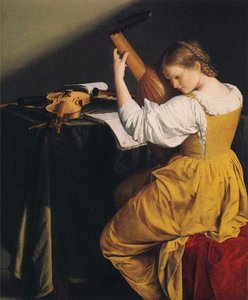
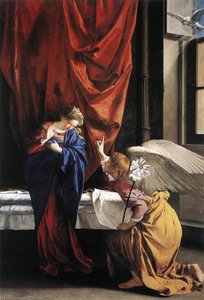
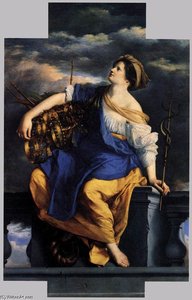
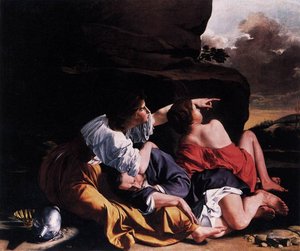
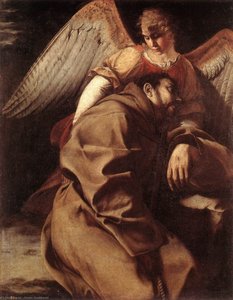
11St Francis supported by an Angel (1600) autorstwa Orazio GentileschiSt Francis supported by an Angel1600 · Museum of Fine Arts 12St. Michael and the Devil (1607) autorstwa Orazio GentileschiSt. Michael and the Devil1607 13St. Francis Receiving the Stigmata (1620) autorstwa Orazio GentileschiSt. Francis Receiving the Stigmata1620 14Crucifixion (1618) autorstwa Orazio GentileschiCrucifixion1618 15St. Jerome (1610) autorstwa Orazio GentileschiSt. Jerome1610 · Museo Civico d'Arte Antica 16The Virgin with the Sleeping Christ Child (1610) autorstwa Orazio GentileschiThe Virgin with the Sleeping Christ Child1610 · Fogg Museum 17Portrait of a Young Woman as a Sibyl (1620) autorstwa Orazio GentileschiPortrait of a Young Woman as a Sibyl1620 · Museum of Fine Arts 18David contemplating the Head of Goliath (1612) autorstwa Orazio GentileschiDavid contemplating the Head of Goliath1612 19Executioner with the Head of John the Baptist (1612) autorstwa Orazio GentileschiExecutioner with the Head of John the Baptist1612 · Museo del Prado 20St. Francis Receiving the Stigmata (1620) autorstwa Orazio GentileschiSt. Francis Receiving the Stigmata1620 21Lute Player (1626) autorstwa Orazio GentileschiLute Player1626 · National Gallery of Art 22A Sibyl (1630) autorstwa Orazio GentileschiA Sibyl1630 · Royal Collection 23Penitent Magdalen (1626) autorstwa Orazio GentileschiPenitent Magdalen1626 · Kunsthistorisches Museum 24Mocking of Christ (1635) autorstwa Orazio GentileschiMocking of Christ1635 25Two Muses (1636) autorstwa Orazio GentileschiTwo Muses1636 · Royal Collection 26Two Muses (1636) autorstwa Orazio GentileschiTwo Muses1636 · Royal Collection 27The Muses: Urania, Calliope and Melpomene (1636) autorstwa Orazio GentileschiThe Muses: Urania, Calliope and Melpomene1636 · Royal Collection 28Personification of Sculpture (1636) autorstwa Orazio GentileschiPersonification of Sculpture1636 · Royal Collection 29Personification of Architecture (1636) autorstwa Orazio GentileschiPersonification of Architecture1636 · Royal Collection 30Personification of Painting (1636) autorstwa Orazio GentileschiPersonification of Painting1636 · Royal Collection 31Personification of Music (1636) autorstwa Orazio GentileschiPersonification of Music1636 · Royal Collection 32An Allegory of Peace and the Arts (1639) autorstwa Orazio GentileschiAn Allegory of Peace and the Arts1639 · Royal Collection 33Head of a Woman (1636) autorstwa Orazio GentileschiHead of a Woman1636 34Lucretia (1650) autorstwa Orazio GentileschiLucretia1650 35Young Jesus sleeping on the Cross (1630) autorstwa Orazio GentileschiYoung Jesus sleeping on the Cross1630 · Museo del Prado 36Rest on the Flight into Egypt (1628) autorstwa Orazio GentileschiRest on the Flight into Egypt1628 · Luwr 37Sts Cecilia, Valerianus and Tiburtius (1620) autorstwa Orazio GentileschiSts Cecilia, Valerianus and Tiburtius1620 · Pinacoteca di Brera 38Cupid and Psyche (1628) autorstwa Orazio GentileschiCupid and Psyche1628 · Ermitaż 39The Lute Player (1615) autorstwa Orazio GentileschiThe Lute Player1615 · National Gallery of Art 40Young Woman Playing a Violin (1624) autorstwa Orazio GentileschiYoung Woman Playing a Violin1624 · Detroit Institute of Arts 41Danaë (1621) autorstwa Orazio GentileschiDanaë1621 · Cleveland Museum of Art 42St Francis and the Angel (1612) autorstwa Orazio GentileschiSt Francis and the Angel1612 · Galleria Nazionale d'Arte Antica 43Holy Family with the Infant Saint John the Baptist (1608) autorstwa Orazio GentileschiHoly Family with the Infant Saint John the Baptist1608 44Saint Cecilia Playing the Spinnet (1621) autorstwa Orazio GentileschiSaint Cecilia Playing the Spinnet1621 · Galleria Nazionale dell'Umbria 45Madonna and Child in a Landscape (1622) autorstwa Orazio GentileschiMadonna and Child in a Landscape1622 · Burghley House 46Saint Mary Magdalen in Penitence (1615) autorstwa Orazio GentileschiSaint Mary Magdalen in Penitence1615 47Madonna and Child (1609) autorstwa Orazio GentileschiMadonna and Child1609 · Narodowe Muzeum Sztuki w Rumunii 48David Contemplating the Head of Goliath (1610) autorstwa Orazio GentileschiDavid Contemplating the Head of Goliath1610 · Galleria Spada 49Judith and Her Maidservant with the Head of Holofernes (1624) autorstwa Orazio GentileschiJudith and Her Maidservant with the Head of Holofernes1624 · Wadsworth Atheneum 50Landscape with St Christopher (1605) autorstwa Orazio GentileschiLandscape with St Christopher1605 · Berlińskie Muzea Państwowe 51Wyobrażenie św. Franciszki Romanki (1615) autorstwa Orazio GentileschiWyobrażenie św. Franciszki Romanki1615 · Galleria Nazionale delle Marche 52Saint Cecilia with an Angel (1621) autorstwa Orazio GentileschiSaint Cecilia with an Angel1621 · National Gallery of Art 53Lot and his Daughters (1621) autorstwa Orazio GentileschiLot and his Daughters1621 · Thyssen-Bornemisza Museum 54The Muses: Euterpe and Calliope autorstwa Orazio GentileschiThe Muses: Euterpe and CalliopeRoyal Collection 55Untitled autorstwa Orazio GentileschiUntitled 56Untitled autorstwa Orazio GentileschiUntitled 57[Unkown] autorstwa Orazio Gentileschi[Unkown] 58St Cecilia autorstwa Orazio GentileschiSt Cecilia 59St. Jerome autorstwa Orazio GentileschiSt. Jerome 60Rest on the Flight to Egypt (1620) autorstwa Orazio GentileschiRest on the Flight to Egypt1620 · Luwr 61Danae (1621) autorstwa Orazio GentileschiDanae1621 · Muzeum J. Paula Getty'ego 62Gentileschi, Orazio (Orazio Lomi, Italian, approx. (1563-1639) ogentil) autorstwa Orazio GentileschiGentileschi, Orazio (Orazio Lomi, Italian, approx. (1563-1639) ogentil) 63Gentz KW The Snake Charmer autorstwa Orazio GentileschiGentz KW The Snake Charmer 64Finding Of Moses autorstwa Orazio GentileschiFinding Of Moses 65Public Felicity Surmounting Perils autorstwa Orazio GentileschiPublic Felicity Surmounting Perils 66Gentz karl wilhelm bedouincamp autorstwa Orazio GentileschiGentz karl wilhelm bedouincamp 67Madonna autorstwa Orazio GentileschiMadonnaGalleria Nazionale d'Arte Antica 68Two Women with a Mirror autorstwa Orazio GentileschiTwo Women with a MirrorAlte Pinakothek 69The Lute Player (1620) autorstwa Orazio GentileschiThe Lute Player1620 · National Gallery of Art 70Lot and His Daughters (1628) autorstwa Orazio GentileschiLot and His Daughters1628 · Muzeum Sztuk Pięknych w Bilbao 71Annuncjacja (1623) autorstwa Orazio GentileschiAnnuncjacja1623 · Galleria Sabauda 72Annunciation (1603) autorstwa Orazio GentileschiAnnunciation1603 73Diana the Huntress (1630) autorstwa Orazio GentileschiDiana the Huntress1630 · Musée d'Arts de Nantes 74Assumption of the Virgin (1605) autorstwa Orazio GentileschiAssumption of the Virgin1605 · Museo Civico d'Arte Antica 75Gentileschi orazio cleopatra (1610) autorstwa Orazio GentileschiGentileschi orazio cleopatra (1610) 76Finding of Moses (1630) autorstwa Orazio GentileschiFinding of Moses1630 · Museo del Prado 77Joseph and Potiphar's Wife (1626) autorstwa Orazio GentileschiJoseph and Potiphar's Wife1626 · Royal Collection 78Public Felicity Triumphant over Dangers (1624) autorstwa Orazio GentileschiPublic Felicity Triumphant over Dangers1624 · Luwr 79Lot and His Daughters (1622) autorstwa Orazio GentileschiLot and His Daughters1622 · Berlińskie Muzea Państwowe 80David and Goliath (1607) autorstwa Orazio GentileschiDavid and Goliath1607 · National Gallery of Ireland 81Christ crowned with Thorns (1615) autorstwa Orazio GentileschiChrist crowned with Thorns1615 · Herzog Anton Ulrich Museum 82Judith and her maidservant with the head of Holofernes (1608) autorstwa Orazio GentileschiJudith and her maidservant with the head of Holofernes1608 · National Museum of Art, Architecture and Design 83[Unkown] autorstwa Orazio Gentileschi[Unkown]Musei di Strada Nuova 84Rest on the Flight to Egypt (1626) autorstwa Orazio GentileschiRest on the Flight to Egypt1626 · Kunsthistorisches Museum 85David Contemplating the Head of Goliath (1610) autorstwa Orazio GentileschiDavid Contemplating the Head of Goliath1610 · Berlińskie Muzea Państwowe 86St Francis Supported by an Angel (1603) autorstwa Orazio GentileschiSt Francis Supported by an Angel1603 · Museo del Prado

Słynne obrazy Orazio Gentileschi epoka po epoce

Tematy, które przyciągnęły wzrok Orazio Gentileschi

Cztery motywy najczęściej powracające w tych oryginałach, z których każdy doczekał się swojego najdoskonalszego przykładu.

Muzea przechowujące oryginały Orazio Gentileschi

8 muzeów, w których znajduje się najwięcej obrazów z tej strony.

Muzea Miasto Dzieła artysty Orazio Gentileschi Obrazy z tej listy
Royal Collection, LondynRoyal Collection Londyn 12 Joseph and Potiphar's Wife (detail), A Sibyl, Two Muses
Museo del Prado, MadrytMuseo del Prado Madryt 5 Finding of Moses, Executioner with the Head of John the Baptist, Young Jesus sleeping on the Cross
National Gallery of Art, WaszyngtonNational Gallery of Art Waszyngton 4 Lute Player, The Lute Player, Saint Cecilia with an Angel
Kunsthistorisches Museum, WiedeńKunsthistorisches Museum Wiedeń 3 Carrying the Cross, Penitent Magdalen, Rest on the Flight to Egypt
Luwr, ParyżLuwr Paryż 3 Rest on the Flight into Egypt, Rest on the Flight to Egypt, Public Felicity Triumphant over Dangers
Berlińskie Muzea Państwowe, BerlinBerlińskie Muzea Państwowe Berlin 3 Landscape with St Christopher, Lot and His Daughters, David Contemplating the Head of Goliath
Museum of Fine Arts, HoustonMuseum of Fine Arts Houston 2 Stigmatization of St Francis, Portrait of a Young Woman as a Sibyl
Museo Civico d'Arte Antica, TurinMuseo Civico d'Arte Antica Turin 2 St. Jerome, Assumption of the Virgin

Orazio Gentileschi, jedno kultowe dzieło na dekadę

Dzieła według dekad

Wybierz dekadę, aby zobaczyć dzieło, które ją definiuje.

Obrazy artysty Orazio Gentileschi: odpowiedzi galerii

Który obraz Orazio Gentileschi jest najsłynniejszy ze wszystkich?Odkryj odpowiedź

Joseph and Potiphar's Wife (detail) (1626), Royal Collection, Londyn. Następne są Finding of Moses (1633) oraz Carrying the Cross (1607).

Ile lat miał Orazio Gentileschi, gdy ukończył Joseph and Potiphar's Wife (detail)?Odkryj odpowiedź

63 lat: Joseph and Potiphar's Wife (detail) pochodzi z 1626, a Orazio Gentileschi urodził(a) się w 1563.

Które to 10 najlepszych obrazów Orazio Gentileschi?Odkryj odpowiedź

Joseph and Potiphar's Wife (detail), Finding of Moses, Carrying the Cross, Fall of the Rebel Angels, Baptism of Christ, Madonna and Child, Circumcision, Madonna and Child, Madonna and Child with Sts Sebastian and Francis i Stigmatization of St Francis. Powyższy ranking zawiera rok powstania oraz muzeum dla każdego z nich.

Ile dzieł stworzył/a Orazio Gentileschi?Odkryj odpowiedź

Nasz katalog zawiera 101 dzieł artysty Orazio Gentileschi, datowanych od 1600 do 1639.

Gdzie można znaleźć najsłynniejsze oryginały autorstwa Orazio Gentileschi?Odkryj odpowiedź

W większości znajdują się w Royal Collection (Londyn), Museo del Prado (Madryt) i National Gallery of Art (Waszyngton). Powyższa tabela muzeów zawiera ich pełną listę.

Kiedy Orazio Gentileschi stworzył swoje najsłynniejsze obrazy?Odkryj odpowiedź

W 1620s: 25 z 86 dzieł na tej stronie powstało w tym czasie, w tym Joseph and Potiphar's Wife (detail).

Które z najsłynniejszych dzieł Orazio Gentileschi należą do jego najwcześniejszych i najpóźniejszych prac?Odkryj odpowiedź

Na tej stronie najwcześniejszy to Madonna and Child with Sts Sebastian and Francis (1600), a najpóźniejszy An Allegory of Peace and the Arts (1639).

Do jakich tematów Orazio Gentileschi powracał najczęściej?Odkryj odpowiedź

Woman (24), Man (14) i Clouds (13), w ramach 86 dzieł na tej stronie.

W jakiej technice najczęściej tworzył Orazio Gentileschi?Odkryj odpowiedź

Oil On Canvas, dla 39 z 86 dzieł na tej stronie.

Z jakim nurtem związany jest Orazio Gentileschi?Odkryj odpowiedź

Baroque, sądząc po oryginałach na tej stronie.

Które oryginały artysty Orazio Gentileschi znajdują się w zbiorach Royal Collection?Odkryj odpowiedź

Joseph and Potiphar's Wife (detail), A Sibyl i Two Muses: Royal Collection, Londyn posiada 12 dzieł widocznych na tej stronie.

Orazio Gentileschi: artysta

A Tuscan Dawn: The Life and Art of Orazio Gentileschi

Born in 1563 amidst the rolling hills of Tuscany, Orazio Gentileschi embarked on a journey that would see him become a pivotal figure in the transition from Mannerism to Baroque painting. Initially known as Orazio Lomi, he gravitated towards Rome, then the epicenter of artistic innovation, where he honed his skills within the workshops of Cola dell’Amata and absorbed the architectural sensibilities of Francesco da Sangallo. These early influences instilled in him a meticulous attention to form and composition, characteristics that would remain hallmarks of his style even as it dramatically evolved. Gentileschi’s initial work often involved contributing figures to larger decorative schemes conceived by other artists – a formative experience that taught him collaboration and adaptability, yet also hinted at a burgeoning ambition for independent expression. He began as a diligent assistant, meticulously rendering details within grander designs, learning the value of precision and the importance of understanding the overall vision of his patrons. This early apprenticeship provided a solid foundation in technique but also fueled a desire to develop his own unique voice.

Embracing the Shadow: Caravaggio's Influence and Artistic Development

The turn of the 17th century marked a turning point in Gentileschi’s artistic trajectory. The revolutionary naturalism of Caravaggio burst onto the Roman art scene, challenging established conventions with its dramatic use of light and shadow – *tenebrism* – and unflinching realism. Gentileschi was profoundly affected by this seismic shift, adopting elements of Caravaggio's style into his own work. However, he wasn’t merely an imitator; rather, he filtered Caravaggio’s innovations through his existing artistic sensibilities. While retaining the dramatic intensity, Gentileschi softened the harshness of Caravaggio’s *tenebrism*, introducing a lighter palette and a more refined approach to detail. This resulted in paintings that possessed both emotional power and elegant grace – a unique synthesis that distinguished him from his contemporaries. He didn't simply replicate Caravaggio’s techniques; he adapted them, imbuing them with his own sensibility and creating a style that was both powerfully emotive and exquisitely detailed. Biblical scenes and mythological narratives became frequent subjects, allowing Gentileschi to explore themes of faith, heroism, and human vulnerability with compelling visual storytelling. His compositions often featured dynamic diagonals and carefully arranged figures, drawing the viewer’s eye through the scene and emphasizing the drama unfolding before them.

A Courtly Wanderer: From Paris to London

Gentileschi’s artistic reputation extended beyond Italy’s borders. His talent attracted the patronage of powerful figures, leading him on a peripatetic journey through Europe. He spent time at the court of Marie de' Medici in Paris, where his refined style resonated with the Queen’s taste for elegance and sophistication. This period saw a further evolution in his work, characterized by increasingly elaborate compositions and a heightened sense of decorum. The Parisian court demanded works that were both visually stunning and subtly expressive, reflecting the sophisticated tastes of its patrons. He developed a particular skill in creating portraits that captured not only physical likeness but also the personality and social standing of their subjects. However, it was his invitation to England in 1626 that would define the final chapter of his career. Appointed court painter to Charles I, Gentileschi became one of the first major exponents of Caravaggism in Britain, significantly influencing the development of English Baroque painting. He undertook ambitious projects, including a series of ceiling paintings for Greenwich Palace (now Marlborough House), showcasing his mastery of large-scale decorative schemes and solidifying his position as a leading artist of his time.

Key Works and Artistic Characteristics

Gentileschi’s oeuvre is characterized by several distinctive features. His use of *tenebrism*, while influenced by Caravaggio, was always tempered with a sense of balance and harmony. He favored bright, vibrant colors – reds, blues, and golds – to create dramatic effects and draw attention to key elements within his compositions. His figures were rendered with remarkable anatomical accuracy and psychological depth, conveying a wide range of emotions through subtle gestures and expressions. Gentileschi was particularly adept at depicting women, imbuing them with strength, dignity, and vulnerability. His paintings often featured dynamic diagonals and carefully arranged figures, drawing the viewer’s eye through the scene and emphasizing the drama unfolding before them. Notable works include “Danae,” a powerful depiction of mythological excess; "The Annunciation," showcasing his mastery of light and shadow; and “The Virgin Mary,” radiating serenity and grace.

Legacy and Lasting Impact

Orazio Gentileschi’s contributions to the world of art are multifaceted. He bridged the gap between Mannerism and Baroque, absorbing the innovations of Caravaggio while forging his own distinctive style. His use of vibrant colors, dramatic compositions, and refined technique influenced a generation of artists across Europe. He was instrumental in introducing Caravaggism to England, leaving an indelible mark on the artistic landscape there. But perhaps his most enduring legacy lies in his daughter, Artemisia Gentileschi. Trained in her father’s studio, she emerged as one of the most celebrated female painters of the Baroque era, carrying forward the family's artistic tradition and achieving renown in her own right. Today, Gentileschi’s works are held in prestigious museums and galleries worldwide – from the Uffizi Gallery in Florence to the Accademia Gallery in Venice – testaments to his enduring brilliance and lasting impact on the history of art. His paintings continue to captivate viewers with their emotional depth, technical virtuosity, and timeless beauty.
  • Major Works: “Danae”, "The Annunciation", “The Virgin Mary”
  • Key Influences: Mannerism, Caravaggio
  • Artistic Style: Baroque, Dramatic compositions, Bright colors.