Portret Lorenzo Monaco

88 najsłynniejszych obrazów artysty Lorenzo Monaco – wybór z galerii

Aktualizacja: Listopad 2026 · ranking według naszego wskaźnika popularności (liczba wyszukiwań, wizyt i zamówień dla każdego dzieła) · 91 dzieł Lorenzo Monaco w naszym katalogu

W skrócie

Spośród wszystkich dzieł oryginalnych, które pozostawił Lorenzo Monaco, najsłynniejszym jest Antiphonary (Cod. Cor. 3, folio 59) (1410), znajdujący się w kolekcji Bernard H. Breslauer w New York City. Tuż za nimi znajdują się Nativity (1414) oraz Antiphonarz (Cod. Cor. 8, folio 134) (1395). Nasz katalog zawiera 91 dzieł autorstwa Lorenzo Monaco; galeria zachowała 88 najbardziej podziwianych na świecie prac, z których każda została przedstawiona wraz z datą powstania, informacją o muzeum oraz jej historią.

1370 – 1425, Siena Early renaissance Najwięcej dzieł: Metropolitan Museum of Art

10 najlepszych obrazów artysty Lorenzo Monaco: wybór galerii

1
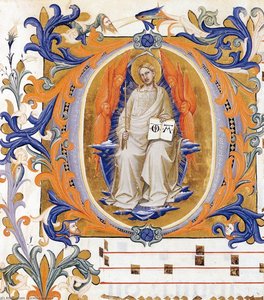
Antiphonary (Cod. Cor. 3, folio 59) (1410) autorstwa Lorenzo Monaco

Antiphonary (Cod. Cor. 3, folio 59)

1410 · Gold Leaf · Bernard H. Breslauer, New York City

Behold this breathtaking illumination, an Antiphonary page capturing the profound moment of the Ascension of Christ. It is not merely a depiction of a theological event; it is a vibrant portal into the spiritual fervor of the early Quattrocento. The composition immediately overwhelms the viewer with its sheer density of divine activity and meticulous artistry. Central to the narrative, Jesus ascends toward an ethereal heaven, bathed in a light that…

2
Nativity (1414) autorstwa Lorenzo Monaco

Nativity

1414 · Oil On Panel · Galleria degli Uffizi, Florencja

Lorenzo Monaco (c. 1370-1425), a Florentine monk whose artistic vision stands as a pivotal bridge between the solemn grandeur of the Trecento and the burgeoning optimism of the Quattrocento, remains an artist shrouded in intriguing biographical obscurity. Yet, his oeuvre speaks volumes about his profound engagement with faith and his masterful assimilation of stylistic influences—a testament to the dynamism of Renaissance art’s formative years.

3
Antiphonarz (Cod. Cor. 8, folio 134) (1395) autorstwa Lorenzo Monaco

Antiphonarz (Cod. Cor. 8, folio 134)

1395 · Farba olejna · National Gallery of Art, Waszyngton

W królestwie sztuki renesansowej rzadko spotyka się dzieło, które tak czule oddaje ducha pokory i piękna jak „Antyfony (Cod. Cor. 8, folio 134)” Lorenza Monaca. Ten imponujący obraz, stworzony w technice tempery na monumentalnej powierzchni 344 x 414 cm, jest świadectwem niezwykłego talentu artysty i religijnego zgiełku epoki. To nie tylko malowidło; to okno do duszy, przenoszące nas w świat wiary i duchowego oddania.

4
The Coronation of the Virgin (1414) autorstwa Lorenzo Monaco

The Coronation of the Virgin

1414 · Tempera On Panel · Galleria degli Uffizi, Florencja

In the quiet, contemplative atmosphere of the early fifteenth century, Lorenzo Monaco breathed life into a celestial vision that continues to captivate the modern soul. The Coronation of the Virgin is not merely a painting; it is a profound window into the transition between the graceful, rhythmic elegance of the Gothic era and the burgeoning humanism of the Italian Renaissance. Created in 1414, this monumental polyptych serves as a breathtaking…
5
The Last Supper (1394) autorstwa Lorenzo Monaco

The Last Supper

1394 · Acrylic On Canvas · Berlińskie Muzea Państwowe, Berlin

Leonardo da Vinci’s The Last Supper, housed within the refectory of Santa Maria delle Grazie in Milan, isn't merely a painting; it’s an immersive experience. Completed between 1495 and 1498, this monumental mural captures a pivotal moment from Christian scripture – the announcement by Jesus of his impending betrayal by one of his apostles. More than just a depiction of an event, it’s a profound exploration of human emotion, faith,…

6
Antiphonary (Cod. Cor. 7, folio 124v) (1406) autorstwa Lorenzo Monaco

Antiphonary (Cod. Cor. 7, folio 124v)

1406 · Painting · Metropolitan Museum of Art, Nowy Jork

To stand before Lorenzo Monaco's Antiphonary (Cod. Cor. 7, folio 124v) is to witness a moment suspended between worlds—a breathtaking confluence where the luminous spirituality of the Gothic tradition gracefully yields to the nascent intellectualism of the Renaissance. This magnificent illumination, dating from 1406, is far more than mere decoration; it is a profound theological narrative rendered in exquisite pigment and gold. The scene captures a gathering imbued with palpable…

8
Chrystus na krzyżu (1405) autorstwa Lorenzo Monaco

Chrystus na krzyżu

1405 · Obraz olejny na płycie · Lindenau-Museum, Altengau

Lorenzo Monaco (c.1370 – c.1425) stands as an enigmatic figure in the annals of Florentine art, representing a crucial bridge between the solemn traditions of Gothic painting and the burgeoning dynamism of the Quattrocento. Though biographical details remain elusive—scholars debate his birthplace and early life—his artistic output speaks volumes about his unwavering devotion to monastic contemplation and his profound understanding of humanist ideals.

9
Madonna and Child with Two Angels (1420) autorstwa Lorenzo Monaco

Madonna and Child with Two Angels

1420 · Oil On Panel · Liechtenstein Museum, Wiedeń

This exquisite gilded panel painting, measuring 68 x 36 cm and dating back to 1420, offers a captivating glimpse into the artistic world of Lorenzo Monaco – a pivotal figure bridging the Gothic sensibilities of the Trecento with the burgeoning innovations of the Quattrocento. Created by this Florentine monk, originally Piero di Giovanni born in Siena around 1370, the artwork embodies a profound spirituality and represents a masterful synthesis of…

10
The Visitation (1405) autorstwa Lorenzo Monaco

The Visitation

1405 · Oil On Canvas · Courtauld Gallery, Londyn

Lorenzo Monaco's "The Visitation," painted around 1405-1410, is more than just a religious depiction; it’s a poignant meditation on faith, family, and the profound mystery at the heart of Christian belief. Created during a pivotal transition in Florentine art – bridging the late Gothic with the nascent Renaissance – this tempera panel offers a glimpse into the deeply spiritual world of Lorenzo Monaco, a Camaldolese monk who profoundly shaped his…

Kontynuacja zestawienia Lorenzo Monaco, od 11 do 88

11Madonna (1403) autorstwa Lorenzo MonacoMadonna1403 · Rijksmuseum 12The Temptation of Christ (1410) autorstwa Lorenzo MonacoThe Temptation of Christ1410 · Luwr 13Antiphonary (Cod. Cor. 8, folio 102) (1395) autorstwa Lorenzo MonacoAntiphonary (Cod. Cor. 8, folio 102)1395 · Berlińskie Muzea Państwowe 14Processional Cross (1392) autorstwa Lorenzo MonacoProcessional Cross1392 · Art Institute of Chicago 15Nativity (1390) autorstwa Lorenzo MonacoNativity1390 · Berlińskie Muzea Państwowe 16Madonna and Child (1413) autorstwa Lorenzo MonacoMadonna and Child1413 · National Gallery of Art 17The Martyrdom of St. James the Greater (1387) autorstwa Lorenzo MonacoThe Martyrdom of St. James the Greater1387 18Crucifixion (1387) autorstwa Lorenzo MonacoCrucifixion1387 19The Banquet of Herod (1387) autorstwa Lorenzo MonacoThe Banquet of Herod1387 20The Beheading of St. Catherine of Alexandria (1389) autorstwa Lorenzo MonacoThe Beheading of St. Catherine of Alexandria1389 · Gemäldegalerie 21Virgin and Child enthroned (1400) autorstwa Lorenzo MonacoVirgin and Child enthroned1400 · Fitzwilliam Museum 22Lamentation of Christ (1408) autorstwa Lorenzo MonacoLamentation of Christ1408 · National Gallery Prague 23The Death of Saint Benedict: Predella Panel (1409) autorstwa Lorenzo MonacoThe Death of Saint Benedict: Predella Panel1409 · National Gallery 24Madonna of Humility (1415) autorstwa Lorenzo MonacoMadonna of Humility1415 25Saint John the Baptist Entering the Wilderness (1400) autorstwa Lorenzo MonacoSaint John the Baptist Entering the Wilderness1400 · New Walk Museum - Art Gallery 26Triptych of Saint Laurent (1407) autorstwa Lorenzo MonacoTriptych of Saint Laurent1407 · Musée du Petit Palais 27The Virgin and Child Enthroned (1418) autorstwa Lorenzo MonacoThe Virgin and Child Enthroned1418 · Scottish National Gallery 28Saint Francis Receiving the Stigmata (1420) autorstwa Lorenzo MonacoSaint Francis Receiving the Stigmata1420 · Rijksmuseum 29Antiphonary (Cod. Cor. 1, folio 63) (1396) autorstwa Lorenzo MonacoAntiphonary (Cod. Cor. 1, folio 63)1396 · Berlińskie Muzea Państwowe 30Coronation of the Virgin (1414) autorstwa Lorenzo MonacoCoronation of the Virgin1414 31Cut-out Crucifix (detail) (1410) autorstwa Lorenzo MonacoCut-out Crucifix (detail)1410 · Szépművészeti Múzeum 32The Crucifixion (1415) autorstwa Lorenzo MonacoThe Crucifixion1415 · Yale University Art Gallery 33Diptych: Madonna of Humility (1420) autorstwa Lorenzo MonacoDiptych: Madonna of Humility1420 · Muzeum Thorvaldsena 34David (1408) autorstwa Lorenzo MonacoDavid1408 · Metropolitan Museum of Art 35Abraham (1408) autorstwa Lorenzo MonacoAbraham1408 · Metropolitan Museum of Art 36Adoration of the Magi (1422) autorstwa Lorenzo MonacoAdoration of the Magi1422 · Galleria degli Uffizi 37Studies (1417) autorstwa Lorenzo MonacoStudies1417 · Metropolitan Museum of Art 38Virgin and Child Enthroned with Six Angels (1415) autorstwa Lorenzo MonacoVirgin and Child Enthroned with Six Angels1415 · Fundación Colección Thyssen-Bornemisza 39Madonna of Humility (1420) autorstwa Lorenzo MonacoMadonna of Humility1420 · Brooklyn Museum 40Christ on the Cross (1405) autorstwa Lorenzo MonacoChrist on the Cross1405 · Lindenau-Museum 41Crucifixion with the Virgin and St John the Evangelist (1400) autorstwa Lorenzo MonacoCrucifixion with the Virgin and St John the Evangelist1400 · Metropolitan Museum of Art 42The Beheading of St Catherine of Alexandria (1394) autorstwa Lorenzo MonacoThe Beheading of St Catherine of Alexandria1394 · Berlińskie Muzea Państwowe 43Gradual (Cod. H 74, folio 122v) (1410) autorstwa Lorenzo MonacoGradual (Cod. H 74, folio 122v)1410 · Cleveland Museum of Art 44Jeremiah (1407) autorstwa Lorenzo MonacoJeremiah1407 45Lamentation over the Dead Christ (1400) autorstwa Lorenzo MonacoLamentation over the Dead Christ1400 46St Peter (1405) autorstwa Lorenzo MonacoSt Peter1405 47Christ as the Man of Sorrows (1415) autorstwa Lorenzo MonacoChrist as the Man of Sorrows1415 48The Prophet Isaiah (1405) autorstwa Lorenzo MonacoThe Prophet Isaiah1405 49The Flight into Egypt (1405) autorstwa Lorenzo MonacoThe Flight into Egypt1405 · Lindenau-Museum 50The Nativity (1405) autorstwa Lorenzo MonacoThe Nativity1405 · Metropolitan Museum of Art 51Moses (1408) autorstwa Lorenzo MonacoMoses1408 · Metropolitan Museum of Art 52Antiphonary (Choir Book 5) (1394) autorstwa Lorenzo MonacoAntiphonary (Choir Book 5)1394 · Biblioteca Medicea Laurenziana 53Virgin and Child Enthroned with Sts John the Baptist and John the Evangelist (1390) autorstwa Lorenzo MonacoVirgin and Child Enthroned with Sts John the Baptist and John the Evangelist1390 · Luwr 54Madonna Enthroned (from a ten-part altarpiece) (1400) autorstwa Lorenzo MonacoMadonna Enthroned (from a ten-part altarpiece)1400 · Toledo Museum of Art 55Christ on the Cross (cut-out Crucifix) (1420) autorstwa Lorenzo MonacoChrist on the Cross (cut-out Crucifix)1420 · Szépművészeti Múzeum 56Antiphonary (Cod. Cor. 1, folio 111v) (1396) autorstwa Lorenzo MonacoAntiphonary (Cod. Cor. 1, folio 111v)1396 · Biblioteca Apostolica Vaticana 57Antiphonary (Cod. Cor. 1, folio 3) (1396) autorstwa Lorenzo MonacoAntiphonary (Cod. Cor. 1, folio 3)1396 · Luwr 58Marriage of the Virgin (1420) autorstwa Lorenzo MonacoMarriage of the Virgin1420 · Santa Trinità 59Diptych: St Jerome (1420) autorstwa Lorenzo MonacoDiptych: St Jerome1420 · Rijksmuseum 60Adoration of the Magi (1405) autorstwa Lorenzo MonacoAdoration of the Magi1405 · Courtauld Gallery 61Antiphonary (Choir Book 5) (1394) autorstwa Lorenzo MonacoAntiphonary (Choir Book 5)1394 · Biblioteca Medicea Laurenziana 62The Crucified Christ between the Virgin and Saint John the Evangelist (1406) autorstwa Lorenzo MonacoThe Crucified Christ between the Virgin and Saint John the Evangelist1406 · Metropolitan Museum of Art 63The Intercession of Christ and the Virgin (1402) autorstwa Lorenzo MonacoThe Intercession of Christ and the Virgin1402 · Metropolitan Museum of Art 64Virgin and Child, Lorenzo Monaco (school of), 1381 - 1410 (1410) autorstwa Lorenzo MonacoVirgin and Child, Lorenzo Monaco (school of), 1381 - 14101410 65Abraham (1408) autorstwa Lorenzo MonacoAbraham1408 · Metropolitan Museum of Art 66Antiphonary (Cod. Cor. 1, folio 102) (1396) autorstwa Lorenzo MonacoAntiphonary (Cod. Cor. 1, folio 102)1396 · Berlińskie Muzea Państwowe 67Calvary autorstwa Lorenzo MonacoCalvary 68Madonna of an annunciation autorstwa Lorenzo MonacoMadonna of an annunciation 69Mary with the Child autorstwa Lorenzo MonacoMary with the ChildGemäldegalerie 70Madonna and Child with Saints John the Baptist and Nicholas autorstwa Lorenzo MonacoMadonna and Child with Saints John the Baptist and NicholasGemäldegalerie 71The Annunciation (1410) autorstwa Lorenzo MonacoThe Annunciation1410 · Galleria dell'Accademia di Firenze 72Coronation of the Virgin (1407) autorstwa Lorenzo MonacoCoronation of the Virgin1407 · National Gallery 73Adoration of the Magi (detail) (1422) autorstwa Lorenzo MonacoAdoration of the Magi (detail)1422 · Galleria degli Uffizi 74Altarpiece (1408) autorstwa Lorenzo MonacoAltarpiece1408 · Luwr 75Coronation of the Virgin and Adoring Saints (1407) autorstwa Lorenzo MonacoCoronation of the Virgin and Adoring Saints1407 · National Gallery 76Madonna of Humility (1418) autorstwa Lorenzo MonacoMadonna of Humility1418 · Nelson-Atkins Museum of Art 77Noah (1408) autorstwa Lorenzo MonacoNoah1408 · Metropolitan Museum of Art 78Lot Żydowski (detal) (1405) autorstwa Lorenzo MonacoLot Żydowski (detal)1405 · Lindenau-Museum 79Gradual (Cod. H 74, folio 43r) (1410) autorstwa Lorenzo MonacoGradual (Cod. H 74, folio 43r)1410 · National Gallery of Art 80madonna with child autorstwa Lorenzo Monacomadonna with child 81St Jerome in the Wilderness autorstwa Lorenzo MonacoSt Jerome in the Wilderness 82Adoring saints - left main tier panel autorstwa Lorenzo MonacoAdoring saints - left main tier panelNational Gallery 83Adoring saints - right main tier panel autorstwa Lorenzo MonacoAdoring saints - right main tier panelNational Gallery 84Saint Benedict admitting Saints into the Order autorstwa Lorenzo MonacoSaint Benedict admitting Saints into the OrderNational Gallery 85Incidents in the Life of Saint Benedict autorstwa Lorenzo MonacoIncidents in the Life of Saint BenedictNational Gallery 86The Baptism of Christ autorstwa Lorenzo MonacoThe Baptism of ChristNational Gallery 87Annunciation Triptych (1415) autorstwa Lorenzo MonacoAnnunciation Triptych1415 · Galleria dell'Accademia di Firenze 88Bartolini Salimbeni Annunciation (1420) autorstwa Lorenzo MonacoBartolini Salimbeni Annunciation1420

Słynne obrazy Lorenzo Monaco epoka po epoce

Tematy, które przyciągnęły wzrok Lorenzo Monaco

Cztery motywy najczęściej powracające w tych oryginałach, z których każdy doczekał się swojego najdoskonalszego przykładu.

Muzea przechowujące oryginały Lorenzo Monaco

8 muzeów, w których znajduje się najwięcej obrazów z tej strony.

Muzea Miasto Dzieła artysty Lorenzo Monaco Obrazy z tej listy
Metropolitan Museum of Art, Nowy JorkMetropolitan Museum of Art Nowy Jork 11 Antiphonary (Cod. Cor. 7, folio 124v), David, Abraham
National Gallery, LondynNational Gallery Londyn 8 The Death of Saint Benedict: Predella Panel, Coronation of the Virgin, Coronation of the Virgin and Adoring Saints
Berlińskie Muzea Państwowe, BerlinBerlińskie Muzea Państwowe Berlin 6 The Last Supper, Antiphonary (Cod. Cor. 8, folio 102), Nativity
Galleria degli Uffizi, FlorencjaGalleria degli Uffizi Florencja 4 Nativity, The Coronation of the Virgin, Adoration of the Magi
Lindenau-Museum, AltengauLindenau-Museum Altengau 4 Chrystus na krzyżu, Christ on the Cross, The Flight into Egypt
Luwr, ParyżLuwr Paryż 4 The Temptation of Christ, Virgin and Child Enthroned with Sts John the Baptist and John the Evangelist, Antiphonary (Cod. Cor. 1, folio 3)
National Gallery of Art, WaszyngtonNational Gallery of Art Waszyngton 3 Antiphonarz (Cod. Cor. 8, folio 134), Madonna and Child, Gradual (Cod. H 74, folio 43r)
Galleria dell'Accademia di Firenze, FlorencjaGalleria dell'Accademia di Firenze Florencja 3 Crucifixion, The Annunciation, Annunciation Triptych

Lorenzo Monaco dekada po dekadzie: oryginały definiujące każdy okres

Dzieła według dekad

Wybierz dekadę, aby zobaczyć dzieło, które ją definiuje.

Pytania kolekcjonerów o obrazy Lorenzo Monaco

Z jakiego dzieła najbardziej znany jest Lorenzo Monaco?Odkryj odpowiedź

Antiphonary (Cod. Cor. 3, folio 59) (1410), Bernard H. Breslauer, New York City. Następne są Nativity (1414) oraz Antiphonarz (Cod. Cor. 8, folio 134) (1395).

W jakim wieku był Lorenzo Monaco, gdy powstało Antiphonary (Cod. Cor. 3, folio 59)?Odkryj odpowiedź

40 lat: Antiphonary (Cod. Cor. 3, folio 59) pochodzi z 1410, a Lorenzo Monaco urodził(a) się w 1370.

Jakie są dziesięć najsłynniejszych obrazów, których autorem jest Lorenzo Monaco?Odkryj odpowiedź

Antiphonary (Cod. Cor. 3, folio 59), Nativity, Antiphonarz (Cod. Cor. 8, folio 134), The Coronation of the Virgin, The Last Supper, Antiphonary (Cod. Cor. 7, folio 124v), Crucifixion, Chrystus na krzyżu, Madonna and Child with Two Angels i The Visitation. Powyższy ranking zawiera rok powstania oraz muzeum dla każdego z nich.

Ile obrazów pozostawił po sobie Lorenzo Monaco?Odkryj odpowiedź

Nasz katalog zawiera 91 dzieł artysty Lorenzo Monaco, datowanych od 1387 do 1422.

W których muzeach znajdują się arcydzieła Lorenzo Monaco?Odkryj odpowiedź

W większości znajdują się w Metropolitan Museum of Art (Nowy Jork), National Gallery (Londyn) i Berlińskie Muzea Państwowe (Berlin). Powyższa tabela muzeów zawiera ich pełną listę.

W których latach Lorenzo Monaco namalował swoje najsłynniejsze dzieła?Odkryj odpowiedź

W 1400s: 31 z 88 dzieł na tej stronie powstało w tym czasie, w tym Antiphonary (Cod. Cor. 7, folio 124v).

Jakie są pierwsze i ostatnie słynne oryginały Lorenzo Monaco?Odkryj odpowiedź

Na tej stronie najwcześniejszy to The Martyrdom of St. James the Greater (1387), a najpóźniejszy Adoration of the Magi (1422).

Jakie tematy Lorenzo Monaco wybierał najczęściej?Odkryj odpowiedź

Gold background (16), Medieval art (15) i Religious art (13), w ramach 88 dzieł na tej stronie.

Której techniki Lorenzo Monaco używał najczęściej?Odkryj odpowiedź

Tempera On Panel, dla 31 z 88 dzieł na tej stronie.

Do jakiego nurtu artystycznego należy Lorenzo Monaco?Odkryj odpowiedź

Early renaissance i International gothic style, sądząc po oryginałach na tej stronie.

Które dzieła Lorenzo Monaco znajdują się w Metropolitan Museum of Art?Odkryj odpowiedź

Antiphonary (Cod. Cor. 7, folio 124v), David i Abraham: Metropolitan Museum of Art, Nowy Jork posiada 11 dzieł widocznych na tej stronie.

Lorenzo Monaco: życie i twórczość

Lorenzo Monaco (1370-1425): A Florentine Monk’s Vision

Lorenzo Monaco, born Piero di Giovanni around 1370 in Siena, occupies a fascinating and pivotal position in the transition from the Gothic grace of the Trecento to the burgeoning Renaissance ideals of the Quattrocento. Though biographical details remain scarce, his artistic journey reveals a compelling story of adaptation, innovation, and deeply felt spirituality. Apprenticed in Florence, he absorbed the lessons of masters like Giotto, Spinello Aretino, and Agnolo Gaddi – artists who established a foundation of narrative clarity and emotional resonance. However, it was his embrace of monastic life in 1390, joining the Camaldolese order at Santa Maria degli Angeli, that truly shaped both his artistic identity and earned him the name by which he is best known: Lorenzo Monaco, or “Lawrence the Monk.” This commitment to a contemplative existence profoundly influenced the character of his work, imbuing it with an introspective quality and a focus on devotional themes.

Early Influences and Gothic Elegance

Lorenzo Monaco’s artistic training began in Florence, where he honed his skills under the tutelage of prominent masters who championed the International Gothic style. Giotto di Bondone, Spinello Aretino, and Agnolo Gaddi – figures celebrated for their expressive narratives and meticulous attention to detail – instilled in him a profound understanding of how to convey emotion through visual representation. This formative period cemented Monaco’s stylistic preferences: he favored elongated figures draped in sinuous, flowing garments, prioritizing elegance and grace over strict anatomical accuracy. The International Gothic style, characterized by its shimmering luminescence and delicate linearism, served as an anchor for his early endeavors, establishing a framework of refined beauty that would persist throughout his career. He absorbed influences from contemporaries like Lorenzo Ghiberti and Gherardo Starnina, incorporating their sophisticated compositional techniques and masterful use of color palettes into his own artistic practice. The resulting paintings were imbued with a palpable sense of serenity and spiritual contemplation—a hallmark of Monaco’s distinctive aesthetic.

The Camaldolese Order and Spiritual Transformation

Joining the Camaldolese order in 1390 marked a decisive turning point in Lorenzo Monaco’s life, irrevocably shaping his artistic sensibilities and directing him toward themes of piety and devotion. This monastic vocation fostered an inner life characterized by contemplation and prayer—values that permeated his creative output. The austere environment of Santa Maria degli Angeli instilled in him a reverence for simplicity and spiritual purity, influencing his stylistic choices and informing the emotional tenor of his paintings. Unlike many artists of his time who sought to glorify worldly power or celebrate heroic narratives, Monaco consistently pursued artistic endeavors rooted in religious faith—a conscious decision that distinguished him from his peers and cemented his reputation as a champion of contemplative art.

Evolution Towards Renaissance Style

While firmly grounded in Gothic traditions, Lorenzo Monaco’s style gradually embraced elements foreshadowing the burgeoning Renaissance aesthetic. He subtly elongated figures, favoring drapery that flowed with graceful movement—a technique reminiscent of Giotto but imbued with an understated elegance. Furthermore, he experimented with sharper edges and brilliant colors – particularly the luxurious hues of gold and lapis lazuli – reflecting a growing fascination with classical ideals of beauty and proportion. Though eschewing radical innovations in perspective or anatomical realism, Monaco skillfully incorporated stylistic refinements that signaled the dawn of a new artistic era. His approach to spatial arrangement prioritized symbolic resonance over strict geometric accuracy—a deliberate departure from the conventions of his predecessors yet consistent with his unwavering commitment to conveying spiritual truths through visual art.

Major Achievements and Legacy

Lorenzo Monaco’s oeuvre comprises numerous masterpieces that exemplify both Gothic elegance and Renaissance sensibilities. Among his most celebrated works are *Pietà*, housed in Florence's Galleria dell'Accademia, showcasing a masterful depiction of sorrowful compassion; *Coronation of the Virgin*, gracing the Uffizi Gallery, demonstrating an exquisite command of color and drapery; and *Polyptych of Monteoliveto*, now residing in Siena Cathedral—a monumental testament to his artistic prowess. Perhaps his most enduring achievement is *Adoration of the Magi* (1420-1422), where Monaco’s innovative use of foreshortening creates a compelling visual experience while simultaneously conveying profound theological symbolism. Giorgio Vasari, writing in his *Lives of the Artists*, acknowledged Monaco's talent while noting his untimely death from an unidentified infection around 1425. Despite the brevity of his artistic life, Lorenzo Monaco left an indelible mark on Florentine art history—a legacy characterized by unwavering devotion to spiritual values and a singular stylistic vision that bridged the gap between Gothic tradition and Renaissance innovation. His paintings continue to inspire admiration for their beauty and grace, serving as enduring reminders of a pivotal moment in Western artistic culture.