Portret François Lemoyne

Obrazy: 49 najsłynniejszych dzieł artysty François Lemoyne – spojrzenie galerii

Aktualizacja: Listopad 2026 · ranking według naszego wskaźnika popularności (liczba wyszukiwań, wizyt i zamówień dla każdego dzieła) · 51 dzieł François Lemoyne w naszym katalogu

W skrócie

Według opinii kuratorów galerii, najsłynniejszym obrazem François Lemoyne jest The Apotheosis of Hercules (1736), którego oryginał znajduje się w Zamek Wersalski w Wersal. Cleopatra (1725) i Messengers of Godfrey of Bouillon in Gardens of Armida (1735) dopełniają trio, które zna każde oko. Z 51 dzieł François Lemoyne w naszym katalogu, galeria prezentuje poniżej 49 najsłynniejszych prac – każda z nich jest oryginałem z podaniem roku powstania, muzeum oraz cech wyróżniających ją na tle innych.

1688 – 1737, Paryż Rococo Najwięcej dzieł: Luwr

10 najlepszych obrazów artysty François Lemoyne w galerii

1
The Apotheosis of Hercules (1736) autorstwa François Lemoyne

The Apotheosis of Hercules

1736 · Acrylic On Canvas · Zamek Wersalski, Wersal

François Lemoyne’s “The Apotheosis of Hercules,” completed in 1736 for Louis XV’s opulent Salon d'Hercule at Versailles, stands as a monumental testament to the zenith of Rococo artistic ambition. More than just decoration—though undeniably lavish—it embodies a profound engagement with religious allegory and imperial aspiration, reflecting the transformative influence of Enlightenment ideals on French aristocratic culture.

2
Cleopatra (1725) autorstwa François Lemoyne

Cleopatra

1725 · Oil On Canvas · Minneapolis Institute of Art, Minneapolis

The portrait titled Cleopatra is a work by the French painter François Lemoyne. Created about 1725, the image captures a moment of calculated excess. The subject is depicted in a gesture of profound extravagance, dissolving a single pearl into a cup of wine. This act serves as a silent demonstration of wealth intended for Mark Antony.

3
Messengers of Godfrey of Bouillon in Gardens of Armida (1735) autorstwa François Lemoyne

Messengers of Godfrey of Bouillon in Gardens of Armida

1735 · Oil · Ermitaż, Sankt Petersburg

In Messengers of Godfrey of Bouillon in Gardens of Armida, François Lemoyne captures a sudden meeting between armored soldiers and ethereal women. The scene unfolds across a wide horizontal format, a stage set within a lush, sprawling landscape. On the left, a group of messengers in military attire breaks the stillness of the garden. Their presence introduces a sharp contrast of color against the natural world; bright cerulean blue and…

4
Hercules and Omphale (1724) autorstwa François Lemoyne

Hercules and Omphale

1724 · Oil On Canvas · Luwr, Paryż

François Lemoyne's "Hercules and Omphale," painted in 1724, isn’t merely a depiction of a mythological tale; it’s an exquisitely rendered exploration of desire, power, and the blurring lines between masculine and feminine. This captivating work, housed within the opulent confines of the Louvre Museum in Paris, offers a glimpse into the heart of the Rococo era – a period defined by its embrace of sensuality, playful extravagance, and a deliberate…

5
HERCULE ASSOMMANT CACUS autorstwa François Lemoyne

HERCULE ASSOMMANT CACUS

Oil On Canvas · Luwr, Paryż

François Lemoyne's "Hercules Assommant Cacus," a monumental painting housed within the hallowed halls of the Louvre, isn’t merely a depiction of a mythological struggle; it’s a vibrant testament to the burgeoning Rococo style and a profound exploration of heroism, power, and the subjugation of primal chaos. Completed in 1717, this artwork transcends its narrative roots, offering a glimpse into the artistic sensibilities of a pivotal era – a time when…

6
Hercules Killing Cacus (1718) autorstwa François Lemoyne

Hercules Killing Cacus

1718 · Oil On Canvas

The canvas captures a violent confrontation between Hercules and the giant Cacus, set against a rugged, mountainous landscape. The composition relies on a triangular arrangement, anchoring the muscular form of Hercules at the apex while the prostrate Cacus occupies the base. This structural choice creates an immediate sense of tension and movement. The scene unfolds with a palpable urgency, depicting the clash between divine strength and monstrous resistance through a…

7
Design for a Ceiling Painting (1713) autorstwa François Lemoyne

Design for a Ceiling Painting

1713 · Wash

The scene unfolds within the "Design for a Ceiling Painting" by François Lemoyne. This preparatory study captures a swirling, upward motion, as if the viewer is looking directly through an opening in a ceiling into the heavens. Figures of deities and cherubs ascend toward a central light, their forms caught in a graceful, curvilinear dance. The composition draws the eye upward, creating an illusion of infinite space through billowing clouds…

8
Latona and the Peasants of Lycia (1721) autorstwa François Lemoyne

Latona and the Peasants of Lycia

1721 · Oil · Portland Art Museum, Portland

In the oil painting Latona and the Peasants of Lycia, created by François Lemoyne about 1721, the scene captures a specific mythological confrontation. The subject matter focuses on the goddess Latona, the mother of Apollo and Diana, as she interacts with a group of Lycian peasants. The figures are positioned in a state of active dispute, centered around the tension between the divine figure and the local inhabitants.

9
The Adoration of the Magi (1716) autorstwa François Lemoyne

The Adoration of the Magi

1716 · Oil On Canvas · Museum of Fine Arts, Houston

In this 1716 oil on canvas, a group of figures gathers within a dark, shadowed stable. The scene is organized in a pyramidal structure, directing the viewer's gaze toward the infant Jesus and the Virgin Mary on the right side of the frame. A celestial light emanates from a star in the upper left corner, casting sharp highlights across the faces and the heavy folds of the drapery. This light…

10
Narcissus. (1728) autorstwa François Lemoyne

Narcissus.

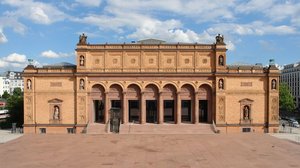
1728 · Oil On Canvas · Hamburger Kunsthalle, Hamburg

is an oil on linen canvas created by the French artist François Lemoyne. Executed in 1728, the work originates from a period when Lemoyne was establishing his reputation within the Parisian art scene. The artist, who lived from 1688 to 1737, was a significant figure in the Rococo movement, eventually serving as the Premier peintre du roi under Louis XV.

Obrazy artysty François Lemoyne, uszeregowane od 11 do 49 miejsca

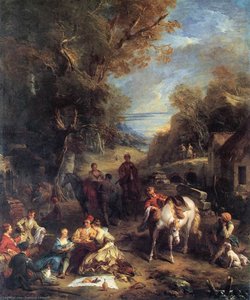
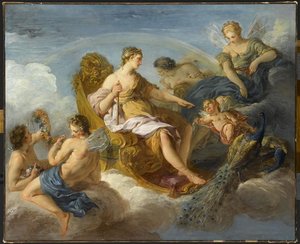
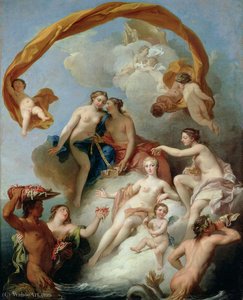
11Diana Returning from the Hunt (1729) autorstwa François LemoyneDiana Returning from the Hunt1729 · Musée Rodin 12Adam and Eve (1730) autorstwa François LemoyneAdam and Eve1730 13Saint John the Baptist (1726) autorstwa François LemoyneSaint John the Baptist1726 14A Vestal Virgin Tending Fire (1726) autorstwa François LemoyneA Vestal Virgin Tending Fire1726 · Minneapolis Institute of Art 15Amor and Psyche. (1730) autorstwa François LemoyneAmor and Psyche.1730 · Muzeum Książąt Czartoryskich 16The Amorous Proposal (1725) autorstwa François LemoyneThe Amorous Proposal1725 17Louis XV offrant la Paix à l'Europe (1737) autorstwa François LemoyneLouis XV offrant la Paix à l'Europe1737 · Musée Des Beaux 18Christ Restoring Sight to a Blind Man (1850) autorstwa François LemoyneChrist Restoring Sight to a Blind Man1850 19Time Saving Truth from Falsehood and Envy (1737) autorstwa François LemoyneTime Saving Truth from Falsehood and Envy1737 · Wallace Collection 20Time Saving Truth from Falsehood and Envy (1737) autorstwa François LemoyneTime Saving Truth from Falsehood and Envy1737 · Wallace Collection 21Venus and Adonis autorstwa François LemoyneVenus and AdonisNationalmuseum 22HERCULE ET OMPHALE autorstwa François LemoyneHERCULE ET OMPHALELuwr 23Hunting Picnic (1723) autorstwa François LemoyneHunting Picnic1723 · Museu de Arte de São Paulo 24A Muse autorstwa François LemoyneA Muse 25Phaeton Driving the Chariot of Apollo, also called Summer autorstwa François LemoynePhaeton Driving the Chariot of Apollo, also called SummerMusee des Beaux-Arts 26Elymas the Sorcerer Struck with Blindness, sketch autorstwa François LemoyneElymas the Sorcerer Struck with Blindness, sketchNational Gallery of Ireland 27Putti with the Accoutrements of Mars autorstwa François LemoynePutti with the Accoutrements of MarsHarvard Art Museums 28The Love of Fishing autorstwa François LemoyneThe Love of Fishing 29L'APOTHEOSE D'HERCULE autorstwa François LemoyneL'APOTHEOSE D'HERCULE 30Esquisse du plafond du salon d'Hercule autorstwa François LemoyneEsquisse du plafond du salon d'Hercule 31LOUIS XV DONNANT LA PAIX A L'EUROPE autorstwa François LemoyneLOUIS XV DONNANT LA PAIX A L'EUROPE 32Persée délivrant Andromède autorstwa François LemoynePersée délivrant Andromède 33Bain de Diane autorstwa François LemoyneBain de DianeDallas Museum of Art 34Le Temps délivrant la Vérité autorstwa François LemoyneLe Temps délivrant la Vérité 35Head of King Louis XV autorstwa François LemoyneHead of King Louis XV 36L'Olympe autorstwa François LemoyneL'OlympeLuwr 37Junon, Iris et Flore autorstwa François LemoyneJunon, Iris et FloreLuwr 38The Apotheosis of Hercules (1736) autorstwa François LemoyneThe Apotheosis of Hercules1736 · Zamek Wersalski 39Four muses autorstwa François LemoyneFour muses 40The Toilet of Venus autorstwa François LemoyneThe Toilet of Venus 41Pygmalion Seeing His Statue Come to Life autorstwa François LemoynePygmalion Seeing His Statue Come to LifeMusée Des Beaux 42Diana and Callisto autorstwa François LemoyneDiana and CallistoLos Angeles County Museum of Art 43Andromeda on rocks autorstwa François LemoyneAndromeda on rocks 44Diana and Actaeon autorstwa François LemoyneDiana and Actaeon 45The Bather autorstwa François LemoyneThe BatherErmitaż 46LA GLORIFICATION DE LA VIERGE autorstwa François LemoyneLA GLORIFICATION DE LA VIERGELuwr 47Perseus and Andromeda (1723) autorstwa François LemoynePerseus and Andromeda1723 · Wallace Collection 48Narcissus (1728) autorstwa François LemoyneNarcissus1728 · Musée des Beaux-Arts de Lyon 49Continence of Scipio by François Lemoyne (1726) autorstwa François LemoyneContinence of Scipio by François Lemoyne1726 · Musée des Beaux-Arts de Nancy

Słynne obrazy François Lemoyne epoka po epoce

Tematy, które przyciągnęły wzrok François Lemoyne

Cztery motywy najczęściej powracające w tych oryginałach, z których każdy doczekał się swojego najdoskonalszego przykładu.

Muzea przechowujące oryginały François Lemoyne

8 muzeów, w których znajduje się najwięcej obrazów z tej strony.

Muzea Miasto Dzieła artysty François Lemoyne Obrazy z tej listy
Luwr, ParyżLuwr Paryż 6 Hercules and Omphale, HERCULE ASSOMMANT CACUS, HERCULE ET OMPHALE
Wallace Collection, LondynWallace Collection Londyn 3 Time Saving Truth from Falsehood and Envy, Time Saving Truth from Falsehood and Envy, Perseus and Andromeda
Zamek Wersalski, WersalZamek Wersalski Wersal 2 The Apotheosis of Hercules, The Apotheosis of Hercules
Minneapolis Institute of Art, MinneapolisMinneapolis Institute of Art Minneapolis 2 Cleopatra, A Vestal Virgin Tending Fire
Ermitaż, Sankt PetersburgErmitaż Sankt Petersburg 2 Messengers of Godfrey of Bouillon in Gardens of Armida, The Bather
Portland Art Museum, PortlandPortland Art Museum Portland 1 Latona and the Peasants of Lycia
Museum of Fine Arts, HoustonMuseum of Fine Arts Houston 1 The Adoration of the Magi
Hamburger Kunsthalle, HamburgHamburger Kunsthalle Hamburg 1 Narcissus.

François Lemoyne, jedno kultowe dzieło na dekadę

Dzieła według dekad

Wybierz dekadę, aby zobaczyć dzieło, które ją definiuje.

Obrazy artysty François Lemoyne: odpowiedzi galerii

Który obraz François Lemoyne jest najsłynniejszy ze wszystkich?Odkryj odpowiedź

The Apotheosis of Hercules (1736), Zamek Wersalski, Wersal. Następne są Cleopatra (1725) oraz Messengers of Godfrey of Bouillon in Gardens of Armida (1735).

Ile lat miał François Lemoyne, gdy ukończył The Apotheosis of Hercules?Odkryj odpowiedź

48 lat: The Apotheosis of Hercules pochodzi z 1736, a François Lemoyne urodził(a) się w 1688.

Które to 10 najlepszych obrazów François Lemoyne?Odkryj odpowiedź

The Apotheosis of Hercules, Cleopatra, Messengers of Godfrey of Bouillon in Gardens of Armida, Hercules and Omphale, HERCULE ASSOMMANT CACUS, Hercules Killing Cacus, Design for a Ceiling Painting, Latona and the Peasants of Lycia, The Adoration of the Magi i Narcissus.. Powyższy ranking zawiera rok powstania oraz muzeum dla każdego z nich.

Ile dzieł stworzył/a François Lemoyne?Odkryj odpowiedź

Nasz katalog zawiera 51 dzieł artysty François Lemoyne, datowanych od 1713 do 1737.

Gdzie można znaleźć najsłynniejsze oryginały autorstwa François Lemoyne?Odkryj odpowiedź

W większości znajdują się w Luwr (Paryż), Wallace Collection (Londyn) i Zamek Wersalski (Wersal). Powyższa tabela muzeów zawiera ich pełną listę.

Kiedy François Lemoyne stworzył swoje najsłynniejsze obrazy?Odkryj odpowiedź

W 1720s: 12 z 49 dzieł na tej stronie powstało w tym czasie, w tym Cleopatra.

Które z najsłynniejszych dzieł François Lemoyne należą do jego najwcześniejszych i najpóźniejszych prac?Odkryj odpowiedź

Na tej stronie najwcześniejszy to Design for a Ceiling Painting (1713), a najpóźniejszy Louis XV offrant la Paix à l'Europe (1737).

Do jakich tematów François Lemoyne powracał najczęściej?Odkryj odpowiedź

Woman (10), Man (8) i Mythology (7), w ramach 49 dzieł na tej stronie.

W jakiej technice najczęściej tworzył François Lemoyne?Odkryj odpowiedź

Oil On Canvas, dla 18 z 49 dzieł na tej stronie.

Z jakim nurtem związany jest François Lemoyne?Odkryj odpowiedź

Rococo, sądząc po oryginałach na tej stronie.

Które oryginały artysty François Lemoyne znajdują się w zbiorach Luwr?Odkryj odpowiedź

Hercules and Omphale, HERCULE ASSOMMANT CACUS i HERCULE ET OMPHALE: Luwr, Paryż posiada 6 dzieł widocznych na tej stronie.

François Lemoyne: artysta

François Lemoyne: Paryskie Dziedzictwo w Blasku Rokoko

François Lemoyne, nazwisko być może mniej znane niż ci jego ówczesnych współtwórców, takich jak Boucher czy Watteau, zajmuje jednakże znaczące miejsce w mozaice francuskiego malarstwa XVIII wieku. Urodzony w Paryżu w 1688 roku, Lemoyne poświęcił swoje życie na ożywienie monumentalności malarstwa alegorycznego na dużą skalę – tradycji, która nieco osłabła od czasów Charlesa Le Bruna, którego Lemoyne głęboko podziwiał i pragnął mu sprostać. Jego ambicją nie było jedynie zdobnictwo, lecz tworzenie dzieł nacechowanych intelektualną treścią i rezonansem emocjonalnym, odzwierciedlających złożony duch epoki rokoko, jednocześnie nawiązując do bardziej klasycznego ideału. Od wczesnego szkolenia pod opieką swojego macocha Roberta le Vrac, a później w surowym środowisku Académie Royale de peinture et de sculpture, Lemoyne wykazywał oddanie opanowaniu zarówno umiejętności technicznych, jak i ekspresji artystycznej. Jego formalna edukacja u Louisa Galloche’a i Pierre-Jacques Cazes była przełomowa, szczególnie w rozwijaniu subtelnego zrozumienia koloru – cechy, która stawała się coraz bardziej widoczna na przestrzeni jego kariery. Pożądany Prix de Rome w 1711 roku oznaczał przełomowy moment, choć ograniczenia finansowe początkowo opóźniły jego podróż do Włoch; podróż, którą ostatecznie podjął w 1723 roku wraz z François Bergerem.

Włoskie Echo i Rokokowe Urody

Pobyt we Włoszech okazał się transformujący dla Lemoyne’a. Zanurzając się w dzieła mistrzów renesansu, takich jak Rafael, Koreggio i Tycjan, przyswoił sobie ich techniki i zasady estetyczne, wzbogacając swój artystyczny słownik. Jednak to dynamiczna energia Petera Paula Rubensa pozostawiła niezatarte ślady na jego stylu – widoczne w jego żywych paletach kolorów i dramatycznych kompozycjach. Ekspozycja na malarstwo weneckie w renomowanej kolekcji Pierre’a Crozata dodatkowo wyrafinowała jego wrażliwość, sprzyjając miłości do bogatych tekstur i efektów atmosferycznych. Te wpływy ukształtowały odrębny styl rokoko charakteryzujący się elegancją, zdobnictwem i skupieniem na dekoracyjnej urodzie. Niemniej jednak Lemoyne nigdy nie porzucił ambicji narracji monumentalnej, która definiowała wcześniejsze francuskie akademickie malarstwo; dążył do syntezy tych pozornie odmiennych elementów – lekkości i wdzięku rokoko z intelektualnego rygoru tradycji klasycznej. To unikalne połączenie wyróżnia jego pracę i przyczynia się do jej trwałego uroku.

Wersal i Królewskie Uznanie

Artystyczna biegłość Lemoyne’a znalazła swoje najbardziej spektakularne wyrazisty w monumentalnych freskach, szczególnie w L'Apothéose d'Hercule (Apotheozie Herkulesa) w Sali Herkulesa na Wersalu. To arcydzieło – oszałamiająca ekspozycja iluzjonistycznej techniki i dynamicznej kompozycji – natychmiast zyskała szerokie uznanie. Współcześni, tacy jak Voltaire i kardynał Fleury, chwalili jego blask, uznając Lemoyne’a za mistrza swojego fachu. Poza Wersalem podjął się również znaczących zleceń religijnych, takich jak The Transfiguration (Przemienienie) w apsydzie kościoła Saint-Jacques (obecnie Parish Church of St. Thomas d’Aquin) w Paryżu, demonstrując jego wszechstronność i zdolność do dostosowywania swojego stylu do różnych tematów. W 1736 roku Lemoyne osiągnął szczyt swojej kariery dzięki mianowaniu na stanowisko Premier peintre du roi (Pierwszy Malarz Króla) pod rządami Ludwika XV – świadectwo jego artystycznych osiągnięć i pozycji na francuskim dworze.

Tragiczny Koniec i Trwała Inspiracja

Pomimo osiągnięcia tak wielkich wysokości, życie Lemoyne’a zostało tragicznie skrócone przez samobójstwo w 1737 roku. Jego przedwczesna śmierć oznaczała nie tylko stratę osobistą, ale także sygnał zmiany gustów artystycznych; zbiegła się ona ze spadkiem popularności monumentalnych alegorycznych fresków na sufitych, które tak gorliwie propagował. Niemniej jednak jego dziedzictwo przetrwało dzięki jego uczniom, w tym znanym artystom takim jak Charles-Joseph Natoire i François Boucher, którym przekazał swoją wiedzę i umiejętności. Choć być może nie jest dziś tak powszechnie celebrowany jak niektórzy z jego współczesnych, wkład Lemoyne’a we francuskie malarstwo rokoko jest coraz bardziej doceniany za jego techniczną biegłość, artystyczną ambicję i unikalną syntezę ideałów klasycznych z panujących wrażliwości estetycznych jego czasów. Jego prace pozostają świadectwem oddanego artysty, który dążył do podniesienia malarstwa do najwyższej formy – dziedzictwa, które nadal inspiruje i zachwyca publiczność wieki później.

Kluczowe Dzieła i Wkład Artystyczny

  • Freski na Sufitach: Jego najbardziej znane osiągnięcia, uosobione w L'Apothéose d'Hercule, ukazują jego mistrzostwo iluzjonistycznych technik i dynamicznej kompozycji.
  • Sceny Mitologiczne: Dzieła takie jak Hercules and Omphale demonstrują jego zdolność do przedstawiania narracji klasycznych z zarówno dramatyczną intensywnością, jak i zmysłową gracją.
  • Obrazy Religijne: The Transfiguration ukazuje jego umiejętności w oddawaniu tematów religijnych z emocjonalną głębią i techniczną precyzją.
  • Portrety: Jego portret Głowy Króla Ludwika XV ujawnia subtelne zrozumienie charakteru i mistrzostwo w technikach pastelowych i sgraffito.