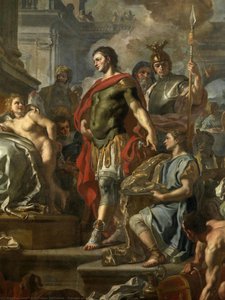
Portret Francesco Solimena

92 najsłynniejszych obrazów artysty Francesco Solimena, każdy niepowtarzalny

Aktualizacja: Listopad 2026 · ranking według naszego wskaźnika popularności (liczba wyszukiwań, wizyt i zamówień dla każdego dzieła) · 96 dzieł Francesco Solimena w naszym katalogu

W skrócie

Dido Receiving Aeneas and Cupid Disguised as Ascanius (1720) to obraz autorstwa Francesco Solimena, który przyciąga najwięcej spojrzeń; oryginał znajduje się w National Gallery, Londyn. Następnie wzrok kieruje się na Expulsion of Heliodorus from the Temple (1725) i The Martyrdom of Sts Placidus and Flavia (1697). Spośród 96 dzieł Francesco Solimena w naszym katalogu, tych 92 jest najbardziej znanych – każde z nich to unikatowy oryginał, przedstawiony wraz z rokiem powstania, muzeum oraz powodem, dla którego przetrwało próbę czasu.

1657 – 1747, Serino Baroque Najwięcej dzieł: Bawarskie Państwowe Zbiory Malarstwa

10 najlepszych obrazów autorstwa Francesco Solimena według oka galerii

1
Dido Receiving Aeneas and Cupid Disguised as Ascanius (1720) autorstwa Francesco Solimena

Dido Receiving Aeneas and Cupid Disguised as Ascanius

1720 · Oil On Canvas · National Gallery, Londyn

Francesco Solimena's "Dido Receiving Aeneas and Cupid Disguised as Ascanius," painted around 1720, is more than just a depiction of a pivotal moment in Virgil’s *Aeneid*; it’s a masterclass in Baroque drama, light, and the potent allure of unrequited love. The canvas explodes with theatricality, transporting the viewer to the opulent court of Queen Dido of Carthage, where a fateful encounter is about to unfold. Solimena, a leading figure in…

2
Expulsion of Heliodorus from the Temple (1725) autorstwa Francesco Solimena

Expulsion of Heliodorus from the Temple

1725 · Oil · Luwr, Paryż

Francesco Solimena's 1725 painting, *Expulsion of Heliodorus from the Temple*, is a monumental testament to Baroque drama and Neapolitan artistic prowess. More than simply a depiction of a biblical episode – the forceful removal of a Syrian official attempting to plunder the Temple treasury – it’s a carefully constructed tableau brimming with theological weight, political allegory, and an arresting display of virtuoso technique. Measuring 150 x 200 cm, the canvas…

3
The Martyrdom of Sts Placidus and Flavia (1697) autorstwa Francesco Solimena

The Martyrdom of Sts Placidus and Flavia

1697 · Oil On Canvas · Szépművészeti Múzeum, Budapeszt

In this large oil on canvas, Francesco Solimena presents The Martyrdom of Sts Placidus and Flavia. Completed in 1697, the work emerged from the patronage of Cardinal Vincenzo Orsini. This commission reflects the religious climate of the era, specifically the spiritual anxieties following the Thirty Years' War. The painting captures a moment of profound religious significance, focusing on the brutal martyrdom of Saints Placidus and Flavia. It is a significant…

4
Aurora Taking Leave of Tithonus (1704) autorstwa Francesco Solimena

Aurora Taking Leave of Tithonus

1704 · Oil On Canvas · Muzeum J. Paula Getty'ego, Los Angeles

A diagonal axis governs the composition, pulling the eye from the celestial heights down to the terrestrial plane. Aurora, the goddess of dawn, ascends toward the heavens, her form draped in luminous white and blue fabrics that catch the light. She is accompanied by winged figures; one carries a flaming torch that casts a warm, orange glow, while another holds a cornucopia of flowers. Below her, the mortal Tithonus reclines…

5
Jacopo Butera (1695) autorstwa Francesco Solimena

Jacopo Butera

1695 · Oil · Art Institute of Chicago, Chicago

This monochrome oil painting, dating to 1695, presents a formal and dignified three-quarter length portrait of a man, identified as Jacopo Butera. The subject is positioned slightly off-center, creating a sense of presence and importance against a draped, dark background. He is depicted wearing an elaborate, voluminous periwig with flowing curls and a delicate lace cravat. His attire includes a heavy, dark cloak and intricate lace cuffs. In the foreground,…

6
Portrait of a Girl (1700) autorstwa Francesco Solimena

Portrait of a Girl

1700 · Oil On Canvas · Art Institute of Chicago, Chicago

The girl turns her gaze toward the upper left, her eyes catching a light that seems to originate from an unseen window. A soft, directional glow brushes her forehead and the curve of her cheek, carving her features out of a deep, brownish void. This is the language of chiaroscuro, where shadow is not merely the absence of light, but a physical presence that gives the face its weight and…

7
The Deposition (1729) autorstwa Francesco Solimena

The Deposition

1729 · Oil On Canvas · Kunsthistorisches Museum, Wiedeń

Step closer to observe the weight of this scene. In 1729, Francesco Solimena captured the heavy, physical reality of Christ being lowered from the cross. The composition follows a complex pyramidal structure, guiding your eyes through a sequence of straining figures and descending limbs. There is a profound sense of gravity here, both literal and spiritual. You can feel the tension in the muscles of the men supporting the body,…

8
The Meeting of Pope Leo and Attila autorstwa Francesco Solimena

The Meeting of Pope Leo and Attila

Oil On Canvas · Pinacoteca di Brera, Mediolan

To stand before The Meeting of Pope Leo and Attila is to be transported across the centuries, into a moment etched by legend and stained with the rich pigments of Baroque drama. Francesco Solimena, in this masterful oil on canvas, does not merely depict an encounter; he stages a profound dialogue between spiritual authority and raw military might. The scene captures the legendary year of 452 AD, centering on Pope…

9
Madonna and Child Enthroned with Saint Peter Martyr and Two Warrior Saints (1706) autorstwa Francesco Solimena

Madonna and Child Enthroned with Saint Peter Martyr and Two Warrior Saints

1706 · Oil On Canvas · Scottish National Gallery, Edynburg

The composition rises like a stone pyramid toward a sudden, divine light. At the center, the Madonna sits enthroned, her presence defined by the heavy weight of deep blue and crimson robes. She holds the Christ Child, their forms emerging from a dark, atmospheric background that swallows the edges of the frame. A stone arch provides a structural depth, framing the figures within a theatrical space. Light falls sharply across…

10
St. Francis before the Pope (1700) autorstwa Francesco Solimena

St. Francis before the Pope

1700 · Oil On Canvas · Muzeum Narodowe w Warszawie, Warszawa

In this 1700 oil painting, we find ourselves witnessing a moment of profound spiritual gravity. The composition is structured with a deliberate, vertical energy, drawing the eye upward through a pyramidal arrangement of figures. At the base, muscular, grounded figures provide a sense of earthly weight, while the upper reaches of the canvas dissolve into a swirling assembly of cherubs and angels. This movement creates a bridge between the terrestrial…

Słynne obrazy artysty Francesco Solimena, od 11 do 92

11Saints in Glory (1690) autorstwa Francesco SolimenaSaints in Glory1690 · Minneapolis Institute of Art 12Adam and Eve in Paradise (1700) autorstwa Francesco SolimenaAdam and Eve in Paradise1700 · Art Institute of Chicago 13Death of Messalina (1704) autorstwa Francesco SolimenaDeath of Messalina1704 · Muzeum J. Paula Getty'ego 14Venus at the Forge of Vulcan (1704) autorstwa Francesco SolimenaVenus at the Forge of Vulcan1704 · Muzeum J. Paula Getty'ego 15Emperor Charles VI and Gundacker, Count Althann (1728) autorstwa Francesco SolimenaEmperor Charles VI and Gundacker, Count Althann1728 · Kunsthistorisches Museum 16Ecce Homo (1700) autorstwa Francesco SolimenaEcce Homo1700 · Muzeum Narodowe w Warszawie 17The Enthroned Mary with the Child, Saint Dominic and Saint Catherine of Siena (Rosary Madonna) (1680) autorstwa Francesco SolimenaThe Enthroned Mary with the Child, Saint Dominic and Saint Catherine of Siena (Rosary Madonna)1680 · Gemäldegalerie 18Audience: the pope blessing a woman (1682) autorstwa Francesco SolimenaAudience: the pope blessing a woman1682 19Saint Francis Returns His Clothes to His Father (1694) autorstwa Francesco SolimenaSaint Francis Returns His Clothes to His Father1694 · Musée Denon 20Hagar and Ishmael in the Desert Comforted by the Angel (1690) autorstwa Francesco SolimenaHagar and Ishmael in the Desert Comforted by the Angel1690 21Saint Catherine of Alexandria and the Angel (1698) autorstwa Francesco SolimenaSaint Catherine of Alexandria and the Angel1698 · Musée Des Beaux 22Saint Simplicius (1690) autorstwa Francesco SolimenaSaint Simplicius1690 · National Gallery of Ireland 23St. Joseph's Dream (1696) autorstwa Francesco SolimenaSt. Joseph's Dream1696 24Allegory (1702) autorstwa Francesco SolimenaAllegory1702 · Bawarskie Państwowe Zbiory Malarstwa 25Mary with John and Child Jesus (1702) autorstwa Francesco SolimenaMary with John and Child Jesus1702 · Bawarskie Państwowe Zbiory Malarstwa 26Ecce Homo (1702) autorstwa Francesco SolimenaEcce Homo1702 · Bawarskie Państwowe Zbiory Malarstwa 27Saint Anne with Joachim and Mary (1702) autorstwa Francesco SolimenaSaint Anne with Joachim and Mary1702 · Bawarskie Państwowe Zbiory Malarstwa 28The Pearl Drink of Cleopatra (1702) autorstwa Francesco SolimenaThe Pearl Drink of Cleopatra1702 · Bawarskie Państwowe Zbiory Malarstwa 29The Risen Christ Appearing to the Virgin (1708) autorstwa Francesco SolimenaThe Risen Christ Appearing to the Virgin1708 · Cleveland Museum of Art 30The Virgin and Child, with a boy presented by his Guardian Angel, and S. Francesco Di Paola (1706) autorstwa Francesco SolimenaThe Virgin and Child, with a boy presented by his Guardian Angel, and S. Francesco Di Paola1706 · Fitzwilliam Museum 31Juno, Io and Argus (1706) autorstwa Francesco SolimenaJuno, Io and Argus1706 · Staatliche Kunstsammlungen Dresden 32Madonna of the Martyrs (1705) autorstwa Francesco SolimenaMadonna of the Martyrs1705 · Minneapolis Institute of Art 33Resurrection of Christ (1720) autorstwa Francesco SolimenaResurrection of Christ1720 34Rest on the Flight into Egypt (1720) autorstwa Francesco SolimenaRest on the Flight into Egypt1720 35Rest on the Flight into Egypt (1720) autorstwa Francesco SolimenaRest on the Flight into Egypt1720 · Fitzwilliam Museum 36The Royal Hunt of Dido and Aeneas (1712) autorstwa Francesco SolimenaThe Royal Hunt of Dido and Aeneas1712 · Museum of Fine Arts 37Christoph Colombus discovers America (1715) autorstwa Francesco SolimenaChristoph Colombus discovers America1715 · Musée des Beaux-Arts 38Boreas Abducting Oreithyia, Daughter of Erechteus (1729) autorstwa Francesco SolimenaBoreas Abducting Oreithyia, Daughter of Erechteus1729 · National Art Museum of Azerbaijan 39The Annunciation, Modello for Altarpiece of the Church of San Rocco (1733) autorstwa Francesco SolimenaThe Annunciation, Modello for Altarpiece of the Church of San Rocco1733 · Rhode Island School of Design Museum of Art 40Portrait of a Man (1728) autorstwa Francesco SolimenaPortrait of a Man1728 · National Museum of Art, Architecture and Design 41Virgin and Child (1727) autorstwa Francesco SolimenaVirgin and Child1727 · Fitzwilliam Museum 42The Abduction of Orithyia (1730) autorstwa Francesco SolimenaThe Abduction of Orithyia1730 · Walters Art Museum 43The Virgin with Child (1750) autorstwa Francesco SolimenaThe Virgin with Child1750 44The Birth of the Virgin (1690) autorstwa Francesco SolimenaThe Birth of the Virgin1690 · Metropolitan Museum of Art 45Painting of Mary Magdalene (1700) autorstwa Francesco SolimenaPainting of Mary Magdalene1700 · Museo Archeologico Nazionale di Taranto 46The Annunciation (1693) autorstwa Francesco SolimenaThe Annunciation1693 · Mauritshuis 47Rebecca and Eleazer (1710) autorstwa Francesco SolimenaRebecca and Eleazer1710 · Gallerie dell'Accademia di Venezia 48Triumph of Charles III at the Battle of Velletri autorstwa Francesco SolimenaTriumph of Charles III at the Battle of Velletri 49Sacred Conversation autorstwa Francesco SolimenaSacred Conversation 50The Assumption and Coronation of the Virgin (1690) autorstwa Francesco SolimenaThe Assumption and Coronation of the Virgin1690 51Portrait of Charles VI, Holy Roman Emperor (1685) autorstwa Francesco SolimenaPortrait of Charles VI, Holy Roman Emperor1685 52Portrait of Aurora Sanseverino (1690) autorstwa Francesco SolimenaPortrait of Aurora Sanseverino1690 53Allegory of a Reign (1690) autorstwa Francesco SolimenaAllegory of a Reign1690 · Ermitaż 54St Bonaventura Receiving the Banner of St Sepulchre from the Madonna (1710) autorstwa Francesco SolimenaSt Bonaventura Receiving the Banner of St Sepulchre from the Madonna1710 · Cathedral 55Portrait of Prince Joseph Wenzel von Liechtenstein (1720) autorstwa Francesco SolimenaPortrait of Prince Joseph Wenzel von Liechtenstein1720 · Liechtenstein Museum 56Saint Martin sharing his Cloak with the Beggar (1732) autorstwa Francesco SolimenaSaint Martin sharing his Cloak with the Beggar1732 · National Gallery 57Battle between Lapiths and Centaurs (1735) autorstwa Francesco SolimenaBattle between Lapiths and Centaurs1735 58The Glorification of Saint Dominic, Francesco Solimena (copy after), 1710 - 1785 (1785) autorstwa Francesco SolimenaThe Glorification of Saint Dominic, Francesco Solimena (copy after), 1710 - 17851785 59Heaven of Saints (Oil Sketch) autorstwa Francesco SolimenaHeaven of Saints (Oil Sketch)Bawarskie Państwowe Zbiory Malarstwa 60San Joaquin, Santa Ana and the Virgin Mary (1747) autorstwa Francesco SolimenaSan Joaquin, Santa Ana and the Virgin Mary1747 · Biblioteca Museu Víctor Balaguer 61The Massacre of the Giustiniani at Chios autorstwa Francesco SolimenaThe Massacre of the Giustiniani at ChiosMuseo di Capodimonte 62Aeneas and Dido (1739) autorstwa Francesco SolimenaAeneas and Dido1739 · Museo di Capodimonte 63Rebecca Leaving Her Father’s House (1730) autorstwa Francesco SolimenaRebecca Leaving Her Father’s House1730 · Ermitaż 64Judith with the Head of Holofernes (1728) autorstwa Francesco SolimenaJudith with the Head of Holofernes1728 · Kunsthistorisches Museum 65Allegory of Winter autorstwa Francesco SolimenaAllegory of WinterNational Gallery of Ireland 66The Rest on the Flight into Egypt autorstwa Francesco SolimenaThe Rest on the Flight into EgyptFitzwilliam Museum 67Saint Augustine Triumphing over Heresy autorstwa Francesco SolimenaSaint Augustine Triumphing over Heresy 68The Personification of Faith autorstwa Francesco SolimenaThe Personification of FaithNorton Simon Museum 69Adoration of the Shepherds autorstwa Francesco SolimenaAdoration of the ShepherdsMusée d'art et d'histoire de Narbonne 70Assumption autorstwa Francesco SolimenaAssumptionMusée des Beaux-Arts de Mulhouse 71Expxulsion of Heliodorus from the Temple autorstwa Francesco SolimenaExpxulsion of Heliodorus from the Temple 72Self-Portrait (1715) autorstwa Francesco SolimenaSelf-Portrait1715 73The Miracle of the Bronze Serpent autorstwa Francesco SolimenaThe Miracle of the Bronze SerpentGirona Art Museum 74Diego Pignatelli d'Aragona (1687–1750) and an Enslaved African Servant (1732) autorstwa Francesco SolimenaDiego Pignatelli d'Aragona (1687–1750) and an Enslaved African Servant1732 · Metropolitan Museum of Art 75Boreas is robbing Orethyia autorstwa Francesco SolimenaBoreas is robbing OrethyiaKunsthistorisches Museum 76The Annunciation autorstwa Francesco SolimenaThe AnnunciationStatens Museum for Kunst 77Bathsheba Bathing (1725) autorstwa Francesco SolimenaBathsheba Bathing1725 · Residenzgalerie 78The Royal Hunt of Dido and Aeneas autorstwa Francesco SolimenaThe Royal Hunt of Dido and Aeneas 79Diedci autorstwa Francesco SolimenaDiedci 80Count Alois Thomas Raimund Harrach, Viceroy of Naples autorstwa Francesco SolimenaCount Alois Thomas Raimund Harrach, Viceroy of Naples 81The Trinity, the Madonna and St Dominic autorstwa Francesco SolimenaThe Trinity, the Madonna and St DominicSacristy 82Saint Cajetan Appeasing Divine Anger autorstwa Francesco SolimenaSaint Cajetan Appeasing Divine AngerBasilica di San Paolo Maggiore 83Annunciation autorstwa Francesco SolimenaAnnunciation 84An Allegory of Louis XIV autorstwa Francesco SolimenaAn Allegory of Louis XIVNational Gallery 85Dream of Jacob autorstwa Francesco SolimenaDream of Jacob 86Rebecca and Eliezer at the Well autorstwa Francesco SolimenaRebecca and Eliezer at the Well 87Memento Mori autorstwa Francesco SolimenaMemento MoriBiennale Internazionale dell'Antiquariato di Firenze 88Diana and Endymion (1710) autorstwa Francesco SolimenaDiana and Endymion1710 · Walker Art Gallery 89Assumption of the Virgin (1705) autorstwa Francesco SolimenaAssumption of the Virgin1705 90Madonna and Child (1720) autorstwa Francesco SolimenaMadonna and Child1720 · Art Gallery of South Australia 91Portrait of a Woman autorstwa Francesco SolimenaPortrait of a WomanMusée des Augustins 92St John the Baptist autorstwa Francesco SolimenaSt John the BaptistMuseo del Prado

Słynne obrazy Francesco Solimena epoka po epoce

Tematy, które przyciągnęły wzrok Francesco Solimena

Cztery motywy najczęściej powracające w tych oryginałach, z których każdy doczekał się swojego najdoskonalszego przykładu.

Muzea przechowujące oryginały Francesco Solimena

8 muzeów, w których znajduje się najwięcej obrazów z tej strony.

Muzea Miasto Dzieła artysty Francesco Solimena Obrazy z tej listy
Bawarskie Państwowe Zbiory Malarstwa, MonachiumBawarskie Państwowe Zbiory Malarstwa Monachium 6 Allegory, Mary with John and Child Jesus, Ecce Homo
Kunsthistorisches Museum, WiedeńKunsthistorisches Museum Wiedeń 4 The Deposition, Emperor Charles VI and Gundacker, Count Althann, Judith with the Head of Holofernes
Fitzwilliam MuseumFitzwilliam Museum 4 The Virgin and Child, with a boy presented by his Guardian Angel, and S. Francesco Di Paola, Rest on the Flight into Egypt, Virgin and Child
National Gallery, LondynNational Gallery Londyn 3 Dido Receiving Aeneas and Cupid Disguised as Ascanius, Saint Martin sharing his Cloak with the Beggar, An Allegory of Louis XIV
Muzeum J. Paula Getty'ego, Los AngelesMuzeum J. Paula Getty'ego Los Angeles 3 Aurora Taking Leave of Tithonus, Death of Messalina, Venus at the Forge of Vulcan
Art Institute of Chicago, ChicagoArt Institute of Chicago Chicago 3 Jacopo Butera, Portrait of a Girl, Adam and Eve in Paradise
Muzeum Narodowe w Warszawie, WarszawaMuzeum Narodowe w Warszawie Warszawa 2 St. Francis before the Pope, Ecce Homo
Minneapolis Institute of Art, MinneapolisMinneapolis Institute of Art Minneapolis 2 Saints in Glory, Madonna of the Martyrs

Francesco Solimena na przestrzeni dekad: jeden unikatowy oryginał dla każdego

Dzieła według dekad

Wybierz dekadę, aby zobaczyć dzieło, które ją definiuje.

Obrazy artysty Francesco Solimena: pytania do galerii

Jakie jest najsłynniejsze dzieło artysty Francesco Solimena?Odkryj odpowiedź

Dido Receiving Aeneas and Cupid Disguised as Ascanius (1720), National Gallery, Londyn. Następne są Expulsion of Heliodorus from the Temple (1725) oraz The Martyrdom of Sts Placidus and Flavia (1697).

W jakim wieku Francesco Solimena stworzył/a Dido Receiving Aeneas and Cupid Disguised as Ascanius?Odkryj odpowiedź

63 lat: Dido Receiving Aeneas and Cupid Disguised as Ascanius pochodzi z 1720, a Francesco Solimena urodził(a) się w 1657.

Które dziesięć obrazów Francesco Solimena jest najbardziej znanych?Odkryj odpowiedź

Dido Receiving Aeneas and Cupid Disguised as Ascanius, Expulsion of Heliodorus from the Temple, The Martyrdom of Sts Placidus and Flavia, Aurora Taking Leave of Tithonus, Jacopo Butera, Portrait of a Girl, The Deposition, The Meeting of Pope Leo and Attila, Madonna and Child Enthroned with Saint Peter Martyr and Two Warrior Saints i St. Francis before the Pope. Powyższy ranking zawiera rok powstania oraz muzeum dla każdego z nich.

Ile znanych dzieł stworzył Francesco Solimena?Odkryj odpowiedź

Nasz katalog zawiera 96 dzieł artysty Francesco Solimena, datowanych od 1680 do 1747.

Gdzie można zobaczyć najsłynniejsze oryginały Francesco Solimena?Odkryj odpowiedź

W większości znajdują się w Bawarskie Państwowe Zbiory Malarstwa (Monachium), Kunsthistorisches Museum (Wiedeń) i Fitzwilliam Museum. Powyższa tabela muzeów zawiera ich pełną listę.

W jakim okresie Francesco Solimena stworzył/a swoje najsłynniejsze obrazy?Odkryj odpowiedź

W 1700s: 19 z 92 dzieł na tej stronie powstało w tym czasie, w tym Aurora Taking Leave of Tithonus.

Który z najsłynniejszych obrazów artysty Francesco Solimena powstał najwcześniej, a który najpóźniej?Odkryj odpowiedź

Na tej stronie najwcześniejszy to The Enthroned Mary with the Child, Saint Dominic and Saint Catherine of Siena (Rosary Madonna) (1680), a najpóźniejszy San Joaquin, Santa Ana and the Virgin Mary (1747).

Jakie tematy preferował Francesco Solimena?Odkryj odpowiedź

Woman (30), Drapery (25) i Clouds (23), w ramach 92 dzieł na tej stronie.

Jakich materiałów Francesco Solimena używał najczęściej?Odkryj odpowiedź

Oil On Canvas, dla 47 z 92 dzieł na tej stronie.

Do jakiego nurtu należy twórczość Francesco Solimena?Odkryj odpowiedź

Baroque, sądząc po oryginałach na tej stronie.

Jakie oryginały Francesco Solimena można zobaczyć w Bawarskie Państwowe Zbiory Malarstwa?Odkryj odpowiedź

Allegory, Mary with John and Child Jesus i Ecce Homo: Bawarskie Państwowe Zbiory Malarstwa, Monachium posiada 6 dzieł widocznych na tej stronie.

Francesco Solimena: portret artysty

A Neapolitan Master of Baroque Grandeur

Francesco Solimena, born in the small Italian town of Canale di Serino near Avellino in 1657, emerged as one of the most significant figures in Neapolitan painting during the late Baroque period. His artistic journey began within a family already steeped in artistic tradition; his father, Angelo Solimena, served as his initial instructor, collaborating with him on early projects like the Paradise fresco for the cathedral of Nocera. This foundational experience instilled in young Francesco a deep appreciation for technique and composition – a meticulous approach that would characterize much of his later work. He further refined his skills under the tutelage of Francesco di Maria and Giacomo del Po, absorbing diverse influences that would ultimately shape his distinctive style, blending Roman grandeur with the vibrant spirit of Naples. The patronage of Cardinal Vincenzo Orsini proved pivotal, providing encouragement and opportunities that allowed Solimena to establish himself as an independent artist by the 1680s, undertaking increasingly ambitious fresco commissions for prominent churches and palaces throughout the region.

Forging a Style: Echoes of Rome in Neapolitan Splendor

Solimena’s artistic voice is immediately recognizable through its warm, brownish shadowing – a technique deeply indebted to the Roman Baroque masters Luca Giordano and Giovanni Lanfranco. He didn't merely imitate; instead, he synthesized these influences into a uniquely Neapolitan aesthetic. The hallmarks of his work include dynamic compositions brimming with emotional intensity, reflecting the Baroque period’s penchant for grandeur and theatricality. He possessed an exceptional ability to capture movement and drama within his scenes – whether depicting biblical narratives or mythological allegories – drawing viewers directly into the heart of the action. Solimena's paintings are characterized by a masterful use of *chiaroscuro*, creating dramatic contrasts between light and shadow that heighten the emotional impact of each scene. His compositions often feature elaborate architectural settings, subtly suggesting depth and space while simultaneously focusing attention on the figures within them. This careful balance between setting and subject is a hallmark of his distinctive style.

A Prolific Output: Frescoes, Altarpieces, and Mythological Visions

Francesco Solimena was an extraordinarily prolific artist, leaving behind a vast body of work encompassing a wide range of subjects and formats. He excelled in large-scale fresco cycles, transforming the interiors of Neapolitan churches and palaces into vibrant displays of religious fervor and aristocratic splendor. His frescoes for the church of San Paolo Maggiore, depicting scenes from the life of St. Paul, are particularly renowned for their dramatic intensity and masterful use of color. His altarpieces are equally impressive, showcasing his ability to convey complex theological narratives with both emotional depth and technical brilliance. These works often feature a multitude of figures arranged in elaborate compositions, each carefully rendered with meticulous detail. Beyond his religious commissions, Solimena also demonstrated a mastery of mythological scenes, imbuing classical tales with dramatic energy and sensuous beauty – as evidenced by his *Allegory of Rule*, currently housed in the State Hermitage Museum in St. Petersburg. His depictions of weddings and courtly occasions further showcase his versatility, capturing the elegance and opulence of Neapolitan society.

The Atelier and its Legacy: Shaping a Generation of Artists

From the 1690s onward, Solimena’s studio became a dominant force in Naples, shaping the artistic landscape of the city for decades. It wasn't simply a workshop; it was a vibrant center of artistic learning and innovation. Solimena trained numerous pupils who went on to become prominent artists in their own right – including Francesco de Mura, Giuseppe Bonito, Pietro Capelli, and Corrado Giaquinto. These students absorbed Solimena’s techniques and stylistic principles, carrying them forward into the next generation of Neapolitan painters. His influence extended beyond mere technical skill; he instilled in his pupils a deep appreciation for composition, color theory, and dramatic storytelling – qualities that would define the artistic landscape of Naples for years to come. The studio's remarkable productivity—churning out altarpieces, frescoes, and canvases at an astonishing rate—testified to Solimena’s organizational skills and his ability to manage a large team of artists.

A Lasting Impact: Solimena’s Place in Art History

Francesco Solimena died in 1747 at Barra, near Naples, leaving behind an enduring legacy that continues to be celebrated through exhibitions, scholarly studies, and reproductions available today. He stands as one of the most important figures in Neapolitan Baroque painting – a master who successfully synthesized Roman influences with local traditions to create a distinctive style that defined artistic production in Naples for generations. His works remain admired for their dramatic flair, technical mastery, and enduring beauty, offering a captivating glimpse into the vibrant cultural life of 18th-century Italy. Solimena’s legacy extends beyond his individual creations; he played a crucial role in shaping the artistic identity of Naples, leaving an indelible mark on the city's cultural heritage.