Portret Stanisław Lépine

Obrazy: 100 najsłynniejszych dzieł artysty Stanisław Lépine – spojrzenie galerii

Aktualizacja: Listopad 2026 · ranking według naszego wskaźnika popularności (liczba wyszukiwań, wizyt i zamówień dla każdego dzieła) · 123 dzieł Stanisław Lépine w naszym katalogu

W skrócie

Według opinii kuratorów galerii, najsłynniejszym obrazem Stanisław Lépine jest Portrait of Stanisław Potocki (1782-1831). (1788), którego oryginał znajduje się w Muzeum Narodowe w Warszawie w Warszawa. Pont de la Tournelle, Paris (1862) i The Tuileries Basin (1877) dopełniają trio, które zna każde oko. Z 123 dzieł Stanisław Lépine w naszym katalogu, galeria prezentuje poniżej 100 najsłynniejszych prac – każda z nich jest oryginałem z podaniem roku powstania, muzeum oraz cech wyróżniających ją na tle innych.

1835 – 1892, Caen Impressionism Najwięcej dzieł: Musée Carnavalet

10 najlepszych obrazów artysty Stanisław Lépine w galerii

1
Portrait of Stanisław Potocki (1782-1831). (1788) autorstwa Stanisław Lépine

Portrait of Stanisław Potocki (1782-1831).

1788 · Oil On Canvas · Muzeum Narodowe w Warszawie, Warszawa

A young child sits at the heart of this scene, draped in ornate, aristocratic attire that speaks of high status and ceremony. This small figure rides a sturdy brown horse, which is positioned atop a large, golden sled. The arrangement feels both dreamlike and deliberate, as if a moment of play has been frozen in a grand, symbolic gesture. Warm earth tones dominate the view, with deep browns, shimmering golds,…

2
Pont de la Tournelle, Paris (1862) autorstwa Stanisław Lépine

Pont de la Tournelle, Paris

1862 · Oil On Canvas · National Gallery of Art, Waszyngton

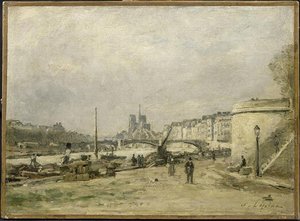
The oil on canvas depicts a river scene in Paris, centered on the Pont de la Tournelle. The composition follows a horizontal emphasis, established by the expanse of the river and the line of the bridge. Verticality is provided by the architectural forms of the buildings lining the banks. In the foreground and midground, the water's surface reflects the structures above, creating a series of curved lines and light patterns.…

3
The Tuileries Basin (1877) autorstwa Stanisław Lépine

The Tuileries Basin

1877 · Sculpture

The work carries the weight of antiquity, appearing as a quiet observer of classical ideals. The composition relies on the interplay between the solid, heavy presence of the stone and the perceived lightness of the figure's upward gaze. There is a sense of weightlessness in the way the drapery falls, despite the material's inherent density. The neutral, seamless background strips away any sense of environment, forcing a direct encounter with…

4
The Rue de Norvins, Montmartre (1878) autorstwa Stanisław Lépine

The Rue de Norvins, Montmartre

1878 · Oil · Kelvingrove Art Gallery and Museum, Glasgow

In this 1878 oil painting, we find ourselves standing at the edge of a sloping street in Montmartre. The Rue de Norvins recedes into a soft, hazy distance, drawing the eye through a deep linear perspective toward a pale horizon. There is a stillness here, a sense of a morning caught in a moment of transition. A woman walks in the foreground, accompanied by a child and a small dog,…

5
Rue Mont-Cenis, Montmartre (1872) autorstwa Stanisław Lépine

Rue Mont-Cenis, Montmartre

1872 · Oil On Canvas · National Gallery of Ireland, Dublin

This oil on canvas depicts a narrow, cobblestone street within the Montmartre district of Paris. The composition relies on a strong linear perspective, where the buildings on either side of the road form a receding corridor that directs the eye toward the center of the background. The architecture is rendered in a palette of muted tones, specifically grey, beige, ochre, and soft browns. Above the rooftops, the sky appears as…

6
A Courtyard on the rue de la Fontenelle (1874) autorstwa Stanisław Lépine

A Courtyard on the rue de la Fontenelle

1874 · Oil · Norton Simon Museum, Pasadena

The scene is a vertically oriented view of a courtyard, framed by two tall, slender trees on the left and right edges. These trees form a natural archway that directs the eye toward the center of the composition. A solitary woman walks toward the viewer in the foreground, carrying a basket. In the distance, near a dark doorway, smaller and less distinct figures are visible. The ground is a pathway…

7
Country Road (1878) autorstwa Stanisław Lépine

Country Road

1878 · Oil On Canvas

In this 1878 oil on canvas, we find ourselves in a serene rural landscape that captures a fleeting instance of rest. Two young men are positioned on a grassy bank, their presence adding a human element to the winding dirt road that leads the eye through a field. A solitary tree rises in the midground, providing a vertical anchor to the composition. The scene is bathed in the soft, diffused…

8
Canal in Saint-Denis, Effect of Moonlight (1876) autorstwa Stanisław Lépine

Canal in Saint-Denis, Effect of Moonlight

1876 · Oil On Canvas

The composition centers on a horizontal view of a canal in Saint-Denis under moonlight. The water occupies the foreground and middle ground, acting as a reflective surface for the moon and the surrounding architecture. On the left, a row of buildings lines the canal edge, while trees appear on the right side of the frame. A bridge spans the water in the distance, creating a sense of depth through size…

9
QUAIS DE LA SEINE, PONT MARIE autorstwa Stanisław Lépine

QUAIS DE LA SEINE, PONT MARIE

Oil On Canvas

The Seine flows through the center of the frame, a grey ribbon cutting through the heart of Paris. Water moves toward the viewer, carrying the weight of an overcast sky in its ripples. The Pont Marie spans the current, its arches breaking the horizontal rhythm of the riverbanks. Buildings line the quays, their facades rendered in muted tones of beige and brown. A few figures move along the banks, small…

10
Prairies à Tournebouse autorstwa Stanisław Lépine

Prairies à Tournebouse

Oil On Canvas

The composition of Prairies à Tournebouse is organized horizontally, emphasizing the breadth of the terrain. In the foreground, tall grasses and wildflowers occupy the lower edge of the frame, rendered with visible, broken brushstrokes that suggest texture and movement. A river curves through the middle ground, its surface reflecting the cool blues of the sky. In the distance, a village is nestled among a cluster of trees, positioned near the…

Obrazy artysty Stanisław Lépine, uszeregowane od 11 do 100 miejsca

11Caen: Customs (1860) autorstwa Stanisław LépineCaen: Customs1860 · Musée des Beaux-Arts de Tours 12Landscape with Farm Buildings (1863) autorstwa Stanisław LépineLandscape with Farm Buildings1863 · Scottish National Gallery 13Montmartre (1863) autorstwa Stanisław LépineMontmartre1863 · Scottish National Gallery 14The Pont de la Tournelle, Paris (1862) autorstwa Stanisław LépineThe Pont de la Tournelle, Paris1862 · National Gallery 15The Seine at Sèvres (1862) autorstwa Stanisław LépineThe Seine at Sèvres1862 16Entrance to the Port (1858) autorstwa Stanisław LépineEntrance to the Port1858 17Ships in Port (1860) autorstwa Stanisław LépineShips in Port1860 18The Saint Pierre Basin (1863) autorstwa Stanisław LépineThe Saint Pierre Basin1863 19Bridge in a French City (1870) autorstwa Stanisław LépineBridge in a French City1870 20The Seine à Bercy (1868) autorstwa Stanisław LépineThe Seine à Bercy1868 · National Gallery of Ireland 21Landscape with a Bridge (1871) autorstwa Stanisław LépineLandscape with a Bridge1871 · Ermitaż 22Nuns and Schoolgirls in the Tuileries Gardens, Paris (1871) autorstwa Stanisław LépineNuns and Schoolgirls in the Tuileries Gardens, Paris1871 · National Gallery 23Moonlit River (1868) autorstwa Stanisław LépineMoonlit River1868 24The Seine at la Garenne Saint-Denis (1870) autorstwa Stanisław LépineThe Seine at la Garenne Saint-Denis1870 25The Seine at Ile Saint-Denis (1870) autorstwa Stanisław LépineThe Seine at Ile Saint-Denis1870 26View of the Seine (1870) autorstwa Stanisław LépineView of the Seine1870 27Farmyard in Normandy (1868) autorstwa Stanisław LépineFarmyard in Normandy1868 28The Marne at Charenton, A Fisherman (1871) autorstwa Stanisław LépineThe Marne at Charenton, A Fisherman1871 29Harbor at Low Tide (1873) autorstwa Stanisław LépineHarbor at Low Tide1873 30The Seine at La Garenne Saint-Denis (1875) autorstwa Stanisław LépineThe Seine at La Garenne Saint-Denis1875 · Ashmolean Museum 31Yacht sur la Riviere (1874) autorstwa Stanisław LépineYacht sur la Riviere1874 · Russell-Cotes Art Gallery - Museum 32View on the Seine, Paris (1872) autorstwa Stanisław LépineView on the Seine, Paris1872 · Art Institute of Chicago 33View on the Outskirts of Caen (1872) autorstwa Stanisław LépineView on the Outskirts of Caen1872 · National Gallery of Art 34View of Brie-sur-Marne (1873) autorstwa Stanisław LépineView of Brie-sur-Marne1873 · Musée d'Orsay 35The Pont Neuf, Paris (1875) autorstwa Stanisław LépineThe Pont Neuf, Paris1875 · Norton Simon Museum 36The Canal Saint-Denis by Moonlight (1877) autorstwa Stanisław LépineThe Canal Saint-Denis by Moonlight1877 · Wallraf-Richartz-Museum 37Montmartre, the rue Cortot (1874) autorstwa Stanisław LépineMontmartre, the rue Cortot1874 38A Plow Horse in a Field (1874) autorstwa Stanisław LépineA Plow Horse in a Field1874 · National Gallery of Art 39Street in Montmartre, Snow Effect (1878) autorstwa Stanisław LépineStreet in Montmartre, Snow Effect1878 40Country Road (1876) autorstwa Stanisław LépineCountry Road1876 41The Pont des Arts, Paris (1875) autorstwa Stanisław LépineThe Pont des Arts, Paris1875 42Place de la Concord (1878) autorstwa Stanisław LépinePlace de la Concord1878 43The Pont de Bercy as seen from the Quai de La Gare (1875) autorstwa Stanisław LépineThe Pont de Bercy as seen from the Quai de La Gare1875 44The Seine at Ile Saint-Denis (1877) autorstwa Stanisław LépineThe Seine at Ile Saint-Denis1877 45The Pont National as Seen from Quai d'Ivry, Paris (1873) autorstwa Stanisław LépineThe Pont National as Seen from Quai d'Ivry, Paris1873 46Montmartre, the Rue Saint-Vincent (1873) autorstwa Stanisław LépineMontmartre, the Rue Saint-Vincent1873 47Paris, the Pont des Arts (1878) autorstwa Stanisław LépineParis, the Pont des Arts1878 48The Ourcq Canal, Towpath, Moonlight (1876) autorstwa Stanisław LépineThe Ourcq Canal, Towpath, Moonlight1876 49The Banks of the Marne (1880) autorstwa Stanisław LépineThe Banks of the Marne1880 · Musée des Beaux-Arts 50The Seine, at Passy (1880) autorstwa Stanisław LépineThe Seine, at Passy1880 · Musée Carnavalet 51Pont des Arts, View from Pont Royal (1884) autorstwa Stanisław LépinePont des Arts, View from Pont Royal1884 · Musée Carnavalet 52Saint-Michel Bridge (1880) autorstwa Stanisław LépineSaint-Michel Bridge1880 · Musée Carnavalet 53L'île de la Cité and l'île Saint-Louis, viewed from the Pont d'Austerlitz (1880) autorstwa Stanisław LépineL'île de la Cité and l'île Saint-Louis, viewed from the Pont d'Austerlitz1880 · Musée Carnavalet 54The Artesian Well of Grenelle, (place de Breteuil) (1880) autorstwa Stanisław LépineThe Artesian Well of Grenelle, (place de Breteuil)1880 · Musée Carnavalet 55Sunset on a River (1880) autorstwa Stanisław LépineSunset on a River1880 · Scottish National Gallery 56A Gateway behind Trees (1881) autorstwa Stanisław LépineA Gateway behind Trees1881 · National Gallery 57The Apple Market (1880) autorstwa Stanisław LépineThe Apple Market1880 · Art Institute of Chicago 58A Stream in France (1880) autorstwa Stanisław LépineA Stream in France1880 · Art Institute of Chicago 59The Courtyard (1880) autorstwa Stanisław LépineThe Courtyard1880 · Art Institute of Chicago 60View of the Louvre (1883) autorstwa Stanisław LépineView of the Louvre1883 · National Gallery of Art 61Canal Saint-Martin (1885) autorstwa Stanisław LépineCanal Saint-Martin1885 62The Estacade Bridge (1880) autorstwa Stanisław LépineThe Estacade Bridge1880 · Walters Art Museum 63The Pont de l'Estacade, Paris (1880) autorstwa Stanisław LépineThe Pont de l'Estacade, Paris1880 · Norton Simon Museum 64River Scene with Ducks (1879) autorstwa Stanisław LépineRiver Scene with Ducks1879 65The Seine at Ivry (1885) autorstwa Stanisław LépineThe Seine at Ivry1885 66Vue de la Butte, Montmartre (1892) autorstwa Stanisław LépineVue de la Butte, Montmartre1892 · City Art Gallery 67A Quarry at Caen (1892) autorstwa Stanisław LépineA Quarry at Caen1892 · Musée des Beaux-Arts de Caen 68Le quai aux fleurs (titre attribué) Le quai aux fleurs et le pont d'Arcole (autre titre) autorstwa Stanisław LépineLe quai aux fleurs (titre attribué) Le quai aux fleurs et le pont d'Arcole (autre titre) 69La Seine devant Saint Denis (titre attribué) Vue sur la Seine (ancien titre donné sans raison dans les anciens catalogues) autorstwa Stanisław LépineLa Seine devant Saint Denis (titre attribué) Vue sur la Seine (ancien titre donné sans raison dans les anciens catalogues) 70The Banks of the Saine at St. Cloud autorstwa Stanisław LépineThe Banks of the Saine at St. Cloud 71Farmyard in Normandy autorstwa Stanisław LépineFarmyard in Normandy 72CHALAND A QUAI autorstwa Stanisław LépineCHALAND A QUAI 73Chantiers navals à Caen autorstwa Stanisław LépineChantiers navals à Caen 74La Seine à Saint Ouen autorstwa Stanisław LépineLa Seine à Saint Ouen 75QUAI DE LA SEINE A PARIS autorstwa Stanisław LépineQUAI DE LA SEINE A PARIS 76MONTMARTRE, RUE SAINT VINCENT autorstwa Stanisław LépineMONTMARTRE, RUE SAINT VINCENT 77LE FILS DE L'ARTISTE autorstwa Stanisław LépineLE FILS DE L'ARTISTE 78Péniche sur la Seine autorstwa Stanisław LépinePéniche sur la SeinePréfecture de L'isère 79Bateaux sur le fleuve, clair de lune (titre attribué) autorstwa Stanisław LépineBateaux sur le fleuve, clair de lune (titre attribué) 80La Seine avec vue du Panthéon autorstwa Stanisław LépineLa Seine avec vue du Panthéon 81LE MARCHE AUX POMMES autorstwa Stanisław LépineLE MARCHE AUX POMMES 82LE PORT DE CAEN autorstwa Stanisław LépineLE PORT DE CAEN 83Les bords de la Seine autorstwa Stanisław LépineLes bords de la SeineLeeds Art Gallery 84Treescape autorstwa Stanisław LépineTreescapeThe Dick Institute 85The Shepherdess autorstwa Stanisław LépineThe ShepherdessAberdeen Art Gallery 86La forêt de Fontainebleau, France autorstwa Stanisław LépineLa forêt de Fontainebleau, FranceBowes Museum 87View of Paris autorstwa Stanisław LépineView of ParisRhode Island School of Design Museum of Art 88The coast of Normandy autorstwa Stanisław LépineThe coast of NormandyFitzwilliam Museum 89The Pont de l'Alma near Paris autorstwa Stanisław LépineThe Pont de l'Alma near ParisScottish National Gallery 90View of the Seine autorstwa Stanisław LépineView of the SeineMuseum of Fine Arts Ghent (MSK) 91Landscape autorstwa Stanisław LépineLandscapeMcmanus: Dundee's Art Galleries And Museums 92River Scene autorstwa Stanisław LépineRiver SceneTowneley Hall Art Gallery And Museum 93Montmartre autorstwa Stanisław LépineMontmartreNational Museum Cardiff 94Landscape with River autorstwa Stanisław LépineLandscape with RiverHarvard Art Museums 95Woman by a Stream autorstwa Stanisław LépineWoman by a Stream 96The Seine. The Trocadero and the Grenelle Bridge, seen from the javel wharf autorstwa Stanisław LépineThe Seine. The Trocadero and the Grenelle Bridge, seen from the javel wharf 97In the Luxembourg Garden autorstwa Stanisław LépineIn the Luxembourg Garden 98Les Champs-Elysées autorstwa Stanisław LépineLes Champs-Elysées 99FAUBOURG DE PARIS SOUS LA NEIGE autorstwa Stanisław LépineFAUBOURG DE PARIS SOUS LA NEIGE 100Les Bords de La Marne. Pêche à l'épervier à la boucle de Saint Maur autorstwa Stanisław LépineLes Bords de La Marne. Pêche à l'épervier à la boucle de Saint Maur

Słynne obrazy Stanisław Lépine epoka po epoce

Tematy, które przyciągnęły wzrok Stanisław Lépine

Cztery motywy najczęściej powracające w tych oryginałach, z których każdy doczekał się swojego najdoskonalszego przykładu.

Muzea przechowujące oryginały Stanisław Lépine

8 muzeów, w których znajduje się najwięcej obrazów z tej strony.

Muzea Miasto Dzieła artysty Stanisław Lépine Obrazy z tej listy
Musée Carnavalet, ParyżMusée Carnavalet Paryż 6 The Seine, at Passy, Pont des Arts, View from Pont Royal, Saint-Michel Bridge
National Gallery of Art, WaszyngtonNational Gallery of Art Waszyngton 4 Pont de la Tournelle, Paris, View on the Outskirts of Caen, A Plow Horse in a Field
Scottish National Gallery, EdynburgScottish National Gallery Edynburg 4 Landscape with Farm Buildings, Montmartre, Sunset on a River
Art Institute of Chicago, ChicagoArt Institute of Chicago Chicago 4 View on the Seine, Paris, The Apple Market, A Stream in France
Norton Simon Museum, PasadenaNorton Simon Museum Pasadena 3 A Courtyard on the rue de la Fontenelle, The Pont Neuf, Paris, The Pont de l'Estacade, Paris
National Gallery, LondynNational Gallery Londyn 3 The Pont de la Tournelle, Paris, Nuns and Schoolgirls in the Tuileries Gardens, Paris, A Gateway behind Trees
National Gallery of Ireland, DublinNational Gallery of Ireland Dublin 2 Rue Mont-Cenis, Montmartre, The Seine à Bercy
Muzeum Narodowe w Warszawie, WarszawaMuzeum Narodowe w Warszawie Warszawa 1 Portrait of Stanisław Potocki (1782-1831).

Stanisław Lépine, jedno kultowe dzieło na dekadę

Dzieła według dekad

Wybierz dekadę, aby zobaczyć dzieło, które ją definiuje.

Obrazy artysty Stanisław Lépine: odpowiedzi galerii

Który obraz Stanisław Lépine jest najsłynniejszy ze wszystkich?Odkryj odpowiedź

Portrait of Stanisław Potocki (1782-1831). (1788), Muzeum Narodowe w Warszawie, Warszawa. Następne są Pont de la Tournelle, Paris (1862) oraz The Tuileries Basin (1877).

Które to 10 najlepszych obrazów Stanisław Lépine?Odkryj odpowiedź

Portrait of Stanisław Potocki (1782-1831)., Pont de la Tournelle, Paris, The Tuileries Basin, The Rue de Norvins, Montmartre, Rue Mont-Cenis, Montmartre, A Courtyard on the rue de la Fontenelle, Country Road, Canal in Saint-Denis, Effect of Moonlight, QUAIS DE LA SEINE, PONT MARIE i Prairies à Tournebouse. Powyższy ranking zawiera rok powstania oraz muzeum dla każdego z nich.

Ile dzieł stworzył/a Stanisław Lépine?Odkryj odpowiedź

Nasz katalog zawiera 123 dzieł artysty Stanisław Lépine, datowanych od 1858 do 1892.

Gdzie można znaleźć najsłynniejsze oryginały autorstwa Stanisław Lépine?Odkryj odpowiedź

W większości znajdują się w Musée Carnavalet (Paryż), National Gallery of Art (Waszyngton) i Scottish National Gallery (Edynburg). Powyższa tabela muzeów zawiera ich pełną listę.

Kiedy Stanisław Lépine stworzył swoje najsłynniejsze obrazy?Odkryj odpowiedź

W 1870s: 34 z 100 dzieł na tej stronie powstało w tym czasie, w tym The Tuileries Basin.

Które z najsłynniejszych dzieł Stanisław Lépine należą do jego najwcześniejszych i najpóźniejszych prac?Odkryj odpowiedź

Na tej stronie najwcześniejszy to Entrance to the Port (1858), a najpóźniejszy Vue de la Butte, Montmartre (1892).

Do jakich tematów Stanisław Lépine powracał najczęściej?Odkryj odpowiedź

Sky (47), Water (43) i River (41), w ramach 100 dzieł na tej stronie.

W jakiej technice najczęściej tworzył Stanisław Lépine?Odkryj odpowiedź

Oil On Canvas, dla 59 z 100 dzieł na tej stronie.

Z jakim nurtem związany jest Stanisław Lépine?Odkryj odpowiedź

Impressionism, sądząc po oryginałach na tej stronie.

Które oryginały artysty Stanisław Lépine znajdują się w zbiorach Musée Carnavalet?Odkryj odpowiedź

The Seine, at Passy, Pont des Arts, View from Pont Royal i Saint-Michel Bridge: Musée Carnavalet, Paryż posiada 5 dzieł widocznych na tej stronie.

Stanisław Lépine: artysta

Cichy obserwator Sekwany: Życie i sztuka Stanislasa Lépine’a

Stanislas Victor Edouard Lépine, urodzony w 1835 roku w Caen we Francji, zajmuje fascynującą, choć często niedocenianą pozycję w historii malarstwa francuskiego XIX wieku. Choć rzadko klasyfikuje się go wśród głównych przedstawicieli impresjonizmu, jego twórczość stanowiła kluczowy pomost między ugruntowaną tradycją szkoły barbizonskiej a rodzącymi się innowacjami, które zdefiniowały sztukę nowoczesną. Artystyczna droga Lépine’a była drogą cichej oddania, naznaczoną głęboką wrażliwością na światło, atmosferę oraz subtelne piękno francuskiej prowincji i krajobrazów miejskich – zwłaszcza tych wzdłuż brzegów Sekwany, która stała się jego nieprzemijającą muzą. Wczesny talent artystyczny skierował go ku formalnemu wykształceniu, jednak to spotkanie z Camillem Corotem w Normandii w 1859 roku okazało się przełomowe. W następnym roku Lépine oficjalnie wstąpił do pracowni Corota, rozpoczynając relację mistrz-uczeń, która głęboko ukształtłowała jego wizję artystyczną i technikę. Ta więź zaszczepiła w nim głęboki szacunek do malarstwa plenerowego – pracy bezpośrednio w naturze – oraz pragnienie uchwycenia ulotnych efektów światła i nastroju powietrza.

Malarskie objęcie światła i atmosfery

Obrazy Lépine’a są natychmiast rozpoznawalne dzięki swojemu spokojnemu nastrojowi, delikatnej świetlistości i często kameralnej skali. Specjalizował się w pejzażach, lecz jego tematyka wykraczała poza czysto wiejskie sceny, obejmując ewoluujące środowisko miejskie Paryża. W jego dorobku dominowały widoki rzeczne; Sekwana, ze swoim tętniącym życiem, migotliwymi refleksami i nieustannie zmieniającym się światłem, stanowiła niewyczerpane źródło inspiracji. Paryskie panoramy oraz cichsze, wiejskie zakątki również znajdowały swoje miejsce na jego płótnach, oddane za pomocą swobodnego, atmosferycznego pociągnięcia pędzla, które przedkładało uchwycenie *wrażenia* z danej sceny nad drobiazgową szczegółowość. Artystę nie interesowały wielkie narracje ani dramatyczne kompozycielskie zabiegi; zamiast tego Lépine dążył do przekazania poczucia spokoju i realizmu, zapraszając widza do chwil cichej kontemplacji. Jego paleta skłaniała się ku stonowanym barwom, umiejętnie wykorzystanym do wywołania subtelnych niuansów światłocienia, co tworzyło atmosferę jednocześnie kojącą i głęboko poruszającą. To oddanie dla efektów atmosferycznych zbliża go do impresjonistów, choć jego podejście pozostało wyraźnie własne – bardziej powściągliwe i mniej skupione na radykalnych eksperymentach z kolorem i formą, które cechowały wielu jego współczesnych.

Postać peryferyjna w rewolucyjnym ruchu

W 1874 roku Lépine wziął udział w pierwszej wystawie impresjonistycznej zorganizowanej w atelier Nadara, krótko jednocząc się z grupą artystów rzucających wyzwanie konwencjom świata sztuki. Jednak jego temperament artystyczny i preferencje stylistyczne ostatecznie sytuowały go nieco na uboczu głównych założeń impresjonizmu. Choć przyjął metodę malowania plenerowego i dzielił zainteresowanie chwytaniem ulotnych momentów, jego pracy nie posiadały tak śmiałych eksperymentów i subiektywnej intensywności, jakie definiowały twórczość Moneta czy Renoira. Pozostał bardziej zakorzeniony w tradycyjnych technikach i naturalistycznym podejściu do przedstawiania rzeczywistości. To rozróżnienie sprawiło, że wielu krytyków i historyków postrzega go jako prekursora impresjonizmu – postać przejściową, która pomogła utorować drogę temu ruchowi, zamiast być jego aktywnym uczestnikiem. Niemniej jednak, jego obecność na tej inauguracyjnego wystawie sygnalizowała gotowość do podejmowania nowych idei i kwestionowania ustalonych norm, umacniając jego miejsce w szerszym kontekście innowacji artystycznych XIX wieku. Służył on jako żywe ogniwo między naciskiem szkoły barbizonskiej na bezpośrednią obserwację a dążeniem impresjonistów do uchwycenia subiektywnego doświadczenia.

Uznanie i dziedzictwo

Przez całą swoją karierę Stanislas Lépine regularnie wystawiał w Salonie oraz innych prestiżowych galeriach, stopniowo zdobywając uznanie krytyki za swoje wrażliwe przedstawienia francuskiej prowincji i życia miejskiego. Jego twórczość rezonowała z odbiorcami, którzy doceniali jej ciche piękno i powściągliwą elegancję. Ważny moment triumfu nastąpił w 1889 roku, kiedy to otrzymał złoty medal na Wystawie Światowej (Exposition Universelle) za obraz *Pont de l'Estacade*. To prestiżowe wyróżnienie potwierdziło jego pozycję w środowisku artystycznym i przyciągnęło szerszą uwagę do jego dzieł. Dziś obrazy Lépine’a znajdują się w licznych kolekcjach publicznych i prywatnych na całym świecie, co jest świadectwem ich trwałego uroku i znaczenia historycznego. Choć często pozostawał w cieniu bardziej sławnych współczesnych, coraz częściej jest rozpoznawany jako mistrz atmosferycznego malarstwa pejzażowego – artysta, który z niezwykłą wrażliwością i umiejętnością uchwycił esencję Francji XIX wieku. Jego spokojne, kontemplacyjne sceny oferują cenny wgląd w minioną epokę, przypominając nam o pięknie ukrytym w codziennych chwilach życia. Zmarł nagle w Paryżu 28 września 1892 roku, pozostawiając po sobie dziedzictwo cichej obserwacji i artystycznego wyrafinowania.

Tematy i powracające motywy

  • Rzeka Sekwana: Dominujący temat w całej karierze Lépine’a, reprezentujący nie tylko lokalizację geograficzną, ale także symbol francuskiego życia i upływu czasu.
  • Paryskie panoramy: Przedstawienia paryskich ulic, mostów i budynków, uchwycone w procesie zmieniającego się krajobrazu miejskiego XIX wieku.
  • Sceny wiejskie: Obrazy obejmujące dziedzińce, pola i wioski, ukazujące spokój i prostotę życia na prowincji w Normandii i nie tylko.
  • Malarstwo plenerowe: Kluczowa cecha jego techniki, kładąca nacisk na bezpośrednią obserwację natury i chwytanie ulotnych efektów atmosferycznych.
  • Widoki księżycowe: Lépine był szczególnie biegły w oddawaniu subtelnych niuansów światła księżyca, tworząc nastrojowe i eteryczne sceny.