Portret Leonaert Bramer

Obrazy: 65 najsłynniejszych dzieł artysty Leonaert Bramer – spojrzenie galerii

Aktualizacja: Listopad 2026 · ranking według naszego wskaźnika popularności (liczba wyszukiwań, wizyt i zamówień dla każdego dzieła) · 68 dzieł Leonaert Bramer w naszym katalogu

W skrócie

Według opinii kuratorów galerii, najsłynniejszym obrazem Leonaert Bramer jest Soldiers with Horses before a House (1655), którego oryginał znajduje się w Museum Kunstpalast w Düsseldorf. Adoration of the Magi (1639) i The Sacrifice of Iphigenia (1623) dopełniają trio, które zna każde oko. Z 68 dzieł Leonaert Bramer w naszym katalogu, galeria prezentuje poniżej 65 najsłynniejszych prac – każda z nich jest oryginałem z podaniem roku powstania, muzeum oraz cech wyróżniających ją na tle innych.

1596 – 1674, Delft Baroque art Najwięcej dzieł: Nationalmuseum

10 najlepszych obrazów artysty Leonaert Bramer w galerii

1
Soldiers with Horses before a House (1655) autorstwa Leonaert Bramer

Soldiers with Horses before a House

1655 · Oil On Canvas · Museum Kunstpalast, Düsseldorf

In the masterful oil painting "Soldiers with Horses before a House," Leonaert Bramer invites viewers into a meticulously crafted moment from the Dutch Golden Age. The scene, captured with profound anatomical accuracy, centers on two mounted soldiers who command the viewer's attention through their expressive poses and the palpable energy of their movement. Bramer employs a sophisticated technique of hatching and cross-hashing, particularly evident in the metallic sheen of the…

2
Adoration of the Magi (1639) autorstwa Leonaert Bramer

Adoration of the Magi

1639 · Oil On Panel · Ermitaż, Sankt Petersburg

The darkness of a vast, desolate landscape presses in from every side, swallowing the horizon in a heavy, nocturnal shroud. In this quiet, shadowy realm, a sudden, intense glow emanates from the center of the scene, cutting through the gloom like a physical presence. This light does not merely illuminate; it transforms. It spills across the figures in the lower left, catching the textures of ornate, heavy garments and the…

3
The Sacrifice of Iphigenia (1623) autorstwa Leonaert Bramer

The Sacrifice of Iphigenia

1623 · Oil On Copper · Het Prinsenhof, Delft

Leonaert Bramer produced The Sacrifice of Iphigenia during his time in Italy. This work is one of the few paintings known to have been executed by the artist in Rome. It represents a significant period of his development, occurring after his departure from Delft and his involvement with the Bentvueghels.

4
The Adoration of the Magi (1642) autorstwa Leonaert Bramer

The Adoration of the Magi

1642 · Oil On Copper · Statens Museum for Kunst, Kopenhaga

The Adoration of the Magi emerges from the shadows of 1639, a moment frozen in oil where the sacred meets the earthly. Leonaert Bramer captures the Holy Family and the Magi in a quiet, intense encounter. The scene centers on the Wise Men as they approach to present their precious gifts to the Christ-child. Every figure exists within a heavy, atmospheric stillness, caught in the act of reverence.

5
Four Latin Fathers of the Church and Saints (verso) (1650) autorstwa Leonaert Bramer

Four Latin Fathers of the Church and Saints (verso)

1650 · Oil On Canvas · British Museum, Londyn

Leonaert Bramer's "Four Latin Fathers of the Church and Saints (verso)" isn’t merely a painting; it’s an intimate portrait of artistic process, a whispered secret revealed through layers of paint, time, and deliberate obscurity. This remarkable work, currently housed in the British Museum, offers a captivating journey into the mind of a pivotal 17th-century Dutch artist – a man often dubbed “Leonardo della Notte” for his mastery of nocturnal scenes…

6
Allegory of Vanity (Vanitas) (1650) autorstwa Leonaert Bramer

Allegory of Vanity (Vanitas)

1650 · Oil On Canvas · Kunsthistorisches Museum, Wiedeń

In this somber Dutch Golden Age composition, we find ourselves in a space defined by shadow and light. The scene is arranged in a triangular formation, drawing the eye toward a cluttered table where the objects of earthly pleasure lie scattered. A strong light source from the upper left cuts through the darkness, illuminating the polished wood of a lute and the metallic sheen of silver vessels. These textures—the soft…

7
Dying Vision of Mary Magdalene (1633) autorstwa Leonaert Bramer

Dying Vision of Mary Magdalene

1633 · Oil On Panel · Ermitaż, Sankt Petersburg

The oil on panel titled Dying Vision of Mary Magdalene was created by Leonaert Bramer in 1633. This religious work captures a moment of spiritual revelation through the heavy application of pigment. The canvas holds the gaze of a woman kneeling in the shadows, her eyes turned toward a celestial light.

9
Crucifixion (1650) autorstwa Leonaert Bramer

Crucifixion

1650 · Oil On Panel · Ermitaż, Sankt Petersburg

The air feels heavy, thick with the silence of a world gone dark. In this somber Baroque scene, the central figure of Christ hangs upon the cross, his body illuminated by a sudden, sharp light that cuts through the surrounding gloom. This light catches the pale tones of his flesh and the tension in his musculature, pulling him forward from a near-black background. Below him, the weight of grief takes…

10
Journey of the Three Magi to Bethlehem (1638) autorstwa Leonaert Bramer

Journey of the Three Magi to Bethlehem

1638 · Oil On Canvas · New York Historical Society, Nowy Jork

In the quiet, shadowed corridors of the Dutch Golden Age, few artists possessed the ability to conjure atmosphere as masterfully as Leonaert Bramer. His 1638 masterpiece, Journey of the Three Magi to Bethlehem, is not merely a depiction of a biblical pilgrimage; it is a profound immersion into a world of divine mystery and dramatic tension. As the viewer approaches this canvas, they are immediately swept into the urgent movement…

Obrazy artysty Leonaert Bramer, uszeregowane od 11 do 65 miejsca

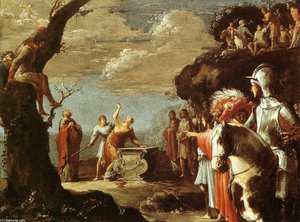
11St Peter"s Denial, Leonaert Bramer, 1642 (1642) autorstwa Leonaert BramerSt Peter"s Denial, Leonaert Bramer, 16421642 · Rijksmuseum 12Christ before Pilate (1635) autorstwa Leonaert BramerChrist before Pilate1635 · Bawarskie Państwowe Zbiory Malarstwa 13The Finding of Pyramus and Thisbe (1624) autorstwa Leonaert BramerThe Finding of Pyramus and Thisbe1624 · Gemäldegalerie 14Five men playing music in an interior (1633) autorstwa Leonaert BramerFive men playing music in an interior1633 · Staatliche Kunsthalle Karlsruhe 15The Adoration of the Shepherds (1635) autorstwa Leonaert BramerThe Adoration of the Shepherds1635 · Nationalmuseum 16The Martyrdom of the Prophet Isaiah (1625) autorstwa Leonaert BramerThe Martyrdom of the Prophet Isaiah1625 17Abraham and the Three Angels (1640) autorstwa Leonaert BramerAbraham and the Three Angels1640 · Museo del Prado 18The circumcision of the Christ-child by the priest in the temple (1640) autorstwa Leonaert BramerThe circumcision of the Christ-child by the priest in the temple1640 · Groninger Museum 19Solomon's idolatry (1 Kings 11:7-8) (1642) autorstwa Leonaert BramerSolomon's idolatry (1 Kings 11:7-8)1642 · Wallraf-Richartz-Museum 20Saphan reads the book of Law aloud to Josiah (2 Kings 8-10) (1642) autorstwa Leonaert BramerSaphan reads the book of Law aloud to Josiah (2 Kings 8-10)1642 21The presentation in the temple (1642) autorstwa Leonaert BramerThe presentation in the temple1642 · New York Historical Society 22The Betrayal of Christ (1637) autorstwa Leonaert BramerThe Betrayal of Christ1637 23Marcus Curtius Leaping into the Abyss on His Horse (1657) autorstwa Leonaert BramerMarcus Curtius Leaping into the Abyss on His Horse1657 24Quevedo Sees Chicotus in the Battle (1659) autorstwa Leonaert BramerQuevedo Sees Chicotus in the Battle1659 · Staatliche Graphische Sammlung 25Figures in a Loggia (1660) autorstwa Leonaert BramerFigures in a Loggia1660 · Victoria and Albert Museum 26Jacob's Dream (1657) autorstwa Leonaert BramerJacob's Dream1657 · Koninklijke Tichelaar 27The Judgment of Solomon (detail) (1640) autorstwa Leonaert BramerThe Judgment of Solomon (detail)1640 · Metropolitan Museum of Art 28Goniec pieniędzy walczy z światem, cielesnością i diabłem (1659) autorstwa Leonaert BramerGoniec pieniędzy walczy z światem, cielesnością i diabłem1659 · Staatliche Graphische Sammlung 29Judżces słoneczny (1640) autorstwa Leonaert BramerJudżces słoneczny1640 · Metropolitan Museum of Art 30The Fall of Simon Magus (1623) autorstwa Leonaert BramerThe Fall of Simon Magus1623 31The Quarrel between Ajax and Odysseus (1623) autorstwa Leonaert BramerThe Quarrel between Ajax and Odysseus1623 · Het Prinsenhof 32Quevedo and the Skeletons of Juan de la Encina and King Perico (1659) autorstwa Leonaert BramerQuevedo and the Skeletons of Juan de la Encina and King Perico1659 · Staatliche Graphische Sammlung 33Scene from the Metamorphoses (1660) autorstwa Leonaert BramerScene from the Metamorphoses1660 34Scene from the Metamorphoses (1660) autorstwa Leonaert BramerScene from the Metamorphoses1660 35Scenes from the Life of Christ (1660) autorstwa Leonaert BramerScenes from the Life of Christ1660 36Allegory of Transitoriness (1640) autorstwa Leonaert BramerAllegory of Transitoriness1640 · Kunsthistorisches Museum 37Pokusa Chrystusa (1645) autorstwa Leonaert BramerPokusa Chrystusa1645 · Hessisches Landesmuseum 38Design for a wall decoration (1645) autorstwa Leonaert BramerDesign for a wall decoration1645 · Nasjonalgalleriet 39Pashur Smiting Jeremiah in the Temple, Leonaert Bramer, c. 1648 (1648) autorstwa Leonaert BramerPashur Smiting Jeremiah in the Temple, Leonaert Bramer, c. 16481648 · Rijksmuseum 40Musicians in an Interior (1660) autorstwa Leonaert BramerMusicians in an Interior1660 · Rijksmuseum 41The Trials of Job (1630) autorstwa Leonaert BramerThe Trials of Job1630 · Courtauld Gallery 42Joseph and Potiphar's Wife (1630) autorstwa Leonaert BramerJoseph and Potiphar's Wife1630 · Courtauld Gallery 43A Peasant and Two Soldiers Playing Dice autorstwa Leonaert BramerA Peasant and Two Soldiers Playing DiceNationalmuseum 44Soldiers Arguing autorstwa Leonaert BramerSoldiers ArguingNationalmuseum 45Musical Company autorstwa Leonaert BramerMusical CompanyNationalmuseum 46Company around a Table autorstwa Leonaert BramerCompany around a TableNationalmuseum 47Anchias Fleeing Troy with His Father and Son autorstwa Leonaert BramerAnchias Fleeing Troy with His Father and Son 48the curious ones autorstwa Leonaert Bramerthe curious ones 49Résurrection de Jésus autorstwa Leonaert BramerRésurrection de Jésus 50SCENE DE SORCELLERIE autorstwa Leonaert BramerSCENE DE SORCELLERIE 51L'Arrestation de Jésus Jésus au Jardin des Oliviers autorstwa Leonaert BramerL'Arrestation de Jésus Jésus au Jardin des Oliviers 52Christ among the Doctors autorstwa Leonaert BramerChrist among the Doctors 53Salome Presented with the Head of St John the Baptist autorstwa Leonaert BramerSalome Presented with the Head of St John the BaptistMusée des Beaux-Arts 54Christ before Caiaphas autorstwa Leonaert BramerChrist before CaiaphasBirmingham Museum and Art Gallery 55LE DRAGON DE CADMUS autorstwa Leonaert BramerLE DRAGON DE CADMUS 56LA DECOUVERTE DES CORPS DE PYRAME ET DE THISBE autorstwa Leonaert BramerLA DECOUVERTE DES CORPS DE PYRAME ET DE THISBELuwr 57portrait of a man autorstwa Leonaert Bramerportrait of a man 58Peasants by a Fire autorstwa Leonaert BramerPeasants by a Fire 59Scenes from the Life of Christ autorstwa Leonaert BramerScenes from the Life of Christ 60The Adoration of the Magi autorstwa Leonaert BramerThe Adoration of the MagiDetroit Institute of Arts 61Concert of Angels (recto) autorstwa Leonaert BramerConcert of Angels (recto) 62Musicians on a Terrace autorstwa Leonaert BramerMusicians on a Terrace 63The Liberation of Saint Peter autorstwa Leonaert BramerThe Liberation of Saint PeterLos Angeles County Museum of Art 64Christ among the Doctors autorstwa Leonaert BramerChrist among the Doctors 65Circumcision of Christ (1640) autorstwa Leonaert BramerCircumcision of Christ1640 · Muzeum Narodowe w Warszawie

Słynne obrazy Leonaert Bramer epoka po epoce

Tematy, które przyciągnęły wzrok Leonaert Bramer

Cztery motywy najczęściej powracające w tych oryginałach, z których każdy doczekał się swojego najdoskonalszego przykładu.

Muzea przechowujące oryginały Leonaert Bramer

8 muzeów, w których znajduje się najwięcej obrazów z tej strony.

Muzea Miasto Dzieła artysty Leonaert Bramer Obrazy z tej listy
Nationalmuseum, StockholmNationalmuseum Stockholm 5 The Adoration of the Shepherds, A Peasant and Two Soldiers Playing Dice, Soldiers Arguing
Ermitaż, Sankt PetersburgErmitaż Sankt Petersburg 3 Adoration of the Magi, Dying Vision of Mary Magdalene, Crucifixion
Rijksmuseum, AmsterdamRijksmuseum Amsterdam 3 St Peter"s Denial, Leonaert Bramer, 1642, Pashur Smiting Jeremiah in the Temple, Leonaert Bramer, c. 1648, Musicians in an Interior
Staatliche Graphische Sammlung, MonachiumStaatliche Graphische Sammlung Monachium 3 Quevedo Sees Chicotus in the Battle, Goniec pieniędzy walczy z światem, cielesnością i diabłem, Quevedo and the Skeletons of Juan de la Encina and King Perico
Het Prinsenhof, DelftHet Prinsenhof Delft 2 The Sacrifice of Iphigenia, The Quarrel between Ajax and Odysseus
Kunsthistorisches Museum, WiedeńKunsthistorisches Museum Wiedeń 2 Allegory of Vanity (Vanitas), Allegory of Transitoriness
New York Historical Society, Nowy JorkNew York Historical Society Nowy Jork 2 Journey of the Three Magi to Bethlehem, The presentation in the temple
Metropolitan Museum of Art, Nowy JorkMetropolitan Museum of Art Nowy Jork 2 The Judgment of Solomon (detail), Judżces słoneczny

Leonaert Bramer, jedno kultowe dzieło na dekadę

Dzieła według dekad

Wybierz dekadę, aby zobaczyć dzieło, które ją definiuje.

Obrazy artysty Leonaert Bramer: odpowiedzi galerii

Który obraz Leonaert Bramer jest najsłynniejszy ze wszystkich?Odkryj odpowiedź

Soldiers with Horses before a House (1655), Museum Kunstpalast, Düsseldorf. Następne są Adoration of the Magi (1639) oraz The Sacrifice of Iphigenia (1623).

Ile lat miał Leonaert Bramer, gdy ukończył Soldiers with Horses before a House?Odkryj odpowiedź

59 lat: Soldiers with Horses before a House pochodzi z 1655, a Leonaert Bramer urodził(a) się w 1596.

Które to 10 najlepszych obrazów Leonaert Bramer?Odkryj odpowiedź

Soldiers with Horses before a House, Adoration of the Magi, The Sacrifice of Iphigenia, The Adoration of the Magi, Four Latin Fathers of the Church and Saints (verso), Allegory of Vanity (Vanitas), Dying Vision of Mary Magdalene, The Raising of Lazarus (John 11: 43-44), Crucifixion i Journey of the Three Magi to Bethlehem. Powyższy ranking zawiera rok powstania oraz muzeum dla każdego z nich.

Ile dzieł stworzył/a Leonaert Bramer?Odkryj odpowiedź

Nasz katalog zawiera 68 dzieł artysty Leonaert Bramer, datowanych od 1623 do 1660.

Gdzie można znaleźć najsłynniejsze oryginały autorstwa Leonaert Bramer?Odkryj odpowiedź

W większości znajdują się w Nationalmuseum (Stockholm), Ermitaż (Sankt Petersburg) i Rijksmuseum (Amsterdam). Powyższa tabela muzeów zawiera ich pełną listę.

Kiedy Leonaert Bramer stworzył swoje najsłynniejsze obrazy?Odkryj odpowiedź

W 1640s: 15 z 65 dzieł na tej stronie powstało w tym czasie, w tym The Adoration of the Magi.

Które z najsłynniejszych dzieł Leonaert Bramer należą do jego najwcześniejszych i najpóźniejszych prac?Odkryj odpowiedź

Na tej stronie najwcześniejszy to The Sacrifice of Iphigenia (1623), a najpóźniejszy Figures in a Loggia (1660).

Do jakich tematów Leonaert Bramer powracał najczęściej?Odkryj odpowiedź

People (12), Figures (11) i Shadows (10), w ramach 65 dzieł na tej stronie.

W jakiej technice najczęściej tworzył Leonaert Bramer?Odkryj odpowiedź

Oil On Canvas, dla 10 z 65 dzieł na tej stronie.

Z jakim nurtem związany jest Leonaert Bramer?Odkryj odpowiedź

Baroque art i Dutch golden age, sądząc po oryginałach na tej stronie.

Które oryginały artysty Leonaert Bramer znajdują się w zbiorach Nationalmuseum?Odkryj odpowiedź

The Adoration of the Shepherds, A Peasant and Two Soldiers Playing Dice i Soldiers Arguing: Nationalmuseum, Stockholm posiada 5 dzieł widocznych na tej stronie.

Leonaert Bramer: artysta

Życie rozświetlone blaskiem: Świat Leonaerta Bramera

Leonaert Bramer, imię rezonujące echem siedemnastowiecznego Delft, był kimś znacznie więcej niż tylko malarzem; był poszukiwaczem przygód, innowatorem i kluczową postacią holenderskiego Złotego Wieku. Urodzony w 1596 roku, przeżył życie, które rozwijało się niczym porywająca opowieść utkana z dalekich podróży, artystycznych eksperymentów i głębokiego zaangażowania w tętniący życiem kulturowy gobelin swoich czasów. Dziedzictwo Bramera nie jest definiowane jedynie przez płótna, które wypełnił, lecz przez unikalną perspektywę, jaką do nich wniósł – skłonność do dramatycznych scen nocnych, przesyconych egzotycznymi detalami, co wyróżniało go na tle wielu współczesnych. Nie ograniczał się jedynie do przedstawiania rzeczywistości; on kreował światy zanurzone w atmosferze i intrydze, co podczas pobytu we Włoszech przyniosło mu sugestywne miano „Leonardo della Notte”, czyli „Leonardo Nocy”.

Z Delft do Rzymu: Podróż kształtująca artystyczną duszę

Artystyczna wędrówka Bramera rozpoczęła się od śmiałego opuszczenia rodzinnego Delft w młodym wieku zaledwie osiemnastu lat, kiedy to wyruszył w wielką podróż, która miała ukształtować jego wrażliwość estetyczną. Nie była to jednak beztroska eksploracja, lecz intensywna praktyka mistrzowska w samym sercu europejskich centrów sztuki. Przemierzając miasta takie jak Arras, Amiens i Paryż, ostatecznie dotarł do Rzymu w 1616 roku – miejsca będącego tyglem artystycznych ambicji. Tam dołączył do szeregów Bentvueghels, stowarzyszenia północnych artystów, którzy przyjmowali satyryczne pseudonimy i angażowali się w ożywione dyskursy intelektualne. Bramer zyskał wówczas miano „Nestelghat” (Niecierpliwy), co sugerowało niespokojną energię przenikającą zarówno jego życie, jak i sztukę. Jego czas we Włoszech nie był wolny od konfliktów; kroniki wspominają o fizycznej sprzeczce z wybitnym Claude’em Lorrainem, co dowodzi ducha pełnego pasji, nieznającego strachu przed konfrontacją. To właśnie w tym dynamicznym środowisku Bramer szlifował swoje umiejętności, opanowując technikę malarstwa freskowego – rzadką w Europie Północnej – jednocześnie chłonąc wpływy mistrzów takich jak Adam Elsheimer czy Agostino Tassi. Podróżował szeroko po Italii, odwiedzając Mantua i Wenecję, a każde z tych miejsc dodawało kolejną warstwę do jego rozwijającego się stylu.

Powrót do Delft: Mecenat, innowacja i artystyczna wszechstronność

Powracając do Delft w 1628 roku, Bramer płynnie wtopił się w lokalną scenę artystyczną, wstępując do cechu Świętego Łukasza w 1629 roku. Szybko zyskał protekcję znamienitych postaci, w tym członków dynastii Orańskiej oraz wpływowych urzędników lokalnych, co zapewniło mu stabilne fundamenty dla jego artystycznych dążeń. Bramer nie był jednak artystą jednowymiarowym; odnajdywał satysfakcję w różnorodnych poszukiwaniach twórczych wykraczających poza malarstwo sztalugowe. Projektował misterne wzory dla manufaktur tapiserii, tworząc dzieła zdobiące domy w całej Holandii. Co więcej, podejmował ambitne projekty muralistyczne, wykorzystując techniki iluzjonistyczne, by przekształcać wnętrza w immersyjne środowiska. Niestety, wiele z tych fresków przepadło wraz z upływem czasu z powodu surowego holenderskiego klimatu, lecz ich istnienie stanowi świadectwo niezwykłej wszechstronności Bramera i jego gotowości do przesuwania artystycznych granic. Jego unikalny styl, charakteryzujący się nerwową energią i mistrzowskim przedstawieniem refleksów świetlnych, konsekwentnie faworyzował tematy włoskie kosztem bardziej konwencjonalnych holenderskich pejzałów czy martwych natur, co czyniło go indywidualistą w swoim środowisku.

Dotyk mentora: Wpływ Bramera i trwałe dziedzictwo

Wpływ Bramera wykraczał daleko poza jego własną twórczość. Uważa się, że odegrał on kluczową rolę w początkach kariery Johannesa Vermeera, broniąc młodego artysty w momencie, gdy jego przyszła teściowa próbowała zapobiec jego małżeństwu. Ten akt sugeruje bliską relację, co skłania wielu badaczy do spekulacji, że Bramer mógł pełnić rolę nauczyciela Vermeera – choć konkretne dowody pozostają nieuchwytne. Jego intelektualna ciekawość znalazła wyraz w stworzeniu „Albumu Bramera” (1642-1654), kolekcji rysunków oferującej bezcenną wiedzę na temat zbiorów sztuki i praktyk artystycznych panujących w Delft w jego czasach. Leonaert Bramer zmarł w Delft przed 10 lutego 1674 roku, pozostawiając po sobie dorobek, który nieustannie fascynuje i intryguje. Choć po jego śmierci jego sława na pewien czas przygasła, współczesne badania naukowe wywołały odrodzone zainteresowanie jego życiem i sztuką, umacniając jego pozycję jako ważnej – choć często pomijanej – postaci w historii sztuki holenderskiej. Pozostaje on świadectwem potęgi indywidualnej wizji oraz nieprzemijającego uroku życia poświęconego dążeniu do artystycznej doskonałości.