Portret Jacques Stella

45 najsłynniejszych obrazów artysty Jacques Stella – wybór z galerii

Aktualizacja: Listopad 2026 · ranking według naszego wskaźnika popularności (liczba wyszukiwań, wizyt i zamówień dla każdego dzieła) · 48 dzieł Jacques Stella w naszym katalogu

W skrócie

Spośród wszystkich dzieł oryginalnych, które pozostawił Jacques Stella, najsłynniejszym jest The Madonna and Child (1642), znajdujący się w kolekcji Ermitaż w Sankt Petersburg. Tuż za nimi znajdują się Madonna and Christ Child, with St John the Baptist and Angels (1650) oraz Christ on the Cross and Saint Mary Magdalene (1625). Nasz katalog zawiera 48 dzieł autorstwa Jacques Stella; galeria zachowała 45 najbardziej podziwianych na świecie prac, z których każda została przedstawiona wraz z datą powstania, informacją o muzeum oraz jej historią.

1596 – 1657, Lyon Baroque Najwięcej dzieł: Luwr

10 najlepszych obrazów artysty Jacques Stella: wybór galerii

1
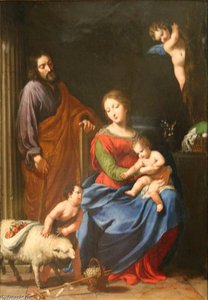
The Madonna and Child (1642) autorstwa Jacques Stella

The Madonna and Child

1642 · Oil · Ermitaż, Sankt Petersburg

The Madonna and Child emerges from the shadows of the seventeenth century, a tender moment captured in oil by the French Baroque painter Jacques De Stella. Born in 1596, the artist brings a sense of profound stillness to this religious scene. The work dates to about 1642, a period when De Stella’s brushwork carries the weight of both Florentine precision and the dramatic light of the Baroque era. He moves…

3
Christ on the Cross and Saint Mary Magdalene (1625) autorstwa Jacques Stella

Christ on the Cross and Saint Mary Magdalene

1625 · Oil

The scene unfolds in a moment of profound sorrow, capturing Christ on the Cross and Saint Mary Magdalene. This religious oil painting by Jacques Stella brings the viewer into the immediate presence of the Crucifixion. The pale, illuminated figure of Christ hangs against a dark, nocturnal sky, while Saint Mary Magdalene remains at the foot of the cross, her presence a heavy weight of grief and devotion. The air feels…

4
Christ and the Samaritan Woman (1640) autorstwa Jacques Stella

Christ and the Samaritan Woman

1640 · Oil

The scene unfolds in 1640, capturing a profound moment of encounter in Christ and the Samaritan Woman. Jacques Stella brings this biblical narrative to life, focusing on the pivotal meeting between Jesus and the woman at the well. The air seems to hold its breath as the two figures engage, their presence anchored by the stone structure of the well that serves as the heart of their interaction.

5
Self-portrait (1640) autorstwa Jacques Stella

Self-portrait

1640 · Oil On Canvas · Musée des Beaux-Arts de Lyon, Lyon

The painting presents a close-up view of a man, focused on the face and upper body against an undefined, dark background. A single light source originates from the upper left, casting the right side of the subject's features into deep shadow. This lighting highlights the bridge of the nose, the lips, and the texture of the skin. The subject is positioned centrally, creating a direct gaze toward the viewer. He…

6
The Nativity (1639) autorstwa Jacques Stella

The Nativity

1639 · Oil On Canvas · Bowes Museum, Barnard Castle

The air inside the stable feels heavy with the scent of hay and the warmth of a recent miracle. A soft, golden light spills through a window to the right, cutting through the dimness to illuminate the central figures. Mary and Joseph lean inward, their bodies forming a quiet, pyramidal shape that draws the eye toward the infant Jesus. The child lies at the heart of this composition, a small…

7
Risen Jesus Christ appearing to his mother (1650) autorstwa Jacques Stella

Risen Jesus Christ appearing to his mother

1650 · Oil

The Resurrection is rendered here through a rare and demanding medium: oil on a translucent, polished stone slab, likely agate or onyx. This choice of substrate dictates the work's unique luminosity. The background is not a static void but a swirling, textured expanse of golden-brown, where the natural veins of the stone integrate with the painted figures. Christ emerges as a muscular, luminous presence, draped in flowing pink and red…

8
Jacob's Ladder (1650) autorstwa Jacques Stella

Jacob's Ladder

1650 · Painting · Los Angeles County Museum of Art, Los Angeles

In Jacob's Ladder, Jacques Stella captures a moment of profound spiritual intersection. Created about 1650, the work presents the biblical scene of Jacob's Ladder, where the boundary between the earthly and the divine begins to dissolve. The subject matter functions as a symbol of divine communication and transcendence, inviting a sense of wonder at the connection between heaven and earth. This celestial encounter unfolds within a dreamlike atmosphere, where the…

9
MINERVE CHEZ LES MUSES autorstwa Jacques Stella

MINERVE CHEZ LES MUSES

Oil On Canvas · Luwr, Paryż

To gaze upon this magnificent depiction of Minerve Chez les Muses is to step directly into the golden age of classical mythology, a moment suspended in an eternal afternoon of intellectual bloom. The scene unfolds with breathtaking richness, presenting Minerva, the embodiment of wisdom and strategic thought, surrounded by her divine companions—the Muses, goddesses patronizing the arts and sciences. It is more than just a painting; it is a vibrant…

10
The Martyrdom of St Stephen (1623) autorstwa Jacques Stella

The Martyrdom of St Stephen

1623 · Oil · Fitzwilliam College, Cambridge

Jacques Stella captured the heavy weight of sacrifice in this depiction of The Martyrdom of St Stephen. Created about 1623, the work presents a moment of profound tension. The scene focuses on the saint as he faces his end, surrounded by the physical reality of his persecution. It is a study of devotion held against the violence of a crowd.

Kontynuacja zestawienia Jacques Stella, od 11 do 45

11The Rest on the Flight into Egypt (1639) autorstwa Jacques StellaThe Rest on the Flight into Egypt1639 12The Virgin and Child with Saint John the Baptist and Child Angels (1640) autorstwa Jacques StellaThe Virgin and Child with Saint John the Baptist and Child Angels1640 · National Trust 13Salome with the Head of Saint John the Baptist (1637) autorstwa Jacques StellaSalome with the Head of Saint John the Baptist1637 · National Trust 14SAINTE CECILE JOUANT DE L'ORGUE autorstwa Jacques StellaSAINTE CECILE JOUANT DE L'ORGUELuwr 15Judgment of Solomon autorstwa Jacques StellaJudgment of SolomonKunsthistorisches Museum 16King Candaules of Lydia Showing His Wife to Gyges autorstwa Jacques StellaKing Candaules of Lydia Showing His Wife to GygesMuzeum Sztuki Johna i Mable Ringlingów 17Virgin and Child autorstwa Jacques StellaVirgin and Child 18The Rape of the Sabines autorstwa Jacques StellaThe Rape of the Sabines 19Massacre Of The Innocents autorstwa Jacques StellaMassacre Of The Innocents 20LOUIS II DE BOURBON, DUC D'ENGHIEN autorstwa Jacques StellaLOUIS II DE BOURBON, DUC D'ENGHIENMusée Condé 21La mort de Saint Joseph autorstwa Jacques StellaLa mort de Saint JosephMusée de Grenoble 22Sainte Anne conduisant la Vierge au temple autorstwa Jacques StellaSainte Anne conduisant la Vierge au temple 23La Vierge donnant la bouillie à l'enfant Jésus, avec un angelot soufflant sur le réchaud autorstwa Jacques StellaLa Vierge donnant la bouillie à l'enfant Jésus, avec un angelot soufflant sur le réchaud 24L'Enfance du Christ La Sainte Famille autorstwa Jacques StellaL'Enfance du Christ La Sainte Famille 25Repos de la Sainte Famille autorstwa Jacques StellaRepos de la Sainte Famille 26LA VIERGE, L'ENFANT JESUS ET SAINT JEAN BAPTISTE autorstwa Jacques StellaLA VIERGE, L'ENFANT JESUS ET SAINT JEAN BAPTISTE 27TRIOMPHE DE LOUIS XIII SUR LES ENNEMIS DE LA RELIGION autorstwa Jacques StellaTRIOMPHE DE LOUIS XIII SUR LES ENNEMIS DE LA RELIGION 28The Marriage of the Virgin autorstwa Jacques StellaThe Marriage of the VirginSzépművészeti Múzeum 29Clelie Passant Le Tibre autorstwa Jacques StellaClelie Passant Le Tibre 30French, (1596-1657) autorstwa Jacques StellaFrench, (1596-1657) 31The Holy Family autorstwa Jacques StellaThe Holy Family 32The Liberality Of Louis Xiii And Cardinal Richelieu autorstwa Jacques StellaThe Liberality Of Louis Xiii And Cardinal Richelieu 33Minerva and the muses autorstwa Jacques StellaMinerva and the muses 34Le Bapteme Du Christ autorstwa Jacques StellaLe Bapteme Du Christ 35La Sainte Famille autorstwa Jacques StellaLa Sainte Famille 36Sémiramis Appelée Au Combat autorstwa Jacques StellaSémiramis Appelée Au Combat 37Portrait De Jacques Stella Et De Sa Mère autorstwa Jacques StellaPortrait De Jacques Stella Et De Sa Mère 38Sainte Famille Avec Saint Jean-baptiste. autorstwa Jacques StellaSainte Famille Avec Saint Jean-baptiste.Musée Fabre 39The Liberality Of Titus, Allegory Of The Liberality Of Louis Xiii And Cardinal Richelieu autorstwa Jacques StellaThe Liberality Of Titus, Allegory Of The Liberality Of Louis Xiii And Cardinal RichelieuHarvard Art Museums 40Mariage de la Vierge autorstwa Jacques StellaMariage de la ViergeMusée des Augustins 41Rest On The Flight Into Egypt autorstwa Jacques StellaRest On The Flight Into EgyptMuzeum Pałacu Króla Jana III w Wilanowie 42Jésus Christ reçoit la Vierge dans le ciel autorstwa Jacques StellaJésus Christ reçoit la Vierge dans le cielLuwr 43CLELIE PASSANT LE TIBRE autorstwa Jacques StellaCLELIE PASSANT LE TIBRELuwr 44Solomon Worshipping Idols (1647) autorstwa Jacques StellaSolomon Worshipping Idols1647 · Musée des Beaux-Arts de Lyon 45Solomon Receiving the Queen of Sheba (1650) autorstwa Jacques StellaSolomon Receiving the Queen of Sheba1650 · Musée des Beaux-Arts de Lyon

Tematy, które przyciągnęły wzrok Jacques Stella

Cztery motywy najczęściej powracające w tych oryginałach, z których każdy doczekał się swojego najdoskonalszego przykładu.

Muzea przechowujące oryginały Jacques Stella

8 muzeów, w których znajduje się najwięcej obrazów z tej strony.

Muzea Miasto Dzieła artysty Jacques Stella Obrazy z tej listy
Luwr, ParyżLuwr Paryż 4 MINERVE CHEZ LES MUSES, SAINTE CECILE JOUANT DE L'ORGUE, Jésus Christ reçoit la Vierge dans le ciel
Musée des Beaux-Arts de Lyon, LyonMusée des Beaux-Arts de Lyon Lyon 3 Self-portrait, Solomon Worshipping Idols, Solomon Receiving the Queen of Sheba
Ermitaż, Sankt PetersburgErmitaż Sankt Petersburg 2 The Madonna and Child, Madonna and Christ Child, with St John the Baptist and Angels
National Trust, ThamesNational Trust Thames 2 The Virgin and Child with Saint John the Baptist and Child Angels, Salome with the Head of Saint John the Baptist
Bowes Museum, Barnard CastleBowes Museum Barnard Castle 1 The Nativity
Los Angeles County Museum of Art, Los AngelesLos Angeles County Museum of Art Los Angeles 1 Jacob's Ladder
Fitzwilliam College, CambridgeFitzwilliam College Cambridge 1 The Martyrdom of St Stephen
Kunsthistorisches Museum, WiedeńKunsthistorisches Museum Wiedeń 1 Judgment of Solomon

Jacques Stella dekada po dekadzie: oryginały definiujące każdy okres

Dzieła według dekad

Wybierz dekadę, aby zobaczyć dzieło, które ją definiuje.

Pytania kolekcjonerów o obrazy Jacques Stella

Z jakiego dzieła najbardziej znany jest Jacques Stella?Odkryj odpowiedź

The Madonna and Child (1642), Ermitaż, Sankt Petersburg. Następne są Madonna and Christ Child, with St John the Baptist and Angels (1650) oraz Christ on the Cross and Saint Mary Magdalene (1625).

W jakim wieku był Jacques Stella, gdy powstało The Madonna and Child?Odkryj odpowiedź

46 lat: The Madonna and Child pochodzi z 1642, a Jacques Stella urodził(a) się w 1596.

Jakie są dziesięć najsłynniejszych obrazów, których autorem jest Jacques Stella?Odkryj odpowiedź

The Madonna and Child, Madonna and Christ Child, with St John the Baptist and Angels, Christ on the Cross and Saint Mary Magdalene, Christ and the Samaritan Woman, Self-portrait, The Nativity, Risen Jesus Christ appearing to his mother, Jacob's Ladder, MINERVE CHEZ LES MUSES i The Martyrdom of St Stephen. Powyższy ranking zawiera rok powstania oraz muzeum dla każdego z nich.

Ile obrazów pozostawił po sobie Jacques Stella?Odkryj odpowiedź

Nasz katalog zawiera 48 dzieł artysty Jacques Stella, datowanych od 1623 do 1650.

W których muzeach znajdują się arcydzieła Jacques Stella?Odkryj odpowiedź

W większości znajdują się w Luwr (Paryż), Musée des Beaux-Arts de Lyon (Lyon) i Ermitaż (Sankt Petersburg). Powyższa tabela muzeów zawiera ich pełną listę.

W których latach Jacques Stella namalował swoje najsłynniejsze dzieła?Odkryj odpowiedź

W 1640s: 5 z 45 dzieł na tej stronie powstało w tym czasie, w tym The Madonna and Child.

Jakie są pierwsze i ostatnie słynne oryginały Jacques Stella?Odkryj odpowiedź

Na tej stronie najwcześniejszy to The Martyrdom of St Stephen (1623), a najpóźniejszy Madonna and Christ Child, with St John the Baptist and Angels (1650).

Jakie tematy Jacques Stella wybierał najczęściej?Odkryj odpowiedź

Woman (7), Man (5) i Landscape (4), w ramach 45 dzieł na tej stronie.

Której techniki Jacques Stella używał najczęściej?Odkryj odpowiedź

Oil, dla 10 z 45 dzieł na tej stronie.

Do jakiego nurtu artystycznego należy Jacques Stella?Odkryj odpowiedź

Baroque, sądząc po oryginałach na tej stronie.

Które dzieła Jacques Stella znajdują się w Luwr?Odkryj odpowiedź

MINERVE CHEZ LES MUSES, SAINTE CECILE JOUANT DE L'ORGUE i Jésus Christ reçoit la Vierge dans le ciel: Luwr, Paryż posiada 4 dzieł widocznych na tej stronie.

Jacques Stella: życie i twórczość

Jacques de Stella: Klasycysta łączący Florencję z Paryżem

Jacques de Stella (1596-1657) jawi się jako postać kluczowa dla siedemnastowiecznego malarstwa francuskiego – artysta, którego kariera w sposób niezwykle płynny połączyła rygorystyczne zasady florenckiego klasycyzmu z rodzącym się dynamizmem rzymskich wpływów. Urodzony w Lyonie w rodzinie głęboko zakorzenionej w tradycji artystycznej – jego ojciec, François Stella, był malarzem i kupcem pochodzenia flamandzkiego – Jacques od najmłodszych lat kroczył ścieżką wyznaczoną przez sztukę. Choć przedwczesna śmierć ojca uniemożliwiła mu zdobycie formalnego wykształcenia pod jego okiem, dom rodzinny, w którym dorastali m.in. rzeźbiarka Madeleine oraz malarz François Młodszy, stał się przestrzenią nasyconą twórczym dialogiem i artystyczną praktyką. To dziedzictwo, wsparte pasją artystyczną jego wuja Antoine’a Stelli, pchnęło go ku życiu w całości poświęconemu ekspresji wizualnej.

Artystyczna wędrówka Stella rozpoczęła się w Lyonie, gdzie szlifował swój warsztat, by następnie udać się w przełomową podróż do Florencji, która trwała w latach 1616–1621. Pobyt na dworze Kosmy II de Medicich okazał się dla niego czasem głęboko transformującym. Współpracując z Jacques’em Callot, Stella zanurzył się w ideałach sztuki renesansowej, chłonąc dbałość o najdrobniejszy detal, harmonijne kompozycje oraz głębokie narracje moralne, tak charakterystyczne dla malarstwa florenckiego. Wpływ Florencji jest niepodważalnie widoczny w całym jego dorobku, przejawiając się zwłaszcza w mistrzowskim operowaniu perspektywą, kunsztownym ujęciu draperii oraz przedstawianiu postaci religijnych z godną, pełną powagi uroczystością.

Rzymskie lata: W cieniu Poussina i pod mecenatem papieża

Po śmierci Kosmy II w 1621 roku, Stella udał się do Rzymu, gdzie przez kolejną dekadę budował swoją pozycję jako ceniony artysta. Okres ten przyniósł znaczącą przemianę jego wrażliwości artystycznej, naznaczoną coraz głębszym związkiem z antykiem oraz – co kluczowe – naukami Nicolasa Poussina. Poussinowskie akcenty kładzione na światło, kolor i idealizowane formy silnie zarezonowały w duszy Stelli, kształtując jego podejście do kompozycji oraz doboru tematów. Ich przyjaźń zaowocowała wspólnym dążeniem do klarowności, powściągliwości i duchowej głębi – cech, które stały się znakami rozpoznawczymi jego unikalnego stylu.

Rzymska kariera Stelli została dodatkowo ugruntowana dzięki mecenatowi papieża Urbana VIII, który dostrzegł niezwykły talent artysty i zlecił mu liczne dzieła. Wśród nich znajdowały się nie tylko tradycyjne obrazy na panelach, ale także niezwykle misterne malowidła na kamieniu, takich jak onyks, lapis lazuli czy łupki. Te zlecenia stanowiły świadectwo technicznej wirtuozerii Stelli oraz jego niezwykłej zdolności do przekładania złożonych narracji na wizualnie porywające formy. Twórczość z tego okresu ukazuje mistrzowskie panowanie nad warsztatem, widoczne w precyzyjnym oddaniu tekstur, subtelnych gradacjach światłocienia oraz harmonijnym wpisaniu postaci w ich naturalne otoczenie.

Tematyka religijna i królewskie uznanie

Twórczość artystyczna Jacques Stella koncentrowała się w szczególności na tematach religijnych, czego najznamienitszym przykładem są jego poruszające przedstawienia „Dzieciństwa Chrystusa”. Istnieje pięć odrębnych wersji tej ikonicznej sceny, z których każda oferuje subtelnie inną interpretację narracji. Obrazy te nie są jedynie przedstawieniami biblijnych wydarzeń; są one przesycone głębokim poczuciem czułości, kruchości oraz duchowej kontemplacji. Meticulous detail, z jakim Stella ukazuje interakcje niemowlęcego Jezusa z jego rodzicami – Maryją i Józefem – świadczy o jego głębokim zrozumieniu ludzkich emocji oraz niezwykłej zdolności do przekazywania złożonych idei teologicznych poprzez obrazową ekspresję.

W 1634 roku Stella powrócił do Lyonu, by w 1635 roku przenieść się do Paryża. Jego przybycie do stolicy stało się przełomowym momentem w jego karierze. Przedstawiony królowi Ludwikowi XIII przez kardynała Richelieu, otrzymał prestiżowy tytuł „Peintre du Roi” (Malarza Królewskiego) – stanowisko, które zapewniło mu królewski mecenat oraz gwarantowaną pensję w wysokości 1000 liwrów. To uznanie ugruntowało pozycję Jacques Stella jako jednego z czołowych artystów Francji, pozwalając mu na kontynuowanie artystycznych poszukiwań w atmosferze względnego bezpieczeństwa i wolności twórczej.

Kolekcjoner i dziedzictwo

Poza niezwykle płodną działalnością malarską i rytowniczą, Jacques Stella przez całe swoje życie pozostawał żarliwym kolekcjonerem sztuki. Zgromadził on zdumiewającą kolekcję dzieł autorstwa Poussina, Rafaela i Michała Anioła, a także rysunków Leonarda da Vinci, co stanowiło świadectwo jego głębokiego szacunku dla artystycznego dziedzictwa przeszłości. Jego oddanie procesowi zachowania i studiowania tych arcydzieł podkreślało nie tylko pasję do twórczej ekspresji, ale także zaangażowanie w naukowe zgłębianie historii sztuki.

Kariera Stella rozciągała się na wiele dziesięcioleci, charakteryzując się niezwykłą zdolnością adaptacji oraz gotowością do czerpania z różnorodnych stylów artystycznych. Artysta odszedł w Paryżu, pozostawiając po sobie imponujący dorobek, który do dziś budzi podziw swoją elegancją, kunsztem technicznym i głębią duchową. Jego wpływ na kolejne pokolenia francuskich malarzy jest niezaprzeczalny, co utwierdza jego pozycję jako kluczowej postaci w procesie przejścia od manieryzmu do klasycyzmu oraz jako żywego łącznika między tradycjami artystycznymi Florencji i Francji.