Portret Franz Ritter von Stuck

100 najsłynniejszych obrazów artysty Franz Ritter von Stuck – wybór z galerii

Aktualizacja: Listopad 2026 · ranking według naszego wskaźnika popularności (liczba wyszukiwań, wizyt i zamówień dla każdego dzieła) · 259 dzieł Franz Ritter von Stuck w naszym katalogu

W skrócie

Spośród wszystkich dzieł oryginalnych, które pozostawił Franz Ritter von Stuck, najsłynniejszym jest Grzech (1893), znajdujący się w kolekcji Bawarskie Państwowe Zbiory Malarstwa w Monachium. Tuż za nimi znajdują się Lucifer (1890) oraz Ranna Amazonka (1904). Nasz katalog zawiera 259 dzieł autorstwa Franz Ritter von Stuck; galeria zachowała 100 najbardziej podziwianych na świecie prac, z których każda została przedstawiona wraz z datą powstania, informacją o muzeum oraz jej historią.

1863 – 1928, Tettenweis Symbolizm Najwięcej dzieł: Bawarskie Państwowe Zbiory Malarstwa

10 najlepszych obrazów artysty Franz Ritter von Stuck: wybór galerii

1
Grzech (1893) autorstwa Franz Ritter von Stuck

Grzech

1893 · Obraz olejny na płótnie · Bawarskie Państwowe Zbiory Malarstwa, Monachium

Grzech to powstałe w 1893 roku dzieło niemieckiego artysty, którym jest Franz von Stuck. W tej kompozycji twórca przedstawia postać Ewy, ukazanej jako nagą, spowitą przez potężnego węża, który oplata jej ciało. Ten konkretny motyw wyłonił się z wcześniejszych poszukiwań tematycznych artysty, rozwijając się bezpośrednio z jego obrazu Zmysłowość (Die Sinnlichkeit) z 1889 roku.

2
Lucifer (1890) autorstwa Franz Ritter von Stuck

Lucifer

1890 · Obraz olejny na płótnie · National Gallery of Bulgaria, Sofia

W 1890 roku Franz von Stuck stworzył Lucifera jako obraz olejny na płótnie, dzieło, które stanowi fundament jego „mrocznego monumentalizmu”. Postać wyłania się z nicości, ukazana jako siedzący człowiek-demon, uchwycony w momencie ciężkiego, pełnego zadumy bezruchu. Jest to istota utkana z mięśni i cienia, której formę definiuje napięcie ciała będącego jednocześnie ludzkim i czymś znacznie starszym. Jego wzrok jest utkwiony, przenika mrok, by spojrzeć prosto w oczy widza.

3
Ranna Amazonka (1904) autorstwa Franz Ritter von Stuck

Ranna Amazonka

1904 · Obraz olejny na płótnie

W przejmująco sugestywnej Rannej Amazonce, stworzonej w 1904 roku, Franz Ritter von Stuck zaprasza nas w głąb momentu głębokiej bezbronności i surowego konfliktu. Obraz przedstawia nagą kobiecą postać, Amazonkę, uchwyconą w stanie intensywnego cierpienia. Kobieta klęczy na ziemi, a jej ciało nosi piętno bitwy w postaci widocznej rany pod piersiom. Próbując osłonić się przed niewidzialnymi zagrożeniami, unosi ramiona ku twarzy, co oddaje poczucie desperackiej obrony. Kompozycję spaja uderzające, wibrujące czerwone…

4
Sin (1893) autorstwa Franz Ritter von Stuck

Sin

1893 · Oil On Canvas · Neue Pinakothek, Monachium

Franz Ritter von Stuck: The Sin The dark, decadent art of Franz Ritter von Stuck is ushered into the light for its first American retrospective. Jo-Ann Birnie Danzker, curator at the Frye Art Museum, hopes that it will lead to a reevaluation of Stuck’s importance as an artist in his own right – his work seemed old-fashioned and irrelevant to a generation that had endured World War I. Stuck's reputation…

5
Lucifer autorstwa Franz Ritter von Stuck

Lucifer

Oil On Canvas

Franz von Stuck presents the fallen angel in Lucifer, an oil on canvas executed between 1890 and 1891. The figure is rendered as a seated, naked, and brooding presence within an undefined dark space. This depiction of a central figure from Christian mythology emphasizes an intense, muscular physicality. The subject's posture is heavy, conveying a sense of profound melancholy and internal struggle.

6
Wine (1889) autorstwa Franz Ritter von Stuck

Wine

1889 · Oil On Canvas · Kunsthaus Zürich, Zurych

To stand before Franz Ritter von Stuck’s Wine is to step directly into the charged, evocative atmosphere of late 19th-century German Symbolism. This piece from 1889 is far more than a mere depiction; it is an emotional tableau, a meditation on human connection, nature's embrace, and perhaps, the intoxicating mystery of desire itself. The composition immediately draws the eye to the central drama: a nude male figure clinging with desperate…

7
The Sin (1912) autorstwa Franz Ritter von Stuck

The Sin

1912 · Oil On Canvas · Alte Nationalgalerie, Berlin

, also known as Die Sünde, is an oil on canvas work by the German artist Franz von Stuck. Created in 1912, this piece represents one of several versions of this specific theme developed by the artist. The work is a significant example of the Symbolist movement, focusing on psychological depth and dramatic tension.

8
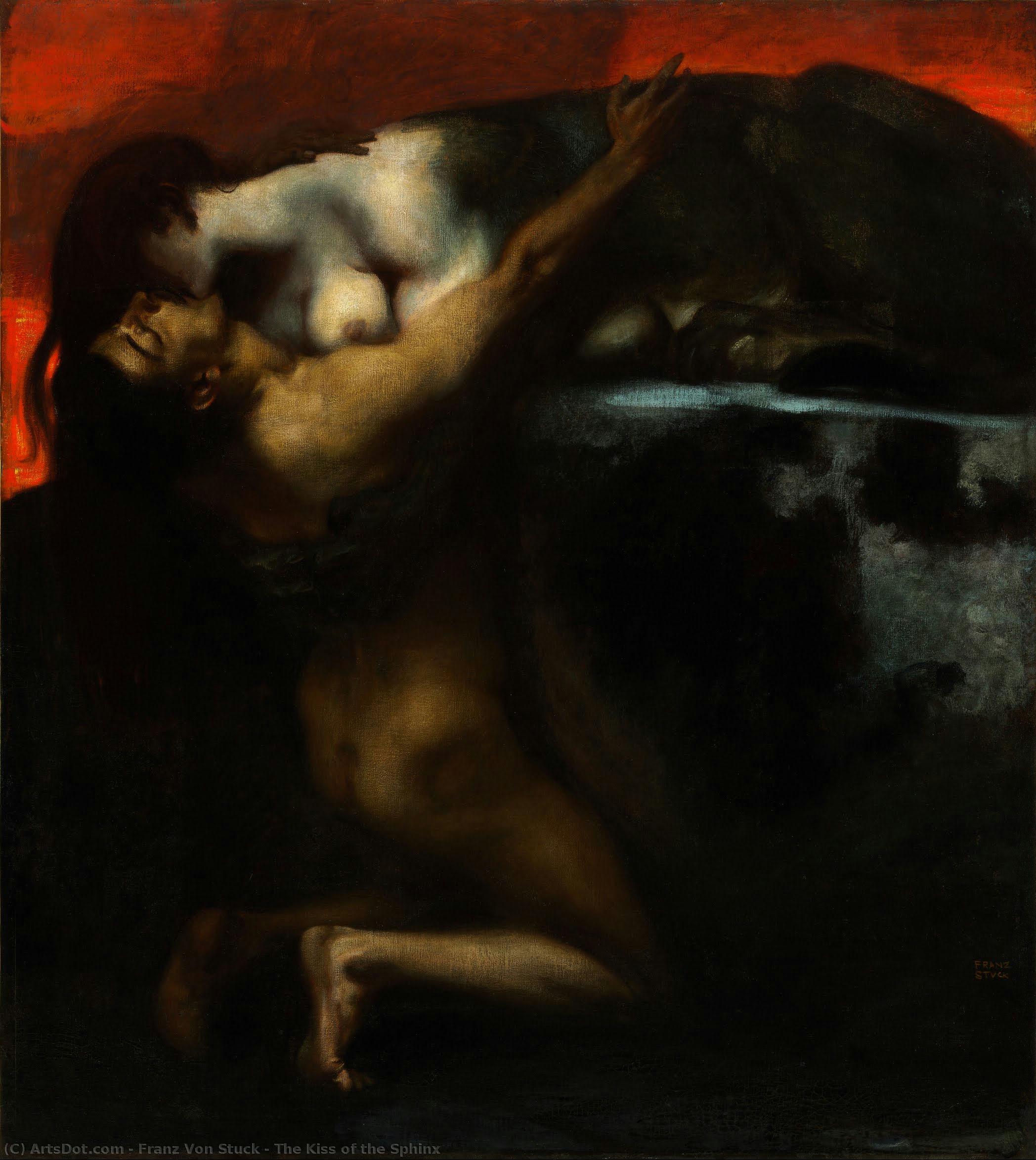
The Kiss of the Sphinx (1895) autorstwa Franz Ritter von Stuck

The Kiss of the Sphinx

1895 · Oil On Canvas · Szépművészeti Múzeum, Budapeszt

In the twilight of the nineteenth century, few images captured the psychological tremors of the era as profoundly as Franz Ritter von Stuck’s "The Kiss of the Sphinx." Completed in 1895, this masterpiece serves as a haunting cornerstone of German Symbolism, inviting the viewer into a realm where the boundaries between the physical and the metaphysical dissolve. The painting presents a dramatic tableau of a sensual encounter, set against the…

9
Sisyphus (1920) autorstwa Franz Ritter von Stuck

Sisyphus

1920 · Oil

In the 1920 painting titled Sisyphus, the artist Franz von Stuck depicts a man engaged in a repetitive physical struggle. The subject is shown in the process of pushing a large boulder up a steep incline. The man is positioned with the weight of the rock resting directly upon his back. He wears a simple loincloth, leaving his muscular form exposed as he labors against the terrain. One hand is…

10
Glow Worms (1898) autorstwa Franz Ritter von Stuck

Glow Worms

1898 · Oil On Canvas

In this work, titled Glow Worms, we encounter a piece from 1898 by the German artist Franz von Stuck. It is a quiet moment captured in oil on canvas, reflecting the specific sensibilities of the late nineteenth century. The artist, who was born in Tettenweis, Germany, brings a particular sense of atmosphere to this nocturnal scene, moving away from the rigid academicism of his era toward something more personal and…

Kontynuacja zestawienia Franz Ritter von Stuck, od 11 do 100

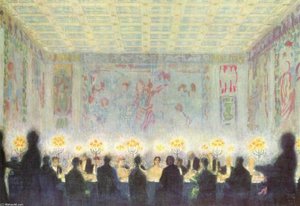
11Wild Chase (1889) autorstwa Franz Ritter von StuckWild Chase1889 · Lenbachhaus 12Inferno (1908) autorstwa Franz Ritter von StuckInferno1908 · Metropolitan Museum of Art 13Portrait of Frau Feez autorstwa Franz Ritter von StuckPortrait of Frau Feez 14The Guardian of Paradise (1889) autorstwa Franz Ritter von StuckThe Guardian of Paradise1889 · Museum Villa Stuck 15von Lucifer autorstwa Franz Ritter von Stuckvon Lucifer 16Gertrud Littmann (1911) autorstwa Franz Ritter von StuckGertrud Littmann1911 · Bawarskie Państwowe Zbiory Malarstwa 17Amazon and Centaur autorstwa Franz Ritter von StuckAmazon and Centaur 18Faun and Nymph (Teasing) (1892) autorstwa Franz Ritter von StuckFaun and Nymph (Teasing)1892 · National Gallery Prague 19Florentine Lady (1901) autorstwa Franz Ritter von StuckFlorentine Lady1901 20Professor Lujo Brentano (1914) autorstwa Franz Ritter von StuckProfessor Lujo Brentano1914 · Bawarskie Państwowe Zbiory Malarstwa 21The Murderer (1891) autorstwa Franz Ritter von StuckThe Murderer1891 22Sin (1893) autorstwa Franz Ritter von StuckSin1893 23Junge autorstwa Franz Ritter von StuckJunge 24Crucifixion (1913) autorstwa Franz Ritter von StuckCrucifixion1913 · Museum der bildenden Künste 25Salome (1906) autorstwa Franz Ritter von StuckSalome1906 · Lenbachhaus 26The Architect Max Littmann (1903) autorstwa Franz Ritter von StuckThe Architect Max Littmann1903 · Bawarskie Państwowe Zbiory Malarstwa 27Young Girl with Wreath (Bust, octagonal) (1862) autorstwa Franz Ritter von StuckYoung Girl with Wreath (Bust, octagonal)1862 28a Lady Monna Vanna (1879) autorstwa Franz Ritter von Stucka Lady Monna Vanna1879 · Stadtisches Museum 29Portrait of the Artist's Wife (1888) autorstwa Franz Ritter von StuckPortrait of the Artist's Wife1888 30Children Sledding (1888) autorstwa Franz Ritter von StuckChildren Sledding1888 31Double Portrait of Two Girls (1888) autorstwa Franz Ritter von StuckDouble Portrait of Two Girls1888 32Portrait of a Lady in Profile (1888) autorstwa Franz Ritter von StuckPortrait of a Lady in Profile1888 33Female Portrait (Back View and Profile) (1888) autorstwa Franz Ritter von StuckFemale Portrait (Back View and Profile)1888 34Female Portrait (1888) autorstwa Franz Ritter von StuckFemale Portrait1888 35Female Nude, Venus (1888) autorstwa Franz Ritter von StuckFemale Nude, Venus1888 36Self-Portrait in Profile (1888) autorstwa Franz Ritter von StuckSelf-Portrait in Profile1888 · Stadtisches Museum 37Sphinx (1892) autorstwa Franz Ritter von StuckSphinx1892 38Lost (1891) autorstwa Franz Ritter von StuckLost1891 39bathing nymph + looking Satyr (1888) autorstwa Franz Ritter von Stuckbathing nymph + looking Satyr1888 40portrait of Tilla Durieux as line (1888) autorstwa Franz Ritter von Stuckportrait of Tilla Durieux as line1888 41Susanna and the two eldermen (1888) autorstwa Franz Ritter von StuckSusanna and the two eldermen1888 42Helios (1888) autorstwa Franz Ritter von StuckHelios1888 43girl with wreath of violets (1888) autorstwa Franz Ritter von Stuckgirl with wreath of violets1888 44Portrait of a man (1888) autorstwa Franz Ritter von StuckPortrait of a man1888 45Female head (1888) autorstwa Franz Ritter von StuckFemale head1888 46A crying nix - woman (1888) autorstwa Franz Ritter von StuckA crying nix - woman1888 47Head of Medusa (1892) autorstwa Franz Ritter von StuckHead of Medusa1892 48Portrait of Beethoven autorstwa Franz Ritter von StuckPortrait of Beethoven 49Drunken Cantaur (1889) autorstwa Franz Ritter von StuckDrunken Cantaur1889 50Boy Bacchus Riding on a Panther autorstwa Franz Ritter von StuckBoy Bacchus Riding on a Panther 51Innocentia (1889) autorstwa Franz Ritter von StuckInnocentia1889 52Sensuality (1897) autorstwa Franz Ritter von StuckSensuality1897 53Franz and Mary Stock in the Studio (1902) autorstwa Franz Ritter von StuckFranz and Mary Stock in the Studio1902 54Portrait of a Girl (1899) autorstwa Franz Ritter von StuckPortrait of a Girl1899 55Portrait of the Artist's Daughter (1903) autorstwa Franz Ritter von StuckPortrait of the Artist's Daughter1903 56Portrait of His Wife (1903) autorstwa Franz Ritter von StuckPortrait of His Wife1903 57Portrait of a Woman (Wife of the Artist) (1903) autorstwa Franz Ritter von StuckPortrait of a Woman (Wife of the Artist)1903 58Runner (1903) autorstwa Franz Ritter von StuckRunner1903 59Portrait of a Woman (his wife) (Lady's Portrait) (1903) autorstwa Franz Ritter von StuckPortrait of a Woman (his wife) (Lady's Portrait)1903 60Portrait of a lady (1902) autorstwa Franz Ritter von StuckPortrait of a lady1902 61Head of a girl (1903) autorstwa Franz Ritter von StuckHead of a girl1903 62Portr. of a lady (1903) autorstwa Franz Ritter von StuckPortr. of a lady1903 63Half-length. ............ (1903) autorstwa Franz Ritter von StuckHalf-length. ............1903 64dancers (1903) autorstwa Franz Ritter von Stuckdancers1903 65Lady with head-dress (1903) autorstwa Franz Ritter von StuckLady with head-dress1903 66Wind + wave (1903) autorstwa Franz Ritter von StuckWind + wave1903 67The see - saw (1903) autorstwa Franz Ritter von StuckThe see - saw1903 68Rape of a maremaid (1902) autorstwa Franz Ritter von StuckRape of a maremaid1902 69head of a girl (1903) autorstwa Franz Ritter von Stuckhead of a girl1903 70Susanna in the bath (1904) autorstwa Franz Ritter von StuckSusanna in the bath1904 · Kunstmuseum St. Gallen 71Bacchanal (1905) autorstwa Franz Ritter von StuckBacchanal1905 72The Ride (1903) autorstwa Franz Ritter von StuckThe Ride1903 73The Kiss of the Sphinx (1905) autorstwa Franz Ritter von StuckThe Kiss of the Sphinx1905 74The Artist's Daughter with Cornflowers in Her Hair (1909) autorstwa Franz Ritter von StuckThe Artist's Daughter with Cornflowers in Her Hair1909 · Westfälisches Landesmuseum 75"The swing of love" (1909) autorstwa Franz Ritter von Stuck"The swing of love"1909 76Portrait of a girl (1907) autorstwa Franz Ritter von StuckPortrait of a girl1907 77Portrait of lady between Doric columns (1906) autorstwa Franz Ritter von StuckPortrait of lady between Doric columns1906 78Bathsheba (1912) autorstwa Franz Ritter von StuckBathsheba1912 · National Museum of Fine Arts 79Phryne (1917) autorstwa Franz Ritter von StuckPhryne1917 · Portland Art Museum 80Spanish duel "the deal" (1917) autorstwa Franz Ritter von StuckSpanish duel "the deal"1917 81Pygmalion (1926) autorstwa Franz Ritter von StuckPygmalion1926 82Wind and Waves (unfinished) (1928) autorstwa Franz Ritter von StuckWind and Waves (unfinished)1928 83The Struggle for Woman autorstwa Franz Ritter von StuckThe Struggle for Woman 84Pietà (1891) autorstwa Franz Ritter von StuckPietà1891 · Städelsche Kunstinstitut Und Städtische Galerie 85Fighting Centaurs (1894) autorstwa Franz Ritter von StuckFighting Centaurs1894 · Städelsche Kunstinstitut Und Städtische Galerie 86Fighting Fauns (1889) autorstwa Franz Ritter von StuckFighting Fauns1889 · Bayerische Staatsgemäldesammlungen 87Encounter (1921) autorstwa Franz Ritter von StuckEncounter1921 · Bawarskie Państwowe Zbiory Malarstwa 88The Spring (1902) autorstwa Franz Ritter von StuckThe Spring1902 · Szépművészeti Múzeum 89Mary with a red hat (1902) autorstwa Franz Ritter von StuckMary with a red hat1902 90War (1894) autorstwa Franz Ritter von StuckWar1894 · Bawarskie Państwowe Zbiory Malarstwa 91Ostrich Hunt (1919) autorstwa Franz Ritter von StuckOstrich Hunt1919 · Bawarskie Państwowe Zbiory Malarstwa 92The Diner autorstwa Franz Ritter von StuckThe DinerBawarskie Państwowe Zbiory Malarstwa 93Evening Star autorstwa Franz Ritter von StuckEvening Star 94Portrait of Marie Stuck autorstwa Franz Ritter von StuckPortrait of Marie Stuck 95The Wild Hunt (1899) autorstwa Franz Ritter von StuckThe Wild Hunt1899 · Musée d'Orsay 96Pallas Athene (1898) autorstwa Franz Ritter von StuckPallas Athene1898 97children on sledges (1888) autorstwa Franz Ritter von Stuckchildren on sledges1888 98Landscape with Waterfall (1896) autorstwa Franz Ritter von StuckLandscape with Waterfall1896 · Bawarskie Państwowe Zbiory Malarstwa 99Dancers (1896) autorstwa Franz Ritter von StuckDancers1896 100Fighting Amazon (1897) autorstwa Franz Ritter von StuckFighting Amazon1897 · Lenbachhaus

Słynne obrazy Franz Ritter von Stuck epoka po epoce

Tematy, które przyciągnęły wzrok Franz Ritter von Stuck

Cztery motywy najczęściej powracające w tych oryginałach, z których każdy doczekał się swojego najdoskonalszego przykładu.

Muzea przechowujące oryginały Franz Ritter von Stuck

8 muzeów, w których znajduje się najwięcej obrazów z tej strony.

Muzea Miasto Dzieła artysty Franz Ritter von Stuck Obrazy z tej listy
Bawarskie Państwowe Zbiory Malarstwa, MonachiumBawarskie Państwowe Zbiory Malarstwa Monachium 9 Grzech, Gertrud Littmann, Professor Lujo Brentano
Lenbachhaus, MonachiumLenbachhaus Monachium 4 Wild Chase, Salome, Fighting Amazon
Szépművészeti Múzeum, BudapesztSzépművészeti Múzeum Budapeszt 2 The Kiss of the Sphinx, The Spring
Stadtisches Museum, GelsenkirchenStadtisches Museum Gelsenkirchen 2 a Lady Monna Vanna, Self-Portrait in Profile
Städelsche Kunstinstitut Und Städtische Galerie, Frankfurt nad MenemStädelsche Kunstinstitut Und Städtische Galerie Frankfurt nad Menem 2 Pietà, Fighting Centaurs
Alte Nationalgalerie, BerlinAlte Nationalgalerie Berlin 4 The Sin
Museum Villa Stuck, MonachiumMuseum Villa Stuck Monachium 3 The Guardian of Paradise
National Gallery of Bulgaria, SofiaNational Gallery of Bulgaria Sofia 1 Lucifer

Franz Ritter von Stuck dekada po dekadzie: oryginały definiujące każdy okres

Dzieła według dekad

Wybierz dekadę, aby zobaczyć dzieło, które ją definiuje.

Pytania kolekcjonerów o obrazy Franz Ritter von Stuck

Z jakiego dzieła najbardziej znany jest Franz Ritter von Stuck?Odkryj odpowiedź

Grzech (1893), Bawarskie Państwowe Zbiory Malarstwa, Monachium. Następne są Lucifer (1890) oraz Ranna Amazonka (1904).

W jakim wieku był Franz Ritter von Stuck, gdy powstało Grzech?Odkryj odpowiedź

30 lat: Grzech pochodzi z 1893, a Franz Ritter von Stuck urodził(a) się w 1863.

Jakie są dziesięć najsłynniejszych obrazów, których autorem jest Franz Ritter von Stuck?Odkryj odpowiedź

Grzech, Lucifer, Ranna Amazonka, Sin, Lucifer, Wine, The Sin, The Kiss of the Sphinx, Sisyphus i Glow Worms. Powyższy ranking zawiera rok powstania oraz muzeum dla każdego z nich.

Ile obrazów pozostawił po sobie Franz Ritter von Stuck?Odkryj odpowiedź

Nasz katalog zawiera 259 dzieł artysty Franz Ritter von Stuck, datowanych od 1879 do 1928.

W których muzeach znajdują się arcydzieła Franz Ritter von Stuck?Odkryj odpowiedź

W większości znajdują się w Bawarskie Państwowe Zbiory Malarstwa (Monachium), Lenbachhaus (Monachium) i Szépművészeti Múzeum (Budapeszt). Powyższa tabela muzeów zawiera ich pełną listę.

W których latach Franz Ritter von Stuck namalował swoje najsłynniejsze dzieła?Odkryj odpowiedź

W 1900s: 31 z 100 dzieł na tej stronie powstało w tym czasie, w tym Ranna Amazonka.

Jakie są pierwsze i ostatnie słynne oryginały Franz Ritter von Stuck?Odkryj odpowiedź

Na tej stronie najwcześniejszy to a Lady Monna Vanna (1879), a najpóźniejszy Wind and Waves (unfinished) (1928).

Jakie tematy Franz Ritter von Stuck wybierał najczęściej?Odkryj odpowiedź

Woman (50), Man (22) i Portrait (19), w ramach 100 dzieł na tej stronie.

Której techniki Franz Ritter von Stuck używał najczęściej?Odkryj odpowiedź

Oil On Canvas, dla 53 z 100 dzieł na tej stronie.

Do jakiego nurtu artystycznego należy Franz Ritter von Stuck?Odkryj odpowiedź

Symbolizm, sądząc po oryginałach na tej stronie.

Które dzieła Franz Ritter von Stuck znajdują się w Bawarskie Państwowe Zbiory Malarstwa?Odkryj odpowiedź

Grzech, Gertrud Littmann i Professor Lujo Brentano: Bawarskie Państwowe Zbiory Malarstwa, Monachium posiada 9 dzieł widocznych na tej stronie.

Franz Ritter von Stuck: życie i twórczość

A Life Steeped in Myth and Symbol

Franz Ritter von Stuck, a name that echoes through the halls of German art history, was more than just an artist; he was a cultural phenomenon, a “Prince of Art” as he was affectionately known during his lifetime. Born in 1863 in the tranquil village of Tettenweis near Passau, Bavaria, his journey began not amidst the bustle of urban life but within the quiet rhythms of rural existence – a setting that would profoundly shape his artistic sensibilities. Initially destined for a path mirroring his father’s as a forester, young Franz quickly revealed an undeniable and deeply rooted talent for drawing, a passion that defied the expectations of his family and ultimately steered him towards a radically different destiny. This early aptitude wasn't merely a childhood pastime; it was a nascent flame, a signal of the extraordinary artistic force he would eventually unleash upon the world. His relocation to Munich in 1878 marked not just a geographical shift but a crucial step toward realizing his potential, immersing himself within the vibrant and increasingly progressive art scene of the burgeoning city.

The Rise of a Symbolist Master

Stuck’s ascent to prominence was remarkably swift and dramatic. His breakthrough arrived in 1889 with *The Guardian of Paradise*, an arresting painting exhibited at the Munich Glass Palace, instantly captivating critics and securing him a gold medal – a testament to his immediate recognition as a rising star. This wasn't simply a technically proficient work; it announced a new artistic voice—one that skillfully blended the meticulous precision of classical tradition with the evocative mystery and dreamlike imagery characteristic of Symbolism. He quickly became a central figure in challenging the conservative norms of the art establishment, playing a pivotal role in the founding of the Munich Secession in 1892 alongside a group of like-minded artists determined to break free from the constraints of academic rigidity and champion the possibilities of modern art. This act of artistic rebellion wasn’t merely a stylistic choice; it was a declaration of independence, a bold assertion of artistic freedom that resonated deeply within the cultural landscape of the time. Simultaneously, he began exploring sculpture, debuting with *Athlete* in 1892 – a piece demonstrating an impressive versatility and foreshadowing his future mastery across multiple mediums. The subsequent acclaim garnered by *The Sin* (1893), a powerfully dramatic painting that explored themes of temptation and transgression, cemented his reputation as a master of Symbolist painting, captivating audiences with its intense emotionality and psychological depth. This period marked the full flowering of Stuck’s unique style – a potent synthesis of classical form, mythological subject matter, and an undercurrent of profound symbolism.

Influences and Artistic Vision

The artistic universe of Franz von Stuck is profoundly shaped by a complex interplay of influences. His early exposure to Arnold Böcklin's hauntingly beautiful mythological scenes in Munich served as a foundational influence, instilling within him a deep appreciation for the power of suggestion and the evocative potential of symbolic imagery. However, Stuck’s artistic vision extended far beyond mere imitation; he synthesized these influences into something uniquely his own, creating works that were both deeply rooted in tradition and strikingly original. He drew inspiration from the Pre-Raphaelites, particularly their emphasis on beauty, emotion, and narrative richness, as well as from Gustave Moreau, whose opulent and richly detailed paintings explored themes of mythology, religion, and the subconscious. Crucially, Stuck wasn’t simply a compiler of influences; he possessed an innate ability to distill these diverse sources into a cohesive and powerfully expressive artistic language. His work is characterized by a sensual intensity, a fascination with the darker aspects of human nature, and a profound engagement with timeless themes—love, loss, desire, and mortality. The recurring motif of the *femme fatale*, embodied in his numerous depictions of Salome – a figure representing both allure and danger – speaks to this underlying preoccupation with the complexities of female power and its potential for both creation and destruction.

Major Works and Recognition

Throughout his prolific career, Franz von Stuck produced a vast body of work encompassing paintings, sculptures, prints, and architectural designs. Among his most celebrated achievements are *The Guardian of Paradise* (1889), a masterpiece that established his signature style; *The Sin* (1893), a powerfully dramatic depiction of temptation and transgression; *Salome* (various versions), arguably his most iconic work, exploring themes of desire, power, and the darker aspects of human nature; *Athlete* (1892), a striking sculpture that showcased his sculptural skill; and *Dissonance* (1893), a haunting portrayal of emotional turmoil. His contributions to the art world were widely recognized during his lifetime, culminating in his ennoblement as “Ritter von Stuck” in 1905 – a testament to his artistic achievements and his significant contribution to German culture. He was also appointed to a royal professorship at the Munich Academy, where he mentored a generation of talented artists, including Paul Klee, Wassily Kandinsky, and Josef Albers. His Villa Stuck in Munich, designed by himself, stands as a remarkable architectural achievement – a testament to his artistic vision and a lasting symbol of his creative legacy.

Legacy and Enduring Significance

Franz von Stuck’s impact on the art world extends far beyond his individual works. He played a pivotal role in shaping the Symbolist movement in Germany, bridging the gap between academic tradition and modern artistic experimentation. His willingness to challenge established norms, embrace new ideas, and explore unconventional themes paved the way for subsequent generations of artists. His work continues to captivate audiences with its dramatic intensity, mythological richness, and psychological depth, ensuring that his legacy remains vibrant and relevant today. He is remembered not only as a brilliant artist but also as a visionary who helped to redefine the boundaries of art and culture in the late 19th and early 20th centuries. His influence can still be felt in contemporary art, demonstrating the enduring power of his creative spirit.