Portret Ferdinand Georg Waldmüller

Obrazy: 100 najsłynniejszych dzieł artysty Ferdinand Georg Waldmüller – spojrzenie galerii

Aktualizacja: Listopad 2026 · ranking według naszego wskaźnika popularności (liczba wyszukiwań, wizyt i zamówień dla każdego dzieła) · 210 dzieł Ferdinand Georg Waldmüller w naszym katalogu

W skrócie

Według opinii kuratorów galerii, najsłynniejszym obrazem Ferdinand Georg Waldmüller jest Portrait of Ludwig van Beethoven (1823), którego oryginał znajduje się w Kunsthistorisches Museum w Wiedeń. The young boy with the stable-lantern / The Young Stableboy with a Stable Lamp (1824) i The Actor Maximilian Korn in a Landscape (1828) dopełniają trio, które zna każde oko. Z 210 dzieł Ferdinand Georg Waldmüller w naszym katalogu, galeria prezentuje poniżej 100 najsłynniejszych prac – każda z nich jest oryginałem z podaniem roku powstania, muzeum oraz cech wyróżniających ją na tle innych.

1793 – 1865, Wiedeń Biedermeier style Najwięcej dzieł: Bawarskie Państwowe Zbiory Malarstwa

10 najlepszych obrazów artysty Ferdinand Georg Waldmüller w galerii

1
Portrait of Ludwig van Beethoven (1823) autorstwa Ferdinand Georg Waldmüller

Portrait of Ludwig van Beethoven

1823 · Oil On Canvas · Kunsthistorisches Museum, Wiedeń

A heavy, dark coat absorbs the light, framing a face etched by internal storms. The subject sits in a bust-length pose, his gaze directed toward the right, away from the viewer's immediate line of sight. Shadows pool deeply in the folds of his white neckcloth and the hollows of his cheeks, creating a sharp, three-dimensional presence. His hair, a wild, wavy mass of grey-white, catches the directional light from the…

2
The young boy with the stable-lantern / The Young Stableboy with a Stable Lamp (1824) autorstwa Ferdinand Georg Waldmüller

The young boy with the stable-lantern / The Young Stableboy with a Stable Lamp

1824 · Oil · Hamburger Kunsthalle, Hamburg

The young boy with the stable-lantern / The Young Stableboy with a Stable Lamp is an oil on oak painting by Ferdinand Georg Waldmüller. Created in 1824, the work measures 17.87 x 21.3 in (45.4 x 54.1 cm). It resides within the collection of the Kunsthalle Hamburg, identified by the accession number 1351 and the note Feuchtmüller-WV-Nr.154.

3
The Actor Maximilian Korn in a Landscape (1828) autorstwa Ferdinand Georg Waldmüller

The Actor Maximilian Korn in a Landscape

1828 · Oil On Panel · Art Institute of Chicago, Chicago

The Actor Maximilian Korn in a Landscape is an oil on panel work created in 1828. The portrait captures a specific presence within a quiet, expansive setting. Ferdinand Georg Waldmüller, an Austrian painter, rendered the figure with a focus on the textures of the era. The subject is Maximilian Korn, a man whose likeness is fixed against the soft light of the natural world.

4
Peasant Lovers (1863) autorstwa Ferdinand Georg Waldmüller

Peasant Lovers

1863 · Wood · Städel Museum, Frankfurt nad Menem

In 1863, Ferdinand Georg Waldmüller painted Peasant Lovers (Bäuerliches Liebespaar) in Austria. The work captures a tender moment between two young lovers. They are locked in an embrace amidst the quietude of a rural setting. This genre painting focuses on the intimate realities of peasant life.

5
The Interrupted Pilgrimage (The Sick Pilgrim) (1858) autorstwa Ferdinand Georg Waldmüller

The Interrupted Pilgrimage (The Sick Pilgrim)

1858 · Oil · Leopold Museum, Wiedeń

The Interrupted Pilgrimage (The Sick Pilgrim) is an oil on wood painting by Ferdinand Georg Waldmüller. Created in 1858, the work captures a moment of stillness amidst a rocky landscape. The artist, Ferdinand Georg Waldmüller, was born in Vienna, Austria, in 1793. He lived until 1865, passing away in Hinterbrühl near Mödling.

6
After Confiscation (1859) autorstwa Ferdinand Georg Waldmüller

After Confiscation

1859 · Oil On Canvas · Gemäldegalerie Alte Meister, Drezno

Sunlight streams through an open doorway, cutting a sharp path across a crowded courtyard where life unfolds in a series of hushed, heavy moments. A group of women and children gather in this intimate space, their forms caught in a delicate dance between light and shadow. The air feels thick with the weight of their shared experience, a quiet community huddled together amidst the stone walls and textured fabrics of…

7
The Conscript’s Farewell (1854) autorstwa Ferdinand Georg Waldmüller

The Conscript’s Farewell

1854 · Leopold Museum, Wiedeń

The Conscript’s Farewell is a painting by Ferdinand Georg Waldmüller. Created in 1854, this work captures a heavy moment within a farmhouse parlor. A young man, called up for military service, stands at the center of a domestic storm. He is surrounded by his family, each member caught in the gravity of his departure. The scene is a genre painting, a slice of life frozen in the quiet tension of…

8
Children at the Window (1853) autorstwa Ferdinand Georg Waldmüller

Children at the Window

1853 · Oil · Residenzgalerie, Salzburg

In this 1853 painting, a group of five children is gathered around a window, which serves as the central focal point of the scene. The arrangement of the figures creates a sense of quiet interaction: one child stands on the left side of the window, while two children are positioned close to each other in the middle. On the right side, another child stands by the window, and a fifth…

9
Children (1834) autorstwa Ferdinand Georg Waldmüller

Children

1834 · Acrylic On Canvas · Ermitaż, Sankt Petersburg

Ferdinand Georg Waldmüller's "Children," painted in 1834, isn’t merely a portrait; it’s a carefully constructed tableau of quiet dignity and poignant observation. The painting captures two young girls returning home from school along a winding path, bathed in the soft, diffused light characteristic of the Biedermeier style – an artistic movement deeply rooted in the appreciation of nature and the celebration of everyday life. Waldmüller, a pivotal figure within this…

10
Catharina Freifrau von Koudelka (1821) autorstwa Ferdinand Georg Waldmüller

Catharina Freifrau von Koudelka

1821 · Oil On Canvas

Catharina Freifrau von Koudelka is a portrait executed by the Austrian painter Ferdinand Georg Waldmüller. Created about 1821, the work emerged during a period of significant artistic transition in Vienna. The subject is presented with the formal dignity characteristic of the era's social hierarchies.

Obrazy artysty Ferdinand Georg Waldmüller, uszeregowane od 11 do 100 miejsca

11Rosina Wieser in her 83rd Year of Life (1820) autorstwa Ferdinand Georg WaldmüllerRosina Wieser in her 83rd Year of Life1820 12Portrait of Archduke Johann of Österreich in Uniform (1818) autorstwa Ferdinand Georg WaldmüllerPortrait of Archduke Johann of Österreich in Uniform1818 13Portrait of Frau Rossini (Isabella Colbran) (1818) autorstwa Ferdinand Georg WaldmüllerPortrait of Frau Rossini (Isabella Colbran)1818 14The court actress Sophie Müller (1822) autorstwa Ferdinand Georg WaldmüllerThe court actress Sophie Müller1822 15Rosina Wieser in Armchair (1822) autorstwa Ferdinand Georg WaldmüllerRosina Wieser in Armchair1822 16Portrait of a knight of the Golden fleece (1818) autorstwa Ferdinand Georg WaldmüllerPortrait of a knight of the Golden fleece1818 17Portrait of the artists mother (1818) autorstwa Ferdinand Georg WaldmüllerPortrait of the artists mother1818 18Peasant woman crosing a creek in a ravine (1818) autorstwa Ferdinand Georg WaldmüllerPeasant woman crosing a creek in a ravine1818 19Portrait of a child (1822) autorstwa Ferdinand Georg WaldmüllerPortrait of a child1822 20man with writing plate (1817) autorstwa Ferdinand Georg Waldmüllerman with writing plate1817 21Girl with flowers (1817) autorstwa Ferdinand Georg WaldmüllerGirl with flowers1817 22maid with snake (1817) autorstwa Ferdinand Georg Waldmüllermaid with snake1817 23Man with book (1817) autorstwa Ferdinand Georg WaldmüllerMan with book1817 24Christ and the Samaritan Woman at the Well (1818) autorstwa Ferdinand Georg WaldmüllerChrist and the Samaritan Woman at the Well1818 25Portrait of a Middle-Aged Lady (1828) autorstwa Ferdinand Georg WaldmüllerPortrait of a Middle-Aged Lady1828 · Bawarskie Państwowe Zbiory Malarstwa 26Lady in White Dress before a Wienerwald Landscape (1829) autorstwa Ferdinand Georg WaldmüllerLady in White Dress before a Wienerwald Landscape1829 27Elisabeth Waldmüller, the Mother of the Artist (1830) autorstwa Ferdinand Georg WaldmüllerElisabeth Waldmüller, the Mother of the Artist1830 28Day Laborer with His Son (1823) autorstwa Ferdinand Georg WaldmüllerDay Laborer with His Son1823 29Mrs. Theresia Rupprecht (1825) autorstwa Ferdinand Georg WaldmüllerMrs. Theresia Rupprecht1825 30Female Portrait in White Ball Toilette (1830) autorstwa Ferdinand Georg WaldmüllerFemale Portrait in White Ball Toilette1830 31Countess Széchenyi (1828) autorstwa Ferdinand Georg WaldmüllerCountess Széchenyi1828 · Cleveland Museum of Art 32Self-portrait (1828) autorstwa Ferdinand Georg WaldmüllerSelf-portrait1828 33Portr. of a gentleman with sabre (1830) autorstwa Ferdinand Georg WaldmüllerPortr. of a gentleman with sabre1830 34Portrait of a lady, half figure (1829) autorstwa Ferdinand Georg WaldmüllerPortrait of a lady, half figure1829 35portrait of a lady (1829) autorstwa Ferdinand Georg Waldmüllerportrait of a lady1829 36Cows in a meadow (1823) autorstwa Ferdinand Georg WaldmüllerCows in a meadow1823 37Little Count Esterhazy in trousers with a rabbit (1827) autorstwa Ferdinand Georg WaldmüllerLittle Count Esterhazy in trousers with a rabbit1827 38Portrait of a Cartographer with his Wife (1824) autorstwa Ferdinand Georg WaldmüllerPortrait of a Cartographer with his Wife1824 · Westfälisches Landesmuseum 39Portrait of a lady (1825) autorstwa Ferdinand Georg WaldmüllerPortrait of a lady1825 40Old soldier with children (1827) autorstwa Ferdinand Georg WaldmüllerOld soldier with children1827 41Portrait of the family Geymüller in a park (1827) autorstwa Ferdinand Georg WaldmüllerPortrait of the family Geymüller in a park1827 42two hunters in the mountains (1829) autorstwa Ferdinand Georg Waldmüllertwo hunters in the mountains1829 43Boy with a Stable Lantern (1825) autorstwa Ferdinand Georg WaldmüllerBoy with a Stable Lantern1825 44Portrait of a Woman in Riding Attire, with her Greyhound (1839) autorstwa Ferdinand Georg WaldmüllerPortrait of a Woman in Riding Attire, with her Greyhound1839 45The Engraver François Haury (1834) autorstwa Ferdinand Georg WaldmüllerThe Engraver François Haury1834 46Woman in Green, Salmon-Pink Shimmering Dress (1837) autorstwa Ferdinand Georg WaldmüllerWoman in Green, Salmon-Pink Shimmering Dress1837 47The Wife of the Court Official Josef von Stadler (1835) autorstwa Ferdinand Georg WaldmüllerThe Wife of the Court Official Josef von Stadler1835 48The Roman Ruin in Schönbrunn (1832) autorstwa Ferdinand Georg WaldmüllerThe Roman Ruin in Schönbrunn1832 49Aloisia Eltz in the Armchair (1834) autorstwa Ferdinand Georg WaldmüllerAloisia Eltz in the Armchair1834 50Josephine Schaumburg, née Stahel (1834) autorstwa Ferdinand Georg WaldmüllerJosephine Schaumburg, née Stahel1834 51A Girl Adorns the Mother of God with a Rose (1836) autorstwa Ferdinand Georg WaldmüllerA Girl Adorns the Mother of God with a Rose1836 52Old Woman with White Ribbon Cap (1832) autorstwa Ferdinand Georg WaldmüllerOld Woman with White Ribbon Cap1832 53Heinrich Werner (1830 - 1861), the son of the married couple Johann and Magdalena Werner (1835) autorstwa Ferdinand Georg WaldmüllerHeinrich Werner (1830 - 1861), the son of the married couple Johann and Magdalena Werner1835 54Count Demetrius Apraxin as a Child before a Mountain Landscape (1832) autorstwa Ferdinand Georg WaldmüllerCount Demetrius Apraxin as a Child before a Mountain Landscape1832 55The Imperial and Royal Börsenkammerrat Johann Werner (1788-1879) (1835) autorstwa Ferdinand Georg WaldmüllerThe Imperial and Royal Börsenkammerrat Johann Werner (1788-1879)1835 56Magdalena Werner (1804-1872) (1835) autorstwa Ferdinand Georg WaldmüllerMagdalena Werner (1804-1872)1835 57The Princely Esterházy Counselor Mathias Kerzmann with his second wife Maria Helena, née Mikolischütz, and daughter Maria (1835) autorstwa Ferdinand Georg WaldmüllerThe Princely Esterházy Counselor Mathias Kerzmann with his second wife Maria Helena, née Mikolischütz, and daughter Maria1835 58Lady in Cinnabar Green Dress (1838) autorstwa Ferdinand Georg WaldmüllerLady in Cinnabar Green Dress1838 59Girl's Head with Blue Headscarf (1836) autorstwa Ferdinand Georg WaldmüllerGirl's Head with Blue Headscarf1836 60Countess Dimitri Tatischeff (1838) autorstwa Ferdinand Georg WaldmüllerCountess Dimitri Tatischeff1838 · Städel Museum 61A Greek in a red coat (1839) autorstwa Ferdinand Georg WaldmüllerA Greek in a red coat1839 · Moravian Gallery in Brno 62View of Ischl (1838) autorstwa Ferdinand Georg WaldmüllerView of Ischl1838 · Alte Nationalgalerie 63Am Allerseelentag (1839) autorstwa Ferdinand Georg WaldmüllerAm Allerseelentag1839 · Alte Nationalgalerie 64Portrait of a young lady with a pearl necklace (1835) autorstwa Ferdinand Georg WaldmüllerPortrait of a young lady with a pearl necklace1835 · Bawarskie Państwowe Zbiory Malarstwa 65Portrait of a Woman (1836) autorstwa Ferdinand Georg WaldmüllerPortrait of a Woman1836 · Bawarskie Państwowe Zbiory Malarstwa 66Portrait of a lady from the family of the nobles of Managetta and Lerchenau (Katharina Jackson, née Bonin-Ghibaud?) (1837) autorstwa Ferdinand Georg WaldmüllerPortrait of a lady from the family of the nobles of Managetta and Lerchenau (Katharina Jackson, née Bonin-Ghibaud?)1837 · Bawarskie Państwowe Zbiory Malarstwa 67Portrait of a Noblewoman Managetta von Lerchenau (1837) autorstwa Ferdinand Georg WaldmüllerPortrait of a Noblewoman Managetta von Lerchenau1837 · Bawarskie Państwowe Zbiory Malarstwa 68Julia Comtesse Apraxin (1835) autorstwa Ferdinand Georg WaldmüllerJulia Comtesse Apraxin1835 69Mr. Wohlleben, the brother of the Mayor of Vienna, Stephan Edler von Wohlleben (1836) autorstwa Ferdinand Georg WaldmüllerMr. Wohlleben, the brother of the Mayor of Vienna, Stephan Edler von Wohlleben1836 70Portrait of Emilie Werner (1832 - 1835), daughter of Johann and Magdalena Werner (1835) autorstwa Ferdinand Georg WaldmüllerPortrait of Emilie Werner (1832 - 1835), daughter of Johann and Magdalena Werner1835 71Emperor Ferdinand I of Austria (1839) autorstwa Ferdinand Georg WaldmüllerEmperor Ferdinand I of Austria1839 72portrait of a young lady (1839) autorstwa Ferdinand Georg Waldmüllerportrait of a young lady1839 73Portrait of Friedrich von Guaita Bürgermeister von Frankfurt/Main (1834) autorstwa Ferdinand Georg WaldmüllerPortrait of Friedrich von Guaita Bürgermeister von Frankfurt/Main1834 74Portrait of a girl (1837) autorstwa Ferdinand Georg WaldmüllerPortrait of a girl1837 75Portrait of a young gentleman in uniform (1836) autorstwa Ferdinand Georg WaldmüllerPortrait of a young gentleman in uniform1836 76Portrait of sitting lady (1837) autorstwa Ferdinand Georg WaldmüllerPortrait of sitting lady1837 77Visit of the grand Parents (1835) autorstwa Ferdinand Georg WaldmüllerVisit of the grand Parents1835 78The Beggar (1836) autorstwa Ferdinand Georg WaldmüllerThe Beggar1836 79A traveling family of beggars is rewarded by poor peasants on Christmas Eve (1834) autorstwa Ferdinand Georg WaldmüllerA traveling family of beggars is rewarded by poor peasants on Christmas Eve1834 80Three graces garlanded with roses (1836) autorstwa Ferdinand Georg WaldmüllerThree graces garlanded with roses1836 81Gustav Barth, Choir Master of the Wiener Männergesangsverein (1843) autorstwa Ferdinand Georg WaldmüllerGustav Barth, Choir Master of the Wiener Männergesangsverein1843 82Lower Austrian Peasants' Wedding (1843) autorstwa Ferdinand Georg WaldmüllerLower Austrian Peasants' Wedding1843 83Christmas Morning (1844) autorstwa Ferdinand Georg WaldmüllerChristmas Morning1844 84Gentleman in black skirt with white vest (1841) autorstwa Ferdinand Georg WaldmüllerGentleman in black skirt with white vest1841 85Portrait of a young woman. (1840) autorstwa Ferdinand Georg WaldmüllerPortrait of a young woman.1840 · Muzeum Narodowe w Warszawie 86Women Bathing at the Brook (1848) autorstwa Ferdinand Georg WaldmüllerWomen Bathing at the Brook1848 87Lime kiln in the Hinterbrühl (1845) autorstwa Ferdinand Georg WaldmüllerLime kiln in the Hinterbrühl1845 · Liechtenstein Museum 88At the ruins of the fire (1847) autorstwa Ferdinand Georg WaldmüllerAt the ruins of the fire1847 89The bridesmaid / Wreath-Bearing Virgin (1843) autorstwa Ferdinand Georg WaldmüllerThe bridesmaid / Wreath-Bearing Virgin1843 90The Adoption. (1847) autorstwa Ferdinand Georg WaldmüllerThe Adoption.1847 · National Museum in Wrocław 91Portrait of a Lady in a Black Silk Dress Sitting on a Red Fauteuil (1850) autorstwa Ferdinand Georg WaldmüllerPortrait of a Lady in a Black Silk Dress Sitting on a Red Fauteuil1850 92Portrait of Madame Josef Bayer (1854) autorstwa Ferdinand Georg WaldmüllerPortrait of Madame Josef Bayer1854 · Petit Palais 93Palm Sunday (1853) autorstwa Ferdinand Georg WaldmüllerPalm Sunday1853 · Moravian Gallery in Brno 94Brushwood collectors in the Wienerwald (1855) autorstwa Ferdinand Georg WaldmüllerBrushwood collectors in the Wienerwald1855 95Anna Bayer, the artists second wife (1850) autorstwa Ferdinand Georg WaldmüllerAnna Bayer, the artists second wife1850 96Depleted power (1854) autorstwa Ferdinand Georg WaldmüllerDepleted power1854 97Restored to New Life (1852) autorstwa Ferdinand Georg WaldmüllerRestored to New Life1852 98Old woman with children (1854) autorstwa Ferdinand Georg WaldmüllerOld woman with children1854 99Woman with child (1855) autorstwa Ferdinand Georg WaldmüllerWoman with child1855 100Homecoming into the fathers house (1855) autorstwa Ferdinand Georg WaldmüllerHomecoming into the fathers house1855

Słynne obrazy Ferdinand Georg Waldmüller epoka po epoce

Tematy, które przyciągnęły wzrok Ferdinand Georg Waldmüller

Cztery motywy najczęściej powracające w tych oryginałach, z których każdy doczekał się swojego najdoskonalszego przykładu.

Muzea przechowujące oryginały Ferdinand Georg Waldmüller

8 muzeów, w których znajduje się najwięcej obrazów z tej strony.

Muzea Miasto Dzieła artysty Ferdinand Georg Waldmüller Obrazy z tej listy
Bawarskie Państwowe Zbiory Malarstwa, MonachiumBawarskie Państwowe Zbiory Malarstwa Monachium 11 Portrait of a Middle-Aged Lady, Portrait of a young lady with a pearl necklace, Portrait of a Woman
Alte Nationalgalerie, BerlinAlte Nationalgalerie Berlin 7 View of Ischl, Am Allerseelentag
Moravian Gallery in Brno, BrnoMoravian Gallery in Brno Brno 4 A Greek in a red coat, Palm Sunday
Städel Museum, Frankfurt nad MenemStädel Museum Frankfurt nad Menem 2 Peasant Lovers, Countess Dimitri Tatischeff
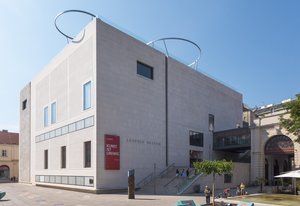
Leopold Museum, WiedeńLeopold Museum Wiedeń 2 The Interrupted Pilgrimage (The Sick Pilgrim), The Conscript’s Farewell
Kunsthistorisches Museum, WiedeńKunsthistorisches Museum Wiedeń 2 Portrait of Ludwig van Beethoven
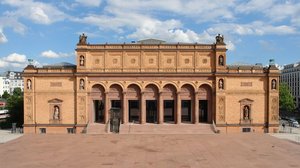
Hamburger Kunsthalle, HamburgHamburger Kunsthalle Hamburg 2 The young boy with the stable-lantern / The Young Stableboy with a Stable Lamp
Cleveland Museum of Art, ClevelandCleveland Museum of Art Cleveland 2 Countess Széchenyi

Ferdinand Georg Waldmüller, jedno kultowe dzieło na dekadę

Dzieła według dekad

Wybierz dekadę, aby zobaczyć dzieło, które ją definiuje.

Obrazy artysty Ferdinand Georg Waldmüller: odpowiedzi galerii

Który obraz Ferdinand Georg Waldmüller jest najsłynniejszy ze wszystkich?Odkryj odpowiedź

Portrait of Ludwig van Beethoven (1823), Kunsthistorisches Museum, Wiedeń. Następne są The young boy with the stable-lantern / The Young Stableboy with a Stable Lamp (1824) oraz The Actor Maximilian Korn in a Landscape (1828).

Ile lat miał Ferdinand Georg Waldmüller, gdy ukończył Portrait of Ludwig van Beethoven?Odkryj odpowiedź

30 lat: Portrait of Ludwig van Beethoven pochodzi z 1823, a Ferdinand Georg Waldmüller urodził(a) się w 1793.

Które to 10 najlepszych obrazów Ferdinand Georg Waldmüller?Odkryj odpowiedź

Portrait of Ludwig van Beethoven, The young boy with the stable-lantern / The Young Stableboy with a Stable Lamp, The Actor Maximilian Korn in a Landscape, Peasant Lovers, The Interrupted Pilgrimage (The Sick Pilgrim), After Confiscation, The Conscript’s Farewell, Children at the Window, Children i Catharina Freifrau von Koudelka. Powyższy ranking zawiera rok powstania oraz muzeum dla każdego z nich.

Ile dzieł stworzył/a Ferdinand Georg Waldmüller?Odkryj odpowiedź

Nasz katalog zawiera 210 dzieł artysty Ferdinand Georg Waldmüller, datowanych od 1817 do 1863.

Gdzie można znaleźć najsłynniejsze oryginały autorstwa Ferdinand Georg Waldmüller?Odkryj odpowiedź

W większości znajdują się w Bawarskie Państwowe Zbiory Malarstwa (Monachium), Alte Nationalgalerie (Berlin) i Moravian Gallery in Brno (Brno). Powyższa tabela muzeów zawiera ich pełną listę.

Kiedy Ferdinand Georg Waldmüller stworzył swoje najsłynniejsze obrazy?Odkryj odpowiedź

W 1830s: 41 z 100 dzieł na tej stronie powstało w tym czasie, w tym Children.

Które z najsłynniejszych dzieł Ferdinand Georg Waldmüller należą do jego najwcześniejszych i najpóźniejszych prac?Odkryj odpowiedź

Na tej stronie najwcześniejszy to man with writing plate (1817), a najpóźniejszy Peasant Lovers (1863).

Do jakich tematów Ferdinand Georg Waldmüller powracał najczęściej?Odkryj odpowiedź

Woman (53), Man (31) i Portrait (19), w ramach 100 dzieł na tej stronie.

W jakiej technice najczęściej tworzył Ferdinand Georg Waldmüller?Odkryj odpowiedź

Oil, dla 47 z 100 dzieł na tej stronie.

Z jakim nurtem związany jest Ferdinand Georg Waldmüller?Odkryj odpowiedź

Biedermeier style, sądząc po oryginałach na tej stronie.

Które oryginały artysty Ferdinand Georg Waldmüller znajdują się w zbiorach Bawarskie Państwowe Zbiory Malarstwa?Odkryj odpowiedź

Portrait of a Middle-Aged Lady, Portrait of a young lady with a pearl necklace i Portrait of a Woman: Bawarskie Państwowe Zbiory Malarstwa, Monachium posiada 5 dzieł widocznych na tej stronie.

Ferdinand Georg Waldmüller: artysta

Wczesne Lata i Początki Artystyczne

Ferdinand Georg Waldmüller przyszedł na świat w Wiedniu, Austria, 15 stycznia 1793 roku – okresie głębokich przemian społecznych i artystycznego fermentu. Jego życie rodzinne naznaczone było trudnościami; przedwczesna śmierć ojca rzuciła cień na losy rodziny, wpajając młodemu Ferdinandowi wczesną świadomość kruchości życia – motyw, który później głęboko rezonował w jego sztuce. Pomimo tych wyzwań Waldmüller wykazywał wyraźny talent do rysunku i malarstwa, co skłoniło go do zapisania się do Akademii Sztuk Pięknych w Wiedniu w 1807 roku. Jego frekwencja była jednak dość nieregularna, co mogło świadczyć o niespokojnym duchu lub niezadowoleniu z sztywnych akademickich ograniczeń tamtych czasów. Początkowo skłaniał się ku portretowi – sprawdzonej ścieżce dla aspirującego artysty poszukującego patronatu – jednak to urok krajobrazów i scen rodzajowych, przedstawiających codzienne życie, naprawdę porwał jego wyobraźnię i ostatecznie zdefiniował jego artystyczne dziedzictwo. Te wczesne eksperymenty położyły fundament pod styl charakteryzujący się skrupulatną obserwacją i głębokim połączeniem ze światem naturalnym.

Kariera Wykuwana w Realizmie i Kontrowersjach

Kariera Waldmüllera rozwijała się jako dynamiczna interakcja między innowacyjnością artystyczną a oporem instytucjonalnym. W okresie formowania się, aby uzupełnić swoje dochody, pracował jako scenograf oraz kontynuował malowanie portretów, często podróżując ze swoją żoną, śpiewaczką Kathariną Weidner. Ten wędrowny tryb życia wystawił go na różnorodne środowiska i poszerzył jego artystyczne horyzonty. W latach 20. XIX wieku Waldmüller zaczął rozwijać swój charakterystyczny styl – zaangażowanie w realistyczne przedstawienia codziennego życia, zwłaszcza w scenerii wiejskiej. Nie interesowała go idealizacja ani romantyzacja; dążył do uchwycenia świata takim, jakim jest naprawdę, ze wszystkimi jego pięknymi i niedoskonałymi stronami. To oddanie realizmowi przyniosło mu zarówno uznanie, jak i krytykę. W 1819 roku uzyskał posadę profesora na Akademii Sztuk Pięknych w Wiedniu, jednak jego kadencja była naznaczona konfliktami. Waldmüller z pasją opowiadał się za bezpośrednią obserwacją z natury – malarstwem plenerowym – i otwarcie krytykował nacisk akademii na formułkowe instrukcje i przywiązanie do ustalonych konwencji. Jego stanowczość doprowadziła do licznych starć z artystyczną elitą, przyczyniając się ostatecznie do jego przymusowego przejścia w stan spoczynku w 1857 roku. Częste podróże do Włoch, rozpoczynające się w 1825 roku, i malowniczy region Salzkammergut wywarły głęboki wpływ na jego krajobrazowe obrazy, doskonaląc jego zdolność do uchwycenia światła, tekstury i atmosfery z niezwykłą precyzją.

Tematyka Życia Wiejskiego i Komentarza Społecznego

Artystyczna produkcja Waldmüllera jest niezwykle różnorodna, obejmując portrety, krajobrazy i sceny rodzajowe, ale wspólnym wątkiem jednoczącym te zróżnicowane tematy jest głębokie zaangażowanie w realia austriackiego życia XIX wieku. Dzieła takie jak Sprzedawca Owoców z Wenecji (1826), wczesny przykład jego stylu malarstwa scen rodzajowych, demonstrują jego umiejętność uchwycenia ulotnych chwil codziennego istnienia. Jego autoportret z 1828 roku ujawnia przenikliwe zrozumienie psychologii ludzkiej i niuansów charakteru. Louise Mayer (1836) stanowi świadectwo jego mistrzostwa w portrecie, podczas gdy Widok Ischla (1838) prezentuje jego rozwijające się umiejętności malarskie w krajobrazie. Jednak to obrazy takie jak W Dzień Wszystkich Świętych (1839), List Miłosny (1849) i Kąpiące się Kobiety (ok. 1848–1849) naprawdę wyróżniły go. Nie były to jedynie malownicze przedstawienia życia wiejskiego; były one nacechowane społecznie krytycznym punktem widzenia, subtelnie ujawniając trudności, z jakimi borykali się zwykli ludzie – wpływ ubóstwa, nieszczęścia i złożoności relacji rodzinnych. Nie unikał przedstawiania mniej atrakcyjnych aspektów egzystencji, oferując bardziej uczciwą i niuansowaną reprezentację społeczeństwa, niż to było typowe w sztuce akademickiej.

Dziedzictwo i Znaczenie Historyczne

Ferdinand Georg Waldmüller jest słusznie uważany za jednego z najważniejszych austriackich malarzy okresu biedermeier. Jego niezachwiane oddanie naturalnej obserwacji i malarstwu plenerowemu wyprzedzało o dekady wiele artystycznych innowacji, które miały charakteryzować Impresjonizm. Kwestionował konwencjonalne przedstawienia życia wiejskiego, wnosząc do tego gatunku dawkę realizmu i komentarza społecznego, który często dominowała idealizowana imagineria. Pomimo krytyki i przeszkód napotkanych podczas kariery – w tym przymusowego przejścia w stan spoczynku z Akademii – praca Waldmüllera ostatecznie zyskała międzynarodowe uznanie, czego kulminacją były wystawy na Wystawie Światowej w Paryżu (1855) i w Pałacu Buckingham (1856), gdzie otrzymał pochwały od cesarza Napoleona III i królowej Wiktorii odpowiednio. Niedługo przed śmiercią, 23 sierpnia 1865 roku w Hinterbrühl, został mianowany szlacheckim, co było późnym uznaniem jego wkładu artystycznego. Dziedzictwo Waldmüllera wykracza poza jego indywidualne obrazy; wpłynął na pokolenia artystów swoim szczegółowym realizmem, skupieniem się na codziennych tematach i odwagą kwestionowania status quo. Pozostaje on kluczową postacią w historii austriackiej sztuki – prawdziwym pionierem, który otworzył drogę do nowych podejść do malarstwa krajobrazowego i scen rodzajowych.