Portret Eustache Lesueur

Obrazy: 100 najsłynniejszych dzieł artysty Eustache Lesueur – spojrzenie galerii

Aktualizacja: Listopad 2026 · ranking według naszego wskaźnika popularności (liczba wyszukiwań, wizyt i zamówień dla każdego dzieła) · 113 dzieł Eustache Lesueur w naszym katalogu

W skrócie

Według opinii kuratorów galerii, najsłynniejszym obrazem Eustache Lesueur jest MORT DE RAYMOND DIOCRES, którego oryginał znajduje się w Luwr w Paryż. Christ Healing the Blind Man i Ludwig IX. der Heilige (1635) dopełniają trio, które zna każde oko. Z 113 dzieł Eustache Lesueur w naszym katalogu, galeria prezentuje poniżej 100 najsłynniejszych prac – każda z nich jest oryginałem z podaniem roku powstania, muzeum oraz cech wyróżniających ją na tle innych.

1616 – 1655, Paryż Baroque Najwięcej dzieł: Luwr

10 najlepszych obrazów artysty Eustache Lesueur w galerii

1
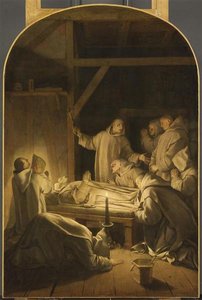
MORT DE RAYMOND DIOCRES autorstwa Eustache Lesueur

MORT DE RAYMOND DIOCRES

Oil On Canvas · Luwr, Paryż

A single bed occupies the center of a quiet, dim room. Upon it lies Raymond Diocres, his body surrendered to the stillness of death. The air in the chamber feels heavy, thick with the scent of old wood and the weight of passing time. Around the bed, figures gather like shadows caught in a sudden beam of light. They lean in, their faces etched with the quiet gravity of those…

2
Christ Healing the Blind Man autorstwa Eustache Lesueur

Christ Healing the Blind Man

Oil On Canvas

In this work, titled Christ Healing the Blind Man, Eustache Le Sueur presents a profound moment of divine intervention. The subject matter is drawn directly from the Bible, capturing the specific instance where Christ restores sight to a man. It is a quiet, focused encounter that centers on the act of healing. Through this narrative, the painting conveys a message of hope and redemption.

3
Ludwig IX. der Heilige (1635) autorstwa Eustache Lesueur

Ludwig IX. der Heilige

1635 · Oil On Canvas · Bawarskie Państwowe Zbiory Malarstwa, Monachium

This oil painting, dated 1635, presents a religious scene rendered in a grayscale, monochromatic palette. The composition is contained within an oval format, creating a vignette effect that centers the viewer's attention on a group of figures within an architectural interior. The setting appears to be a cathedral or a chapel, defined by receding arches that establish a sense of depth. Light enters from the upper right, creating a high-contrast…

4
The Sacrifice of Manoah (1626) autorstwa Eustache Lesueur

The Sacrifice of Manoah

1626 · Oil On Canvas · Musée des Augustins, Tuluza

The Sacrifice of Manoah by Eustache Le Sueur captures a singular moment of spiritual revelation. The scene centers on a divine communication that interrupts the earthly ritual of a sacrifice. From the rising grey smoke of the altar, an angel emerges to meet the gaze of the faithful. This celestial presence breaks the silence of the landscape, turning a simple offering into a profound encounter between the mortal and the…

5
Raymond Diocrès Responds After His Death (1646) autorstwa Eustache Lesueur

Raymond Diocrès Responds After His Death

1646 · Oil On Canvas

Raymond Diocrès Responds After His Death is a painting by Eustache Le Sueur. The canvas captures the figure of Raymond Diocrès, a professor at the Sorbonne, in a moment of spiritual transition. This work belongs to a larger cycle of twenty-two paintings depicting the life of Saint Bruno. These images were created between 1645 and 1648 for the small cloister of the Chartreuse de Paris.

6
Cupid, Reprimanded by His Mother, Takes Refuge in the Arms of Ceres (1646) autorstwa Eustache Lesueur

Cupid, Reprimanded by His Mother, Takes Refuge in the Arms of Ceres

1646 · Oil On Canvas

This large-scale, horizontal oil painting from 1646 presents a mythological scene unfolding within a sky of voluminous, pale clouds. The composition is organized into three distinct groups of figures set against an atmospheric background of grays and whites. On the left, a woman draped in a deep blue mantle reclines upon dark clouds, her hand extended in a gesture toward the center of the frame. In the middle ground, a…

7
Pope Victor III Confirms the Institution of the Carthusians (1646) autorstwa Eustache Lesueur

Pope Victor III Confirms the Institution of the Carthusians

1646 · Oil On Canvas

The oil on canvas titled Pope Victor III Confirms the Institution of the Carthusians was painted by Eustache Le Sueur. Created about 1646, the work captures a moment of religious interaction and monastic life. It centers on a papal portrait within a formal monastic setting, documenting a significant historical figure and the establishment of the Carthusian order.

8
Saint Bruno in Prayer (1646) autorstwa Eustache Lesueur

Saint Bruno in Prayer

1646 · Oil

In a dense, shadowy woodland, three monks occupy a space defined by deep browns, muted greens, and ochre. The composition is organized through layers of depth within the dark forest. In the foreground left, a monk in white robes kneels, leaning forward with hands clasped near his face, holding a tool resembling a pickaxe. To the lower right, another monk in a similar white habit kneels, using a shovel to…

9
Ascension of the Lord, (1646) autorstwa Eustache Lesueur

Ascension of the Lord,

1646 · Oil · Groninger Museum, Groningen

The Ascension of the Lord, by Eustache Le Sueur, is a vertically oriented oil painting created about 1646. The composition directs the viewer's gaze upward from a group of terrestrial figures toward the ascending figure of Christ. This upward movement is reinforced by the use of perspective, which establishes a sense of ascension from the grounded figures at the bottom toward the nebulous, cloud-filled sky above. The arrangement of the…

10
Meeting of Saint Bruno and Count Roger of Sicily (1646) autorstwa Eustache Lesueur

Meeting of Saint Bruno and Count Roger of Sicily

1646 · Oil On Canvas

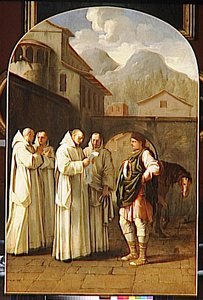
The forest breathes in shades of sepia and cream. A large white horse, its muscular flank catching a soft light from the upper left, anchors the composition. Beside it, a man kneels in the dirt, his arm raised in a sudden gesture of reverence or perhaps startled recognition. He is met by a standing figure dressed in monastic habit, a presence of quiet authority amidst the dense, dark foliage. A…

Obrazy artysty Eustache Lesueur, uszeregowane od 11 do 100 miejsca

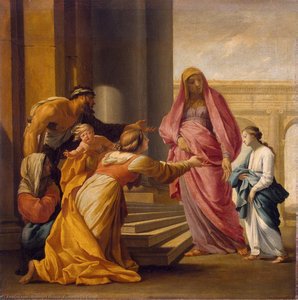
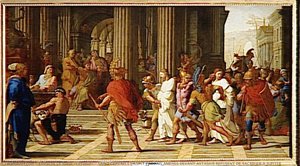
11The Ark of the Covenant (Procession from the Temple) (1642) autorstwa Eustache LesueurThe Ark of the Covenant (Procession from the Temple)1642 12Bacchus and Ariadne (1640) autorstwa Eustache LesueurBacchus and Ariadne1640 · Museum of Fine Arts 13Marine Gods Paying Homage to Love (1636) autorstwa Eustache LesueurMarine Gods Paying Homage to Love1636 · Muzeum J. Paula Getty'ego 14The Rape of Tamar (1640) autorstwa Eustache LesueurThe Rape of Tamar1640 · Metropolitan Museum of Art 15Cupid Ordering Mercury to Announce his Power to the Universe (1647) autorstwa Eustache LesueurCupid Ordering Mercury to Announce his Power to the Universe1647 · Luwr 16Saint Bruno and His Companions Distributing Their Goods to the Poor (1655) autorstwa Eustache LesueurSaint Bruno and His Companions Distributing Their Goods to the Poor1655 17Jacob Sending His Son Joseph to Seek His Brothers at Sichem (1650) autorstwa Eustache LesueurJacob Sending His Son Joseph to Seek His Brothers at Sichem1650 18Portrait of a Man (1650) autorstwa Eustache LesueurPortrait of a Man1650 19Hercules fighting Cacus (1653) autorstwa Eustache LesueurHercules fighting Cacus1653 · Muzeum Pałacu Króla Jana III w Wilanowie 20The Annunciation (1650) autorstwa Eustache LesueurThe Annunciation1650 · Toledo Museum of Art 21Allegory of Magnificence (1654) autorstwa Eustache LesueurAllegory of Magnificence1654 · Dayton Art Institute 22Christ in the House of Mary and Martha (1650) autorstwa Eustache LesueurChrist in the House of Mary and Martha1650 · Bawarskie Państwowe Zbiory Malarstwa 23St. Bruno in Prayer (1650) autorstwa Eustache LesueurSt. Bruno in Prayer1650 · Gemäldegalerie 24Sleeping Venus (1639) autorstwa Eustache LesueurSleeping Venus1639 · Legion of Honor 25St. Gervase and St. Protase Brought before Anastasius (1652) autorstwa Eustache LesueurSt. Gervase and St. Protase Brought before Anastasius1652 · Luwr 26The Birth of Cupid (1647) autorstwa Eustache LesueurThe Birth of Cupid1647 · Luwr 27Saint Paul preaching at Ephesus (1649) autorstwa Eustache LesueurSaint Paul preaching at Ephesus1649 · National Gallery 28TERPSICHORE autorstwa Eustache LesueurTERPSICHORELuwr 29SAINT BRUNO EN PRIERE DANS SON ORATOIRE autorstwa Eustache LesueurSAINT BRUNO EN PRIERE DANS SON ORATOIRELuwr 30PHAETON DEMANDE A APOLLON LA CONDUITE DU CHAR DU SOLEIL autorstwa Eustache LesueurPHAETON DEMANDE A APOLLON LA CONDUITE DU CHAR DU SOLEILLuwr 31Portrait of a Young Man (1640) autorstwa Eustache LesueurPortrait of a Young Man1640 · Wadsworth Atheneum Museum of Art 32L'AMOUR DEROBE LA FOUDRE A JUPITER autorstwa Eustache LesueurL'AMOUR DEROBE LA FOUDRE A JUPITERLuwr 33Christ on the Cross with the Magdalen, the Virgin Mary and Saint John the Evangelist (1643) autorstwa Eustache LesueurChrist on the Cross with the Magdalen, the Virgin Mary and Saint John the Evangelist1643 · National Gallery 34Solomon and the Queen of Sheba (1650) autorstwa Eustache LesueurSolomon and the Queen of Sheba1650 · The Barber Institute of Fine Arts 35Christ on the Cross with the Virgin and Saints autorstwa Eustache LesueurChrist on the Cross with the Virgin and Saints 36SONGE DE SAINT BRUNO autorstwa Eustache LesueurSONGE DE SAINT BRUNOLuwr 37ARRIVEE DE SAINT BRUNO A ROME autorstwa Eustache LesueurARRIVEE DE SAINT BRUNO A ROMELuwr 38LA SALUTATION ANGELIQUE autorstwa Eustache LesueurLA SALUTATION ANGELIQUELuwr 39Casrmelite in extasy autorstwa Eustache LesueurCasrmelite in extasy 40Alms autorstwa Eustache LesueurAlmsMusée d'art et d'histoire de Narbonne 41The Madonna and Child autorstwa Eustache LesueurThe Madonna and Child 42Marriage of Tobias and Sarah autorstwa Eustache LesueurMarriage of Tobias and SarahMuzeum Narodowe w Warszawie 43LA NAISSANCE DE L'AMOUR autorstwa Eustache LesueurLA NAISSANCE DE L'AMOURLuwr 44URANIE autorstwa Eustache LesueurURANIELuwr 45Le Christ sur la Croix autorstwa Eustache LesueurLe Christ sur la Croix 46ARRIVEE DE SAINT BRUNO A GRENOBLE, CHEZ SAINT HUGUES autorstwa Eustache LesueurARRIVEE DE SAINT BRUNO A GRENOBLE, CHEZ SAINT HUGUESLuwr 47L'AMOUR, REPRIMANDE PAR SA MERE, SE REFUGIE DANS LES BRAS DE CERES autorstwa Eustache LesueurL'AMOUR, REPRIMANDE PAR SA MERE, SE REFUGIE DANS LES BRAS DE CERESLuwr 48VOYAGE A LA CHARTREUSE autorstwa Eustache LesueurVOYAGE A LA CHARTREUSELuwr 49VENUS PRESENTE L'AMOUR A JUPITER autorstwa Eustache LesueurVENUS PRESENTE L'AMOUR A JUPITERLuwr 50L'AMOUR ORDONNE A MERCURE D'ANNONCER SON POUVOIR A L'UNIVERS autorstwa Eustache LesueurL'AMOUR ORDONNE A MERCURE D'ANNONCER SON POUVOIR A L'UNIVERSLuwr 51SAINT BRUNO PREND L'HABIT MONASTIQUE autorstwa Eustache LesueurSAINT BRUNO PREND L'HABIT MONASTIQUELuwr 52SAINT BRUNO EST ENLEVE AU CIEL autorstwa Eustache LesueurSAINT BRUNO EST ENLEVE AU CIELLuwr 53LE RETOUR DE TOBIE autorstwa Eustache LesueurLE RETOUR DE TOBIELuwr 54VENUS PRESENTE L'AMOUR A JUPITER, JUNON, NEPTUNE ET AMPHITRITE autorstwa Eustache LesueurVENUS PRESENTE L'AMOUR A JUPITER, JUNON, NEPTUNE ET AMPHITRITELuwr 55SAINT BRUNO EN PRIERE autorstwa Eustache LesueurSAINT BRUNO EN PRIERELuwr 56RAYMOND DIOCRES REPOND APRES SA MORT autorstwa Eustache LesueurRAYMOND DIOCRES REPOND APRES SA MORTLuwr 57PLAN DE LA CHARTREUSE DE PARIS PORTE PAR DEUX ANGES autorstwa Eustache LesueurPLAN DE LA CHARTREUSE DE PARIS PORTE PAR DEUX ANGESLuwr 58SAINT BRUNO ASSISTE AU SERMON DE RAYMOND DIOCRES autorstwa Eustache LesueurSAINT BRUNO ASSISTE AU SERMON DE RAYMOND DIOCRESLuwr 59SAINT BRUNO REFUSE L'ARCHEVEQUE DE REGGIO QUE LUI OFFRE URBAIN II autorstwa Eustache LesueurSAINT BRUNO REFUSE L'ARCHEVEQUE DE REGGIO QUE LUI OFFRE URBAIN IILuwr 60JESUS PORTANT SA CROIX autorstwa Eustache LesueurJESUS PORTANT SA CROIXLuwr 61LE PAPE VICTOR III CONFIRME L'INSTITUTION DES CHARTREUX autorstwa Eustache LesueurLE PAPE VICTOR III CONFIRME L'INSTITUTION DES CHARTREUXLuwr 62SAINT BRUNO EXAMINE UN DESSIN DES THERMES DE DIOCLETIN, EMPLACEMENT DE LA FUTURE CHARTREUSE DE ROME autorstwa Eustache LesueurSAINT BRUNO EXAMINE UN DESSIN DES THERMES DE DIOCLETIN, EMPLACEMENT DE LA FUTURE CHARTREUSE DE ROMELuwr 63Clio, Euterpe et Thalie autorstwa Eustache LesueurClio, Euterpe et ThalieLuwr 64Poliphile s'agenouille devant la reine Eleutherilide autorstwa Eustache LesueurPoliphile s'agenouille devant la reine Eleutherilide 65GANYMEDE ENLEVE PAR JUPITER autorstwa Eustache LesueurGANYMEDE ENLEVE PAR JUPITERLuwr 66L'AMOUR RECOIT LES DONS DE DIANE, D'APOLLON ET DE MERCURE autorstwa Eustache LesueurL'AMOUR RECOIT LES DONS DE DIANE, D'APOLLON ET DE MERCURELuwr 67Agar et l'ange autorstwa Eustache LesueurAgar et l'angeMusée des Beaux-Arts 68DEDICACE D'UNE EGLISE DE CHARTREUX autorstwa Eustache LesueurDEDICACE D'UNE EGLISE DE CHARTREUXLuwr 69L'AMOUR RECOIT L'HOMMAGE DE DIANE, D'APOLLON ET DE MERCURE autorstwa Eustache LesueurL'AMOUR RECOIT L'HOMMAGE DE DIANE, D'APOLLON ET DE MERCURELuwr 70Sainte Marie Madeleine en prière autorstwa Eustache LesueurSainte Marie Madeleine en prièrePalais des Beaux-Arts de Lille 71DESCENTE DE CROIX autorstwa Eustache LesueurDESCENTE DE CROIXLuwr 72Saint Bruno reçoit un message du pape autorstwa Eustache LesueurSaint Bruno reçoit un message du papeLuwr 73JESUS APPARAIT A LA MADELEINE autorstwa Eustache LesueurJESUS APPARAIT A LA MADELEINELuwr 74The Muse Terpsichore (1652) autorstwa Eustache LesueurThe Muse Terpsichore1652 · Luwr 75SAINT BRUNO FAIT CONSTRUIRE LE MONASTERE autorstwa Eustache LesueurSAINT BRUNO FAIT CONSTRUIRE LE MONASTERELuwr 76MELPOMENE, ERATO ET POLYMNIE autorstwa Eustache LesueurMELPOMENE, ERATO ET POLYMNIELuwr 77Presentation of the Virgin (1641) autorstwa Eustache LesueurPresentation of the Virgin1641 · Ermitaż 78CALLIOPE autorstwa Eustache LesueurCALLIOPELuwr 79SAINT BRUNO DONNE L'HABIT A PLUSIEURS PERSONNES autorstwa Eustache LesueurSAINT BRUNO DONNE L'HABIT A PLUSIEURS PERSONNESLuwr 80SAINT GERVAIS ET SAINT PROTAIS AMENES DEVANT ASTASIUS REFUSENT DE SACRIFIER A JUPITER autorstwa Eustache LesueurSAINT GERVAIS ET SAINT PROTAIS AMENES DEVANT ASTASIUS REFUSENT DE SACRIFIER A JUPITERLuwr 81St Bruno Appearing to Comte Roger (1645) autorstwa Eustache LesueurSt Bruno Appearing to Comte Roger1645 · Luwr 82A Gathering Of Friends autorstwa Eustache LesueurA Gathering Of Friends 83L'AMOUR, ENTOURE DE LA JEUNESSE ET DE LA BEAUTE, ORDONNE A MERCURE D'ANNONCER SON POUVOIR A L'UNIVERS autorstwa Eustache LesueurL'AMOUR, ENTOURE DE LA JEUNESSE ET DE LA BEAUTE, ORDONNE A MERCURE D'ANNONCER SON POUVOIR A L'UNIVERSLuwr 84Caligula Depositing The Ashes Of His Mother And Brother In The Tomb Of His Ancestors autorstwa Eustache LesueurCaligula Depositing The Ashes Of His Mother And Brother In The Tomb Of His AncestorsRoyal Collection 85L'Ange Raphaël révèle sa véritable nature à Tobie et à sa famille et s'élève au ciel La famille de Tobie remerciant Dieu après le départ de l'ange Raphaël (Ancien titre) autorstwa Eustache LesueurL'Ange Raphaël révèle sa véritable nature à Tobie et à sa famille et s'élève au ciel La famille de Tobie remerciant Dieu après le départ de l'ange Raphaël (Ancien titre) 86SAINT BRUNO ENGAGE SES DISCIPLES ET SES AMIS A QUITTER LE MONDE autorstwa Eustache LesueurSAINT BRUNO ENGAGE SES DISCIPLES ET SES AMIS A QUITTER LE MONDELuwr 87Poliphile au bain avec les nymphes autorstwa Eustache LesueurPoliphile au bain avec les nymphesMusée National Magnin 88Diane découvrant la grossesse de Callisto autorstwa Eustache LesueurDiane découvrant la grossesse de CallistoMusée National Magnin 89SAINT BRUNO ET SES COMPAGNONS, AVANT DE PARTIR POUR GRENOBLE, DISTRIBUENT TOUS LEURS BIENS AUX PAUVRES autorstwa Eustache LesueurSAINT BRUNO ET SES COMPAGNONS, AVANT DE PARTIR POUR GRENOBLE, DISTRIBUENT TOUS LEURS BIENS AUX PAUVRESLuwr 90Alexander and his Doctor autorstwa Eustache LesueurAlexander and his Doctor 91APPARITION DE LA VIERGE ACCOMPAGNEE DE SAINTE AGNES ET DE SAINTE THECLE A SAINT MARTIN DIT AUTREFOIS APPARITION DE SAINTE SCHOLASTIQUE A SAINT BENOIT autorstwa Eustache LesueurAPPARITION DE LA VIERGE ACCOMPAGNEE DE SAINTE AGNES ET DE SAINTE THECLE A SAINT MARTIN DIT AUTREFOIS APPARITION DE SAINTE SCHOLASTIQUE A SAINT BENOITLuwr 92Alexander and his Doctor autorstwa Eustache LesueurAlexander and his DoctorNational Gallery 93The Preaching of St. Paul at Ephesus (1649) autorstwa Eustache LesueurThe Preaching of St. Paul at Ephesus1649 · Luwr 94MORT DE SAINT BRUNO LE 6 OCTOBRE 1101 autorstwa Eustache LesueurMORT DE SAINT BRUNO LE 6 OCTOBRE 1101Luwr 95A Gathering of Friends autorstwa Eustache LesueurA Gathering of FriendsLuwr 96Melpomene, Erato and Polyhymnia autorstwa Eustache LesueurMelpomene, Erato and Polyhymnia 97Madonna and Child with Saint John the Baptist (1635) autorstwa Eustache LesueurMadonna and Child with Saint John the Baptist1635 98Justice (1650) autorstwa Eustache LesueurJustice1650 · Musée Des Beaux 99Meekness (Douceur or Mansuétude) (1650) autorstwa Eustache LesueurMeekness (Douceur or Mansuétude)1650 · Art Institute of Chicago 100The Muses: Clio, Euterpe and Thalia (1652) autorstwa Eustache LesueurThe Muses: Clio, Euterpe and Thalia1652 · Luwr

Słynne obrazy Eustache Lesueur epoka po epoce

Tematy, które przyciągnęły wzrok Eustache Lesueur

Cztery motywy najczęściej powracające w tych oryginałach, z których każdy doczekał się swojego najdoskonalszego przykładu.

Muzea przechowujące oryginały Eustache Lesueur

8 muzeów, w których znajduje się najwięcej obrazów z tej strony.

Muzea Miasto Dzieła artysty Eustache Lesueur Obrazy z tej listy
Luwr, ParyżLuwr Paryż 56 MORT DE RAYMOND DIOCRES, Cupid Ordering Mercury to Announce his Power to the Universe, St. Gervase and St. Protase Brought before Anastasius
National Gallery, LondynNational Gallery Londyn 3 Saint Paul preaching at Ephesus, Christ on the Cross with the Magdalen, the Virgin Mary and Saint John the Evangelist, Alexander and his Doctor
Bawarskie Państwowe Zbiory Malarstwa, MonachiumBawarskie Państwowe Zbiory Malarstwa Monachium 2 Ludwig IX. der Heilige, Christ in the House of Mary and Martha
Musée National Magnin, DijonMusée National Magnin Dijon 2 Poliphile au bain avec les nymphes, Diane découvrant la grossesse de Callisto
Musée des Augustins, TuluzaMusée des Augustins Tuluza 1 The Sacrifice of Manoah
Groninger Museum, GroningenGroninger Museum Groningen 1 Ascension of the Lord,
Museum of Fine Arts, BostonMuseum of Fine Arts Boston 1 Bacchus and Ariadne
Muzeum J. Paula Getty'ego, Los AngelesMuzeum J. Paula Getty'ego Los Angeles 1 Marine Gods Paying Homage to Love

Eustache Lesueur, jedno kultowe dzieło na dekadę

Dzieła według dekad

Wybierz dekadę, aby zobaczyć dzieło, które ją definiuje.

Obrazy artysty Eustache Lesueur: odpowiedzi galerii

Który obraz Eustache Lesueur jest najsłynniejszy ze wszystkich?Odkryj odpowiedź

MORT DE RAYMOND DIOCRES, Luwr, Paryż. Następne są Christ Healing the Blind Man oraz Ludwig IX. der Heilige (1635).

Które to 10 najlepszych obrazów Eustache Lesueur?Odkryj odpowiedź

MORT DE RAYMOND DIOCRES, Christ Healing the Blind Man, Ludwig IX. der Heilige, The Sacrifice of Manoah, Raymond Diocrès Responds After His Death, Cupid, Reprimanded by His Mother, Takes Refuge in the Arms of Ceres, Pope Victor III Confirms the Institution of the Carthusians, Saint Bruno in Prayer, Ascension of the Lord, i Meeting of Saint Bruno and Count Roger of Sicily. Powyższy ranking zawiera rok powstania oraz muzeum dla każdego z nich.

Ile dzieł stworzył/a Eustache Lesueur?Odkryj odpowiedź

Nasz katalog zawiera 113 dzieł artysty Eustache Lesueur, datowanych od 1626 do 1655.

Gdzie można znaleźć najsłynniejsze oryginały autorstwa Eustache Lesueur?Odkryj odpowiedź

W większości znajdują się w Luwr (Paryż), National Gallery (Londyn) i Bawarskie Państwowe Zbiory Malarstwa (Monachium). Powyższa tabela muzeów zawiera ich pełną listę.

Kiedy Eustache Lesueur stworzył swoje najsłynniejsze obrazy?Odkryj odpowiedź

W 1640s: 17 z 100 dzieł na tej stronie powstało w tym czasie, w tym Raymond Diocrès Responds After His Death.

Które z najsłynniejszych dzieł Eustache Lesueur należą do jego najwcześniejszych i najpóźniejszych prac?Odkryj odpowiedź

Na tej stronie najwcześniejszy to The Sacrifice of Manoah (1626), a najpóźniejszy Saint Bruno and His Companions Distributing Their Goods to the Poor (1655).

Do jakich tematów Eustache Lesueur powracał najczęściej?Odkryj odpowiedź

Man (12), Woman (12) i People (10), w ramach 100 dzieł na tej stronie.

W jakiej technice najczęściej tworzył Eustache Lesueur?Odkryj odpowiedź

Oil On Canvas, dla 32 z 100 dzieł na tej stronie.

Z jakim nurtem związany jest Eustache Lesueur?Odkryj odpowiedź

Baroque, sądząc po oryginałach na tej stronie.

Które oryginały artysty Eustache Lesueur znajdują się w zbiorach Luwr?Odkryj odpowiedź

MORT DE RAYMOND DIOCRES, Cupid Ordering Mercury to Announce his Power to the Universe i St. Gervase and St. Protase Brought before Anastasius: Luwr, Paryż posiada 53 dzieł widocznych na tej stronie.

Eustache Lesueur: artysta

Życie poświęcone boskiej wizji: Świat Eustache Le Sueura

Eustache Le Sueur, nazwisko rezonujące z żarem i wyrafinowaniem francuskiego malarstwa barokowego XVII wieku, jawi się jako postać kluczowa dla artystycznej ewolucji narodu. Urodzony w Paryżu 19 listopada 1617 roku i zmarły w jego murach 30 kwietnia 1655 roku, Le Sueur poświęcił swoje życie utrwalaniu narracji religijnych z coraz bardziej neoklasyczną wrażliwością. Jego droga nie była naznaczona dalekimi podróżami czy dramatycznymi osobistymi wstrząsami; była to raczej celowa wspinaczka w obrębie paryskiego świata sztuki, która zwieńczyła jego rola jako założyciela prestiżowej Francuskiej Akademii Malarstwa i Rzeźby. Jego ojciec, Cathelin Le Sueur, biegły tokarz i rzeźbiarz w drewnie, wcześnie dostrzegł rodzący się talent syna i poddał go nauce u Simona Voueta, ówczesnej dominującej siły we francuskim malarstwie. To fundamentalne szkolenie okazało się kluczowe, zaszczepiając w młodym Eustache mistrzostwo rysunku i kompozycji, które miało charakteryzować całą jego karierę.

Wczesne sukcesy i królewskie zlecenia

Le Sueur szybko wyróżnił się w pracowni Voueta, błyskawicznie uzyskując przyjęcie do cechu mistrzów malarstwa. Jego wczesne dzieła, zwłaszcza te ilustrujące sceny z Hypnerotomachia Poliphili – złożonego romansu alegorycznego – przyniosły mu początkowe uznanie. Jednak to właśnie seria dekoracji zamówiona dla rezydencji Lamberta de Thorigny prawdziwie rozpoczęła budowanie jego reputacji. Choć projekty te były często przerywane innymi obowiązkłym, ukazywały one rozwijającą się zdolność Le Sueura do tworzenia dynamicznych kompozycji i nadawania swoim postaciom poczucia dramatycznej obecności. Sam Luwr stał się płótnem dla jego ambicji, gdy podjął się kilku malowideł do królewskich apartamentów – dzieł niestety utraconych przez historię, lecz udokumentowanych w ówczesnych inwentarzach. Zlecenia te sygnalizowały rosnącą akceptację w najwyższych sferach francuskiego społeczeństwa, torując drogę do dalszych możliwości i umacniając jego pozycję jako poszukiwanego artysty. Nie ograniczał się on jedynie do realizacji schematów dekoracyjnych; współtworzył wizualny język władzy i pobożności, który definiował dwór Ludwika XIII, a później Ludwika XIV.

Powstanie Akademii i zwrot ku neoklasycyzmowi

Przełomowym momentem w karierze Le Sueura było ustanowienie Królewskiej Francuskiej Akademii Malarstwa i Rzeźby w 1648 roku. Został wybrany jako jeden z pierwotnych dwunastu starszych, powierzonych zadaniu przewodzenia rozwojowi instytucji i ustalania standardów artystycznej doskonałości. Rola ta nie miała charakteru wyłącznie administracyjnego; odzwierciedlała szerszą zmianę w estetycznej wrażliwości Le Sueura. Coraz bardziej przyciągał go styl neoklasyczny, charakteryzujący się klarownością formy, powściągliwymi emocjami i skupieniem na idealizowanym pięknie – co stanowiło odejście od bardziej ekstrawaganckich tendencji wcześniejszego malarstwa barokowego. Ten paryski atycyzm, jak zaczął być nazywany, kładł nacisk na intelektualną rygorystyczność i powrót do zasad klasycznych, wpływając nie tylko na jego własną twórczość, ale także kształtując kierunek francuskiej sztuki dla przyszłych pokoleń.

Życie świętego Bruna: Arcydzieło pobożności

Być może najtrwalszym dziedzictwem Le Sueura jest jego seria przedstawiająca Życie świętego Bruna, zamówiona dla krużganków klasztoru kartuzów. Malowidła te, niegdyś zdobiące ściany opactwa, stanowią kulminację jego wizji artystycznej i technicznej biegłości. Są one niezwykłe nie tylko ze względu na swoją siłę narracyjną, ale także głęboką duchową jakość. Postacie Le Sueura posiadają cichą godność i głębokie poczucie oddania, przekazując ascetyczne ideały zakonu kartuzów z poruszającą mocą. Zastosowanie chiaroscuro – dramatycznej gry światła i cienia – potęguje emocjonalny wpływ każdej sceny, wciągając widza w świat świętego Bruna i jego naśladowców. Mimo uszkodzeń i licznych renowacji na przestrzeni lat, dzieła te zachowują wiele swojej pierwotnej piękności, oferując wgląd w mistrzostwo Le Sueura w zakresie kompozycji, koloru i psychologicznej przenikliwości.

Dziedzictwo i znaczenie historyczne Wpływ Eustache Le Sueura wykraczał poza jego własne obrazy. Przeszkolił wielu uczniów, w tym brata swojej żony, Theodore Goussé, oraz kilku swoich krewnych, pielęgnując warsztat, który utrwalał jego styl i techniki. Jego rysunki, z których wiele zachowało się w Cabinet des Dessins w Luwrze, demonstrują wyjątkowy kunszt rysunkowy i dostarczają cennych informacji o jego procesie twórczym. Choć niektórzy krytycy zauważali pewną konwencjonalność w jego pracy – tendencję do polegania na ustalonych typach postaci – jest niezaprzeczalne, że Le Sueur odegrał kluczową rolę w kształtowaniu krajobrazu estetycznego siedemnastowiecznej Francji. Stał on na styku wcześniejszej barokowej egzaltacji i bardziej powściągliwego klasycyzmu, który miał zdefiniować sztukę francuską za czasów Ludwika XIV, pozostawiając po sobie dorobek, który nieustannie budzi podziw i zachwyt. Jego oddanie tematom religijnym, w połączeniu z technicznym geniuszem i dążeniem do artystycznej doskonałości, zapewnia mu miejsce wśród najważniejszych malarzy swojej epoki.