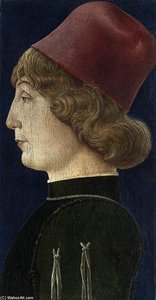
Portret Cosmè Tura

93 najsłynniejszych obrazów artysty Cosmè Tura – wybór z galerii

Aktualizacja: Listopad 2026 · ranking według naszego wskaźnika popularności (liczba wyszukiwań, wizyt i zamówień dla każdego dzieła) · 97 dzieł Cosmè Tura w naszym katalogu

W skrócie

Spośród wszystkich dzieł oryginalnych, które pozostawił Cosmè Tura, najsłynniejszym jest Annunciation (1469), znajdujący się w kolekcji Museo del Duomo w Ferrara. Tuż za nimi znajdują się The Madonna of the Zodiac (detail) (1459) oraz The Madonna of the Zodiac (1459). Nasz katalog zawiera 97 dzieł autorstwa Cosmè Tura; galeria zachowała 93 najbardziej podziwianych na świecie prac, z których każda została przedstawiona wraz z datą powstania, informacją o muzeum oraz jej historią.

1430 – 1495, Ferrara Early renaissance Najwięcej dzieł: Palazzo Schifanoia

10 najlepszych obrazów artysty Cosmè Tura: wybór galerii

1
Annunciation (1469) autorstwa Cosmè Tura

Annunciation

1469 · Oil On Canvas · Museo del Duomo, Ferrara

To stand before an image like Cosmè Tura’s Annunciation is to step across the threshold of time and into a moment suspended by divine grace. This masterpiece, dating from 1469, captures the pivotal instant when the Archangel Gabriel announces to the Virgin Mary that she will conceive Christ. It is not merely a depiction of a biblical event; it is an exquisitely orchestrated meditation on humility meeting the sublime. The…

2
The Madonna of the Zodiac (detail) (1459) autorstwa Cosmè Tura

The Madonna of the Zodiac (detail)

1459 · Tempera On Panel · Gallerie dell'Accademia di Venezia, Wenecja

To gaze upon this exquisite detail from Cosmè Tura’s The Madonna of the Zodiac is to be transported directly into the luminous, intellectual atmosphere of the Early Renaissance. This fragment, focusing intimately on a bird poised amidst ripe grapes, transcends mere depiction; it captures a moment suspended between earthly bounty and celestial mystery. The artist’s mastery is immediately apparent in the meticulous rendering of nature—the delicate sweep of the bird's…

3
The Madonna of the Zodiac (1459) autorstwa Cosmè Tura

The Madonna of the Zodiac

1459 · Oil On Panel · Gallerie dell'Accademia di Venezia, Wenecja

Cosmè Tura’s “Madonna of the Zodiac,” painted in 1459, isn't merely a depiction of the Virgin Mary and Child; it’s a shimmering portal into the intellectual and artistic fervor of early Renaissance Ferrara. This exquisite tempera on panel painting, now residing within the Gallerie dell’Accademia in Venice, embodies the era’s fascination with classical antiquity, burgeoning scientific thought, and deeply personal devotion. The work immediately captivates with its serene beauty –…

4
St George and the Princess (1469) autorstwa Cosmè Tura

St George and the Princess

1469 · Oil On Canvas · Museo del Duomo, Ferrara

To gaze upon Cosmè Tura's depiction of St George and the Princess is to step directly into the vibrant, dramatic heart of the early Renaissance. This monumental canvas, dating from 1469, is far more than a mere historical tableau; it is an epic narrative rendered in paint, capturing a moment charged with divine intervention, chivalric virtue, and profound human drama. The scene unfolds with palpable energy, centering on St George,…

5
The Madonna of the Zodiac (1459) autorstwa Cosmè Tura

The Madonna of the Zodiac

1459 · Oil On Panel · Gallerie dell'Accademia di Venezia, Wenecja

Cosmè Tura’s “Madonna of the Zodiac,” painted in 1459, is more than just a devotional image; it's a window into the burgeoning artistic landscape of early Renaissance Ferrara. This intimate portrait of the Virgin Mary cradling the infant Jesus isn’t merely a depiction of motherhood; it’s a carefully constructed allegory brimming with symbolism and reflecting the intellectual currents of its time. Tura, a Ferrarese visionary often considered the founder of…

6
Pietà (1460) autorstwa Cosmè Tura

Pietà

1460 · Oil On Panel · Museo Correr, Wenecja

Within the hushed reverence of the Museo Correr in Venice resides a painting that transcends mere representation, becoming instead an embodiment of profound sorrow and enduring faith – Cosmè Tura’s 1460 “Pietà.” More than simply a depiction of Mary cradling her son's lifeless form, this work is a cornerstone of Early Renaissance art, a testament to the artist’s mastery of technique and his ability to infuse religious subject matter with…

7
Allegory of September (detail) (1484) autorstwa Cosmè Tura

Allegory of September (detail)

1484 · Oil On Canvas · Palazzo Schifanoia, Ferrara

Cosmè Tura’s Allegory of September, a fresco dominating the Sala dei Nove in Palazzo Schifanoia, Ferrara, is not merely a decorative panel; it's a meticulously crafted microcosm of Late Medieval and Early Renaissance thought. Painted between 1476 and 1478 for the court of Borso d’Este, Duke of Ferrara, this monumental work offers a rare glimpse into the intellectual and artistic climate of a burgeoning city-state—a testament to Tura's exceptional skill…

8
The Virgin Annunciate (1477) autorstwa Cosmè Tura

The Virgin Annunciate

1477 · Oil On Panel · National Gallery, Londyn

The painting depicts a seated female figure positioned in profile, her body turned slightly toward the viewer. She sits within an architectural setting characterized by a heavy, carved wooden chair. Her gaze is directed downwards and inwards, away from the external world. A crimson underdress is visible beneath a deep blue outer garment, which is fastened at the chest with small buttons or clasps. The fabric of her clothing displays…

9
Saints Maurelius and Paul with Niccolò Roverella (1470) autorstwa Cosmè Tura

Saints Maurelius and Paul with Niccolò Roverella

1470 · Oil On Panel · Palazzo Colonna, Rzym

The painting Saints Maurelius and Paul with Niccolò Roverella by Cosimo Tura emerges from the shadows of history as a vital fragment of a much larger whole. This work exists as the right-hand panel of the expansive Roverella Altarpiece, a grand composition that once filled a sacred space. The Roverella family commissioned this piece, seeking to leave a lasting mark of their devotion and lineage within the religious landscape of…

10
The Annunciation with Saint Francis and Saint Louis of Toulouse [four panels] (1475) autorstwa Cosmè Tura

The Annunciation with Saint Francis and Saint Louis of Toulouse [four panels]

1475 · Tempera On Panel · National Gallery of Art, Waszyngton

The Annunciation with Saint Francis and Saint Louis of Toulouse [four panels] is a religious work by the Ferrarese painter Cosimo Tura. This polyptych is divided into four distinct vertical segments. Each panel holds a single holy figure, creating a rhythmic sequence of sacred presence. The figures emerge from a deep, lapis-like blue background, set against a landscape of dark, jagged hills.

Kontynuacja zestawienia Cosmè Tura, od 11 do 93

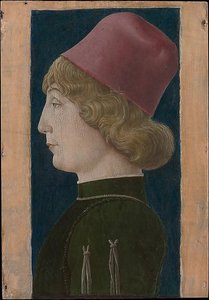
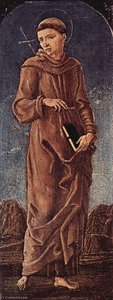
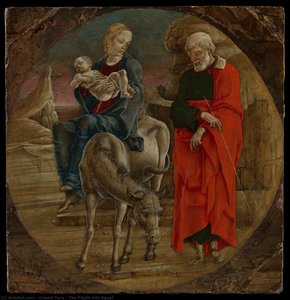
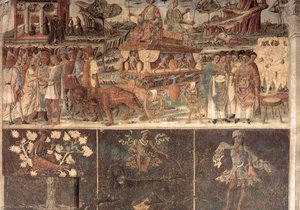
11English Allegory of June Triumph of Mercury (1484) autorstwa Cosmè TuraEnglish Allegory of June Triumph of Mercury1484 · Palazzo Schifanoia 12Portrait of a Young Man (1450) autorstwa Cosmè TuraPortrait of a Young Man1450 · Metropolitan Museum of Art 13St Anthony of Padua Reading (1475) autorstwa Cosmè TuraSt Anthony of Padua Reading1475 · Luwr 14Saint John the Baptist (1474) autorstwa Cosmè TuraSaint John the Baptist1474 · Philadelphia Museum of Art 15The Crucifixion (1450) autorstwa Cosmè TuraThe Crucifixion1450 · Fitzwilliam Museum 16Untitled (AQRDZC) (1455) autorstwa Cosmè TuraUntitled (AQRDZC)1455 · Musée Fesch 17English A Muse (Calliope ) (1460) autorstwa Cosmè TuraEnglish A Muse (Calliope )1460 18The Adoration of the Magi (1480) autorstwa Cosmè TuraThe Adoration of the Magi1480 · Fogg Museum 19Saint Lucy and Saint Eutychia at the Shrine of Saint Agatha (1484) autorstwa Cosmè TuraSaint Lucy and Saint Eutychia at the Shrine of Saint Agatha1484 · Isabella Stewart Gardner Museum 20Saint Louis of Toulouse (1484) autorstwa Cosmè TuraSaint Louis of Toulouse1484 · Metropolitan Museum of Art 21Saint Jerome (1474) autorstwa Cosmè TuraSaint Jerome1474 22Pietà (panel from the Roverella Polyptych) (1474) autorstwa Cosmè TuraPietà (panel from the Roverella Polyptych)1474 · Luwr 23View of the Salone dei Mesi (1484) autorstwa Cosmè TuraView of the Salone dei Mesi1484 · Palazzo Schifanoia 24Adoration of the Magi (from the predella of the Roverella Polyptych) (1474) autorstwa Cosmè TuraAdoration of the Magi (from the predella of the Roverella Polyptych)1474 25Untitled (D2WVMR) (1450) autorstwa Cosmè TuraUntitled (D2WVMR)1450 26Pietà (1474) autorstwa Cosmè TuraPietà1474 27Allegory of September (detail) (1476) autorstwa Cosmè TuraAllegory of September (detail)1476 · Palazzo Schifanoia 28The Muse Terpsichore (1460) autorstwa Cosmè TuraThe Muse Terpsichore1460 29Allegory of August: Triumph of Ceres (detail) (1476) autorstwa Cosmè TuraAllegory of August: Triumph of Ceres (detail)1476 · Palazzo Schifanoia 30A Muse (detail) (1455) autorstwa Cosmè TuraA Muse (detail)1455 · National Gallery 31St George (fragment z poliptyki Roverelli) (1474) autorstwa Cosmè TuraSt George (fragment z poliptyki Roverelli)1474 · Fine Arts Gallery 32Annunciation (detail) (1469) autorstwa Cosmè TuraAnnunciation (detail)1469 · Museo del Duomo 33Manuscript Illumination with All Saints in an Initial V, from an Antiphonary (1450) autorstwa Cosmè TuraManuscript Illumination with All Saints in an Initial V, from an Antiphonary1450 34Manuscript Illumination with the Presentation in the Temple in an Initial S, from a Gradual (1450) autorstwa Cosmè TuraManuscript Illumination with the Presentation in the Temple in an Initial S, from a Gradual1450 35Manuscript Illumination with the Assumption of the Virgin in an Initial A, from an Antiphonary (1450) autorstwa Cosmè TuraManuscript Illumination with the Assumption of the Virgin in an Initial A, from an Antiphonary1450 36Terpsichore (detail) (1450) autorstwa Cosmè TuraTerpsichore (detail)1450 · Museo Poldi Pezzoli 37Manuscript Illumination with the Presentation in the Templ in an Initial S, from a Gradual (1450) autorstwa Cosmè TuraManuscript Illumination with the Presentation in the Templ in an Initial S, from a Gradual1450 38Manuscript Illumination with All Saints in an Initial V, from an Antiphonary (1450) autorstwa Cosmè TuraManuscript Illumination with All Saints in an Initial V, from an Antiphonary1450 39Manuscript Illumination with the Assumption of the Virgin in an Initial G, from a Gradual (1450) autorstwa Cosmè TuraManuscript Illumination with the Assumption of the Virgin in an Initial G, from a Gradual1450 40Flight to Egypt (from the predella of the Roverella Polyptych) (1474) autorstwa Cosmè TuraFlight to Egypt (from the predella of the Roverella Polyptych)1474 · Metropolitan Museum of Art 41English Portrait of a Young Man (1452) autorstwa Cosmè TuraEnglish Portrait of a Young Man1452 42Saint George (1460) autorstwa Cosmè TuraSaint George1460 · Collezione Vittorio Cini 43Deutsch Madonna im Garten (1452) autorstwa Cosmè TuraDeutsch Madonna im Garten1452 44Madonna and Child in a Garden (1452) autorstwa Cosmè TuraMadonna and Child in a Garden1452 45Deutsch Porträt eines Mannes English Portrait of a prince from Este family (1452) autorstwa Cosmè TuraDeutsch Porträt eines Mannes English Portrait of a prince from Este family1452 46The Virgin Annunciate [middle right panel] (1480) autorstwa Cosmè TuraThe Virgin Annunciate [middle right panel]1480 · National Gallery of Art 47Untitled (AQRE3U) (1480) autorstwa Cosmè TuraUntitled (AQRE3U)1480 48Untitled (AQRE2L) (1480) autorstwa Cosmè TuraUntitled (AQRE2L)1480 49Alfonso d'Este (1477) autorstwa Cosmè TuraAlfonso d'Este1477 50Ercole I d'Este (obverse) and Eleonora of Aragon (reverse) (1477) autorstwa Cosmè TuraErcole I d'Este (obverse) and Eleonora of Aragon (reverse)1477 51Portrait of a Young Man (1470) autorstwa Cosmè TuraPortrait of a Young Man1470 · Metropolitan Museum of Art 52Deutsch Hl. Dominikus, Detail (1475) autorstwa Cosmè TuraDeutsch Hl. Dominikus, Detail1475 53English Allegory of August Triumph of Ceres (detail) (1484) autorstwa Cosmè TuraEnglish Allegory of August Triumph of Ceres (detail)1484 · Palazzo Schifanoia 54Madonna with the Child Enthroned (detail) (1474) autorstwa Cosmè TuraMadonna with the Child Enthroned (detail)1474 55Deutsch Jungfrau der Verkündigung (1475) autorstwa Cosmè TuraDeutsch Jungfrau der Verkündigung1475 56Deutsch Hl. Franz von Assisi (1475) autorstwa Cosmè TuraDeutsch Hl. Franz von Assisi1475 · National Gallery of Art 57St Dominic (1475) autorstwa Cosmè TuraSt Dominic1475 58Deutsch Hl. Maurelius von Ferrara (1475) autorstwa Cosmè TuraDeutsch Hl. Maurelius von Ferrara1475 · National Gallery of Art 59Deutsch Verkündigungsengel (1475) autorstwa Cosmè TuraDeutsch Verkündigungsengel1475 · National Gallery of Art 60English St Christopher (1484) autorstwa Cosmè TuraEnglish St Christopher1484 · Gemäldegalerie 61Deutsch Hl. Jacobus d. Ä (1475) autorstwa Cosmè TuraDeutsch Hl. Jacobus d. Ä1475 · Musée des Beaux-Arts de Caen 62Deutsch Engelpietà, Fragment (1474) autorstwa Cosmè TuraDeutsch Engelpietà, Fragment1474 · Kunsthistorisches Museum 63English St Sebastian (1484) autorstwa Cosmè TuraEnglish St Sebastian1484 · Gemäldegalerie 64English Madonna and Child in the Garden (1470) autorstwa Cosmè TuraEnglish Madonna and Child in the Garden1470 · National Gallery of Art 65Deutsch Hl. Hieronymus (1474) autorstwa Cosmè TuraDeutsch Hl. Hieronymus1474 66Allegory of August: Triumph of Ceres (detail) (1476) autorstwa Cosmè TuraAllegory of August: Triumph of Ceres (detail)1476 · Palazzo Schifanoia 67St John the Evangelist on Patmos (1470) autorstwa Cosmè TuraSt John the Evangelist on Patmos1470 · Thyssen-Bornemisza Museum 68English St James the Great (1475) autorstwa Cosmè TuraEnglish St James the Great1475 · Musée des Beaux-Arts de Caen 69Virgin Announced and St Maurelio (panels of a polyptych) (1475) autorstwa Cosmè TuraVirgin Announced and St Maurelio (panels of a polyptych)1475 70St Francis of Assisi and Announcing Angel (panels of a polyptych) (1475) autorstwa Cosmè TuraSt Francis of Assisi and Announcing Angel (panels of a polyptych)1475 71Circumcision (from the predella of the Roverella Polyptych) (1474) autorstwa Cosmè TuraCircumcision (from the predella of the Roverella Polyptych)1474 · Isabella Stewart Gardner Museum 72The Flight into Egypt (1470) autorstwa Cosmè TuraThe Flight into Egypt1470 · Metropolitan Museum of Art 73Pietà (panel from the Roverella Polyptych) (1474) autorstwa Cosmè TuraPietà (panel from the Roverella Polyptych)1474 · Luwr 74Madonna with the Child Enthroned (detail) (1474) autorstwa Cosmè TuraMadonna with the Child Enthroned (detail)1474 · National Gallery 75English Madonna with the Child (1475) autorstwa Cosmè TuraEnglish Madonna with the Child1475 · Accademia Carrara 76Allegory of September (detail) (1476) autorstwa Cosmè TuraAllegory of September (detail)1476 · Palazzo Schifanoia 77Deutsch Reitergruppe, Fragment autorstwa Cosmè TuraDeutsch Reitergruppe, Fragment 78English Allegory of July Triumph of Jupiter (detail) (1484) autorstwa Cosmè TuraEnglish Allegory of July Triumph of Jupiter (detail)1484 · Palazzo Schifanoia 79Saint Peter (1474) autorstwa Cosmè TuraSaint Peter1474 · Philadelphia Museum of Art 80Deutsch Hl. Sebastian autorstwa Cosmè TuraDeutsch Hl. Sebastian 81Madonna of the Zodiac (1459) autorstwa Cosmè TuraMadonna of the Zodiac1459 · Gallerie dell'Accademia di Venezia 82Triptych (1469) autorstwa Cosmè TuraTriptych1469 83Italiano Pietà (1460) autorstwa Cosmè TuraItaliano Pietà1460 · Museo Correr 84Deutsch Hl. Dominikus (1475) autorstwa Cosmè TuraDeutsch Hl. Dominikus1475 85Deutsch Hl. Antonius von Padua Italiano Sant'Antonio da Padova (1484) autorstwa Cosmè TuraDeutsch Hl. Antonius von Padua Italiano Sant'Antonio da Padova1484 · Galleria Estense 86Untitled (AQRE2U) autorstwa Cosmè TuraUntitled (AQRE2U)National Gallery 87English Terpsichore (1450) autorstwa Cosmè TuraEnglish Terpsichore1450 · Museo Poldi Pezzoli 88Madonna with the Child Enthroned (panel from the Roverella Polyptych) (1474) autorstwa Cosmè TuraMadonna with the Child Enthroned (panel from the Roverella Polyptych)1474 · National Gallery 89Deutsch Gekreuzigter Christus Italiano Cristo crocifisso (1474) autorstwa Cosmè TuraDeutsch Gekreuzigter Christus Italiano Cristo crocifisso1474 · Pinacoteca di Brera 90English Allegory of August Triumph of Ceres (1484) autorstwa Cosmè TuraEnglish Allegory of August Triumph of Ceres1484 · Palazzo Schifanoia 91Deutsch Altarretabel des Hl. Maurelius, Szene Martyrium des Hl. Maurelius, Tondo (1475) autorstwa Cosmè TuraDeutsch Altarretabel des Hl. Maurelius, Szene Martyrium des Hl. Maurelius, Tondo1475 · Palazzo dei Diamanti 92Deutsch Altarretabel des Hl. Maurelius, Szene Verurteilung des Hl. Maurelius, Tondo (1475) autorstwa Cosmè TuraDeutsch Altarretabel des Hl. Maurelius, Szene Verurteilung des Hl. Maurelius, Tondo1475 · Palazzo dei Diamanti 93Deutsch Der Frühling (1460) autorstwa Cosmè TuraDeutsch Der Frühling1460 · National Gallery

Słynne obrazy Cosmè Tura epoka po epoce

Tematy, które przyciągnęły wzrok Cosmè Tura

Cztery motywy najczęściej powracające w tych oryginałach, z których każdy doczekał się swojego najdoskonalszego przykładu.

Muzea przechowujące oryginały Cosmè Tura

8 muzeów, w których znajduje się najwięcej obrazów z tej strony.

Muzea Miasto Dzieła artysty Cosmè Tura Obrazy z tej listy
Palazzo Schifanoia, FerraraPalazzo Schifanoia Ferrara 10 Allegory of September (detail), English Allegory of June Triumph of Mercury, View of the Salone dei Mesi
National Gallery, LondynNational Gallery Londyn 6 The Virgin Annunciate, A Muse (detail), Madonna with the Child Enthroned (detail)
National Gallery of Art, WaszyngtonNational Gallery of Art Waszyngton 6 The Annunciation with Saint Francis and Saint Louis of Toulouse [four panels], The Virgin Annunciate [middle right panel], Deutsch Hl. Franz von Assisi
Metropolitan Museum of Art, Nowy JorkMetropolitan Museum of Art Nowy Jork 5 Portrait of a Young Man, Saint Louis of Toulouse, Flight to Egypt (from the predella of the Roverella Polyptych)
Gallerie dell'Accademia di Venezia, WenecjaGallerie dell'Accademia di Venezia Wenecja 4 The Madonna of the Zodiac (detail), The Madonna of the Zodiac, The Madonna of the Zodiac
Museo del Duomo, FerraraMuseo del Duomo Ferrara 3 Annunciation, St George and the Princess, Annunciation (detail)
Luwr, ParyżLuwr Paryż 3 St Anthony of Padua Reading, Pietà (panel from the Roverella Polyptych), Pietà (panel from the Roverella Polyptych)
Museo Correr, WenecjaMuseo Correr Wenecja 2 Pietà, Italiano Pietà

Cosmè Tura dekada po dekadzie: oryginały definiujące każdy okres

Dzieła według dekad

Wybierz dekadę, aby zobaczyć dzieło, które ją definiuje.

Pytania kolekcjonerów o obrazy Cosmè Tura

Z jakiego dzieła najbardziej znany jest Cosmè Tura?Odkryj odpowiedź

Annunciation (1469), Museo del Duomo, Ferrara. Następne są The Madonna of the Zodiac (detail) (1459) oraz The Madonna of the Zodiac (1459).

W jakim wieku był Cosmè Tura, gdy powstało Annunciation?Odkryj odpowiedź

39 lat: Annunciation pochodzi z 1469, a Cosmè Tura urodził(a) się w 1430.

Jakie są dziesięć najsłynniejszych obrazów, których autorem jest Cosmè Tura?Odkryj odpowiedź

Annunciation, The Madonna of the Zodiac (detail), The Madonna of the Zodiac, St George and the Princess, The Madonna of the Zodiac, Pietà, Allegory of September (detail), The Virgin Annunciate, Saints Maurelius and Paul with Niccolò Roverella i The Annunciation with Saint Francis and Saint Louis of Toulouse [four panels]. Powyższy ranking zawiera rok powstania oraz muzeum dla każdego z nich.

Ile obrazów pozostawił po sobie Cosmè Tura?Odkryj odpowiedź

Nasz katalog zawiera 97 dzieł artysty Cosmè Tura, datowanych od 1450 do 1484.

W których muzeach znajdują się arcydzieła Cosmè Tura?Odkryj odpowiedź

W większości znajdują się w Palazzo Schifanoia (Ferrara), National Gallery (Londyn) i National Gallery of Art (Waszyngton). Powyższa tabela muzeów zawiera ich pełną listę.

W których latach Cosmè Tura namalował swoje najsłynniejsze dzieła?Odkryj odpowiedź

W 1470s: 44 z 93 dzieł na tej stronie powstało w tym czasie, w tym The Virgin Annunciate.

Jakie są pierwsze i ostatnie słynne oryginały Cosmè Tura?Odkryj odpowiedź

Na tej stronie najwcześniejszy to Portrait of a Young Man (1450), a najpóźniejszy Allegory of September (detail) (1484).

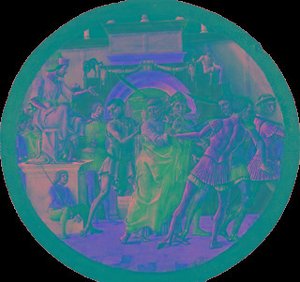
Jakie tematy Cosmè Tura wybierał najczęściej?Odkryj odpowiedź

Man (19), Woman (14) i People (13), w ramach 93 dzieł na tej stronie.

Której techniki Cosmè Tura używał najczęściej?Odkryj odpowiedź

Tempera On Panel, dla 28 z 93 dzieł na tej stronie.

Do jakiego nurtu artystycznego należy Cosmè Tura?Odkryj odpowiedź

Early renaissance, sądząc po oryginałach na tej stronie.

Które dzieła Cosmè Tura znajdują się w Palazzo Schifanoia?Odkryj odpowiedź

Allegory of September (detail), English Allegory of June Triumph of Mercury i View of the Salone dei Mesi: Palazzo Schifanoia, Ferrara posiada 10 dzieł widocznych na tej stronie.

Cosmè Tura: życie i twórczość

Cosmè Tura – Founder of the Ferrara School

Born around 1430 in the vibrant ducal city of Ferrara, Italy, Cosmè Tura emerged from humble beginnings – his father was a shoemaker named Domenico – to become one of the most distinctive and influential painters of the Early Renaissance. While details surrounding his initial training remain somewhat elusive, art historians suggest a possible apprenticeship with Galasso Galassi, a shadowy figure connected to the renowned Piero della Francesca. This early exposure likely laid the groundwork for Tura’s developing artistic sensibilities, though it was a period of travel, potentially encompassing Venice and Padua between 1452 and 1456, that truly ignited his creative spark. In Padua, he would have encountered the workshop of Francesco Squarcione, a pivotal center for artistic innovation where the study of classical antiquity flourished alongside emerging Renaissance techniques like linear perspective and robust form. These influences were not merely absorbed but synthesized into something uniquely Tura’s own – a style characterized by its sharp lines, decorative exuberance, and an almost obsessive attention to detail.

Early Life and Artistic Training

Information about Cosmè Tura's formative years is scarce, reflecting the limitations of archival records from the period. However, scholarly consensus points towards a probable apprenticeship with Galasso Galassi, whose connections to Piero della Francesca – a master known for his geometric precision and mastery of perspective – undoubtedly shaped Tura’s artistic vision. This connection underscores the importance of humanist scholarship in fostering artistic creativity during the Renaissance, where artists sought inspiration from classical ideals and mathematical principles. The journey to Padua between 1452 and 1456 proved decisive, placing Tura squarely within the orbit of Francesco Squarcione's workshop – a bastion of innovation that championed both classical antiquity and groundbreaking techniques like linear perspective. This environment nurtured Tura’s talent and exposed him to the stylistic developments occurring across Europe.

The Este Court and Artistic Patronage

Cosmè Tura’s artistic career ascended rapidly within the patronage of the Este dukes at Ferrara, beginning with Duke Borso d'Este in 1456 and continuing under Ercole I d’Este until his death in 1495. This royal support afforded him unparalleled freedom to experiment with materials and techniques, transforming him into a multifaceted artisan employed not only in creating frescoes and panel paintings but also in designing tournaments, decorating furniture, and crafting clothing – reflecting the comprehensive artistic ambitions of the Este court. His role as official court painter allowed him to immerse himself in the intellectual and cultural currents of Ferrara, fostering collaborations with fellow artists and shaping the aesthetic landscape of his time. The dukes recognized Tura’s exceptional skill and rewarded him generously for his contributions, securing his position at the apex of Ferrarese artistic life.

A Distinctive Style: Linearity and Decorative Ornamentation

Cosmè Tura's style stands apart from many of his contemporaries due to its distinctive characteristics – namely, an unwavering commitment to linearity and a lavish embrace of decorative ornamentation. Unlike artists who favored softer contours and muted palettes, Tura employed bold lines to delineate forms with remarkable clarity and precision, creating images that possessed a sculptural quality. This stylistic preference was informed by the influence of Piero della Francesca’s geometric rigor and Andrea Mantegna's dramatic foreshortening – masters whose works served as models for Tura’s artistic endeavors. Furthermore, his paintings are replete with intricate patterns, arabesques, and gilded embellishments that heighten their visual impact and convey a sense of grandeur. This meticulous attention to detail—a hallmark of Ferrarese art—demonstrates Tura's mastery of technique and underscores his desire to elevate painting beyond mere representation into a form of artistic expression.

Major Works and Legacy

Cosmè Tura’s oeuvre comprises numerous paintings, altarpieces, and decorative commissions that testify to his prolific creativity and enduring influence. Among his most celebrated achievements are the frescoes decorating the Salone dei Mesi at Palazzo Schifanoia – a monumental cycle depicting the zodiac signs and mythological figures with unparalleled stylistic sophistication—the Annunciation altar piece in Ferrara Cathedral, showcasing Tura’s masterful rendering of drapery and light, and Saint Anthony of Padua Reading, which exemplifies his expressive use of line and color. His *Pietà*, housed in the Louvre Museum, represents a pinnacle of Ferrarese devotional art. Moreover, Tura's designs for tournaments and furnishings further cemented his reputation as a versatile artist who excelled across multiple disciplines. Cosmè Tura’s legacy extends far beyond the confines of Ferrara; his style influenced subsequent generations of painters and continues to inspire admiration for its boldness, clarity, and decorative splendor. He remains a pivotal figure in the history of Early Renaissance art—a testament to the transformative power of humanist scholarship and artistic innovation.