Portret Carlo Maratta

100 najsłynniejszych obrazów artysty Carlo Maratta, każdy niepowtarzalny

Aktualizacja: Listopad 2026 · ranking według naszego wskaźnika popularności (liczba wyszukiwań, wizyt i zamówień dla każdego dzieła) · 130 dzieł Carlo Maratta w naszym katalogu

W skrócie

André Le Nôtre (1681) to obraz autorstwa Carlo Maratta, który przyciąga najwięcej spojrzeń; oryginał znajduje się w Zamek Wersalski, Wersal. Następnie wzrok kieruje się na Apollo Chasing Daphne (1681) i Saint John the Baptist Pointing to Christ in a Landscape (1656). Spośród 130 dzieł Carlo Maratta w naszym katalogu, tych 100 jest najbardziej znanych – każde z nich to unikatowy oryginał, przedstawiony wraz z rokiem powstania, muzeum oraz powodem, dla którego przetrwało próbę czasu.

1625 – 1713, Camerano Baroque Najwięcej dzieł: Bawarskie Państwowe Zbiory Malarstwa

10 najlepszych obrazów autorstwa Carlo Maratta według oka galerii

1
André Le Nôtre (1681) autorstwa Carlo Maratta

André Le Nôtre

1681 · Acrylic On Canvas · Zamek Wersalski, Wersal

André Le Nôtre’s portrait, painted in 1681 by Carlo Maratta, offers a glimpse into the mind of a man who fundamentally reshaped the landscape of Europe. More than simply a gardener, Le Nôtre was the “King of Gardeners,” Controller General of Buildings, Arts and Manufactures for France, and, crucially, Gardener to the King – a position that afforded him unparalleled influence over the aesthetic sensibilities of his era. The painting…

2
Apollo Chasing Daphne (1681) autorstwa Carlo Maratta

Apollo Chasing Daphne

1681 · Acrylic On Canvas · Musées Royaux des Beaux-Arts, Bruksela

Carlo Maratta’s “Apollo Chasing Daphne,” completed in 1681, isn't merely a depiction of Greek mythology; it’s an exquisitely crafted distillation of humanist ideals within the Baroque aesthetic. Hanging proudly at the Musées Royaux des Beaux-Arts in Brussels—a testament to Belgian cultural heritage—the canvas commands attention with its serene composure and subtle dynamism.

3
Saint John the Baptist Pointing to Christ in a Landscape (1656) autorstwa Carlo Maratta

Saint John the Baptist Pointing to Christ in a Landscape

1656 · Oil · Harvard Art Museums, Cambridge

A single arm cuts through the air, a diagonal line of intent that directs the eye from the rugged foreground toward a distant, blue-mantled figure. Saint John the Baptist reclines in the landscape, his body angled toward the viewer while his gaze seeks something beyond the immediate frame. He wears a heavy, magenta cloak that anchors the composition, a deep splash of color against the earthy browns and muted greens…

4
Saint John the Evangelist on Patmos (1700) autorstwa Carlo Maratta

Saint John the Evangelist on Patmos

1700 · Oil On Canvas · Rijksmuseum, Amsterdam

The oil on canvas titled Saint John the Evangelist on Patmos is a work by the Roman painter Carlo Maratta. Created between about 1680 and about 1720, the painting captures a moment of divine transcription. The subject focuses on the evangelist Johannes as he writes upon the island of Patmos.

5
Death of Saint Joseph (1676) autorstwa Carlo Maratta

Death of Saint Joseph

1676 · Oil On Canvas · Kunsthistorisches Museum, Wiedeń

The air in the room feels heavy with the weight of a final breath. In this 1676 oil painting, the earthly realm and the heavens collide in a single, breathless moment. Below, the mortal figures gather around the bed where Saint Joseph lies in his final hours. The Virgin Mary, Jesus, and Joseph form a central triangle of light, their faces illuminated by a theatrical glow that cuts through the…

6
Portrait of Cavalier Burnes (1676) autorstwa Carlo Maratta

Portrait of Cavalier Burnes

1676 · Oil · Statens Museum for Kunst, Kopenhaga

Portrait of Cavalier Burnes is a painting by the Italian artist Carlo Maratta. Executed about 1676, this work belongs to the genre of portraiture. It presents a single male figure, capturing the likeness of a man through a focused, bust-length composition.

7
The Flight into Egypt (1664) autorstwa Carlo Maratta

The Flight into Egypt

1664 · Oil On Canvas · Metropolitan Museum of Art, Nowy Jork

The air feels heavy with the weight of a sudden departure. In this scene, the Holy Family moves through a landscape that seems to pulse with both urgency and divine grace. The Virgin Mary sits upon a rocky bank, her form draped in a deep blue mantle that rests heavily over a pink robe. She cradles the Christ Child closely, her gaze fixed on the path ahead. To her side,…

8
Madonna and Child (1660) autorstwa Carlo Maratta

Madonna and Child

1660 · Oil On Canvas · Kunsthistorisches Museum, Wiedeń

This oil painting on canvas presents a close-up view of the upper bodies of the Madonna and Child. The figures are positioned along a diagonal axis that moves from the top left toward the bottom right of the frame. A beam of light descends from the upper left corner, striking the faces of both the mother and the infant. This lighting creates a chiaroscuro effect, where bright highlights on skin…

9
The Painter Andrea Sacchi (1661) autorstwa Carlo Maratta

The Painter Andrea Sacchi

1661 · Oil On Canvas · Museo del Prado, Madryt

The light enters from the upper left, striking a face etched with quiet intelligence. It is the portrait of Andrea Sacchi, captured in the year 1661. A sharp white collar cuts through the darkness, providing a crisp boundary between the skin and the deep blacks of his clothing. The subject sits slightly off-center, his gaze meeting the viewer with a solemn weight. Dark, wavy hair falls in soft, blended strands…

10
The Vanity of the Earthly (1669) autorstwa Carlo Maratta

The Vanity of the Earthly

1669 · Oil · Bawarskie Państwowe Zbiory Malarstwa, Monachium

The scene unfolds within The Vanity of the Earthly, an allegorical oil painting that captures a moment of profound stillness and reflection. Created by Carlo Maratta, the work emerges from the mid-seventeenth century, dating to about 1669. It exists as a window into the Baroque era, where the weight of existence meets the fleeting nature of worldly pursuits. The subject matter invites a quiet wonder regarding the transient beauty of…

Słynne obrazy artysty Carlo Maratta, od 11 do 100

11Madonna and Child Enthroned with Angels and Saints (1680) autorstwa Carlo MarattaMadonna and Child Enthroned with Angels and Saints1680 · Santa Maria in Vallicella 12Virgin and Child with St John (1704) autorstwa Carlo MarattaVirgin and Child with St John1704 · Kunsthistorisches Museum 13Adoration of the Shepherds (1690) autorstwa Carlo MarattaAdoration of the Shepherds1690 · Ermitaż 14Rebecca and Eliezer at the Well (1655) autorstwa Carlo MarattaRebecca and Eliezer at the Well1655 · Museum of Art 15Portrait of a Cardinal (Barberini) (1650) autorstwa Carlo MarattaPortrait of a Cardinal (Barberini)1650 16Prédication de Saint Jean Baptiste (1655) autorstwa Carlo MarattaPrédication de Saint Jean Baptiste1655 · Musée des Beaux-Arts de Pau 17Portrait of Giovanni Pietro Bellori (1650) autorstwa Carlo MarattaPortrait of Giovanni Pietro Bellori1650 18Magdalene in the desert (1650) autorstwa Carlo MarattaMagdalene in the desert1650 · Museo del Prado 19The Angel of the Annunciation in a Garland of Flowers (1651) autorstwa Carlo MarattaThe Angel of the Annunciation in a Garland of Flowers1651 20Study for the altarpiece of Saint Rosalie among the Plague-Stricken (1658) autorstwa Carlo MarattaStudy for the altarpiece of Saint Rosalie among the Plague-Stricken1658 · Yale University Art Gallery 21Portrait of a gentleman (1650) autorstwa Carlo MarattaPortrait of a gentleman1650 22Christ and the Samaritan woman. (1650) autorstwa Carlo MarattaChrist and the Samaritan woman.1650 23Alpheus and Arethusa (1655) autorstwa Carlo MarattaAlpheus and Arethusa1655 24Depiction in the Temple (1669) autorstwa Carlo MarattaDepiction in the Temple1669 · Bawarskie Państwowe Zbiory Malarstwa 25Sleeping, Naked Child (1669) autorstwa Carlo MarattaSleeping, Naked Child1669 · Bawarskie Państwowe Zbiory Malarstwa 26Christ on the Mount of Olives (1669) autorstwa Carlo MarattaChrist on the Mount of Olives1669 · Bawarskie Państwowe Zbiory Malarstwa 27Mary with Child and Infant John (1669) autorstwa Carlo MarattaMary with Child and Infant John1669 · Bawarskie Państwowe Zbiory Malarstwa 28Madonna and Child (1669) autorstwa Carlo MarattaMadonna and Child1669 · Bawarskie Państwowe Zbiory Malarstwa 29Pope Clement IX (1669) autorstwa Carlo MarattaPope Clement IX1669 · Bawarskie Państwowe Zbiory Malarstwa 30Carolus (1669) autorstwa Carlo MarattaCarolus1669 · Bawarskie Państwowe Zbiory Malarstwa 31Bathing wood nymph (1669) autorstwa Carlo MarattaBathing wood nymph1669 · Bawarskie Państwowe Zbiory Malarstwa 32Caritas by Carlo Maratti (1669) autorstwa Carlo MarattaCaritas by Carlo Maratti1669 · Bawarskie Państwowe Zbiory Malarstwa 33Portrait of Maria Madalena Rospigliosi (1664) autorstwa Carlo MarattaPortrait of Maria Madalena Rospigliosi1664 34Portrait of Giovanna Garzoni (1665) autorstwa Carlo MarattaPortrait of Giovanna Garzoni1665 35Portrait of Maria Maddalena Rospigliosi Panciatichi (1664) autorstwa Carlo MarattaPortrait of Maria Maddalena Rospigliosi Panciatichi1664 36The Rape of Europa (1682) autorstwa Carlo MarattaThe Rape of Europa1682 · National Gallery of Ireland 37The Flight into Egypt (1677) autorstwa Carlo MarattaThe Flight into Egypt1677 38The Vision of Saint Stanislas Kostka (1685) autorstwa Carlo MarattaThe Vision of Saint Stanislas Kostka1685 · Royal Collection 39The Origin of the Red Rose (1676) autorstwa Carlo MarattaThe Origin of the Red Rose1676 · Statens Museum for Kunst 40The finding of Romulus and Remus (1686) autorstwa Carlo MarattaThe finding of Romulus and Remus1686 41Bath of Diana (1684) autorstwa Carlo MarattaBath of Diana1684 42Flora (1690) autorstwa Carlo MarattaFlora1690 43Virgin and Child (1697) autorstwa Carlo MarattaVirgin and Child1697 · Statens Museum for Kunst 44The Adoration of the Shepherds (1689) autorstwa Carlo MarattaThe Adoration of the Shepherds1689 · Statens Museum for Kunst 45Cupids and Garlands of Flowers with a Parrot (1694) autorstwa Carlo MarattaCupids and Garlands of Flowers with a Parrot1694 46Portrait of Francesca Gommi Maratti (1701) autorstwa Carlo MarattaPortrait of Francesca Gommi Maratti1701 · Cleveland Museum of Art 47Marchese Niccolò Maria Pallavicini (1650-1714) guided to the Temple of Virtù by Apollo with a Self-portrait of the Artist (1705) autorstwa Carlo MarattaMarchese Niccolò Maria Pallavicini (1650-1714) guided to the Temple of Virtù by Apollo with a Self-portrait of the Artist1705 48Madonna and Child (1711) autorstwa Carlo MarattaMadonna and Child1711 · Minneapolis Institute of Art 49The Judgment of Paris (1708) autorstwa Carlo MarattaThe Judgment of Paris1708 · Tsarskoye Selo 50Assumption of Mary (1713) autorstwa Carlo MarattaAssumption of Mary1713 · Fries Museum 51Annunciation (1713) autorstwa Carlo MarattaAnnunciation1713 52Hagar and Ishmael (1701) autorstwa Carlo MarattaHagar and Ishmael1701 · Museo del Prado 53Saint John on Patmos (1669) autorstwa Carlo MarattaSaint John on Patmos1669 · Bawarskie Państwowe Zbiory Malarstwa 54The Virgin and Child in Glory (1680) autorstwa Carlo MarattaThe Virgin and Child in Glory1680 · Museo del Prado 55Portrait of Count Franz Anton Berka of Dubá (1670) autorstwa Carlo MarattaPortrait of Count Franz Anton Berka of Dubá1670 · National Gallery Prague 56Adoration of the Shepherds (1690) autorstwa Carlo MarattaAdoration of the Shepherds1690 · Ermitaż 57A Young Man (1663) autorstwa Carlo MarattaA Young Man1663 · Berlińskie Muzea Państwowe 58Virgin in contemplation autorstwa Carlo MarattaVirgin in contemplationMuseo del Prado 59Self-portrait (1684) autorstwa Carlo MarattaSelf-portrait1684 · British Museum 60Uznanie Magi (w Garlandzie) autorstwa Carlo MarattaUznanie Magi (w Garlandzie)Ermitaż 61Time driving a boat ferries the four seasons and a sleeping figure toward death (1713) autorstwa Carlo MarattaTime driving a boat ferries the four seasons and a sleeping figure toward death1713 · Muzea Miejskie w Reggio Emilia 62The Holy Night (The Nativity) (1656) autorstwa Carlo MarattaThe Holy Night (The Nativity)1656 · Staatliche Kunstsammlungen Dresden 63Retrato de Faustina Maratti. (1686) autorstwa Carlo MarattaRetrato de Faustina Maratti.1686 64The Virgin Appearing to St Philip Neri (1675) autorstwa Carlo MarattaThe Virgin Appearing to St Philip Neri1675 · Galleria Palatina 65St. Mark the Evangelist autorstwa Carlo MarattaSt. Mark the EvangelistThyssen-Bornemisza Museum 66Self-portrait autorstwa Carlo MarattaSelf-portrait 67Assumption and the Doctors of the Church (1689) autorstwa Carlo MarattaAssumption and the Doctors of the Church1689 · Santa Maria del Popolo 68The Virgin teaching the infant Christ to read autorstwa Carlo MarattaThe Virgin teaching the infant Christ to readFitzwilliam Museum 69The Annunciation autorstwa Carlo MarattaThe AnnunciationRoyal Collection 70Virgin and Child autorstwa Carlo MarattaVirgin and ChildFinnish National Gallery 71The Flagellation of Christ autorstwa Carlo MarattaThe Flagellation of ChristMuseum of Fine Arts 72Virgin Mary autorstwa Carlo MarattaVirgin Mary 73Nativity autorstwa Carlo MarattaNativityMuzeum Narodowe w Krakowie 74The Visitation autorstwa Carlo MarattaThe Visitation 75The Martyrdom of St. Andrew autorstwa Carlo MarattaThe Martyrdom of St. Andrew 76The Holy Family With Angels autorstwa Carlo MarattaThe Holy Family With Angels 77Annunciation autorstwa Carlo MarattaAnnunciation 78The Birth of the Virgin autorstwa Carlo MarattaThe Birth of the Virgin 79The Assumption of the Virgin autorstwa Carlo MarattaThe Assumption of the Virgin 80The Adoration of the Magi autorstwa Carlo MarattaThe Adoration of the Magi 81The Madonna with the Young Christ Sleeping autorstwa Carlo MarattaThe Madonna with the Young Christ Sleeping 82The Virgin and Child with the Young St. John the Baptist autorstwa Carlo MarattaThe Virgin and Child with the Young St. John the Baptist 83Christ and the Samaritan Woman autorstwa Carlo MarattaChrist and the Samaritan Woman 84Studies for the head of Jael autorstwa Carlo MarattaStudies for the head of Jael 85Painter Andrea Sacchi autorstwa Carlo MarattaPainter Andrea Sacchi 86The Madonna and Child autorstwa Carlo MarattaThe Madonna and Child 87Rebecca and Eliezer at the Well autorstwa Carlo MarattaRebecca and Eliezer at the Well 88Madonna and Child autorstwa Carlo MarattaMadonna and Child 89Judith autorstwa Carlo MarattaJudithMuzea Kapitolińskie 90Madonna and Child with the Young Saint John the Baptist autorstwa Carlo MarattaMadonna and Child with the Young Saint John the BaptistDetroit Institute of Arts 91Arcangelo Corelli (1700) autorstwa Carlo MarattaArcangelo Corelli1700 · Royal College of Music Museum 92The Holy Family autorstwa Carlo MarattaThe Holy FamilyToledo Museum of Art 93The Sleep of the Infant Jesus, with Musician Angels (1697) autorstwa Carlo MarattaThe Sleep of the Infant Jesus, with Musician Angels1697 · Luwr 94Study for a Statue of the Apostle Peter (1703) autorstwa Carlo MarattaStudy for a Statue of the Apostle Peter1703 · Kunstpalast 95Maria Immaculata (1688) autorstwa Carlo MarattaMaria Immaculata1688 · Galeria Obrazów Sanssouci 96Hercules and Onfalia autorstwa Carlo MarattaHercules and Onfalia 97Madonna with Saints Verso autorstwa Carlo MarattaMadonna with Saints Verso 98The Annunciation autorstwa Carlo MarattaThe Annunciation 99Holy Family autorstwa Carlo MarattaHoly Family 100Faith and Justice Enthroned autorstwa Carlo MarattaFaith and Justice Enthroned

Słynne obrazy Carlo Maratta epoka po epoce

Tematy, które przyciągnęły wzrok Carlo Maratta

Cztery motywy najczęściej powracające w tych oryginałach, z których każdy doczekał się swojego najdoskonalszego przykładu.

Muzea przechowujące oryginały Carlo Maratta

8 muzeów, w których znajduje się najwięcej obrazów z tej strony.

Muzea Miasto Dzieła artysty Carlo Maratta Obrazy z tej listy
Bawarskie Państwowe Zbiory Malarstwa, MonachiumBawarskie Państwowe Zbiory Malarstwa Monachium 11 The Vanity of the Earthly, Depiction in the Temple, Sleeping, Naked Child
Museo del Prado, MadrytMuseo del Prado Madryt 5 The Painter Andrea Sacchi, Magdalene in the desert, Hagar and Ishmael
Statens Museum for Kunst, KopenhagaStatens Museum for Kunst Kopenhaga 4 Portrait of Cavalier Burnes, The Origin of the Red Rose, Virgin and Child
Ermitaż, Sankt PetersburgErmitaż Sankt Petersburg 4 Adoration of the Shepherds, Adoration of the Shepherds, Uznanie Magi (w Garlandzie)
Kunsthistorisches Museum, WiedeńKunsthistorisches Museum Wiedeń 3 Death of Saint Joseph, Madonna and Child, Virgin and Child with St John
Royal Collection, LondynRoyal Collection Londyn 2 The Vision of Saint Stanislas Kostka, The Annunciation
National Gallery of Ireland, DublinNational Gallery of Ireland Dublin 2 The Rape of Europa
Fitzwilliam MuseumFitzwilliam Museum 2 The Virgin teaching the infant Christ to read

Carlo Maratta na przestrzeni dekad: jeden unikatowy oryginał dla każdego

Dzieła według dekad

Wybierz dekadę, aby zobaczyć dzieło, które ją definiuje.

Obrazy artysty Carlo Maratta: pytania do galerii

Jakie jest najsłynniejsze dzieło artysty Carlo Maratta?Odkryj odpowiedź

André Le Nôtre (1681), Zamek Wersalski, Wersal. Następne są Apollo Chasing Daphne (1681) oraz Saint John the Baptist Pointing to Christ in a Landscape (1656).

W jakim wieku Carlo Maratta stworzył/a André Le Nôtre?Odkryj odpowiedź

56 lat: André Le Nôtre pochodzi z 1681, a Carlo Maratta urodził(a) się w 1625.

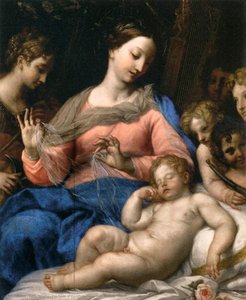
Które dziesięć obrazów Carlo Maratta jest najbardziej znanych?Odkryj odpowiedź

André Le Nôtre, Apollo Chasing Daphne, Saint John the Baptist Pointing to Christ in a Landscape, Saint John the Evangelist on Patmos, Death of Saint Joseph, Portrait of Cavalier Burnes, The Flight into Egypt, Madonna and Child, The Painter Andrea Sacchi i The Vanity of the Earthly. Powyższy ranking zawiera rok powstania oraz muzeum dla każdego z nich.

Ile znanych dzieł stworzył Carlo Maratta?Odkryj odpowiedź

Nasz katalog zawiera 130 dzieł artysty Carlo Maratta, datowanych od 1650 do 1713.

Gdzie można zobaczyć najsłynniejsze oryginały Carlo Maratta?Odkryj odpowiedź

W większości znajdują się w Bawarskie Państwowe Zbiory Malarstwa (Monachium), Museo del Prado (Madryt) i Statens Museum for Kunst (Kopenhaga). Powyższa tabela muzeów zawiera ich pełną listę.

W jakim okresie Carlo Maratta stworzył/a swoje najsłynniejsze obrazy?Odkryj odpowiedź

W 1660s: 18 z 100 dzieł na tej stronie powstało w tym czasie, w tym The Flight into Egypt.

Który z najsłynniejszych obrazów artysty Carlo Maratta powstał najwcześniej, a który najpóźniej?Odkryj odpowiedź

Na tej stronie najwcześniejszy to Portrait of a Cardinal (Barberini) (1650), a najpóźniejszy Assumption of Mary (1713).

Jakie tematy preferował Carlo Maratta?Odkryj odpowiedź

Woman (37), Man (20) i Clouds (17), w ramach 100 dzieł na tej stronie.

Jakich materiałów Carlo Maratta używał najczęściej?Odkryj odpowiedź

Oil On Canvas, dla 35 z 100 dzieł na tej stronie.

Do jakiego nurtu należy twórczość Carlo Maratta?Odkryj odpowiedź

Baroque, sądząc po oryginałach na tej stronie.

Jakie oryginały Carlo Maratta można zobaczyć w Bawarskie Państwowe Zbiory Malarstwa?Odkryj odpowiedź

The Vanity of the Earthly, Depiction in the Temple i Sleeping, Naked Child: Bawarskie Państwowe Zbiory Malarstwa, Monachium posiada 11 dzieł widocznych na tej stronie.

Carlo Maratta: portret artysty

Rzymski mistrz baroku klasycystycznego

Carlo Maratta, często znany jako Maratti, to postać kluczowa dla włoskiego malarstwa XVII wieku, stanowiąca żywy pomost między pełnym przepychu dojrzałym barokiem a bardziej wyrafinowaną, inspirowaną antykiem estetyką. Urodzony 15 maja 1625 roku w Camerano, w obrębie Państwa Kościelnego – dzisiejszych Włoch – rozpoczął swoją artystyczną wędrówkę od przeprowadzki do Rzymu w wieku zaledろ lat. Ta zmiana miejsca zamieszkania okazała się przełomowa, gdyż otworzyła mu drzwi do pracowni Andrea Sacchi, malarza słynącego z umiarkowanych kompozycji i głębokiego przywiązania do ideałów klasycznych. Wpływ Sacchi w sposób fundamentalny ukształtował rozwijający się styl Maratty, zaszczepiając w nim dążenie do klarowności, równowagi oraz powściągliwego emocjonalizmu, który odróżniał go od bardziej ekstrawaganckich współczesnych mu twórców baroku. Ta nauka nie była jedynie technicznym szkoleniem; było to zanurzenie w filozoficznym podejściu do sztuki, stawiającym rygor intelektualny i harmonijny projekt ponad teatralny spektakl. Maratta przyswoił te zasady, lecz nie zamknął się wyłącznie w ich granicach, wykazując niezwykłą zdolność do syntezy klasycznych fundamentów z dominującymi nurtami barokowej wrażliwości.

Rozkwit kariery w Rzymie

Talent Maratty rozkwitł niezwykle szybko, a już w połowie lat 50. XVII wieku zaczął przyciągać znaczące zamówienia. Jego wczesne dzieła, takie jak Nawiedzenie (1656) dla Santa Maria della Pace, ujawniają mistrzowską władzę nad światłem i ruchem, połączoną z rodzącą się zdolnością do nasycania scen religijnych namacalnym poczuciem duchowej głębi. Nie był on jedynie naśladowcą ustalonych wzorców; tchnął w nie własną, unikalną wizję, charakteryzującą się pełnymi wdzięku postaciami, eleganckimi draperiami oraz subtelnym, a zarazem potężnym operowaniem kolorem. W tym okresie powstało również Objawienie Tajemnicy Trójcy św. Augustynowi (ok. 1655), dzieło będące doskonałym przykładem jego umiejętności balansowania między klasycznym idealizmem a barokowym dynamizmem. Wraz ze wzrostem sławy, rosła także skala i prestiż jego zleceń. Stał się ulubionym artystą wpływowych rzymskich rodów, a co najważniejsze – samego papiestwa. Przez sześć dekady Maratta cieszył się mecenatem nie mniejszej liczby niż sześciu papieży, co stanowi świadectwo jego artystycznej biegłości i politycznego wyczucia. Ta niezmienna wsparcie ze strony Stolicy Apostolskiej nie tylko zapewniło mu bezpieczeństwo finansowe, ale także umieściło go w samym sercu rzymskiego życia artystycznego i kulturalnego.

Synteza stylów i wpływów

Styl Maratty często określa się mianem „baroku klasycystycznego”, co doskonale oddaje jego wyjątkową pozycję w krajobrazie historii sztuki. Choć głęboko zakorzeniony w tradycji klasycznej wywodzącej się od Rafaela, nie był on odporny na wpływ bardziej teatralnych tendencji baroku. Jego współczesny, Giovanni Bellori, dostrzegł tę syntezę, dokumentując podejście artystyczne Maratty we wczesnej biografii. Artysta po mistrzowsku integrował dramatyczne użycie światłocienia, charakterystyczne dla malarstwa barokowego, z klarownością formy i kompozycyjną równowagą preferowaną przez klasyków. Ta fuzja zaowocowała dziełami, które były jednocześnie angażujące emocjonalnie i satysfakcjonujące intelektualnie. Jego paleta, choć żywa, często pozostawała powściągliwa, przedkładając harmonijne relacje kolorystyczne nad gwałtowne kontrasty. Doskonale radził sobie z przedstawianiem narracji religijnych, nasycając je poczuciem czci i duchowej intensywności. Zjawienie się Matki Bożej św. Filipowi Neri (ok. 1675), znajdujące się obecnie w Palazzo Pitti we Florencji, jest doskonałym przykładem jego zdolności do interpretowania takich tematów z gracją i głębokim rezonansem emocjonalnym.

Poza malarstwo: Restauracja i dziedzictwo

Wkład Maratty wykraczał poza tworzenie nowych dzieł; powierzono mu również zadanie ochrony artystycznego dziedzictwa Rzymu. W latach 1702–1703 Innocenty XI mianował go surintendent des chambres du vatican i powierzył mu naprawę fresków Rafaela w watykańskich Stanze – odpowiedzialność, która podkreślała jego status jako czołowego autorytetu w dziedzinie sztuki klasycznej. Podjęcie tego zadania nie było jedynie kwestią technicznej renowacji; był to akt czci wobec jednego z największych skarbów Włoch, powierzony mistrzowi, który w pełni rozumiał jego wagę. Maratta pracował płodnie aż do śmierci w Rzymie 15 grudnia 1713 roku, pozostawiając po sobie ogromny i wpływowy dorobek. Jego dziedzictwo jako mistrza późnobarokowego maniery klasycystycznej przetrwało przez cały XVIII wiek, inspirując kolejne pokolenia artystów poprzez nacisk na klarowność, równowagę i harmonijną kompozycję. Dziś jego obrazy można odnaleźć w muzeach na całym świecie, co sprawia, że jego artystyczna wizja nieustannie inspiruje i zachwyca odbiorców.

Kluczowe dzieła i trwały wpływ

  • Apollo ścigający Dafne: Dynamiczne przedstawienie mitu klasycznego, ukazujące kunszt Maratty w oddawaniu ruchu i emocji.
  • Adoracja Trzech Króli (w girlandzie): Bogato szczegółowa kompozycja, będąca przykładem jego mistrzostwa w operowaniu kolorem i formą.
  • Adoracja Pasterzy: Barokowe arcydzieło z 1690 roku, cenione za boską symbolikę i dynamiczną aranżację.
  • Nawiedzenie: Wczesne dzieło demonstrujące rodzący się talent Maratty do operowania światłem i ruchem w kontekście religijnym.
  • Objawienie Tajemnicy Trójcy św. Augustynowi: Przekonujący przykład jego zdolności do łączenia klasycznego idealizmu z elementami barokowymi.
Wpływ Maratty wykracza poza konkretne obrazy; tkwi on w sformułowaniu stylu, który połączył dwie epoki, oferując wyrafinowaną i intelektualnie angażującą alternatywę dla bardziej jaskrawych tendencji dojrzałego baroku. Pozostaje on postacią niezwykle istotną dla zrozumienia ewolucji sztuki włoskiej oraz jej trwałego dziedzictwa w całej tradycji artystycznej Zachodu.