Portret Bartholomeus Spranger

74 najsłynniejszych obrazów artysty Bartholomeus Spranger, każdy niepowtarzalny

Aktualizacja: Listopad 2026 · ranking według naszego wskaźnika popularności (liczba wyszukiwań, wizyt i zamówień dla każdego dzieła) · 76 dzieł Bartholomeus Spranger w naszym katalogu

W skrócie

Adoration of the Magi (1606) to obraz autorstwa Bartholomeus Spranger, który przyciąga najwięcej spojrzeń. Następnie wzrok kieruje się na Ulysses and Circe (1586) i Allegory of Emperor Rudolf II (1592). Spośród 76 dzieł Bartholomeus Spranger w naszym katalogu, tych 74 jest najbardziej znanych – każde z nich to unikatowy oryginał, przedstawiony wraz z rokiem powstania, muzeum oraz powodem, dla którego przetrwało próbę czasu.

1546 – 1611, Antwerpia Northern mannerism Najwięcej dzieł: Kunsthistorisches Museum

10 najlepszych obrazów autorstwa Bartholomeus Spranger według oka galerii

1
Adoration of the Magi (1606) autorstwa Bartholomeus Spranger

Adoration of the Magi

1606 · Engraving

The work titled Adoration of the Magi, also recognized as The Adoration of the Kings, is a creation of the artist Bartholomeus Spranger. Born in Antwerp, Belgium, in 1546, Spranger brought a specific Northern sensibility to the religious scene. He remained active in his craft until his death in 1611. This specific piece emerged from his hand during a period of intense creative output, dated around 1590 or around 1595-6.

2
Ulysses and Circe (1586) autorstwa Bartholomeus Spranger

Ulysses and Circe

1586 · Oil On Canvas · Kunsthistorisches Museum, Wiedeń

The air in the room feels heavy, thick with the scent of old stone and spilled wine. In this Mannerist encounter, the bodies do not merely exist; they twist. Circe, seen from behind, turns her torso in a serpentine arc, her pale skin catching a sharp, luminous light that cuts through the gloom. Her form is a curve of white against the deep, dark shadows of the background. Opposite her,…

3
Allegory of Emperor Rudolf II (1592) autorstwa Bartholomeus Spranger

Allegory of Emperor Rudolf II

1592 · Oil · Kunsthistorisches Museum, Wiedeń

The Allegory of Emperor Rudolf II emerges from the brush of Bartholomeus Spranger, a painter who captures a moment of intense, swirling movement. Created in 1592, this work presents a complex arrangement of figures that seem to dance through a bright, open sky. The composition draws the eye upward toward a winged figure, while below, a pyramidal structure of deities and warriors creates a sense of layered depth. Every line…

4
Hercules, Deianira, and Nessus (1580) autorstwa Bartholomeus Spranger

Hercules, Deianira, and Nessus

1580 · Oil · Kunsthistorisches Museum, Wiedeń

The air in this scene feels heavy, thick with the sudden, violent shift of fate. In a swirling composition of interlocking limbs and muscular torsos, the figures of Hercules, Deianira, and Nessus collide in a moment of profound struggle. The movement is restless, a serpentine energy that pulls the eye through a tangle of bodies. Hercules dominates the center, his form rendered with a powerful anatomical precision that catches the…

5
Minerva Victorious over Ignorance (1591) autorstwa Bartholomeus Spranger

Minerva Victorious over Ignorance

1591 · Oil On Canvas · Kunsthistorisches Museum, Wiedeń

In this dynamic Mannerist oil painting, the goddess Minerva Victorious over Ignorance emerges as a central force of triumph. Created by Bartholomeus Spranger around 1591, the scene captures a moment of intense movement and theatrical energy. Minerva dominates the vertical space, her body held in an elegant, elongated contrapposto pose that suggests both grace and power. She wears a gleaming silver breastplate with a golden relief, paired with a light…

6
Self-portrait (1585) autorstwa Bartholomeus Spranger

Self-portrait

1585 · Oil On Canvas · Kunsthistorisches Museum, Wiedeń

This oil portrait, titled Self-portrait, was executed by the artist Bartholomeus Spranger in 1585. It offers a direct encounter with the painter himself, captured during a period of significant professional development. The work measures 45 x 63 cm, providing an intimate scale for such a personal study of identity and presence.

7
Fall of Man (1595) autorstwa Bartholomeus Spranger

Fall of Man

1595 · Oil On Panel · Kunsthistorisches Museum, Wiedeń

The religious art piece "Fall of Man" by Bartholomeus Spranger presents a scene centered on the biblical narrative of the expulsion from Paradise. The composition focuses on the figures of Adam and Eve in the immediate aftermath of their transgression. These two figures occupy the central space of the work, positioned within a landscape that reflects the consequences of their actions. The subject matter specifically addresses the moment of humanity's…

8
God the Father with the Holy Ghost and angels (1582) autorstwa Bartholomeus Spranger

God the Father with the Holy Ghost and angels

1582 · Oil On Panel · Kunsthistorisches Museum, Wiedeń

A celestial hierarchy unfolds within an oval composition, capturing a moment of profound spiritual descent. At the apex, God the Father gazes downward with a solemn expression, one hand raised in blessing while the other rests upon a luminous orb that represents the universe. Beneath him, the Holy Ghost descends as a white dove, enveloped in radiant golden light. The scene is populated by cherubic angel faces emerging from soft,…

9
Apollo and the Muses (1590) autorstwa Bartholomeus Spranger

Apollo and the Muses

1590 · Oil · Kunsthistorisches Museum, Wiedeń

In this Mannerist oil painting, we find ourselves drawn into a crowded, dynamic scene where mythology meets a lush, hilly landscape. Apollo sits at the center of this movement, a radiant figure distinguished by a halo, his fingers engaged with a stringed instrument. He is not alone; he is surrounded by several female Muses, each caught in a moment of music or quiet conversation. The composition feels intentional yet restless,…

10
Mercury and Venus (1578) autorstwa Bartholomeus Spranger

Mercury and Venus

1578 · Oil On Canvas · Bawarskie Państwowe Zbiory Malarstwa, Monachium

The oil on canvas work titled Mercury and Venus was executed by the artist Bartholomeus Spranger. This painting is dated to about 1585. It captures a moment of mythic intimacy through the presence of two central nude figures. These figures, likely Mercury and Venus, are caught in the middle of an embrace.

Słynne obrazy artysty Bartholomeus Spranger, od 11 do 74

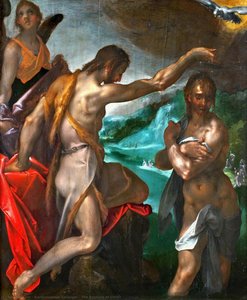
11The Fragrance (1578) autorstwa Bartholomeus SprangerThe Fragrance1578 · Bawarskie Państwowe Zbiory Malarstwa 12Saint Mary Magdalene (1578) autorstwa Bartholomeus SprangerSaint Mary Magdalene1578 · Bawarskie Państwowe Zbiory Malarstwa 13Holy Family (1578) autorstwa Bartholomeus SprangerHoly Family1578 · Bawarskie Państwowe Zbiory Malarstwa 14Lamentation of Christ (1576) autorstwa Bartholomeus SprangerLamentation of Christ1576 · Bawarskie Państwowe Zbiory Malarstwa 15Sine Cerere et Baccho friget Venus (1590) autorstwa Bartholomeus SprangerSine Cerere et Baccho friget Venus1590 · Kunsthistorisches Museum 16Mountain landscape with a scene of the early history of man (1569) autorstwa Bartholomeus SprangerMountain landscape with a scene of the early history of man1569 · Staatliche Kunsthalle Karlsruhe 17The contest between Apollo and Pan (1587) autorstwa Bartholomeus SprangerThe contest between Apollo and Pan1587 · Bawarskie Państwowe Zbiory Malarstwa 18Saint Luke painting the Virgin (1582) autorstwa Bartholomeus SprangerSaint Luke painting the Virgin1582 · Bawarskie Państwowe Zbiory Malarstwa 19The Flagellation of Christ (1586) autorstwa Bartholomeus SprangerThe Flagellation of Christ1586 · Statens Museum for Kunst 20Jael Kills Sisera (1586) autorstwa Bartholomeus SprangerJael Kills Sisera1586 · Statens Museum for Kunst 21Ecce Homo (1580) autorstwa Bartholomeus SprangerEcce Homo1580 22God the father with the holy spirit and angels (1582) autorstwa Bartholomeus SprangerGod the father with the holy spirit and angels1582 23Diana Resting after Hunt (1597) autorstwa Bartholomeus SprangerDiana Resting after Hunt1597 · Szépművészeti Múzeum 24Diana - Luna (1600) autorstwa Bartholomeus SprangerDiana - Luna1600 · Szépművészeti Múzeum 25Venus and Mercury put a blindfold over Cupid's eyes (1597) autorstwa Bartholomeus SprangerVenus and Mercury put a blindfold over Cupid's eyes1597 · Germanisches Nationalmuseum 26Portrait of Zdenko Adalbert Popel, 1st Prince Lobkowicz (1568-1628) (1600) autorstwa Bartholomeus SprangerPortrait of Zdenko Adalbert Popel, 1st Prince Lobkowicz (1568-1628)1600 · National Gallery Prague 27The Suicide of Sophonisba (1605) autorstwa Bartholomeus SprangerThe Suicide of Sophonisba1605 · National Gallery Prague 28Amor fleeing Psyche (1599) autorstwa Bartholomeus SprangerAmor fleeing Psyche1599 29Standing Nude Man (Bacchus) (1600) autorstwa Bartholomeus SprangerStanding Nude Man (Bacchus)1600 30Diana and Actaeon (1600) autorstwa Bartholomeus SprangerDiana and Actaeon1600 31Saint Barbara (1611) autorstwa Bartholomeus SprangerSaint Barbara1611 · Szépművészeti Múzeum 32Venus and Mercury (1585) autorstwa Bartholomeus SprangerVenus and Mercury1585 · Kunsthistorisches Museum 33Jupiter and Antiope (1596) autorstwa Bartholomeus SprangerJupiter and Antiope1596 · Kunsthistorisches Museum 34Allegory of Justice and Prudence (1599) autorstwa Bartholomeus SprangerAllegory of Justice and Prudence1599 · Luwr 35Venus and Adonis (1587) autorstwa Bartholomeus SprangerVenus and Adonis1587 · Rijksmuseum 36Venus and Mars warned by Mercury (1587) autorstwa Bartholomeus SprangerVenus and Mars warned by Mercury1587 · Kunsthistorisches Museum 37Hermes and Athena (1585) autorstwa Bartholomeus SprangerHermes and Athena1585 · Zamek na Hradczanach 38Venus and Vulcan (1610) autorstwa Bartholomeus SprangerVenus and Vulcan1610 · Kunsthistorisches Museum 39Mountain landscape with a hermit (1567) autorstwa Bartholomeus SprangerMountain landscape with a hermit1567 · Staatliche Kunsthalle Karlsruhe 40Figure Studies (1575) autorstwa Bartholomeus SprangerFigure Studies1575 41Glaucus and Scylla (1582) autorstwa Bartholomeus SprangerGlaucus and Scylla1582 · Kunsthistorisches Museum 42Diana and Actaeon (1585) autorstwa Bartholomeus SprangerDiana and Actaeon1585 43Saint Margaret (1583) autorstwa Bartholomeus SprangerSaint Margaret1583 44Engelen dragen het lichaam van Christus (Engelenpietà), Bartholomeus Spranger, c. 1587 (1587) autorstwa Bartholomeus SprangerEngelen dragen het lichaam van Christus (Engelenpietà), Bartholomeus Spranger, c. 15871587 · Rijksmuseum 45The Baptism of Christ (1603) autorstwa Bartholomeus SprangerThe Baptism of Christ1603 · National Museum in Wrocław 46The Triumph of Venus (1600) autorstwa Bartholomeus SprangerThe Triumph of Venus1600 47Study of a Female Nude (Venus in a Drapery) (1605) autorstwa Bartholomeus SprangerStudy of a Female Nude (Venus in a Drapery)1605 · Muzeum Narodowe w Warszawie 48Achelous and Deianeira (1600) autorstwa Bartholomeus SprangerAchelous and Deianeira1600 49The Adoration of the Kings (1595) autorstwa Bartholomeus SprangerThe Adoration of the Kings1595 · National Gallery 50Adoration of the Kings (1595) autorstwa Bartholomeus SprangerAdoration of the Kings1595 · National Gallery 51Mercury Carrying Psyche to Mount Olympus (1611) autorstwa Bartholomeus SprangerMercury Carrying Psyche to Mount Olympus1611 52Odysseus and Circe (1585) autorstwa Bartholomeus SprangerOdysseus and Circe1585 · Kunsthistorisches Museum 53St Wenceslas and St Vitus autorstwa Bartholomeus SprangerSt Wenceslas and St VitusNational Gallery Prague 54St Sigismund and St Adalbert autorstwa Bartholomeus SprangerSt Sigismund and St AdalbertNational Gallery Prague 55Vulcan and Maia (1575) autorstwa Bartholomeus SprangerVulcan and Maia1575 · Kunsthistorisches Museum 56Ceres and Bacchus autorstwa Bartholomeus SprangerCeres and Bacchus 57Allegory autorstwa Bartholomeus SprangerAllegoryMusée des Beaux-Arts 58Apotheosis of the Arts (Fame leading the Arts to Olympus) autorstwa Bartholomeus SprangerApotheosis of the Arts (Fame leading the Arts to Olympus)National Gallery Prague 59Faun with Wounded Foot autorstwa Bartholomeus SprangerFaun with Wounded Foot 60La Peinture, la Sculpture et l'Architecture autorstwa Bartholomeus SprangerLa Peinture, la Sculpture et l'Architecture 61Le Christ sauveur du monde autorstwa Bartholomeus SprangerLe Christ sauveur du monde 62ALLEGORIA PRAWDY autorstwa Bartholomeus SprangerALLEGORIA PRAWDYLuwr 63Venus + Mercury und Amus autorstwa Bartholomeus SprangerVenus + Mercury und Amus 64Peter and John Heal a Cripple at the Gate of the Temple autorstwa Bartholomeus SprangerPeter and John Heal a Cripple at the Gate of the Temple 65Salvator Mundi autorstwa Bartholomeus SprangerSalvator Mundi 66Faith, Hope and Charity autorstwa Bartholomeus SprangerFaith, Hope and Charity 67Sarah Presenting Hagar to Abraham autorstwa Bartholomeus SprangerSarah Presenting Hagar to Abraham 68Christ blessing little children autorstwa Bartholomeus SprangerChrist blessing little children 69Female Warrior Crushing a Satyr autorstwa Bartholomeus SprangerFemale Warrior Crushing a Satyr 70Venus and Adonis (1597) autorstwa Bartholomeus SprangerVenus and Adonis1597 · Kunsthistorisches Museum 71Epitaph of Goldsmith Nicolas Müller of Prague (1592) autorstwa Bartholomeus SprangerEpitaph of Goldsmith Nicolas Müller of Prague1592 · National Gallery Prague 72Angelica and Medoro (1600) autorstwa Bartholomeus SprangerAngelica and Medoro1600 · Alte Pinakothek 73Hermaphrodite and the nymph Salmacis (1582) autorstwa Bartholomeus SprangerHermaphrodite and the nymph Salmacis1582 · Kunsthistorisches Museum 74Herakles and Omphale (1585) autorstwa Bartholomeus SprangerHerakles and Omphale1585 · Kunsthistorisches Museum

Słynne obrazy Bartholomeus Spranger epoka po epoce

Tematy, które przyciągnęły wzrok Bartholomeus Spranger

Cztery motywy najczęściej powracające w tych oryginałach, z których każdy doczekał się swojego najdoskonalszego przykładu.

Muzea przechowujące oryginały Bartholomeus Spranger

8 muzeów, w których znajduje się najwięcej obrazów z tej strony.

Muzea Miasto Dzieła artysty Bartholomeus Spranger Obrazy z tej listy
Kunsthistorisches Museum, WiedeńKunsthistorisches Museum Wiedeń 19 Ulysses and Circe, Allegory of Emperor Rudolf II, Hercules, Deianira, and Nessus
Bawarskie Państwowe Zbiory Malarstwa, MonachiumBawarskie Państwowe Zbiory Malarstwa Monachium 7 Mercury and Venus, The Fragrance, Saint Mary Magdalene
National Gallery Prague, PragaNational Gallery Prague Praga 6 Portrait of Zdenko Adalbert Popel, 1st Prince Lobkowicz (1568-1628), The Suicide of Sophonisba, St Wenceslas and St Vitus
Szépművészeti Múzeum, BudapesztSzépművészeti Múzeum Budapeszt 3 Diana Resting after Hunt, Diana - Luna, Saint Barbara
Staatliche Kunsthalle Karlsruhe, KarlsruheStaatliche Kunsthalle Karlsruhe Karlsruhe 2 Mountain landscape with a scene of the early history of man, Mountain landscape with a hermit
Statens Museum for Kunst, KopenhagaStatens Museum for Kunst Kopenhaga 2 The Flagellation of Christ, Jael Kills Sisera
Luwr, ParyżLuwr Paryż 2 Allegory of Justice and Prudence, ALLEGORIA PRAWDY
Rijksmuseum, AmsterdamRijksmuseum Amsterdam 2 Venus and Adonis, Engelen dragen het lichaam van Christus (Engelenpietà), Bartholomeus Spranger, c. 1587

Bartholomeus Spranger na przestrzeni dekad: jeden unikatowy oryginał dla każdego

Dzieła według dekad

Wybierz dekadę, aby zobaczyć dzieło, które ją definiuje.

Obrazy artysty Bartholomeus Spranger: pytania do galerii

Jakie jest najsłynniejsze dzieło artysty Bartholomeus Spranger?Odkryj odpowiedź

Adoration of the Magi (1606). Następne są Ulysses and Circe (1586) oraz Allegory of Emperor Rudolf II (1592).

W jakim wieku Bartholomeus Spranger stworzył/a Adoration of the Magi?Odkryj odpowiedź

60 lat: Adoration of the Magi pochodzi z 1606, a Bartholomeus Spranger urodził(a) się w 1546.

Które dziesięć obrazów Bartholomeus Spranger jest najbardziej znanych?Odkryj odpowiedź

Adoration of the Magi, Ulysses and Circe, Allegory of Emperor Rudolf II, Hercules, Deianira, and Nessus, Minerva Victorious over Ignorance, Self-portrait, Fall of Man, God the Father with the Holy Ghost and angels, Apollo and the Muses i Mercury and Venus. Powyższy ranking zawiera rok powstania oraz muzeum dla każdego z nich.

Ile znanych dzieł stworzył Bartholomeus Spranger?Odkryj odpowiedź

Nasz katalog zawiera 76 dzieł artysty Bartholomeus Spranger, datowanych od 1567 do 1611.

Gdzie można zobaczyć najsłynniejsze oryginały Bartholomeus Spranger?Odkryj odpowiedź

W większości znajdują się w Kunsthistorisches Museum (Wiedeń), Bawarskie Państwowe Zbiory Malarstwa (Monachium) i National Gallery Prague (Praga). Powyższa tabela muzeów zawiera ich pełną listę.

W jakim okresie Bartholomeus Spranger stworzył/a swoje najsłynniejsze obrazy?Odkryj odpowiedź

W 1580s: 21 z 74 dzieł na tej stronie powstało w tym czasie, w tym Ulysses and Circe.

Który z najsłynniejszych obrazów artysty Bartholomeus Spranger powstał najwcześniej, a który najpóźniej?Odkryj odpowiedź

Na tej stronie najwcześniejszy to Mountain landscape with a hermit (1567), a najpóźniejszy Saint Barbara (1611).

Jakie tematy preferował Bartholomeus Spranger?Odkryj odpowiedź

Woman (34), Man (32) i Skin (13), w ramach 74 dzieł na tej stronie.

Jakich materiałów Bartholomeus Spranger używał najczęściej?Odkryj odpowiedź

Oil, dla 26 z 74 dzieł na tej stronie.

Do jakiego nurtu należy twórczość Bartholomeus Spranger?Odkryj odpowiedź

Northern mannerism, sądząc po oryginałach na tej stronie.

Jakie oryginały Bartholomeus Spranger można zobaczyć w Kunsthistorisches Museum?Odkryj odpowiedź

Ulysses and Circe, Allegory of Emperor Rudolf II i Hercules, Deianira, and Nessus: Kunsthistorisches Museum, Wiedeń posiada 19 dzieł widocznych na tej stronie.

Bartholomeus Spranger: portret artysty

Bartholomeus Spranger: Dworski malarz erotyzmu i majestatu

Bartholomeus Spranger (1546–1611), nazwisko, które wciąż rezonuje w korytarzach manieryzmu północnego, był kimś znacznie więcej niż tylko malarzem; był kluczową postacią kształtującą wrażliwość artystyczną swoich czasów. Urodzony w Antwerpii, jako syn kupca o szerokich horyzontach i licznych podróżach, od wczesnych lat zdradzał predyspozycje do przyszłości przesiąkniętej sztuką i obcymi wpływami. Jego wstępne szkolenie pod okiem Jana Mandijna, Fransa Mostaerta oraz Cornelisa van Dalema zapewniło mu solidne fundamenty w malarstwie pejzażowym – co stanowi zaskakujący punkt wyjścia dla artysty, który w późniejszych latach zyskał sławę dzięki niezwykle zmysłowym przedstawieniom aktu. Jednak to pobyt w Paryżu w 1565 roku i praca w pracowni Marca Duvala prawdziwie rozpaliły jego artystyczną trajektorię, otwierając go na nowe techniki oraz nieznane dotąd perspektywy.

Wczesne wpływy i włoskie podróże

Artystyczny rozwój Sprangera nie ograniczał się jedynie do kręgu Niderlandów. Z niezwykłą pilnością kopiował grafiki autorstwa Fransa Florisa oraz Parmigianina, chłonąc ich elegancką linię i wyrafinowane kompozycje. Kluczowym momentem okazały się jego podróże do Włoch, gdzie spędził osiem miesięcy w Mediolanie oraz trzy miesiące w Parmie, asystując Bernardino Gattiemu przy ambitnym projekcie fresków na kopule Santa Maria della Steccata. To doświadczenie dostarczyło mu bezcennej wiedzy na temat technik malarstwa wielkoformatowego i pozwoliło zanurzyć się w tętniącym życiem świecie artystycznym włoskiego renesansu. Pobyt w Rzymie okazał się szczególnie formacyjny, nawiązując relację z Giulio Clovio, słynnym malarzem i projektantem manierystycznym, który stał się jego mentorem. To właśnie tam artysta spotkał Karela van Mandera, którego dzieło Schilder-boeck miało w przyszłości dostarczyć szczegółowego opisu życia i twórczości Sprangera – co stanowi żywy dowód na ogromne znaczenie tego artysty w ówczesnej społeczności twórców.

Cesarski Dwór w Pradze

Kariera Sprangera wkroczyła na najwyższe szczyty, gdy w 1570 roku został mianowany malarzem dworskim papieża Piusa V. Jednak to jego służba na dworze Świętego Cesarza Rzymskiego Rudolfa II, namiętnego kolekcjonera sztuki i wiedzy ezoterycznej, pozostawiła po sobie najbardziej trwałe dziedzictwo. Przeniesienie dworu cesarskiego do Pragi w 1581 roku stało się dla artysty momentem przełomowym. Fascynacja cesarza antykiem, mitologią oraz alchemią wywarła głęboki wpływ na twórczość malarza. Spranger odpowiedział na te preferencje w sposób bezpośredni, tworząc cykl dzieł zdominowanych przez mistrzowsko oddane akty – często przedstawiane od tyłu, co nadawało im aurę tajemnicy i zmysłowości. Nie były to jedynie dekoracyjne studia; stanowiły one starannie skonstruowane alegorie, odzwierciedlające filozoficzne skłonności Rudolfa II oraz jego pragnienie kreowania wizerunku potęgi i wyrafinowania.

Styl i technika: Szczytowe osiągnięcia manieryzmu północnego

Styl Bartholomeusa Sprangera stanowi kwintesencję manieryzmu północnego, charakteryzując się wydłużonymi sylwetkami, niezwykle złożonymi pozami oraz świadomym dążeniem do elegancji i wyrafinowania. Jego malarstwo wyróżnia się aksamitnym modelunkiem światłocieniowym, dbałością o najdrobniejszy detal oraz subtelnym, pełnym wyczucia operowaniem kolorem. Artysta ten z niezwykłą biegłością połączył niderlandzki realizm z włoskimi wpływami manieryzmu, czerpiąc inspirację zwłaszcza z rzymskiej tradycji przedstawiania mitologii klasycznej. Jego rysunki, a w szczególności te, które pozostawił po sobie, emanują niezwykłą energią i swobodą, co stanowi niepodważalny dowód jego mistrzowskiego warsztatu kreślenia linii. Twórczość Sprangera uderza dynamizmem, który osiągnięto dzięki precyzyjnie zaplanowanym liniom diagonalnym oraz nieustannemu poczuciu ruchu wpisanemu w każdą kompozycję. W jego pracach wciąż pobrzmiewa echo wczesnego wykształcenia w dziedzinie pejzażu, co objawia się w malowniczych, nastrojowych tła, które nadają postaciom głębi oraz niezbędnego kontekstu przestrzennego.

Dziedzictwo i wpływ

Wpływ, jaki Bartholomeus Spranger wywarł na sztukę europejską, jest nie do przecenienia. Jego płótna, a w szczególności te zgromadzone w wiedeńskim Kunsthistorisches Museum, stanowią prawdziwy szczyt północnego manieryzmu. Twórczość ta stała się źródłem inspiracji dla kolejnych pokoleń artystów, w tym dla twórców z Republiki Zjednoczonych Prowincji, gdzie jego unikalny styl rozprzestrzeniał się szeroko za pośrednictwem drzeworytów oraz dzięki pracownikom warsztatów, którzy mieli zaszczyt z nim współpracować. Niezwykła precyzja detalu oraz zmysłowa aura jego aktów nieustannie fascynują współczesnych widzów, utwierdzając pozycję Sprangera jako mistrza w swoim fachu i fundamentalnej postaci w historii sztuki zachodniej. Jego życiorys to fascynująca opowieść o artystycznej ewolucji, ukształtowanej przez różnorodne wpływy i ostatecznie zdefiniowanej przez niezwykłą wizję – wizję, która w sposób niezakłócony łączyła w sobie erotyzm, alegorię oraz imperialny przepych.