Portret Abraham Mignon

Obrazy: 67 najsłynniejszych dzieł artysty Abraham Mignon – spojrzenie galerii

Aktualizacja: Listopad 2026 · ranking według naszego wskaźnika popularności (liczba wyszukiwań, wizyt i zamówień dla każdego dzieła) · 74 dzieł Abraham Mignon w naszym katalogu

W skrócie

Według opinii kuratorów galerii, najsłynniejszym obrazem Abraham Mignon jest Still-Life with Fruits (1660), którego oryginał znajduje się w Staatliche Kunsthalle Karlsruhe w Karlsruhe. Garland of Flowers (1675) i Still Life with Fruit, Tin Plate and Wine Glasses (1663) dopełniają trio, które zna każde oko. Z 74 dzieł Abraham Mignon w naszym katalogu, galeria prezentuje poniżej 67 najsłynniejszych prac – każda z nich jest oryginałem z podaniem roku powstania, muzeum oraz cech wyróżniających ją na tle innych.

1640 – 1679, Frankfurt Baroque Najwięcej dzieł: Bawarskie Państwowe Zbiory Malarstwa

10 najlepszych obrazów artysty Abraham Mignon w galerii

1
Still-Life with Fruits (1660) autorstwa Abraham Mignon

Still-Life with Fruits

1660 · Oil On Canvas · Staatliche Kunsthalle Karlsruhe, Karlsruhe

Still-Life with Fruits is an oil on canvas work by Abraham Mignon, executed about 1660. The artist, born in Frankfurt, Germany, in 1640, was a significant figure in the Dutch Golden Age still life tradition. His career was marked by a rapid development of skill in rendering organic forms, a trajectory that continued until his death in 1679.

2
Garland of Flowers (1675) autorstwa Abraham Mignon

Garland of Flowers

1675 · Oil On Canvas · Muzeum Sztuk Pięknych w Bilbao, Bilbao

The oil on canvas painting titled Garland of Flowers was executed by the artist Abraham Mignon. This work dates to about 1675. Mignon, born in Frankfurt, Germany, was a practitioner of the Dutch Golden Age still life tradition. His technical approach involved a high degree of botanical accuracy and a focus on the specific textures of the natural world.

3
Still Life with Fruit, Tin Plate and Wine Glasses (1663) autorstwa Abraham Mignon

Still Life with Fruit, Tin Plate and Wine Glasses

1663 · Oil On Canvas · Städel Museum, Frankfurt nad Menem

The painting titled Still Life with Fruit, Tin Plate and Wine Glasses is a work of the still life genre. Abraham Mignon rendered this composition using oil on oak. The surface captures a specific arrangement of objects, focusing on the textures of fruit and the clarity of glass. It dates to about 1663.

4
Interior with a Still Life (1670) autorstwa Abraham Mignon

Interior with a Still Life

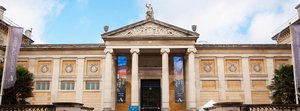
1670 · Oil On Canvas · Ashmolean Museum, Oksford

A dense, pyramidal arrangement of fruit and luxury objects occupies a dark, shadowy interior. Light emanates from the upper left, casting sharp highlights across the velvety skin of peaches and the crystalline translucency of grapes. A golden chalice sits amidst the bounty, its metallic sheen contrasting with the organic, fluid lines of winding grapevines and drooping leaves. The composition creates a sense of three-dimensionality through extreme chiaroscuro, where deep shadows…

5
Still life with grapes and other fruit (1670) autorstwa Abraham Mignon

Still life with grapes and other fruit

1670 · Oil On Canvas · Museum Boijmans Van Beuningen, Rotterdam

A dense cluster of grapes occupies the center of this composition, displaying varieties of translucent green, deep purple, and dark blue. A single peach, possessing a velvety texture, sits among the fruit. The arrangement is framed by a large, textured grapevine with broad, serrated leaves in shades of ochre, gold, and muted green that arches over the subject. Small details are present throughout the scene, including stalks of wheat, tiny…

6
Still Life with Plums, Peaches, Apricots, Grapes and a Melon (1665) autorstwa Abraham Mignon

Still Life with Plums, Peaches, Apricots, Grapes and a Melon

1665 · Oil On Canvas · Gemäldegalerie Alte Meister, Drezno

This highly detailed Baroque still life painting features a dense, pyramidal arrangement of various fruits set against a dark, atmospheric background. The composition includes plums, peaches, apricots, grapes, and a melon, alongside corn, a glass of wine, and small birds. These elements are draped with heavy, textured textiles and foliage. The color palette is dominated by warm tones, such as deep reds, oranges, yellows, and soft pinks, which contrast with…

7
Flowers in a Metal Vase (1670) autorstwa Abraham Mignon

Flowers in a Metal Vase

1670 · Oil On Canvas · Mauritshuis, Haga

In this composition, we find ourselves before a substantial metal vase, its gold-toned surface catching the light as it rests upon a stone ledge. Within this vessel, a profusion of flora spills outward, creating a dense, layered arrangement that feels both abundant and carefully orchestrated. One can almost sense the weight of the petals, from the soft curves of pink and red roses to the structured elegance of tulips and…

8
A  bird's nest in a fruit basket (1659) autorstwa Abraham Mignon

A bird's nest in a fruit basket

1659 · Oil On Canvas · Staatliche Kunstsammlungen Dresden, Drezno

A bird's nest in a fruit basket is a still life painting by the artist Abraham Mignon. This work captures a dense arrangement of nature, centering on a basket overflowing with fruit and the delicate, fibrous structure of a bird's nest. The composition gathers various botanical elements, including grapes, peaches, and melons, alongside the small, fragile life contained within the nest.

9
Festoon of fruit suspended from a rope, in a niche (1674) autorstwa Abraham Mignon

Festoon of fruit suspended from a rope, in a niche

1674 · Oil On Canvas · Museum Mayer van den Bergh, Antwerpia

A cluster of white grapes hangs as the central focus within a dark, architectural niche. The fruit appears luminous, catching a strong, directional light that defines its spherical volume and creates highlights on the smooth, dew-covered skins. Surrounding this central mass, a variety of other elements are suspended from a rope, including stalks of wheat, berries, and various leaves. The composition is defined by organic, fluid lines found in the…

10
Hunting Still Life (1671) autorstwa Abraham Mignon

Hunting Still Life

1671 · Oil On Canvas · Bawarskie Państwowe Zbiory Malarstwa, Monachium

is a still life genre painting by the artist Abraham Mignon. The work depicts the aftermath of a hunt, focusing on several dead birds arranged on a stone ledge. These birds, primarily partridges or similar game birds, are positioned within a dark, arched niche. The composition centers on the organic shapes of the plumage and the limp posture of the subjects.

Obrazy artysty Abraham Mignon, uszeregowane od 11 do 67 miejsca

11Oysters, Fruit and a Wineglass on a Stone Table (1675) autorstwa Abraham MignonOysters, Fruit and a Wineglass on a Stone Table1675 · Statens Museum for Kunst 12Flowers in an ornamental Vase (1660) autorstwa Abraham MignonFlowers in an ornamental Vase1660 · Ashmolean Museum 13Flower Still Life (1659) autorstwa Abraham MignonFlower Still Life1659 · Bawarskie Państwowe Zbiory Malarstwa 14Hunting Prey with Bittern and Other Birds (1659) autorstwa Abraham MignonHunting Prey with Bittern and Other Birds1659 · Bawarskie Państwowe Zbiory Malarstwa 15Still Life with Fruits, Foliage and Insects (1669) autorstwa Abraham MignonStill Life with Fruits, Foliage and Insects1669 · Minneapolis Institute of Art 16Flowers in a Grotto (1660) autorstwa Abraham MignonFlowers in a Grotto1660 · Narodowe Muzeum Sztuki w Rumunii 17Flowers and tiny creatures – Vanitas (1650) autorstwa Abraham MignonFlowers and tiny creatures – Vanitas1650 · Muzeum Narodowe w Warszawie 18Still-Life (1660) autorstwa Abraham MignonStill-Life1660 19Still life of fruit and a chalice in a niche (1665) autorstwa Abraham MignonStill life of fruit and a chalice in a niche1665 · Liechtenstein Museum 20Still-life of flowers and fruits (1674) autorstwa Abraham MignonStill-life of flowers and fruits1674 · Muzeum Pałacu Króla Jana III w Wilanowie 21Still life of grapes, peaches, blackberries, acorns, prickly fruit, an elaborate glass and various insects on a ledge in a niche (1665) autorstwa Abraham MignonStill life of grapes, peaches, blackberries, acorns, prickly fruit, an elaborate glass and various insects on a ledge in a niche1665 22Fruit, Basket, Insects, and Butterflies against a Background of a Stone Niche (1674) autorstwa Abraham MignonFruit, Basket, Insects, and Butterflies against a Background of a Stone Niche1674 23Flower-piece (1672) autorstwa Abraham MignonFlower-piece1672 · Fitzwilliam Museum 24Still-life: fruit and nuts on a stone ledge (1672) autorstwa Abraham MignonStill-life: fruit and nuts on a stone ledge1672 · Fitzwilliam Museum 25Flower still life with orange, hourglass and skull (1670) autorstwa Abraham MignonFlower still life with orange, hourglass and skull1670 26Field flowers in woodland (1671) autorstwa Abraham MignonField flowers in woodland1671 · Bawarskie Państwowe Zbiory Malarstwa 27Fruit Still-life (1672) autorstwa Abraham MignonFruit Still-life1672 · Bawarskie Państwowe Zbiory Malarstwa 28Flowers in a Crystal Vase Standing on a Stone Pedestal, with a Dragonfly (1665) autorstwa Abraham MignonFlowers in a Crystal Vase Standing on a Stone Pedestal, with a Dragonfly1665 29Stillife, flowers and bird-nest (1669) autorstwa Abraham MignonStillife, flowers and bird-nest1669 · Noordbrabants Museum 30Garland of fruit (1670) autorstwa Abraham MignonGarland of fruit1670 · Centraal Museum 31A Garland of Flowers (1667) autorstwa Abraham MignonA Garland of Flowers1667 · Statens Museum for Kunst 32Still Life with Crabs on a Pewter Plate (1669) autorstwa Abraham MignonStill Life with Crabs on a Pewter Plate1669 · Fine Arts Museums of San Francisco 33Flowers and a branch of blackberries in a glass vase, with insects and snails, in a niche (1674) autorstwa Abraham MignonFlowers and a branch of blackberries in a glass vase, with insects and snails, in a niche1674 · Herzog Anton Ulrich Museum 34A swag of fruit and flowers hanging from a nail (1670) autorstwa Abraham MignonA swag of fruit and flowers hanging from a nail1670 · Kunsthandel P. de Boer 35Flowers and fruit on a plinth (1665) autorstwa Abraham MignonFlowers and fruit on a plinth1665 36stillife various fruit and plant. (1665) autorstwa Abraham Mignonstillife various fruit and plant.1665 37Flowers in a Vase on a plinth (1665) autorstwa Abraham MignonFlowers in a Vase on a plinth1665 38Still Life with a Goblet of Wine, Fruit and Oysters (1670) autorstwa Abraham MignonStill Life with a Goblet of Wine, Fruit and Oysters1670 · National Gallery Prague 39Still life with game in a niche (1669) autorstwa Abraham MignonStill life with game in a niche1669 · Gemäldegalerie 40A Hanging Bouquet of Flowers (1670) autorstwa Abraham MignonA Hanging Bouquet of Flowers1670 · National Gallery of Art 41Still-Life with Fishes and Bird Nest (1670) autorstwa Abraham MignonStill-Life with Fishes and Bird Nest1670 · Szépművészeti Múzeum 42The Nature as a Symbol of Vanitas (1665) autorstwa Abraham MignonThe Nature as a Symbol of Vanitas1665 · Hessisches Landesmuseum 43A Glass of Flowers and an Orange Twig (1660) autorstwa Abraham MignonA Glass of Flowers and an Orange Twig1660 · Gemäldegalerie Alte Meister 44Flowers in a glass vase on a stone ledge (1675) autorstwa Abraham MignonFlowers in a glass vase on a stone ledge1675 45Still life of wild flowers at the foot of an oak tree, in front of a grotto (1675) autorstwa Abraham MignonStill life of wild flowers at the foot of an oak tree, in front of a grotto1675 46Flowers and a branch of berries in a glass vase on a stone ledge (1679) autorstwa Abraham MignonFlowers and a branch of berries in a glass vase on a stone ledge1679 · Królewskie Muzeum Sztuk Pięknych Antwerpia 47Game, Fish, and a Nest on a Forest Floor (1675) autorstwa Abraham MignonGame, Fish, and a Nest on a Forest Floor1675 48Fruit Still life with Lizard (1670) autorstwa Abraham MignonFruit Still life with Lizard1670 · Staatliche Kunsthalle Karlsruhe 49Fruit and oysters in a niche (1671) autorstwa Abraham MignonFruit and oysters in a niche1671 · Bawarskie Państwowe Zbiory Malarstwa 50Still Life with Dead Poultry (1663) autorstwa Abraham MignonStill Life with Dead Poultry1663 · Städel Museum 51Flowers in a Glass Vase autorstwa Abraham MignonFlowers in a Glass Vase 52Fruit Still-Life with Squirrel and Goldfinch autorstwa Abraham MignonFruit Still-Life with Squirrel and GoldfinchStaatliche Museen 53Vase of flowers (1672) autorstwa Abraham MignonVase of flowers1672 · Museum Boijmans Van Beuningen 54Wreath of fruit, with some flowers, suspended from a metal ring (1659) autorstwa Abraham MignonWreath of fruit, with some flowers, suspended from a metal ring1659 · Staatliche Kunstsammlungen Dresden 55Flower still life with cat and mouse trap autorstwa Abraham MignonFlower still life with cat and mouse trapRijksmuseum 56Still-Life autorstwa Abraham MignonStill-LifeLuwr 57Vase of Flowers autorstwa Abraham MignonVase of FlowersErmitaż 58Still Life with Fruit, Fish, and a Nest (1675) autorstwa Abraham MignonStill Life with Fruit, Fish, and a Nest1675 · National Gallery of Art 59Flowers and Fruit autorstwa Abraham MignonFlowers and FruitMauritshuis 60Still life with fruit and a goldfinch autorstwa Abraham MignonStill life with fruit and a goldfinch 61Still life with fruit and a goblet on barnyardgrass autorstwa Abraham MignonStill life with fruit and a goblet on barnyardgrassRijksmuseum 62Still life with fruit, oysters and a porcelain bowl autorstwa Abraham MignonStill life with fruit, oysters and a porcelain bowlRijksmuseum 63Still life with fruits and oysters autorstwa Abraham MignonStill life with fruits and oystersRijksmuseum 64Still-Life autorstwa Abraham MignonStill-LifeWallraf-Richartz-Museum 65Still Life with Flowers and a watch autorstwa Abraham MignonStill Life with Flowers and a watchRijksmuseum 66Still life with flowers in a glass vase autorstwa Abraham MignonStill life with flowers in a glass vaseRijksmuseum 67Fruit Still Life autorstwa Abraham MignonFruit Still LifeBawarskie Państwowe Zbiory Malarstwa

Tematy, które przyciągnęły wzrok Abraham Mignon

Cztery motywy najczęściej powracające w tych oryginałach, z których każdy doczekał się swojego najdoskonalszego przykładu.

Muzea przechowujące oryginały Abraham Mignon

8 muzeów, w których znajduje się najwięcej obrazów z tej strony.

Muzea Miasto Dzieła artysty Abraham Mignon Obrazy z tej listy
Bawarskie Państwowe Zbiory Malarstwa, MonachiumBawarskie Państwowe Zbiory Malarstwa Monachium 7 Hunting Still Life, Flower Still Life, Hunting Prey with Bittern and Other Birds
Rijksmuseum, AmsterdamRijksmuseum Amsterdam 6 Flower still life with cat and mouse trap, Still life with fruit and a goblet on barnyardgrass, Still life with fruit, oysters and a porcelain bowl
Städel Museum, Frankfurt nad MenemStädel Museum Frankfurt nad Menem 2 Still Life with Fruit, Tin Plate and Wine Glasses, Still Life with Dead Poultry
Ashmolean Museum, OksfordAshmolean Museum Oksford 2 Interior with a Still Life, Flowers in an ornamental Vase
Museum Boijmans Van Beuningen, RotterdamMuseum Boijmans Van Beuningen Rotterdam 2 Still life with grapes and other fruit, Vase of flowers
Mauritshuis, HagaMauritshuis Haga 2 Flowers in a Metal Vase, Flowers and Fruit
Staatliche Kunstsammlungen Dresden, DreznoStaatliche Kunstsammlungen Dresden Drezno 2 A bird's nest in a fruit basket, Wreath of fruit, with some flowers, suspended from a metal ring
Statens Museum for Kunst, KopenhagaStatens Museum for Kunst Kopenhaga 2 Oysters, Fruit and a Wineglass on a Stone Table, A Garland of Flowers

Abraham Mignon, jedno kultowe dzieło na dekadę

Dzieła według dekad

Wybierz dekadę, aby zobaczyć dzieło, które ją definiuje.

Obrazy artysty Abraham Mignon: odpowiedzi galerii

Który obraz Abraham Mignon jest najsłynniejszy ze wszystkich?Odkryj odpowiedź

Still-Life with Fruits (1660), Staatliche Kunsthalle Karlsruhe, Karlsruhe. Następne są Garland of Flowers (1675) oraz Still Life with Fruit, Tin Plate and Wine Glasses (1663).

Ile lat miał Abraham Mignon, gdy ukończył Still-Life with Fruits?Odkryj odpowiedź

20 lat: Still-Life with Fruits pochodzi z 1660, a Abraham Mignon urodził(a) się w 1640.

Które to 10 najlepszych obrazów Abraham Mignon?Odkryj odpowiedź

Still-Life with Fruits, Garland of Flowers, Still Life with Fruit, Tin Plate and Wine Glasses, Interior with a Still Life, Still life with grapes and other fruit, Still Life with Plums, Peaches, Apricots, Grapes and a Melon, Flowers in a Metal Vase, A bird's nest in a fruit basket, Festoon of fruit suspended from a rope, in a niche i Hunting Still Life. Powyższy ranking zawiera rok powstania oraz muzeum dla każdego z nich.

Ile dzieł stworzył/a Abraham Mignon?Odkryj odpowiedź

Nasz katalog zawiera 74 dzieł artysty Abraham Mignon, datowanych od 1650 do 1679.

Gdzie można znaleźć najsłynniejsze oryginały autorstwa Abraham Mignon?Odkryj odpowiedź

W większości znajdują się w Bawarskie Państwowe Zbiory Malarstwa (Monachium), Rijksmuseum (Amsterdam) i Städel Museum (Frankfurt nad Menem). Powyższa tabela muzeów zawiera ich pełną listę.

Kiedy Abraham Mignon stworzył swoje najsłynniejsze obrazy?Odkryj odpowiedź

W 1670s: 28 z 67 dzieł na tej stronie powstało w tym czasie, w tym Garland of Flowers.

Które z najsłynniejszych dzieł Abraham Mignon należą do jego najwcześniejszych i najpóźniejszych prac?Odkryj odpowiedź

Na tej stronie najwcześniejszy to Flowers and tiny creatures – Vanitas (1650), a najpóźniejszy Flowers and a branch of berries in a glass vase on a stone ledge (1679).

Do jakich tematów Abraham Mignon powracał najczęściej?Odkryj odpowiedź

Grapes (13), Leaves (12) i Flowers (11), w ramach 67 dzieł na tej stronie.

W jakiej technice najczęściej tworzył Abraham Mignon?Odkryj odpowiedź

Oil On Canvas, dla 23 z 67 dzieł na tej stronie.

Z jakim nurtem związany jest Abraham Mignon?Odkryj odpowiedź

Baroque, sądząc po oryginałach na tej stronie.

Które oryginały artysty Abraham Mignon znajdują się w zbiorach Bawarskie Państwowe Zbiory Malarstwa?Odkryj odpowiedź

Hunting Still Life, Flower Still Life i Hunting Prey with Bittern and Other Birds: Bawarskie Państwowe Zbiory Malarstwa, Monachium posiada 7 dzieł widocznych na tej stronie.

Abraham Mignon: artysta

Życie zanurzone w ciszy: Świat Abrahama Mignona

Abraham Mignon, znany niekiedy jako Minjon, pozostaje fascynującą postacią w tradycji martwej natury Złotego Wieku Holandii, mimo tragicznie krótkiej kariery, która trwała jedynie od 1640 do 1679 roku. Urodzony we Frankfurcie w Niemczech, w rodzinie o korzeniach w Niderlandach Południowych i wyznaniu kalwińskim, Mignon przeszedł artystyczną drogę naznaczoną błyskawicznym rozwojem i niezwykłym talentem. Jego obrazy — wykwintne kompozycje z kwiatów, owoców, zwierzyny łownej i luksusowych przedmiotów — nie są jedynie przedstawieniami materialnego piękna, lecz raczej starannie skonstruowanymi medytacjami nad ulotnością życia, przesyconymi symbolizmem i technicznym mistrzostwem.

Wczesne szkolenie Mignona rozpoczęło się pod okiem Jacoba Marrela w Wetzlar. Marrel, szanowany malarz kwiatowy i marszand, dostrzegł talent młodego Abrahama i pielęgnował jego zdolności. Ta nauka była kluczowa, zapewniając Mignonowi solidne fundamenty w zakresie botanicznej precyzji oraz kompozycji. Jednak to przeprowadzka do Utrechtu w Republice Zjednoczonych Prowincji prawdziwie rozbudziła jego artystyczny potencjał. Tętniąca życiem scena artystyczna Utrechtu, w połączeniu z kontaktem z dziełami mistrzów takich jak Jan Davidszoon de Heem, w sposób głęboki ukształtowała jego styl.

Wpływ De Heema i rozkwitający styl

Utrecht stanowiło tętniące życiem centrum malarstwa martwej natury, a Mignon błyskawicznie stał się integralną częścią tej artystycznej społeczności. W 1669 roku wstąpił do Gildii Świętego Łukasza, co ostatecznie ugruntowało jego pozycję jako profesjonalnego artysty. Co jednak znacznie ważniejsze, został asystentem w pracowni Jana Davidszoona de Heema. De Heem był postacią kluczową dla rozwoju przepychu i złożoności martwych natur, słynąc z dramatycznego operowania światłem, bogactwa tekstur oraz głębi symbolicznej. Mignon chłonął te lekcje z niezwykłą prędkością, wypracowując styl, który oddychał wielkością dzieł De Heema, a jednocześnie pozwalał mu na odnalezienie własnego, unikalnego głosu.

Po powrocie De Heema do Antwerpii w 1672 roku powszechnie uważa się, że to Mignon przejął stery w jego pracowni. Ta zmiana mówi wiele o szacunku, jakim darzyli go współcześni, oraz o zaufaniu, jakie De Heem pokładał w jego talentach. Malarstwo Mignon z tego okresu ukazuje podniesiony poziom wyrafinowania, charakteryzujący się niespotykaną dbałością o detal, żywą paletą barw oraz coraz bardziej subtelnym zrozumieniem światłocienia. Jego kompozycje często przedstawiają feerię kwitnących kwiatów, dojrzałych owoców, delikatnych owadów i lśniącego szkła, ułożonych z niezwykłą, dynamiczną energią.

Symbolizm i tradycja Vanitas

Martwe natury Mignona nie były jedynie popisami technicznymi; były głęboko zakorzenione w tradycji Vanitas—gatunku, który służył jako wizualne przypomnienie o śmiertelności i przemijalności ziemskich przyjemności. Obecność więdnących kwiatów, gniijących owoców, zgaszonych świec czy klepsydr stanowiła aluzję do nieuchronnego upływu czasu i marności dóbr doczesnych. Jednak twórczość Mignona nie koncentrowała się wyłącznie na ponurej kontemplacji. Jego obrazy celebrowały również piękno i obfitość natury, tworząc subtelną równowagę między radością a melancholią.

Obecność egzotycznych owoców, rzadkich muszli czy importowanej porcelany sugerowała bogactwo i wysoki status, lecz symbole te były często zestawiane z elementami podkreślającymi ich nietrwałość. Przykładowo, półobrana cytryna mogła reprezentować zarówno słodycz życia, jak i jego nieuchronny rozkład. Ta subtelna gra symboli wyniosła martwe natury Mignona ponad zwykłą dekorację, przekształcając je w głębokie rozważania nad kondycją ludzką.

Dziedzictwo i znaczenie historyczne

Mimo przedwczesnej śmierci w wieku 39 lat w Utrechtu, Abraham Mignon pozostawił niezatarty ślad w świecie malarstwa martwej natury. Za życia jego dzieła cieszyły się ogromnym uznaniem wśród kolekcjonerów w całej Europie, zdobiąc domy arystokracji oraz zamożnych kupców. Rodzina Orange-Nassau należała do grona jego najbardziej znamienitych mecenasów, co jeszcze bardziej ugruntowało jego reputację jako czołowego artysty swoich czasów.

Dziś obrazy Mignon'a są cenione za ich wyrafinowane piękno, techniczny kunszt oraz symboliczną głębię. Stanowi on świadectwo potęgi uważnej obserwacji, uroku materialnego przepychu oraz nieustającej ludzkiej fascynacji ulotną naturą istnienia. Jego wpływ jest widoczny w pracach późniejszych mistrzów martwej natury, co utwierdza jego pozycję jako znaczącej postaci Złotego Wieku Holandii i mistrza malarstwa Vanitas.