
 Podgląd w skali 1:1
 Wyślij jako kartkę
 Udostępnij
 Szczegóły dzieła
 Przewodnik

 Pobierz obraz
 Podobne obiekty
 RTG
RTG Pokaz slajdów
 Q&A
Q&A Statystyki
Gemini

- 61.0 x 54.0 cm


 Rozwiń treść
Dzieło sztuki prezentowane na tej stronie podlega ochronie prawem autorskim, co oznacza, że nie mamy prawa do tworzenia ani sprzedaży jego identycznej reprodukcji. Ochrona ta jest egzekwowana na mocy umów międzynarodowych, takich jak Konwencja berneńska oraz przez przepisy prawa krajowego, w tym te określone w Prawo autorskie USA – Tytuł 17.
Metoda ta jest w pełni zgodna z przepisami prawa autorskiego, ponieważ nie polega na kopiowaniu ani powielaniu chronionego dzieła. Stanowi ona kreatywną reinterpretację – nowy obraz, który czerpie inspirację z oryginału, ale nie jest z nim tożsamy.
Giclée / Wydruk artystyczny
Wydruki giclée lub płótna o jakości muzealnej, szybka realizacja i szeroki wybór opcji wykończenia. ( Zamów ręcznie malowaną reprodukcję Przejdź do wersji cyfrowej)




P118B zł10

P118H zł10

P118W zł10

P438Z zł10

P508JH zł12

P508YH zł12

P805H zł10

P805Z zł10

P919BZ zł10

P919G zł10

P919XJ zł10

P959ZH zł10

P968JZ zł12

W106C zł8

W218G zł10

W218JH zł8

W218Y zł10

W307PJ zł10

W316G zł10

W316PJ zł8

W316Y zł10

W398PJ zł8

W4111J zł10

W500HY zł15

W500JH zł15

W692G zł12

W849H zł8

W940BG zł15

W953PJ zł8




Wybierz spośród naszych standardowych rozmiarów, które zachowują oryginalne proporcje dzieła sztuki.

Wpisz wymaganą szerokość i wysokość, aby dopasować grafikę do ramy lub ściany. Wydruk można jedynie przyciąć, nigdy nie powiększając go poza oryginalny obraz, dlatego format o innych proporcjach spowoduje utratę części kompozycji. Przed rozpoczęciem druku prześlemy Ci cyfrowy podgląd do zatwierdzenia. Obraz wyświetlany na tej stronie nie pokazuje rzeczywistego przycięcia — jedynie podgląd oddaje ten efekt.
Dostawa na cały świat () w ciągu 2 tygodni zamiast standardowych 4/5 tygodni. (1 Listopad)

Bezpłatna ekspresowa wysyłka na cały świat

Wysokiej jakości płótno lniane

Pełne ubezpieczenie przesyłki

Gwarancja zwrotu należności celnych i podatków importowych

Gwarancja wiernego odwzorowania kolorów

100-dniowa polityka zwrotów (tylko w przypadku wad)

Gwarancja 100% zwrotu pieniędzy

Zniżka przy zakupie wielu sztuk
 Opcja ze szkłem jest dostępna wyłącznie w rozmiarach poniżej 110 cm

Gemini
Giclée / Wydruk artystyczny
Wymiary reprodukcji
-


Cena całkowita
zł 311
Pytania i odpowiedzi
Gdzie mogę znaleźć dzieła sztuki podobne do „Gemini” – Sui Jianguo?
Strona Podobne dzieła dzieła „Gemini” – Sui Jianguo prezentuje powiązane utwory.
Jak zbudowana jest kompozycja kolorystyczna „Gemini” – Sui Jianguo?
Kompozycja kolorystyczna „Gemini” – Sui Jianguo łączy w sobie Gentle kontrast z Discordant Palette harmonią.
Czy Sui Jianguo, twórca "Gemini", jest znany pod innymi nazwiskami?
Sui Jianguo jest znany/a również pod pseudonimami: 隋建國.
Biografia artysty
Early Life and the Echoes of Maoist China
Sui Jianguo, born in Qingdao, China in 1956, is a figure deeply marked by the tumultuous history of his nation. His formative years unfolded under the long shadow of Mao Zedong’s rule, an era that profoundly shaped not only Chinese society but also the very fabric of its artistic expression. Growing up as the son of factory workers, Sui experienced firsthand the hardships and sacrifices demanded by the communist regime. The absence of his parents due to their demanding work schedules instilled a sense of early independence, but more significantly, it exposed him to the pervasive influence of Maoist ideology. During this period, art was largely confined within the strict parameters of socialist realism—a style that glorified the revolution and its leader in idealized terms. This official aesthetic, intended to cultivate a cult of personality around Mao, became the dominant visual language of the time.
However, beneath the surface of officially sanctioned imagery lay a simmering discontent. Sui’s early exposure to this controlled artistic landscape would later become a crucial point of departure for his own work. The rigid constraints and propagandistic nature of socialist realism sparked within him a desire to explore alternative forms of expression—a yearning that was initially suppressed but ultimately fueled his artistic evolution. His childhood, spent witnessing the realities of factory life and the omnipresent imagery of Mao, laid the foundation for a career dedicated to confronting and reinterpreting China’s complex past.
From Propaganda to Personal Expression
The Cultural Revolution brought further disruption to Sui Jianguo's early life. Schools were closed, and he was compelled to join his parents in factory work—a period he later described as being “transfixed in the age of Mao worship.” This experience wasn’t merely a matter of labor; it was an immersion into the very heart of the system he would eventually critique through his art. He began painting propaganda posters, dutifully replicating the idealized images of Mao that permeated society. Yet, even within these confines, a nascent artistic sensibility began to emerge.
A turning point arrived with a broken arm in 1976—an injury that unexpectedly liberated him from factory work and allowed him to pursue his burgeoning passion for art. This period of convalescence became a time of profound introspection, as Sui contemplated his “spiritual” life and the direction he wished to take. With his father’s encouragement, he secretly began studying painting at night, laying the groundwork for a future career that would challenge the established norms of Chinese art. His early works reflected this transition—a traditional landscape painting completed after Mao's death signaled a departure from the rigid constraints of socialist realism and a tentative exploration of personal expression.
Sculptural Innovations and the Use of Raw Materials
Sui Jianguo’s artistic journey took a decisive turn when he enrolled in the Central Academy of Fine Arts in Beijing, where he focused on sculpture. Inspired by his years in the factories—a place where physical labor and manual skill were paramount—he embraced the medium as a means of translating his experiences into tangible form. After earning his master’s degree, Sui embarked on a period of international travel, exhibiting his work in Japan, Australia, and other countries. These encounters broadened his artistic horizons and exposed him to diverse perspectives.
His early sculptures were characterized by the use of “naturalistic materials”—rocks, boulders, and steel—which he manipulated to create powerful forms that resonated with his perception of life and internal conflicts. He developed unique techniques of sealing, binding, tying, and hammering, forging a relationship between his materials that was both associative and confrontational. However, it was his exploration of Mao suits in 1997 that truly catapulted him to international prominence. These sculptures—imitations of Chairman Mao’s iconic jacket—became instantly recognizable symbols of China’s complex past.
The Mao Suit Series: Memory, Power, and Transformation
The Mao suit series represents a pivotal moment in Sui Jianguo’s career and a significant contribution to contemporary Chinese art. These sculptures are not merely replicas of a garment; they are potent symbols that evoke the era of Mao Zedong and its enduring legacy. By recreating these iconic jackets, Sui forces viewers to confront their own relationship with China’s history—a history marked by both revolutionary fervor and profound social upheaval.
The materials used in the series further amplify its symbolic weight. Often crafted from marble or other durable stones, the suits take on a monumental quality, suggesting the enduring power of Maoist ideology. The act of transforming this everyday object into a sculpture also speaks to the process of historical reinterpretation—a process that Sui actively engages with in his work. His sculptures have attracted the attention of prominent collectors like Uli Sigg, solidifying his position as a leading figure in the Chinese contemporary art scene.
Historical Significance and Contemporary Relevance
Sui Jianguo’s work is deeply rooted in the historical context of China, but its themes resonate far beyond national boundaries. His exploration of memory, power, and transformation speaks to universal human experiences—the struggle for identity, the weight of the past, and the search for meaning in a rapidly changing world.
As professor and ex-chairman of the Department of Sculpture at the Central Academy of Fine Arts in Beijing, Sui Jianguo has played a crucial role in shaping the next generation of Chinese artists. His work continues to challenge conventional notions of art and history, prompting viewers to question established narratives and engage with China’s complex past on a deeper level. He is not simply documenting history; he is actively reinterpreting it—a process that is essential for understanding the present and forging a path towards the future.
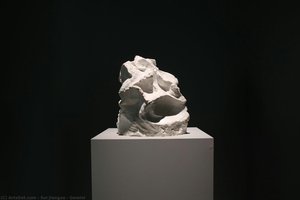
- Gemini (2009): A striking sculpture of stacked marble boulders, embodying power and resilience.
- The Mao Suit Series: Sculptures crafted from durable materials like marble, representing enduring ideology.
- Land Depression: Early sculptures utilizing rocks and steel to explore internal conflicts.
Sui Jianguo
China
Krótka nota
- Full Name: Sui Jianguo
- Nationality: Chinese
- Place Of Birth: China
- Notable Artworks:
- Blind Portraits
- Legacy Mantle
- Made in China
- Artistic Movement Or Style: Contemporary Sculpture
- Artists Who Influenced This Artist:
- Richard Serra
- Heidegger
- Artists Or Movements Influenced By This Artist: ['Landform Sculpture']
Powiązane artykuły

Trwałe Formy: Ewolucja Technik i Tematów w Rzeźbie Przez Wieki – Od Antyku do Renesansu
Poznaj fascynującą historię rzeźby od antyku do renesansu! Odkryj techniki, wybitnych artystów i wpływ na współczesną sztukę. Ekspercka analiza dla kolekcjonerów i miłośników.

Timeless Elegance: A Complete Guide to the Sublime Beauty and Artistry of Marble Sculpture
Discover the sublime beauty of marble art through an expert exploration of Renaissance and Neoclassical masterpieces. From the delicate textures of Carpeaux to the grandeur of Sansovino, immerse yourself in a guide to timeless elegance and sculptural perfection.

Trwała Forma: Rzeźba w Historii – Technika i Rezonans Emocjonalny
Poznaj historię rzeźby od antyku do współczesności! Ekspercka analiza technik, stylów i emocjonalnego wpływu arcydzieł. Inspiracje dla kolekcjonerów i miłośników sztuki.

Urok marmuru w historii sztuki: od klasycznej rzeźby do nowoczesnej abstrakcji
Odkryj fascynującą historię rzeźby marmurowej – od klasycznych arcydzieł po nowoczesną abstrakcję. Poznaj techniki, artystów i wartość kolekcjonerską tego wyjątkowego medium. Ekspercka analiza dla miłośników sztuki.

10 Legendarnych Brązów Rzeźbiarskich, Które Zmieniły Sztukę | OriginalUniqueArt
Odkryj 10 legendarnych rzeźb brązowych od Rodina, Degasa i innych mistrzów! Poznaj historię powstania arcydzieł sztuki i inspiruj się do dekoracji wnętrz. Reprodukcje najwyższej jakości na OriginalUniqueArt.com – zobacz kolekcję!