

 Zobacz w skali 1:1
 Wyślij
 Udostępnij
 Szczegóły
 Przewodnik

 Pobierz plik obrazu
 Podobne obiekty
 RTG
RTG Pokaz slajdów
 Statystyki
College Road, Hampstead
 Oil On Panel
- British Neo-Romantic Landscape
 1935
1935 25.0 x 36.0 cm
 New College
 Czytaj więcej
Giclée / Wydruk artystyczny
Wydruki giclée lub płótna o jakości muzealnej, szybka realizacja i szeroki wybór opcji wykończenia. ( Kup ręcznie malowany obraz Przełącz na wersję cyfrową)




P118B $10

P118H $10

P118W $10

P438Z $10

P508JH $12

P508YH $12

P805H $10

P805Z $10

P919BZ $10

P919G $10

P919XJ $10

P959ZH $10

P968JZ $12

W106C $8

W218G $10

W218JH $8

W218Y $10

W307PJ $10

W316G $10

W316PJ $8

W316Y $10

W398PJ $8

W4111J $10

W500HY $15

W500JH $15

W692G $12

W849H $8

W940BG $15

W953PJ $8




Wybierz spośród naszych standardowych rozmiarów, które zachowują oryginalne proporcje dzieła sztuki.

Możesz wprowadzić własne wymiary, aby dopasować dzieło do konkretnej ramy lub przestrzeni. Jeśli wybrany rozmiar nie będzie odpowiadał proporcjom oryginalnego obrazu, przytniecie dzieło lub rozszerzymy obraz za pomocą odbicia lustrzanego lub jednolitego wypełnienia krawędzi. Przed rozpoczęciem produkcji prześlemy cyfrową wizualizację do Twojej akceptacji.
Prosimy pamiętać, że podgląd na ekranie nie odzwierciedla faktycznego przycinania ani rozszerzania. Tylko wizualizacja dokładnie pokaże końcową kompozycję.
Mimo dostępności niestandardowych rozmiarów, zalecamy wybór wymiaru z listy zdefiniowanej, aby zachować oryginalne proporcje.
Dostawa na cały świat () w ciągu 2 tygodni zamiast standardowych 4/5 tygodni. (27 Wrzesień)

Bezpłatna ekspresowa wysyłka na cały świat

Wysokiej jakości płótno lniane

Pełne ubezpieczenie transportowe

Gwarancja zwrotu należności celnych i podatków importowych

Gwarancja idealnego odwzorowania barw

100-dniowy okres na zwrot dzieła w przypadku wykrycia wad produkcyjnych

Gwarancja 100% zwrotu pieniędzy

Oferta przy zakupie wielu sztuk
 Opcja ze szkłem jest dostępna wyłącznie w rozmiarach poniżej 110 cm

College Road, Hampstead
Giclée / Wydruk artystyczny
Rozmiar reprodukcji
-


Suma do zapłaty
$ 80
A Moment Frozen in Time: Stephen Bone’s College Road
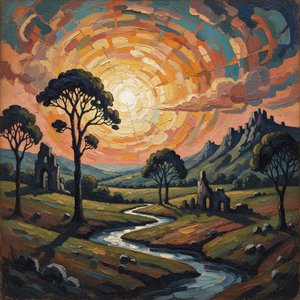
Stephen Bone's "College Road, Hampstead," painted in 1935, isn’t merely a depiction of a London street; it’s an invitation to step into a pocket of serene contemplation. The painting captures a quiet afternoon on a leafy residential road, bathed in the soft, diffused light characteristic of early evening. Bone, a key figure within the British Neo-Romantic landscape movement, eschews dramatic vistas or bold statements in favor of a subtle, almost melancholic beauty. He masterfully employs an impressionistic technique—visible brushstrokes dance across the canvas, creating a sense of movement and atmosphere rather than striving for photographic realism. The muted palette – gentle yellows, soft greens, and hazy blues – evokes a feeling of nostalgia and timelessness, as if recalling a forgotten memory.
- Subject Matter: A quintessential London street scene—a quiet residential road lined with charming houses.
- Style: Impressionistic – prioritizing atmosphere and light over precise detail.
- Technique: Loose, expressive brushwork; layering of colors to create depth and luminosity.
The Language of Light and Shadow
Bone’s genius lies in his ability to capture the ephemeral quality of light. The painting is dominated by a subtle interplay of light and shadow, creating a sense of depth and volume within the scene. Notice how the sunlight filters through the bare branches of the tree on the left, casting dappled patterns onto the street and the houses beyond. This careful manipulation of light isn’t just aesthetic; it subtly guides the viewer's eye through the composition, drawing attention to key elements while maintaining a sense of spaciousness. The slightly overcast sky contributes to this atmospheric effect, lending a gentle melancholy to the scene.
The artist skillfully uses color temperature – warmer tones in the foreground and cooler hues receding into the distance – to enhance the illusion of depth and create a harmonious visual experience.A Window into 1930s London
“College Road, Hampstead” offers a poignant glimpse into London life during the interwar period. The architecture—pitched roofs, dormer windows, and the overall style of the houses—are typical of the era, reflecting a blend of Victorian influences and emerging modernism. The inclusion of the lamppost adds an element of urbanity to the otherwise rural setting, suggesting the coexistence of tranquility and progress. Considering that Stephen Bone was commissioned as a war artist during World War II, this painting can be viewed as a counterpoint—a celebration of peace and beauty amidst times of turmoil.
Historical Context:** The painting’s creation in 1935 coincides with the height of Bone's artistic career, marked by his exploration of British landscapes and his growing recognition within the art world.Symbolism and Emotional Resonance
Beyond its visual appeal, “College Road, Hampstead” resonates with a deeper emotional significance. The quietness of the scene—the absence of people or vehicles—evokes a sense of solitude and introspection. The bare tree on the left could be interpreted as a symbol of resilience or perhaps even loss, while the overall composition suggests a longing for simpler times. Bone’s work invites us to pause, reflect, and appreciate the beauty of everyday moments – a sentiment that continues to hold profound appeal in our increasingly hectic world. It's a painting that whispers rather than shouts, leaving a lasting impression long after you’ve turned away.
Biografia artysty
Stephen Bone: Życie i Sztuka
Wczesne lata i edukacja
- Urodzony: Chiswick, Wielka Brytania (1904)
- Zmarł: 1958
- Stephen Bone był synem znamienitego artysty, sir Muirheada Bone'a, oraz pisarki Gertrude Heleny Dodd. To artystyczne dziedzictwo rodzinne wywarło głęboki wpływ na jego wczesny rozwój.
- Edukację rozpoczął w Bedales School, by w 1922 roku podjąć studia w Slade School of Fine Art.
- Jednakże, zniechęcony akademickim podejściem panującym w Slade, opuścił uczelnię w 1924 roku, aby poświęcić się ilustracji książkowej.
Wczesna kariera i rozwój artystyczny
- Bone początkowo odniósł sukces jako ilustrator drzeworytnik, tworząc prace dla swojej matki oraz innych pisarzy. W 1925 roku zdobył złoty medal za drzeworyt na Międzynarodowej Wystawie w Paryżu.
- W 1926 roku, wraz z Rodneyem Josephem Burnem i Robinem Guthrie, wystawił swoje prace w Goupil Gallery, co stanowiło istotny krok w budowaniu jego artystycznego uznania.
- W 1928 roku namalował mural dla stacji metra Piccadilly Circus, demonstrując swoją wszechstronność i poszerzając artystyczne horyzonty.
- Małżeństwo z artystką Mary Adshead w 1929 roku zaowocowało licznymi podróżami po Brytanii i Europie. Podróże te odegrały kluczową rolłę w wypracowaniu jego charakterystycznego stylu jasnego malarstwa pejzażowego, polegającego na chwytaniu scen en plein air bez względu na panujące warunki pogodowe.
Lata 30.: Malarstwo pejzażowe i wystawy
- W latach 30. Bone regularnie wystawiał swoje dzieła w prestiżowych galeriach, takich jak Fine Art Society, Lefevre Gallery oraz Redfern Gallery.
- W 1936 roku zaprezentował serię 41 obrazów przedstawiających brytyjskie hrabstwa w Ryman Gallery w Oksfordzie, ukazując swoje oddanie próbie uchwycenia esencji brytyjskiego krajobrazu.
- Swoją międzynarodową obecność wzmocnił również wystawami w Sztokholmie w latach 1936 i 1937.
Artysta wojenny i wkład w okres II wojny światowej
- Wraz z wybuchem II wojny światowej, Bone wstąpił do służby jako oficer w Civil Defence Camouflage Establishment.
- W _1943 roku został mianowany pełnoetatowym artystą opłacanym przez War Artists' Advisory Committee, specjalizując się w tematach związanych z Admiralicją. Rolę tę pełnił wcześniej jego ojciec, Muirhead Bone, lecz Stephen przejął ją po tragicznej śmierci ich syna, Gavina.
- Znaczące dzieła wojenne: Stworzył liczne płótna przedstawiające instalacje przybrzeżne i jednostki morskie, w tym sceny malowane na pokładach okrętów podwodnych.
- Bone był świadkiem i dokumentalistą lądowania w Normandii w 1944 roku, malując sceny w Caen i Courseulles. Rejestrował również szturm na wyspę Walcheren w Holandii.
- Pod koniec 1944 roku podróżował do Norwegii, dokumentując wrak okrętu Tirpitz oraz rejestrując zdobyte bazy morskie, a także masowe groby jeńców wojennych.
Powojenna kariera i dziedzictwo
- Po wojnie Bone odniósł wrażenie, że jego styl wyszedł nieco z mody. Mimo kontynuowania pracy malarskiej, napotykał trudności z wystawianiem swoich dzieł.
- Zajął się krytyką artystyczną, pisząc dla „Manchester Guardian” oraz publikując humorystyczne teksty w „Glasgow Herald”.
- Bone pracował również w telewizji i radiu dla BBC, a wspólnie z żoną tworzył książki dla dzieci. Razem organizowali także kurs malowania murali w Dartington.
- W 1957 roku został mianowany dyrektorem Hornsey College of Art.
- Śmierć: Stephen Bone zmarł na raka 15 września 1958 roku w szpitalu St Bartholomew's w Londynie.
- Twórczość Stephena Bone'a stanowi niezwykle cenną wizualną kronikę połowy XX wieku w Wielkiej Brytanii, obejmującą zarówno spokój jej krajobrazów, jak i brutalną rzeczywistość czasu wojny.

Stephen Bone
1904 - 1958 , Wielka Brytania
Najważniejsze informacje
- Artistic Movement Or Style: Landskapowa malarstwo
- Artists Or Movements Influenced By This Artist: ['NEAC']
- Artists Who Influenced This Artist:
- Muirhead Bone
- Henry Tonks
- Date Of Birth: 13 listopada 1904
- Date Of Death: 15 września 1958
- Full Name: Stephen Bone
- Nationality: Brytyjski
- Notable Artworks:
- Hayricks, późne lato (1930)
- Albion: An Artist's Britain
- Place Of Birth: Chiswick, Londyn
Zobacz także powiązane artykuły
Stephen Bone: A Reassessment of Colour, Form & the British Neo-Romantic Landscape Tradition
Explore the vibrant world of Stephen Bone (1904-1958), a key figure in British Neo-Romanticism. Discover his captivating landscapes, impactful war art & unique artistic style. Learn about his life, influences & legacy.

10 Arcydzieł Impresjonizmu Krajobrazowego, Które Zdefiniowały Sztukę
Odkryj 10 arcydzieł impresjonizmu krajobrazowego! Poznaj historie Moneta, Renoir'a i Van Gogha. Inspiracje wnętrzarskie, techniki malarskie i piękne reprodukcje obrazów na OriginalUniqueArt.com. Eksploruj kolekcję online!

Evocations of Place: A Historical Journey Through Landscape Art
Explore the rich history of landscape art with OriginalUniqueArt. Discover renowned artists, movements like Impressionism & Romanticism, and expert guidance for collecting timeless pieces. Find your perfect serene escape today!

Echa Miejsca: Historyczna Podróż przez Sztukę Krajobrazu
Odkryj historię sztuki krajobrazu – od romantycznych wizji Friedricha po surrealistyczne pejzaże Dalego. Analizy, inspiracje i reprodukcje obrazów najwyższej jakości na OriginalUniqueArt.com.

Paul Cézanne: 25 Arcydzieł, które Zrewolucjonizowały Świat Sztuki | OriginalUniqueArt
Odkryj 25 arcydzieł Paula Cézanne'a – od impresjonizmu po postimpresjonizm. Poznaj historie, techniki i inspiracje malarza, który zrewolucjonizował sztukę. Reprodukcje obrazów najwyższej jakości na OriginalUniqueArt.com!

