

 Zobacz w skali 1:1
 Wyślij
 Udostępnij
 Szczegóły
 Przewodnik

 Pobierz plik obrazu
 Podobne obiekty
 RTG
RTG Pokaz slajdów
 Statystyki
Hurdy Gurdy Boy
 Acrylic
- WallArt
- Pre-Raphaelite Brotherhood
 1843
1843 61.0 x 51.0 cm
 Czytaj więcej
Giclée / Wydruk artystyczny
Wydruki giclée lub płótna o jakości muzealnej, szybka realizacja i szeroki wybór opcji wykończenia. ( Kup ręcznie malowany obraz Przełącz na wersję cyfrową)




P118B zł10

P118H zł10

P118W zł10

P438Z zł10

P508JH zł12

P508YH zł12

P805H zł10

P805Z zł10

P919BZ zł10

P919G zł10

P919XJ zł10

P959ZH zł10

P968JZ zł12

W106C zł8

W218G zł10

W218JH zł8

W218Y zł10

W307PJ zł10

W316G zł10

W316PJ zł8

W316Y zł10

W398PJ zł8

W4111J zł10

W500HY zł15

W500JH zł15

W692G zł12

W849H zł8

W940BG zł15

W953PJ zł8




Wybierz spośród naszych standardowych rozmiarów, które zachowują oryginalne proporcje dzieła sztuki.

Możesz wprowadzić własne wymiary, aby dopasować dzieło do konkretnej ramy lub przestrzeni. Jeśli wybrany rozmiar nie będzie odpowiadał proporcjom oryginalnego obrazu, przytniecie dzieło lub rozszerzymy obraz za pomocą odbicia lustrzanego lub jednolitego wypełnienia krawędzi. Przed rozpoczęciem produkcji prześlemy cyfrową wizualizację do Twojej akceptacji.
Prosimy pamiętać, że podgląd na ekranie nie odzwierciedla faktycznego przycinania ani rozszerzania. Tylko wizualizacja dokładnie pokaże końcową kompozycję.
Mimo dostępności niestandardowych rozmiarów, zalecamy wybór wymiaru z listy zdefiniowanej, aby zachować oryginalne proporcje.
Dostawa na cały świat () w ciągu 2 tygodni zamiast standardowych 4/5 tygodni. (11 Październik)

Bezpłatna ekspresowa wysyłka na cały świat

Wysokiej jakości płótno lniane

Pełne ubezpieczenie transportowe

Gwarancja zwrotu należności celnych i podatków importowych

Gwarancja idealnego odwzorowania barw

100-dniowy okres na zwrot dzieła w przypadku wykrycia wad produkcyjnych

Gwarancja 100% zwrotu pieniędzy

Oferta przy zakupie wielu sztuk
 Opcja ze szkłem jest dostępna wyłącznie w rozmiarach poniżej 110 cm

Hurdy Gurdy Boy
Giclée / Wydruk artystyczny
Rozmiar reprodukcji
-


Suma do zapłaty
zł 298
A Glimpse into the Artist's Life
Sir John Everett Millais was a child prodigy who, at the age of eleven, became the youngest student to enter the Royal Academy Schools. He was one of the founders of the Pre-Raphaelite Brotherhood, a group known for their historical and naturalist focus in art. Millais's personal life has also played a significant role in his reputation, particularly his marriage to Effie Gray, who was formerly married to the critic John Ruskin.The Painting: A Detailed Analysis
The Hurdy Gurdy Boy painting depicts a young boy wearing a hat and holding a hurdy gurdy. The boy appears to be smiling as he poses for the picture, dressed in a brown jacket with a guitar strapped across his body. The background of the image is somewhat blurry, which adds a sense of depth and focuses attention on the main subject. The painting itself is quite detailed, with the boy's facial features prominently displayed, along with his clothing and the hurdy gurdy he holds.Artistic Style and Influence
Millais became the most famous exponent of the Pre-Raphaelite style, and his paintings generated considerable controversy. His later works were enormously successful, making him one of the wealthiest artists of his day. However, some former admirers saw this as a sell-out, particularly when he allowed one of his paintings to be used for a sentimental soap advertisement.Legacy and Recognition
Millais played a significant role in the establishment of the National Portrait Gallery in 1889. His health began to decline due to advancing throat cancer, but his legacy lives on through his captivating works. The Hurdy Gurdy Boy is just one example of his skill and artistry.Reproductions Available at OriginalUniqueArt.com
For those who wish to own a piece of this artistic history, OriginalUniqueArt.com offers high-quality, hand-painted reproductions of the Hurdy Gurdy Boy. These oil paintings on canvas are created by experienced artists and can be delivered worldwide.- Artist: Sir John Everett Millais
- Painting Title: Hurdy Gurdy Boy
- Museum: Wednesbury Museum and Art Gallery
- Medium: Oil on Canvas
- Date: 1843
- Size: 61 x 51 cm
Pytania i odpowiedzi
W jaki sposób mogę uzyskać plik cyfrowy dzieła „Hurdy Gurdy Boy” autorstwa John Everett Millais?
Aby otrzymać plik cyfrowy dzieła „Hurdy Gurdy Boy” autorstwa John Everett Millais, zamów wysokiej rozdzielczości cyfrowe zdjęcie do pobrania na ta strona.
Jaka jest technika i wymiary oryginału „Hurdy Gurdy Boy” autorstwa John Everett Millais?
Oryginalny utwór „Hurdy Gurdy Boy” autorstwa John Everett Millais to praca wykonana w technice Acrylic, o wymiarach 61 x 51 cm. Technika i rozmiar opisują obiekt oryginalny.
Czy dzieło „Hurdy Gurdy Boy” autorstwa John Everett Millais znajduje się w domenie publicznej i dlaczego?
„Hurdy Gurdy Boy” autorstwa John Everett Millais znajduje się w stanowi domenę publiczną – autorskie prawa majątkowe wygasły. Okres ochrony praw autorskich liczony jest od śmierci artysty, która nastąpiła w 1896.
W którym roku powstało dzieło "Hurdy Gurdy Boy"?
Dzieło "Hurdy Gurdy Boy" pochodzi z 1843 roku. Data ta pozwala umiejscowić pracę w kontekście twórczości John Everett Millais oraz epoki, w której powstała.
Kto stworzył "Hurdy Gurdy Boy"?
„Hurdy Gurdy Boy” zostało stworzone przez John Everett Millais. Informacje na tej stronie opisują oryginalne dzieło autorstwa John Everett Millais.
Ile lat miał(a) John Everett Millais, tworząc "Hurdy Gurdy Boy" w 1843 roku?
John Everett Millais miał 14 lat, tworząc „Hurdy Gurdy Boy” w 1843. Wiek ten został obliczony na podstawie roku urodzenia artysty, 1829.
Jaka technika została użyta w przypadku "Hurdy Gurdy Boy" i kiedy powstało to dzieło?
"Hurdy Gurdy Boy" powstało w 1843 roku przy użyciu Acrylic.
Biografia artysty
A Prodigy of the Pre-Raphaelites: The Life and Art of Sir John Everett Millais
Born in Southampton in 1829, John Everett Millais entered the Royal Academy Schools at the astonishing age of eleven—the youngest student ever admitted. This early demonstration of prodigious talent foreshadowed a career that would not only define an artistic movement but also capture the Victorian imagination with its breathtaking realism and emotional depth. From his earliest days, Millais possessed a remarkable gift for observation, a quality that would become the cornerstone of his artistic style. He wasn’t merely painting what he saw; he was meticulously recreating it, imbuing each brushstroke with an almost photographic fidelity. This dedication to truth in representation set him apart and ultimately led him to challenge the established conventions of British art.The Birth of a Brotherhood and Artistic Rebellion
Millais’s artistic trajectory took a pivotal turn in 1848 when, alongside Dante Gabriel Rossetti and William Holman Hunt, he founded the Pre-Raphaelite Brotherhood. This wasn't simply an aesthetic choice; it was a deliberate rebellion against what they perceived as the artificiality of academic art—art that had strayed too far from the natural world and the sincerity of early Renaissance masters, those working *before* Raphael. The Pre-Raphaelites sought to revive the clarity, detail, and vibrant color palettes of artists like Jan van Eyck and Fra Angelico. Their manifesto was one of truth to nature, a rejection of idealized forms, and an embrace of subjects drawn from literature, mythology, and everyday life. Millais’s early works, such as *Isabella*, immediately showcased this new approach—a meticulous attention to detail combined with a narrative intensity that captivated and often provoked audiences. His most controversial work during this period, Christ in the House of His Parents (1849-50), depicted the Holy Family not as ethereal beings but as ordinary working-class people, sparking outrage among critics who found its realism unsettling and even blasphemous. The painting’s depiction of a mother washing her child's clothes in a muddy stream was considered shockingly unidealized for religious art at the time.Evolving Styles and Victorian Sensibilities
The mid-1850s marked a period of significant change for Millais, both personally and artistically. His marriage to Effie Gray, following the annulment of her marriage to John Ruskin, profoundly influenced his work. He moved away from the intensely detailed, symbolic style of his early Pre-Raphaelite paintings towards a broader, more atmospheric realism. This shift wasn’t simply a matter of stylistic preference; it reflected a growing engagement with contemporary life and a desire to capture the fleeting beauty of the natural world. Paintings like *Autumn Leaves* exemplify this new direction—a serene depiction of a group of young women drifting leaves on a river, imbued with a sense of melancholy and nostalgia. The painting’s luminous quality and subtle color variations were groundbreaking for their time. He also found considerable success as a portraitist, capturing the likenesses of prominent Victorian figures, including John Gladstone and Benjamin Disraeli. This period saw Millais achieve widespread popularity and financial security, but it also drew criticism from some who felt he had compromised his artistic principles.Major Works & Collections
- Christ in the House of His Parents (1849-1850): Tate Britain, London – A controversial masterpiece that exemplifies early Pre-Raphaelite realism.
- Ophelia (1851-1852): Tate Britain, London – Perhaps his most famous work, renowned for its haunting beauty and symbolic depth.
- A Huguenot (1851-1852): Private Collection – A dramatic depiction of religious conflict and forbidden love.
- Mariana (1850-1851): Manchester Art Gallery – Inspired by Shakespeare and Tennyson, showcasing Millais’s skill in capturing mood and atmosphere.
- Autumn Leaves (1855-1856): City of Manchester Art Galleries – A serene and evocative painting that reflects his evolving style.
Legacy and Lasting Influence
Despite these criticisms, Sir John Everett Millais remains one of the most important figures in 19th-century British art. His influence extends far beyond the Pre-Raphaelite Brotherhood; he helped to redefine the standards of realism and narrative painting, inspiring generations of artists. His iconic images—Ophelia, with its haunting beauty and symbolic richness, A Huguenot, depicting a moment of poignant drama, and countless others—continue to resonate with audiences today. Millais’s ability to blend meticulous observation with emotional depth, his mastery of color and composition, and his willingness to challenge artistic conventions cemented his place as a true innovator. In 1896, he was elected President of the Royal Academy, a testament to his enduring legacy—though sadly, he passed away only months later. His work continues to be celebrated in museums and collections worldwide, ensuring that the beauty and power of his art will endure for generations to come.
John Everett Millais
1829 - 1896 , Wielka Brytania
Najważniejsze informacje
- Artistic Movement Or Style: Prerafaelizm, Realizm
- Artists Or Movements Influenced By This Artist: Prerafaelska szkoła
- Artists Who Influenced This Artist: Prerafaeliści
- Date Of Birth: 8 czerwca 1829
- Date Of Death: 13 sierpnia 1896
- Full Name: Sir John Everett Millais
- Nationality: Brytyjski
- Notable Artworks:
- Christ w domu...
- Ophelia
- Hugenot
- Mariana
- Place Of Birth: Southampton, Wielka Brytania
Zobacz także powiązane artykuły

Sir John Everett Millais: Pre-Raphaelite Rebellion & Victorian Narrative Detail
Explore the revolutionary art of Sir John Everett Millais & the Pre-Raphaelite Brotherhood. Discover their radical realism, symbolic narratives, and lasting impact on Victorian aesthetics. A deep dive into 19th-century masterpieces.
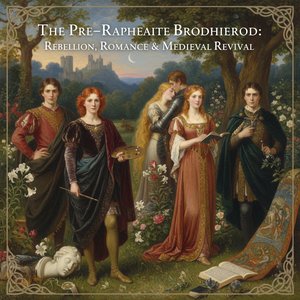
Prerafaelici: Bunt przeciw akademizmowi i odrodzenie malarstwa narracyjnego
Poznaj fascynujący świat prerafaelitów – ruchu artystycznego, który zrewolucjonizował malarstwo wiktoriańskie. Analiza stylu, twórczości Millaisa, Rossettiego i innych mistrzów. Odkryj inspiracje średniowieczem i symbolikę ich dzieł.

Arthur Hughes: Pre-Raphaelite Visions of Beauty & Melancholy
Explore the captivating world of Arthur Hughes (1832-1915), a leading Pre-Raphaelite painter. Discover his dreamy landscapes, poetic narratives & iconic Victorian artworks. Learn about his life, style & collecting today.

The Pre-Raphaelite Brotherhood: Rediscovering Beauty, Romance, and Medieval Magic in Victorian Art
Embark on a journey through the Pre-Raphaelite Brotherhood. Discover the romantic symbolism, medieval magic, and radical beauty of Rossetti and Burne-Jones in this expert exploration of Victorian art history.

Dante Gabriel Rossetti: 25 Arcydzieł Pełnych Pasji i Symboliki | OriginalUniqueArt
Odkryj 25 najpiękniejszych obrazów Dante Gabriela Rossettiego! Poznaj historię, symbolikę i techniki prerafaelitów. Reprodukcje najwyższej jakości do Twojego wnętrza – OriginalUniqueArt.


