Podgląd w skali 1:1
 Wyślij jako kartkę
 Udostępnij
 Szczegóły dzieła
 Przewodnik

 Pobierz obraz
 Podobne obiekty
 RTG
RTG Pokaz slajdów
 Pytania i odpowiedzi
 Statystyki
Zdjęcie z krzyża

- 150.0 x 420.0 cm


 Rozwiń treść
Giclée / Wydruk artystyczny
Wydruki giclée lub płótna o jakości muzealnej, szybka realizacja i szeroki wybór opcji wykończenia. ( Zamów ręcznie malowaną reprodukcję Przejdź do wersji cyfrowej)




P118B zł10

P118H zł10

P118W zł10

P438Z zł10

P508JH zł12

P508YH zł12

P805H zł10

P805Z zł10

P919BZ zł10

P919G zł10

P919XJ zł10

P959ZH zł10

P968JZ zł12

W106C zł8

W218G zł10

W218JH zł8

W218Y zł10

W307PJ zł10

W316G zł10

W316PJ zł8

W316Y zł10

W398PJ zł8

W4111J zł10

W500HY zł15

W500JH zł15

W692G zł12

W849H zł8

W940BG zł15

W953PJ zł8




Wybierz spośród naszych standardowych rozmiarów, które zachowują oryginalne proporcje dzieła sztuki.

Wpisz wymaganą szerokość i wysokość, aby dopasować grafikę do ramy lub ściany. Wydruk można jedynie przyciąć, nigdy nie powiększając go poza oryginalny obraz, dlatego format o innych proporcjach spowoduje utratę części kompozycji. Przed rozpoczęciem druku prześlemy Ci cyfrowy podgląd do zatwierdzenia. Obraz wyświetlany na tej stronie nie pokazuje rzeczywistego przycięcia — jedynie podgląd oddaje ten efekt.
Dostawa na cały świat () w ciągu 2 tygodni zamiast standardowych 4/5 tygodni. (4 Listopad)

Bezpłatna ekspresowa wysyłka na cały świat

Wysokiej jakości płótno lniane

Pełne ubezpieczenie przesyłki

Gwarancja zwrotu należności celnych i podatków importowych

Gwarancja wiernego odwzorowania kolorów

100-dniowa polityka zwrotów (tylko w przypadku wad)

Gwarancja 100% zwrotu pieniędzy

Zniżka przy zakupie wielu sztuk
 Opcja ze szkłem jest dostępna wyłącznie w rozmiarach poniżej 110 cm

Zdjęcie z krzyża
Giclée / Wydruk artystyczny
Wymiary reprodukcji
-


Cena całkowita
zł 315
Dramat Zstąpienia z Krzyża – Arcydzieło Rubensa i Barokowej Ekspresji
Monumentalne “Zstąpienie z Krzyża” Petera Paula Rubensa, powstałe w latach 1612-1614, stanowi kamień milowy sztuki baroku. Obraz ten, pierwotnie zamówiony przez cech muszkieterów w katedrze antwerpskiej, to nie tylko przedstawienie biblijnej sceny, lecz głębokie przeżycie, które pochłania widza emocjonalną głębią i dynamiczną kompozycją. Rubens stworzył dzieło, które wykracza poza samą narrację – jest to wciągająca wizja pełna żalu, wiary i boskiego poświęcenia.
Temat i Narracja
Obraz ukazuje poruszający moment, w którym ciało Chrystusa ostrożnie opuszczane jest z krzyża po jego ukrzyżowaniu. W odróżnieniu od wcześniejszych przedstawień skupiających się wyłącznie na smutku, Rubens podkreśla kontrolowany proces zejścia, precyzyjnie zaaranżowany przez grupę mężczyzn wspierających ciężar Chrystusa z powagą i szacunkiem. Boczne panele rozszerzają tę centralną scenę, oferując kontekstowe elementy pogłębiające narrację – sugerując zarówno żałobę, jak i obietnicę zmartwychwstania. Kompozycja nie jest chaotyczna; ruch jest celowy, a postacie wydają się uczestniczyć w świętym rytuale.
Styl Barokowy i Technika Malarska
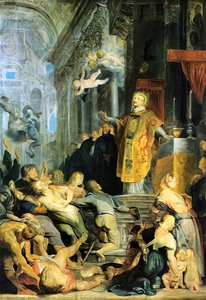
Mistrzostwo Rubensa w stylu barokowym jest tutaj w pełni widoczne. Charakteryzujące go intensywne emocje, dramatyczne oświetlenie (chiaroscuro) oraz wirujący ruch odrzucają statyczność na rzecz dynamicznej energii. Wykonane olejem na drewnianych panelach, malowidło cechuje się luźnym, ekspresyjnym pociągnięciem pędzla, które nadaje postaciom życie i teksturę. Bogata paleta barw – zdominowana przez głębokie czerwienie symbolizujące pasję i poświęcenie, obok ciepłych odcieni złota i brązów – dodatkowo wzmacnia emocjonalny wpływ dzieła. Rubens nie unika realizmu w przedstawianiu ludzkiego ciała, ale jednocześnie idealizuje je, nadając mu monumentalną formę.
Kontekst Historyczny i Religijny
Stworzone w okresie kontrreformacji, “Zstąpienie z Krzyża” stanowiło potężne wizualne potwierdzenie wiary katolickiej. Rubens umiejętnie równoważył ludzkie emocje z boską łaską, przedstawiając Chrystusa nie tylko jako cierpiącą postać, ale także jako triumfującego zbawiciela. Włączenie św. Krzysztofa, patrona podróżnych i cechu muszkieterów, dodaje kolejną warstwę znaczeń, subtelnie łącząc ziemską ochronę z duchowym zbawieniem. Obraz odzwierciedla ówczesny nacisk na przystępne obrazy religijne mające inspirować pobożność i wzbudzać w wiernych głębokie przeżycia.
Symbolika i Emocjonalny Rezonans
Poza dosłownym przedstawieniem, “Zstąpienie z Krzyża” jest bogate w symbolikę. Wzrok skierowany ku górze przez wielu postaci wyraża nadzieję i wiarę, podczas gdy starannie zaaranżowana kompozycja – z diagonalnymi liniami prowadzącymi wzrok do Chrystusa – podkreśla jego centralną rolę. Dostojny smutek Maryi Panny, odbiegający od wcześniejszych przedstawień przesadnej żałoby, uosabia siłę i akceptację. Dzieło to wywołuje głębokie poczucie empatii, zapraszając widza do kontemplacji tematów straty, odkupienia i trwałej mocy wiary. To nie tylko obraz – to świadectwo ludzkich emocji i artystycznego geniuszu.
Pytania i odpowiedzi
Jak kolory w dziele "Zdjęcie z krzyża" współgrają ze sobą?
Kolory dzieła „Zdjęcie z krzyża” – Rubens wykazują Silna harmonia kolorów harmonię. Harmonia ta opisuje wzajemne relacje między barwami.
Ile lat miał(a) Rubens, tworząc "Zdjęcie z krzyża" w 1614 roku?
Rubens stworzył/a "Zdjęcie z krzyża" w wieku 37 lat. Artysta urodził/a się w 1577, a datowanie dzieła to 1614.
Czy mogę przyjrzeć się bliżej dziełu "Zdjęcie z krzyża"?
"Zdjęcie z krzyża" można badać warstwa po warstwie na stronie Analiza rentgenowska, która oferuje interaktywny podgląd inspirowany stołem świetlnym konserwatora, prezentujący jedenaście optycznych odczytów obrazu.
Biografia artysty
A Life Forged in Baroque Splendor
Sir Peter Paul Rubens, a name synonymous with the very essence of Baroque dynamism, was far more than simply a painter; he was a diplomat, a scholar, and a cultural architect who fundamentally reshaped the artistic landscape of 17th-century Europe. Born in Siegen, Germany, in 1577, his early life was marked by displacement—a formative experience that subtly permeated his later work with an undercurrent of drama and emotional depth. His father, Jan Rubens, a lawyer fleeing religious persecution for his Calvinist beliefs, uprooted the family from their native Antwerp, then under Spanish rule. This initial exile instilled in young Peter Paul a sense of resilience and adaptability, qualities that would serve him well throughout his multifaceted career. Following his father’s death in 1587, the family returned to Antwerp, where he received a humanist education before embarking on his artistic training around 1590, apprenticing under Tobias Verhaecht and Adam van Noort, honing foundational skills in drawing and painting techniques. However, it was his time with Otto van Veen that proved pivotal, exposing him to the rich legacy of Italian Renaissance art—a world he would soon embrace wholeheartedly.The Italian Awakening and Artistic Synthesis
In 1600, Rubens embarked on a transformative journey to Italy, a pilgrimage that irrevocably shaped his artistic vision. For eight years, he immersed himself in the masterpieces of Michelangelo, Raphael, and Titian, absorbing their mastery of form, color, and composition. The influence of these Renaissance giants is readily apparent in his early Italian works, characterized by classical themes and idealized figures. Yet, Rubens didn’t merely imitate; he synthesized these influences with his own innate talent, developing a distinctive style marked by vibrant hues, dynamic compositions, and a sensuous depiction of the human form. He studied anatomy meticulously, resulting in figures that possessed both physical realism and emotional power—robust bodies imbued with life and movement. This period wasn’t solely about artistic development; it was a profound intellectual awakening, fostering a deep appreciation for classical mythology and literature which would become recurring motifs throughout his oeuvre. Upon returning to Antwerp in 1608, Rubens swiftly established himself as the leading artist of his time, receiving a flood of commissions that testified to his burgeoning reputation and solidifying his position at the forefront of Flemish art.A Master of Many Forms: Painting Beyond Boundaries
Rubens’s artistic output was astonishingly diverse and prolific. He didn't confine himself to a single genre; instead, he excelled in history paintings, mythological scenes, portraits, landscapes, and religious works—a testament to his versatility and boundless creativity. His large-scale canvases, often intended for churches, palaces, and public spaces, were breathtaking displays of technical virtuosity and dramatic storytelling. The Descent from the Cross (c. 1616-1617) exemplifies his masterful use of light and shadow to create a scene of profound emotional intensity, drawing viewers into the heart of the narrative. The figures are not merely depicted; they *feel* the weight of grief and the drama of the moment. The Raising of the Cross (1610-1611), with its swirling figures and dynamic composition, showcases his ability to convey movement and energy—a hallmark of his Baroque style. Even in seemingly static subjects like The Judgement of Paris (c. 1636), Rubens infused a sense of life and vitality through his vibrant color palette and sensual depiction of the human form. His technique was equally remarkable – a masterful command of oil painting, employing impasto to create texture and depth, alongside delicate glazing techniques to achieve luminous effects. He frequently employed allegorical figures and symbolic imagery, layering narratives with complex meanings that invited contemplation and interpretation.The Influence of Rubens: A Legacy of Dynamism
Rubens’s impact on the art world was immediate and profound. His style quickly became a dominant force in Flemish painting, influencing generations of artists who sought to emulate his dynamism, color, and sensuality. Artists like Anthony van Dyck, known for his elegant portraits and masterful compositions, were directly inspired by Rubens's work. Jacob Jordaens, another prominent Antwerp painter, adopted many of Rubens’s techniques and compositional strategies. Even centuries later, the influence of Rubens can be seen in the works of Eugène Delacroix, the Romantic French painter who admired Rubens’s dramatic flair and expressive use of color. Beyond his direct followers, Rubens's work served as a model for artists across Europe, shaping the course of Baroque art and contributing to the development of new artistic styles. His emphasis on movement, emotion, and sensual beauty resonated with audiences throughout the 17th and 18th centuries, cementing his place as one of the most important figures in Western art history.Diplomacy, Legacy, and Enduring Influence
Rubens’s influence extended far beyond the realm of art. His diplomatic skills were highly sought after by the Southern Netherlands (modern-day Belgium), and he undertook numerous missions to England, France, and Spain, negotiating treaties and fostering political alliances—a unique dual role that afforded him a nuanced perspective on European affairs and further enhanced his reputation as a man of intellect and influence. In 1630, he married Hélène Fourment, who became both his muse and frequent subject in his paintings – her youthful beauty gracing many of his later works, embodying the sensuality and vitality that characterized his style. He continued to paint prolifically until his death in Antwerp in 1640, leaving behind a vast legacy that continues to inspire awe and admiration. His impact on subsequent generations of artists is immeasurable; painters like Anthony van Dyck, Jacob Jordaens, and Eugène Delacroix all drew inspiration from his dynamic compositions, vibrant colors, and sensuous figures. Rubens didn’t just define the Baroque style—he elevated painting to a new level of prestige and influence, solidifying Antwerp as a major center of artistic production during the 17th century. He remains, centuries later, a towering figure in the history of art, a testament to the power of human creativity and the enduring allure of Baroque splendor.Key Characteristics of Rubens’s Style
- Dynamic Composition: Rubens' paintings are known for their energetic and dramatic arrangements of figures.
- Vibrant Color Palette: He employed a rich, warm color scheme that brought his canvases to life.
- Sensuous Figures: His depictions of the human form were characterized by fullness, vitality, and often, overt sensuality.
- Masterful Use of Light and Shadow: Rubens skillfully manipulated light and shadow to create depth, drama, and emotional impact.
- Allegorical Symbolism: His works frequently incorporated allegorical figures and symbolic imagery, adding layers of meaning and complexity.

Rubens
1577 - 1640 , Niemcy
Krótka nota
- Artistic Movement Or Style: Barokowy
- Artists Or Movements Influenced By This Artist:
- Anthony van Dyck
- Jacob Jordaens
- Artists Who Influenced This Artist:
- Tycjan
- Rafael
- Michelangelo
- Date Of Birth: 1577
- Date Of Death: 1640
- Full Name: Sir Peter Paul Rubens
- Nationality: Flamandzki
- Notable Artworks:
- Deszcz z krzyżem
- Wniebowzięcie Najświętszej Maryi Panny
- Portret Isabelle Brant
- Place Of Birth: Siegen, Niemcy
Powiązane artykuły

Barokowe arcydzieła: 10 obrazów, które zdefiniowały epokę | OriginalUniqueArt.com
Odkryj 10 arcydzieł baroku! Caravaggio, Rembrandt, Rubens i inni artyści, którzy zdefiniowali epokę. Poznaj historie, techniki i inspiracje tych niezwykłych obrazów. Reprodukcje najwyższej jakości na OriginalUniqueArt.com – idealne do Twojego wnętrza!

The Visceral Stage: Exploring Dramatic Narratives & Emotional Intensity in Baroque Art
Explore the dramatic world of Baroque art! Discover iconic masters like Caravaggio & Rembrandt, their techniques, and the movement's lasting impact. Expert insights for collectors & enthusiasts at OriginalUniqueArt.
Dramatyzm i Intensywność Emocji: Eksploracja Innowacji Artystycznych w Malarstwie Barokowym
Odkryj fascynujący świat malarstwa barokowego! Poznaj arcydzieła Caravaggia, Rubensa i Rembrandta, techniki artystyczne oraz wpływ kontrreformacji na sztukę. Ekspercka analiza i inspiracje dla miłośników historii sztuki.

Peter Paul Rubens: A Baroque Master's Life, Legacy & Enduring Influence
Discover the life & art of Peter Paul Rubens, the most influential artist of the Flemish Baroque tradition. Explore his masterpieces, legacy, and impact on art history with OriginalUniqueArt.

Dramatyczny Rozkwit Baroku: Dziedzictwo Sztuki Kontrreformacji i Mistrzowie Chiaroscuro
Odkryj dramatyczny świat baroku! Poznaj historię sztuki kontrreformacji, mistrzów chiaroscuro i weneckich arcydzieł. Reprodukcje najwyższej jakości na OriginalUniqueArt.com.