1893
Threshing (Robert Bevan, 1893)
Robert Bevan (1865–1925) stworzył Threshing. Dzieło pochodzi z 1893.
- 1893

 Podgląd w skali 1:1

 Ręcznie malowany obraz olejny
 Wyślij jako kartkę
 Udostępnij
 Karta informacyjna


 Pobierz obraz
 Podobne obiekty
 RTG
 Pokaz slajdów
 Pytania i odpowiedzi

 Statystyki
Threshing w skrócie
- Tytuł
- Threshing
- Artysta
- Robert Bevan (1865–1925)
- Miejsce urodzenia artysty
- Hove, Wielka Brytania
- Data powstania
- 1893
Zdjęcia w wysokiej rozdzielczości dzieła Threshing
Domena publiczna: artysta zmarł w 1925.
Robert Bevan, Threshing (1893). Domena publiczna
Odpowiedzi na pytania dotyczące Threshing
W którym roku powstało dzieło "Threshing"?
"Threshing" powstało w 1893 roku. Data ta pozwala umiejscowić dzieło w kontekście twórczości Robert Bevan oraz epoki, w której powstało.
Czy „Threshing” – Robert Bevan znajduje się w domenie publicznej?
Status praw autorskich dla „Threshing” – Robert Bevan: dzieło znajduje się w należy do domeny publicznej – autorskie prawa majątkowe wygasły. Określa to, czy reprodukcje obrazu mogą być sporządzane swobodnie.
Kto stworzył "Threshing"?
„Threshing” zostało stworzone przez Robert Bevan. Informacje na tej stronie dotyczą oryginalnego dzieła autorstwa Robert Bevan.
Ile lat miał Robert Bevan, gdy powstało dzieło „Threshing”?
Robert Bevan stworzył/a "Threshing" w wieku 28 lat. Artysta urodził/a się w 1865, a datowanie dzieła to 1893.
Z czego wynika obecny status praw autorskich dzieła "Threshing"?
Status praw autorskich do dzieła „Threshing” – należy do domeny publicznej – autorskie prawa majątkowe wygasły – wynika z faktu, że artysta zmarł w 1925.
O artyście: Robert Bevan

1865–1925, Wielka Brytania
Robert Bevan
Robert Polhill Bevan (1865–1925): British Painter & Camden Town Group Founder Robert Polhill Bevan, born in Hove in 1865, occupies a pivotal yet often understated position within the narrative of early 20th-century British art. Emerging from a Quaker background steeped in banking connections – his parents were Richard Alexander Bevan and Laura Maria Polhill – he defied conventional expectations to become a daring innovator, a key figure in the transition from Impressionism towards more radical explorations of color and form. His journey was one of constant experimentation, absorbing influences from across Europe while forging a distinctly personal artistic vision that would profoundly impact the development of modern art in Britain. Bevan’s early education at Westminster School of Art under Fred Brown provided a solid foundation, but it was his subsequent studies at the Académie Julian in Paris that truly ignited his creative spark.
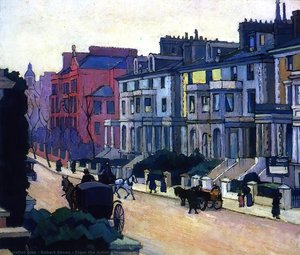 From the Artist's Window1915
 Horse Dealers (Sale at Ward's Repository No.1)1918
 Devonshire Valley, No. 21913
 Landscape in the Blackdown Hills, Devon1917