
 Podgląd w skali 1:1
 Wyślij jako kartkę
 Udostępnij
 Szczegóły dzieła
 Przewodnik

 Pobierz obraz
 Podobne obiekty
 RTG
RTG Pokaz slajdów
 Pytania i odpowiedzi
 Statystyki
Chabot Valley

 Rozwiń treść
Dzieło sztuki prezentowane na tej stronie podlega ochronie prawem autorskim, co oznacza, że nie mamy prawa do tworzenia ani sprzedaży jego identycznej reprodukcji. Ochrona ta jest egzekwowana na mocy umów międzynarodowych, takich jak Konwencja berneńska oraz przez przepisy prawa krajowego, w tym te określone w Prawo autorskie USA – Tytuł 17.
Metoda ta jest w pełni zgodna z przepisami prawa autorskiego, ponieważ nie polega na kopiowaniu ani powielaniu chronionego dzieła. Stanowi ona kreatywną reinterpretację – nowy obraz, który czerpie inspirację z oryginału, ale nie jest z nim tożsamy.
Giclée / Wydruk artystyczny
Wydruki giclée lub płótna o jakości muzealnej, szybka realizacja i szeroki wybór opcji wykończenia. ( Zamów ręcznie malowaną reprodukcję Przejdź do wersji cyfrowej)




































Wybierz spośród naszych standardowych rozmiarów, które zachowują oryginalne proporcje dzieła sztuki.

Wpisz wymaganą szerokość i wysokość, aby dopasować grafikę do ramy lub ściany. Wydruk można jedynie przyciąć, nigdy nie powiększając go poza oryginalny obraz, dlatego format o innych proporcjach spowoduje utratę części kompozycji. Przed rozpoczęciem druku prześlemy Ci cyfrowy podgląd do zatwierdzenia. Obraz wyświetlany na tej stronie nie pokazuje rzeczywistego przycięcia — jedynie podgląd oddaje ten efekt.
Dostawa na cały świat () w ciągu 2 tygodni zamiast standardowych 4/5 tygodni. (6 Listopad)

Bezpłatna ekspresowa wysyłka na cały świat

Wysokiej jakości płótno lniane

Pełne ubezpieczenie przesyłki

Gwarancja zwrotu należności celnych i podatków importowych

Gwarancja wiernego odwzorowania kolorów

100-dniowa polityka zwrotów (tylko w przypadku wad)

Gwarancja 100% zwrotu pieniędzy

Zniżka przy zakupie wielu sztuk
 Opcja ze szkłem jest dostępna wyłącznie w rozmiarach poniżej 110 cm

Chabot Valley
Giclée / Wydruk artystyczny
Wymiary reprodukcji
-


Cena całkowita
zł 317
Chabot Valley: A Lyrical Landscape by Richard Diebenkorn
- Artist: Richard Diebenkorn
- Year: 1955
- Medium: Oil on Canvas
“Chabot Valley” is a captivating oil painting by Richard Diebenkorn, exemplifying his signature style within the Bay Area Figurative Movement. This artwork presents a semi-abstracted landscape scene, capturing the essence of California’s beauty with a dynamic and expressive approach. It's more than just a depiction of a valley; it's an exploration of color, form, and feeling.
Composition and Technique: A Fragmented Vision
Diebenkorn abandons traditional perspective in "Chabot Valley," creating a composition that feels both familiar and disorienting. Shapes are flattened and layered, overlapping to generate visual complexity rather than spatial realism. The eye is drawn across the canvas by bold brushstrokes and unexpected juxtapositions of color. A striking dark vertical element—likely representing a telephone pole—dominates the right side, acting as an anchor amidst the fragmented landscape. Houses cluster in the mid-ground, fields stretch towards a horizon suggested rather than defined, and a broad band of red commands attention in the foreground. This deliberate lack of conventional perspective contributes to the painting’s energetic and somewhat chaotic feel.
Color and Emotion: An Expressive Palette
The color palette is arguably the most striking aspect of "Chabot Valley." Diebenkorn employs a rich range of blues, greens, reds, yellows, and purples, applied in distinct strokes rather than blended smoothly. This technique creates a palpable texture and emphasizes the painting’s expressive quality. The contrast between cool tones (in the sky and houses) and warmer hues (in the fields and foreground) generates visual tension and adds depth to the composition. The colors aren't merely descriptive; they convey emotion, contributing to the overall sense of dynamism and energy that permeates the work. It’s a landscape not just seen but *felt*.
Historical Context and Diebenkorn's Evolution
“Chabot Valley” was created during a pivotal period in Richard Diebenkorn’s career, following World War II and influenced by the shift of artistic focus from Paris to America. While initially inspired by Edward Hopper, Diebenkorn moved towards Abstract Expressionism before developing his unique style that blended figuration with abstraction. This painting reflects this evolution, demonstrating a move away from strict representation toward capturing the essence of a place through color and form. The influence of aerial views, which fascinated him after a cross-country flight in 1951, is evident in the flattened perspective and patchwork quality of the landscape. Diebenkorn’s work during this period helped define the Bay Area Figurative Movement, a group of artists who rejected both Abstract Expressionism's complete abstraction and traditional representational art.
Symbolic Resonance: Capturing a Feeling
“Chabot Valley” doesn’t tell a specific story; instead, it aims to evoke a feeling or impression. The fragmented composition and expressive color palette suggest dynamism, energy, and perhaps even emotional intensity. It's an invitation for the viewer to engage with the landscape on a visceral level, interpreting its meaning through their own experiences and emotions. The painting’s enduring appeal lies in its ability to transcend mere representation, offering a glimpse into Diebenkorn’s unique vision of California’s beauty.
Pytania i odpowiedzi
Jaki kolor dominuje w dziele "Chabot Valley"?
Dominującym odcieniem dzieła „Chabot Valley” – Richard Diebenkorn jest Warm Sunset Tones. Odcień ten stanowi bazową tonację palety barw.
Jaki poziom kontrastu prezentuje „Chabot Valley” – Richard Diebenkorn?
Kontrast jasności w dziele "Chabot Valley" wynosi Bold. Kontrast określa stopień zróżnicowania między obszarami jasnymi a ciemnymi.
Czy mogę obejrzeć "Chabot Valley" w formie pełnoekranowej prezentacji slajdów?
Prezentację slajdów utworu "Chabot Valley" można obejrzeć na stronie Prezentacja slajdów tego dzieła.
Biografia artysty
Early Life and Artistic Foundations
Richard Diebenkorn, born in Portland, Oregon, in 1922, embarked on a journey that would establish him as one of the most significant American painters of the postwar era. His family’s relocation to San Francisco when he was just two years old proved formative, imbuing his artistic sensibility with the light and atmosphere of California—a landscape that would become inextricably linked to his work. Even in childhood, a profound inclination towards drawing manifested itself, signaling an early dedication to visual expression. This innate passion led him to Stanford University in 1940, where he encountered pivotal mentors like Victor Arnautoff, who instilled a rigorous classical discipline with oil paint, and Daniel Mendelowitz, who shared his admiration for the evocative realism of Edward Hopper. Hopper’s influence is readily apparent in Diebenkorn's early paintings, characterized by a quiet introspection and a masterful handling of light and shadow. These formative years laid the groundwork for a career defined by both technical skill and emotional depth.Navigating Abstraction and Figuration
The landscape of American art underwent a dramatic shift in the wake of World War II, with the center of artistic innovation moving from Paris to New York. Diebenkorn keenly felt this change, enrolling at the California School of Fine Arts (now the San Francisco Art Institute) and embracing abstract expressionism as his primary mode of self-expression. He found inspiration in the work of artists like Clyfford Still, Arshile Gorky, Hassel Smith, and Willem de Kooning, absorbing their bold experimentation with form and color. However, Diebenkorn was not content to simply follow established trends. Alongside Elmer Bischoff, Henry Villierme, David Park, and James Weeks, he became a leading figure in the Bay Area Figurative Movement—a conscious return to representational painting after the dominance of abstract expressionism. This transition wasn’t abrupt; it was a gradual process of reintroducing recognizable forms into his work, blending abstraction's emotional intensity with figuration’s narrative potential. He sought to bridge the gap between inner experience and external reality, creating paintings that were both deeply personal and universally resonant.The Ocean Park Series: A Defining Achievement
In 1967, Diebenkorn embarked on a series of paintings that would come to define his career—the *Ocean Park* series. Named after the Santa Monica neighborhood where he lived and worked, these geometric, lyrical abstract paintings represent a culmination of his artistic explorations. Unlike the gestural spontaneity of abstract expressionism or the direct representation of Bay Area Figurative work, the *Ocean Park* paintings are characterized by a carefully considered composition, subtle color palettes, and a sense of serene order. These weren’t depictions of Ocean Park itself, but rather distillations of its light, space, and atmosphere—evocations of place through abstract form. He explored printmaking alongside his painting, beginning with drypoint in 1961 at UCLA, and forging a long-lasting collaboration with Kathan Brown at Crown Point Press from 1965 to 1992, producing numerous prints that further expanded his artistic vocabulary. The *Ocean Park* series garnered widespread critical acclaim, establishing Diebenkorn as a major force in contemporary art.Influences and Artistic Development
Diebenkorn’s artistic development was shaped by a diverse range of influences. Early exposure to the works of Henri Matisse, Paul Cézanne, and Pablo Picasso at a young age instilled a deep appreciation for color, form, and composition. The paintings of Edward Hopper provided a model for capturing mood and atmosphere, while the abstract expressionists—particularly Clyfford Still—inspired him to explore the expressive potential of color and gesture. He also drew inspiration from the landscape of California, particularly the light and space of the Bay Area. His time in Albuquerque, New Mexico, exposed him to Southwestern art and architecture, which influenced his use of color and composition. Throughout his career, Diebenkorn remained open to new influences, constantly experimenting with different techniques and approaches.Legacy and Lasting Influence
Richard Diebenkorn’s influence on postwar American art is undeniable. His ability to synthesize abstract expressionism, lyrical abstraction, and figurative painting created a unique artistic voice that resonated with artists for generations. A significant retrospective at the Pasadena Art Museum in 1960—later shown at the California Palace of the Legion of Honor in San Francisco—cemented his reputation as a leading figure in the art world. He didn’t adhere to any single dogma, instead forging his own path by embracing experimentation and following his artistic intuition. His work continues to inspire artists and collectors alike, celebrated for its beauty, complexity, and emotional depth. Diebenkorn's passing in 1993 marked the end of a remarkable career, but his legacy lives on through the enduring power of his paintings—a testament to his innovative spirit and unwavering commitment to artistic vision. His work remains a poignant reminder of the transformative potential of art.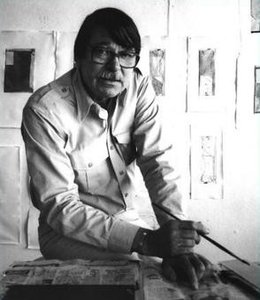
Richard Diebenkorn
1922 - 1993 , Stany Zjednoczone
Krótka nota
- Artistic Movement Or Style: Liryczna abstrakcja
- Artists Or Movements Influenced By This Artist:
- Bay Area Figurative
- Abstrakcja ekspresjonistyczna
- Artists Who Influenced This Artist:
- Edward Hopper
- Clyfford Still
- Date Of Birth: 22 kwietnia 1922
- Date Of Death: 30 marca 1993
- Full Name: Richard Clifford Diebenkorn
- Nationality: Amerykański
- Notable Artworks:
- Ocean Park No. 32
- A Day at the Races
- Place Of Birth: Portland, USA
Powiązane artykuły

25 Arcydzieł Kandinskiego: Kolor, Duchowość i Abstrakcja w Twoim Domu | OriginalUniqueArt.com
Odkryj 25 arcydzieł Wassily Kandinskiego – pioniera abstrakcji i ekspresjonizmu! Poznaj historie, techniki i emocje kryjące się za jego kolorowymi kompozycjami. Reprodukcje obrazów najwyższej jakości na OriginalUniqueArt.com. Eksploruj pełną kolekcję online!
Ekspresjonizm Abstrakcyjny: Emocjonalny Krajobraz Nowojorskiej Awangardy
Poznaj fascynujący świat ekspresjonizmu abstrakcyjnego! Analiza kluczowych artystów, nurtów i wpływu na współczesną sztukę. Ekskluzywne informacje dla kolekcjonerów i miłośników.
Richard Diebenkorn: A Poetics of Space & Form – Navigating Abstraction in California Modernism
Explore the evolution of Richard Diebenkorn's iconic art – from abstract expressionism to his celebrated Ocean Park series. Discover insights for collectors & enthusiasts.
The Soul of Color: A Journey into the Emotional Resonance of Lyrical Abstraction
Embark on a cultural journey through Lyrical Abstraction. Explore how masters like Kandinsky used color and motion to translate emotion into visual poetry. Discover the profound beauty of abstract expressionism and learn to curate emotional resonance in your own art collection.

Top 10 arcydzieł ekspresjonizmu abstrakcyjnego – inspiracje dla Twojego wnętrza | OriginalUniqueArt.com
Odkryj 10 arcydzieł ekspresjonizmu abstrakcyjnego – Pollock, Rothko, de Kooning i inni. Poznaj historie artystów, techniki i inspiracje dla Twojego wnętrza. Reprodukcje najwyższej jakości na OriginalUniqueArt.com!