

 Zobacz w skali 1:1
 Wyślij
 Udostępnij
 Szczegóły
 Przewodnik

 Pobierz plik obrazu
 Podobne obiekty
 RTG
RTG Pokaz slajdów
 Statystyki
The Apothecary
 Oil On Canvas
- WallArt
- Baroque
 1752
1752 59.0 x 48.0 cm
 Gallerie dell’Accademia
 Czytaj więcej
Ręcznie malowana reprodukcja olejowa
Ręcznie malowany obraz olejny na płótnie, wykonany na zamówienie przez naszych artystów w wybranym przez Ciebie wymiarze i oprawie. ( Przełącz na wersję drukowaną Przełącz na wersję cyfrową)




P118B $10

P118H $10

P118W $10

P438Z $10

P508JH $12

P508YH $12

P805H $10

P805Z $10

P919BZ $10

P919G $10

P919XJ $10

P959ZH $10

P968JZ $12

W106C $8

W218G $10

W218JH $8

W218Y $10

W307PJ $10

W316G $10

W316PJ $8

W316Y $10

W398PJ $8

W4111J $10

W500HY $15

W500JH $15

W692G $12

W849H $8

W940BG $15

W953PJ $8




Wybierz spośród naszych standardowych rozmiarów, które zachowują oryginalne proporcje dzieła sztuki.

Możesz wprowadzić własne wymiary, aby dopasować obraz do konkretnej ramy lub przestrzeni. Jeśli wybrany rozmiar nie będzie odpowiadał proporcjom oryginału, przytniecie dzieło sztuki lub rozszerzymy je o dodatkowe elementy, ręcznie domalowane przez artystę. Przed rozpoczęciem produkcji wyślemy projekt cyfrowy do Twojej akceptacji.
Należy pamiętać, że podgląd na ekranie nie odzwierciedla rzeczywistego przycinania ani rozszerzania obrazu. Tylko projekt dokładnie pokaże ostateczną kompozycję.
Choć oferujemy możliwość zamówienia niestandardowych rozmiarów, zalecamy wybór wymiaru z gotowej listy, aby zachować oryginalne proporcje dzieła.
Po złożeniu zamówienia zespół OriginalUniqueArt.com skontaktuje się z klientem drogą mailową w celu uzyskania instrukcji i prześle wizualizację projektu
Dostawa na całym świecie () w ciągu 3–4 tygodni zamiast standardowych 5 tygodni. (26 Wrzesień). Bez kompromisów w kwestii jakości.

Bezpłatna ekspresowa wysyłka na cały świat

Wysokiej jakości płótno lniane

Pełne ubezpieczenie transportowe

Gwarancja zwrotu należności celnych i podatków importowych

Gwarancja idealnego odwzorowania barw

100-dniowy okres na zwrot dzieła w przypadku wykrycia wad produkcyjnych

Gwarancja 100% zwrotu pieniędzy

Oferta przy zakupie wielu sztuk
 Opcja ze szkłem jest dostępna wyłącznie w rozmiarach poniżej 110 cm

The Apothecary
Technika wykonania
Rozmiar reprodukcji
-


Suma do zapłaty
$ 375
A Glimpse into Venetian Society: Pietro Longhi’s “The Apothecary”
Pietro Longhi's "The Apothecary," painted in 1752, is more than just a depiction of a bustling commercial space; it’s a meticulously crafted window into the vibrant and often contradictory world of 18th-century Venice. Longhi, a master of capturing the everyday dramas unfolding within bourgeois homes, eschewed the grand historical narratives favored by his contemporaries, instead focusing on the intimate details of Venetian life – a deliberate choice that cemented his reputation as the “Venetian Hogarth.” This painting immediately draws the viewer into a scene brimming with quiet observation and subtle social commentary, utilizing a shallow depth of field to prioritize interaction and narrative over strict realism. The warm palette—rich browns, ochres, and deep reds—creates an atmosphere both inviting and slightly cluttered, reflecting the practical yet aesthetically-minded environment of an apothecary.
A Baroque Tableau: Composition and Technique
The composition is remarkably complex, skillfully arranged to guide the eye through a series of interconnected actions. A central figure, a man diligently applying something to a woman’s face – a gesture both intimate and slightly unsettling – dominates the scene, immediately establishing a core narrative thread. An older gentleman observes with a mixture of curiosity and concern, while a nun stands nearby, seemingly offering assistance or perhaps simply observing the unfolding drama. Longhi's mastery lies in his ability to render textures with remarkable detail; the rough surfaces of wooden shelves laden with jars and bottles contrast sharply with the smooth fabrics of the clothing worn by the figures. The use of linear perspective, characteristic of Baroque painting, subtly flattens the space, prioritizing clarity and narrative flow over strict adherence to three-dimensional accuracy. The brushwork is generally smooth and blended, indicative of an oil paint technique—a medium that allowed for nuanced color gradations and a rich, tactile quality.
Symbolism Within the Scene: Alchemy and Social Commentary
Beyond its immediate depiction of apothecary life, “The Apothecary” is laden with symbolic meaning. The shelves overflowing with jars and bottles represent not just medicinal ingredients but also knowledge, alchemy, and perhaps even a veiled commentary on the pursuit of wealth and power within Venetian society. The presence of the nun adds another layer of complexity, suggesting themes of faith, charity, or even illicit affairs – common motifs in Longhi’s work. The man administering the treatment is often interpreted as representing a physician, while the woman receiving it embodies vulnerability and perhaps a degree of passive acceptance. Notably, many of the figures are partially obscured, their faces often hidden behind masks—a recurring device in Longhi's oeuvre that invites speculation about identity, disguise, and the performative nature of social interactions. The scene subtly critiques the superficiality and intrigue prevalent within the Venetian elite.
Historical Context: A Portrait of a Changing Venice
Painted in 1752, “The Apothecary” reflects a pivotal moment in Venetian history – a period of relative stability following the turmoil of the preceding decades. Venice was transitioning from its maritime dominance to a more inward-looking society, increasingly focused on domestic life and the pleasures of the wealthy elite. Longhi’s choice to depict this everyday scene—a private moment within a professional setting—underscores this shift in focus. His work stands as a valuable historical document, offering insights into the social customs, fashion trends, and prevailing attitudes of 18th-century Venice. The painting aligns with the Rococo style, characterized by its emphasis on elegance, intimacy, and playful subject matter, yet it retains Longhi’s distinctive wit and observational acuity.
Collecting a Legacy: Reproduction and Artistic Value
Reproductions of “The Apothecary” offer an exceptional opportunity to bring this captivating scene into any interior space. The painting's rich detail and evocative atmosphere create a focal point that sparks conversation and adds a touch of historical charm. Considered alongside the work of Pietro Longhi, it exemplifies his unique ability to capture the nuances of Venetian life with both artistic skill and social awareness. Investing in a high-quality reproduction allows you to appreciate the enduring appeal of this masterful painting—a testament to Longhi’s legacy as one of Venice's most perceptive and engaging chroniclers of daily life.
Biografia artysty
A Venetian Chronicler of Daily Life
Pietro Longhi, born Pietro Falca in Venice on November 5th, 1701, wasn’t painting grand historical narratives or mythological scenes; he was capturing the quiet dramas unfolding within the city's elegant homes and bustling streets. He became renowned for his witty genre paintings – intimate glimpses into the lives of 18th-century Venetians, a departure from the prevailing artistic trends of his time. The son of Alessandro Falca, a silversmith, Longhi’s early training began under the Veronese painter Antonio Balestra, who recognized and nurtured the young artist's talent. This foundation in traditional technique would later serve as a subtle counterpoint to the innovative spirit he brought to his chosen subject matter. He adopted the surname “Longhi” upon beginning his artistic career, a symbolic shedding of his father’s trade for the pursuit of painting.From Religious Scenes to Venetian Interiors
Longhi's initial works reflected the expectations of the era: altarpieces and religious themes dominated his early portfolio. His 1732 altarpiece for the church of San Pellegrino demonstrates a skillful command of traditional techniques, showcasing broken brushwork and vibrant color glazes characteristic of Venetian painting. These were executed with meticulous attention to detail, mirroring the stylistic conventions of the time—a deliberate contrast to the burgeoning experimentation that would characterize his later career. However, it was in the late 1730s that Longhi truly found his voice, shifting towards the small-scale genre scenes that would define his legacy. This transition wasn’t merely a change in subject matter; it represented a profound engagement with the burgeoning social and cultural shifts of the time. The 18th century witnessed a growing fascination with the private lives of the bourgeoisie, a focus on domesticity and everyday rituals—a trend Longhi expertly captured, offering viewers a window into Venetian society that was both charming and subtly satirical. He married Caterina Maria Rizzi in 1732, and together they had eleven children, though only three survived to adulthood. This personal life, while not overtly depicted in his art, undoubtedly informed his understanding of the human condition—a perspective he conveyed with remarkable sensitivity.The “Venetian Hogarth” and a Satirical Eye
Longhi quickly earned the moniker "the Venetian William Hogarth," a testament to his ability to infuse seemingly innocuous scenes with layers of social commentary. Like Hogarth, Longhi didn’t shy away from depicting human foibles and societal contradictions—a characteristic that distinguishes him from many of his contemporaries. He possessed an uncanny knack for capturing fleeting expressions and gestures, conveying emotion with remarkable precision. His paintings are populated with masked figures – a vibrant reminder of the Carnival celebrations that captivated Venice—engaged in various activities, from gambling and flirtation to clandestine meetings and dubious transactions. The Concert portrays a group of musicians performing in a richly decorated salon, capturing not only the visual splendor of the setting but also the subtle tensions between performers and patrons. Longhi’s canvases are imbued with an understated irony—a hallmark of his artistic vision—that compels viewers to contemplate deeper questions about human behavior and social dynamics. He wasn't simply recording life as it was; he was offering a perceptive critique of its complexities and contradictions.Technique, Influence, and Lasting Legacy
Longhi’s technique was as distinctive as his subject matter. He favored small canvases—typically no more than 24 x 19 ½ inches—and meticulously rendered them with a delicate touch and an unwavering commitment to realism. His interiors are bathed in soft light, creating an atmosphere of intimacy and immediacy that draws the viewer into the depicted scene. He achieved this luminous effect through masterful glazing techniques—applying thin layers of translucent pigment over opaque underlayers—resulting in breathtakingly vibrant colors and remarkable textural depth. Longhi’s work was influenced by earlier Venetian masters like Giuseppe Maria Crespi, who championed a humanist approach to painting that prioritized observation and psychological insight. However, Longhi forged his own path, anticipating later developments in genre painting and establishing himself as one of the foremost artists of his era. He served as Director of the Academy of Drawing and Carving from 1763, furthering Venetian artistic tradition and nurturing the talents of aspiring painters. Pietro Longhi passed away on May 8th, 1785, leaving behind a legacy that continues to inspire admiration for its elegance, wit, and profound understanding of human nature—a true testament to the enduring power of Venetian art.
Pietro Longhi
1701 - 1785 , Włochy
Najważniejsze informacje
- Artistic Movement Or Style: Venetian painting, Rococo
- Artists Or Movements Influenced By This Artist: ['William Hogarth']
- Artists Who Influenced This Artist:
- Antonio Balestra
- Giuseppe Maria Crespi
- Date Of Birth: November 5, 1701
- Date Of Death: May 8, 1785
- Full Name: Pietro Longhi
- Nationality: Italian
- Notable Artworks:
- The Tailor
- The Baptism
- Painter in his studio
- Place Of Birth: Venice, Italy
Zobacz także powiązane artykuły

Pietro Longhi's Venetian Scenes: A Study of Rococo Society & Domestic Life
Explore the captivating world of Pietro Longhi's Venetian scenes! Discover insightful analysis of his Rococo masterpieces & social commentary on 18th-century life. Learn about this 'Venetian Hogarth' and his lasting artistic legacy.

Barokowe arcydzieła: 10 obrazów, które zdefiniowały epokę | OriginalUniqueArt.com
Odkryj 10 arcydzieł baroku! Caravaggio, Rembrandt, Rubens i inni artyści, którzy zdefiniowali epokę. Poznaj historie, techniki i inspiracje tych niezwykłych obrazów. Reprodukcje najwyższej jakości na OriginalUniqueArt.com – idealne do Twojego wnętrza!

Barokowy Dramat we Wnętrzach: Sztuka Przepychu i Elegancji w Twoim Domu
Odkryj świat barokowego przepychu! Porady ekspertów jak wprowadzić elegancję i dramat do Twojego wnętrza. Inspiracje, charakterystyka stylu i praktyczne wskazówki.

Dramatyczny Rozkwit Baroku: Dziedzictwo Sztuki Kontrreformacji i Mistrzowie Chiaroscuro
Odkryj dramatyczny świat baroku! Poznaj historię sztuki kontrreformacji, mistrzów chiaroscuro i weneckich arcydzieł. Reprodukcje najwyższej jakości na OriginalUniqueArt.com.
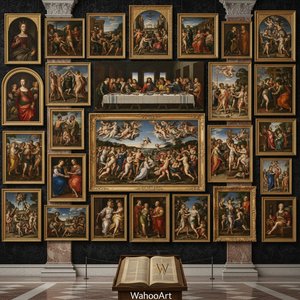
Jacopo Tintoretto: 25 Arcydzieł Pełnych Dramatyzmu i Światła | OriginalUniqueArt.com
Odkryj 25 arcydzieł Jacopo Tintoretto – weneckiego mistrza dramatyzmu i światła! Poznaj historie, techniki i inspiracje za jego najsłynniejszymi obrazami. Reprodukcje najwyższej jakości na OriginalUniqueArt.com. Eksploruj kolekcję online!