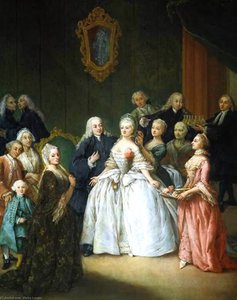
Pietro Longhi

1701 - 1785

Pietro Longhi (1701–1785) jest znany przede wszystkim z The Dancing Lesson; w katalogu znajduje się 143 dzieł tego artysty.

Kluczowe informacje

  • Movements: rococo
  • Gift suitability:
    • rocznica
    • ślub
  • Color intensity: monochromatyczność
  • Art period: – Wczesna nowożytność
  • Vibe: elegancja
  • Creative periods: mature period
  • Born: 1701, Wenecja, Włochy
  • Also known as:
    • Pietro Long
    • Falca Longhi
    • P. Longhi
    • Pietro Longi
    • Pietrus Longe

A Venetian Chronicler of Daily Life

Pietro Longhi, born Pietro Falca in Venice on November 5th, 1701, wasn’t painting grand historical narratives or mythological scenes; he was capturing the quiet dramas unfolding within the city's elegant homes and bustling streets. He became renowned for his witty genre paintings – intimate glimpses into the lives of 18th-century Venetians, a departure from the prevailing artistic trends of his time. The son of Alessandro Falca, a silversmith, Longhi’s early training began under the Veronese painter Antonio Balestra, who recognized and nurtured the young artist's talent. This foundation in traditional technique would later serve as a subtle counterpoint to the innovative spirit he brought to his chosen subject matter. He adopted the surname “Longhi” upon beginning his artistic career, a symbolic shedding of his father’s trade for the pursuit of painting.

From Religious Scenes to Venetian Interiors

Longhi's initial works reflected the expectations of the era: altarpieces and religious themes dominated his early portfolio. His 1732 altarpiece for the church of San Pellegrino demonstrates a skillful command of traditional techniques, showcasing broken brushwork and vibrant color glazes characteristic of Venetian painting. These were executed with meticulous attention to detail, mirroring the stylistic conventions of the time—a deliberate contrast to the burgeoning experimentation that would characterize his later career. However, it was in the late 1730s that Longhi truly found his voice, shifting towards the small-scale genre scenes that would define his legacy. This transition wasn’t merely a change in subject matter; it represented a profound engagement with the burgeoning social and cultural shifts of the time. The 18th century witnessed a growing fascination with the private lives of the bourgeoisie, a focus on domesticity and everyday rituals—a trend Longhi expertly captured, offering viewers a window into Venetian society that was both charming and subtly satirical. He married Caterina Maria Rizzi in 1732, and together they had eleven children, though only three survived to adulthood. This personal life, while not overtly depicted in his art, undoubtedly informed his understanding of the human condition—a perspective he conveyed with remarkable sensitivity.

The “Venetian Hogarth” and a Satirical Eye

Longhi quickly earned the moniker "the Venetian William Hogarth," a testament to his ability to infuse seemingly innocuous scenes with layers of social commentary. Like Hogarth, Longhi didn’t shy away from depicting human foibles and societal contradictions—a characteristic that distinguishes him from many of his contemporaries. He possessed an uncanny knack for capturing fleeting expressions and gestures, conveying emotion with remarkable precision. His paintings are populated with masked figures – a vibrant reminder of the Carnival celebrations that captivated Venice—engaged in various activities, from gambling and flirtation to clandestine meetings and dubious transactions. The Concert portrays a group of musicians performing in a richly decorated salon, capturing not only the visual splendor of the setting but also the subtle tensions between performers and patrons. Longhi’s canvases are imbued with an understated irony—a hallmark of his artistic vision—that compels viewers to contemplate deeper questions about human behavior and social dynamics. He wasn't simply recording life as it was; he was offering a perceptive critique of its complexities and contradictions.

Technique, Influence, and Lasting Legacy

Longhi’s technique was as distinctive as his subject matter. He favored small canvases—typically no more than 24 x 19 ½ inches—and meticulously rendered them with a delicate touch and an unwavering commitment to realism. His interiors are bathed in soft light, creating an atmosphere of intimacy and immediacy that draws the viewer into the depicted scene. He achieved this luminous effect through masterful glazing techniques—applying thin layers of translucent pigment over opaque underlayers—resulting in breathtakingly vibrant colors and remarkable textural depth. Longhi’s work was influenced by earlier Venetian masters like Giuseppe Maria Crespi, who championed a humanist approach to painting that prioritized observation and psychological insight. However, Longhi forged his own path, anticipating later developments in genre painting and establishing himself as one of the foremost artists of his era. He served as Director of the Academy of Drawing and Carving from 1763, furthering Venetian artistic tradition and nurturing the talents of aspiring painters. Pietro Longhi passed away on May 8th, 1785, leaving behind a legacy that continues to inspire admiration for its elegance, wit, and profound understanding of human nature—a true testament to the enduring power of Venetian art.

Quiz

Do każdego pytania dotyczy tylko jedna poprawna odpowiedź.

Pytanie 1:
Jak nazywał się Pietro Longhi?
Pytanie 2:
Kto nauczył Pietro Longhi malować?
Pytanie 3:
W którym okresie twórczości Pietro Longhi dominowały sceny rodzajowe?
Pytanie 4:
Kto porównano Pietro Longhi do innego słynnego artysty?
Pytanie 5:
Co wyróżniało technikę Pietro Longhi?

Pytania i odpowiedzi

Ile lat żył/a Pietro Longhi?

Pietro Longhi żył(a) około 84 lat, od 1701 do 1785.

Gdzie można zobaczyć obrazy Pietro Longhi?

Gdzie i w którym roku urodził(a) się Pietro Longhi?

Pietro Longhi urodził się w Wenecja w 1701 roku.

Czy mogę odwiedzić wirtualne muzeum dzieł Pietro Longhi?

Jakich technik używał/a Pietro Longhi?

Prace Pietro Longhi wymienione na tej stronie to głównie obraz olejny na płótnie.

Czy prace Pietro Longhi należą do domeny publicznej?

Tak. Pietro Longhi zmarł(a) w 1785, a jego/jej dzieła znajdują się w domenie publicznej.

Jak długo trwała kariera Pietro Longhi?

Datowane dzieła Pietro Longhi wymienione tutaj obejmują lata od 1727 do 1776, co daje łącznie 78 prac. Zobacz etapy kariery Pietro Longhi chronologicznie.

Z jakich obrazów znany jest Pietro Longhi?

Pietro Longhi jest znany z dzieł wymienionych w najsłynniejszych obrazach Pietro Longhi.

Do jakiego nurtu artystycznego należał/a Pietro Longhi?

Pietro Longhi to jeden z słynnych artystów nurtu Rococo.