

 Zobacz w skali 1:1
 Wyślij
 Udostępnij
 Szczegóły
 Przewodnik

 Pobierz plik obrazu
 Podobne obiekty
 RTG
RTG Pokaz slajdów
 Statystyki
Marie-Madeleine


 Czytaj więcej
Giclée / Wydruk artystyczny
Wydruki giclée lub płótna o jakości muzealnej, szybka realizacja i szeroki wybór opcji wykończenia. ( Kup ręcznie malowany obraz Przełącz na wersję cyfrową)




P118B $10

P118H $10

P118W $10

P438Z $10

P508JH $12

P508YH $12

P805H $10

P805Z $10

P919BZ $10

P919G $10

P919XJ $10

P959ZH $10

P968JZ $12

W106C $8

W218G $10

W218JH $8

W218Y $10

W307PJ $10

W316G $10

W316PJ $8

W316Y $10

W398PJ $8

W4111J $10

W500HY $15

W500JH $15

W692G $12

W849H $8

W940BG $15

W953PJ $8




Wybierz spośród naszych standardowych rozmiarów, które zachowują oryginalne proporcje dzieła sztuki.

Możesz wprowadzić własne wymiary, aby dopasować dzieło do konkretnej ramy lub przestrzeni. Jeśli wybrany rozmiar nie będzie odpowiadał proporcjom oryginalnego obrazu, przytniecie dzieło lub rozszerzymy obraz za pomocą odbicia lustrzanego lub jednolitego wypełnienia krawędzi. Przed rozpoczęciem produkcji prześlemy cyfrową wizualizację do Twojej akceptacji.
Prosimy pamiętać, że podgląd na ekranie nie odzwierciedla faktycznego przycinania ani rozszerzania. Tylko wizualizacja dokładnie pokaże końcową kompozycję.
Mimo dostępności niestandardowych rozmiarów, zalecamy wybór wymiaru z listy zdefiniowanej, aby zachować oryginalne proporcje.
Dostawa na cały świat () w ciągu 2 tygodni zamiast standardowych 4/5 tygodni. (27 Wrzesień)

Bezpłatna ekspresowa wysyłka na cały świat

Wysokiej jakości płótno lniane

Pełne ubezpieczenie transportowe

Gwarancja zwrotu należności celnych i podatków importowych

Gwarancja idealnego odwzorowania barw

100-dniowy okres na zwrot dzieła w przypadku wykrycia wad produkcyjnych

Gwarancja 100% zwrotu pieniędzy

Oferta przy zakupie wielu sztuk
 Opcja ze szkłem jest dostępna wyłącznie w rozmiarach poniżej 110 cm

Marie-Madeleine
Giclée / Wydruk artystyczny
Rozmiar reprodukcji
-


Suma do zapłaty
$ 80
A Vision of Eternal Serenity
In the quietude of Pierre Cécile Puvis de Chavannes’s 1897 masterpiece, Marie-Madeleine, we encounter more than a mere portrait; we enter a sanctuary of the soul. As a cornerstone of the Symbolist movement, this painting eschews the frantic energy of Impressionism in favor of a profound, meditative stillness. The subject, Marie Madeleine, sits poised upon weathered, ancient rocks, her gaze drifting toward an unseen horizon that suggests a communion with the divine. There is a rhythmic grace to her posture, a quiet dignity that invites the viewer to pause their own hurried existence and enter into her state of deep contemplation. For the discerning collector or interior designer, this work offers a rare opportunity to introduce a sense of monumental peace into a living space, acting as an anchor of tranquility amidst the chaos of modern life.
The artist’s technique is nothing short of poetic. Puvis de Chavannes was a master of the glazing technique, applying delicate, translucent layers of pigment to create a luminous, ethereal glow that seems to emanate from within the canvas itself. Rather than relying on sharp, academic outlines, he utilized a muted, harmonious palette and subtly sculpted surfaces to evoke a dreamlike atmosphere. This soft-focus approach allows the textures of the stone and the flowing fabric of her white dress to merge seamlessly with the landscape, blurring the line between the physical world and the spiritual realm. The result is a painting that feels less like a captured moment in time and more like an eternal, breathing memory.
The Language of Symbolism
Every element within this composition serves as a silent syllable in a larger spiritual narrative. Beyond the central figure, the artist has woven subtle symbols that enrich the viewer's emotional journey. Two birds, perched delicately upon the rocks, act as messengers of hope and ascension, their presence mirroring Marie Madeleine’s upward-reaching spirit. Scattered wildflowers dot the landscape, adding touches of delicate beauty that symbolize divine grace and the ephemeral nature of life. These details are not merely decorative; they are essential components of a visual symphony designed to resonate with the subconscious.
To possess a reproduction of Marie-Madeleine is to bring a piece of late 19th-century French history into the contemporary home. It is a work that speaks to the anxieties and aspirations of an era standing on the precipice of change, yet it remains timeless in its pursuit of truth. Whether placed in a sunlit gallery or a sophisticated study, this painting serves as a profound testament to the power of art to transcend the literal and touch the infinite. It is an investment in atmosphere, a tribute to the enduring beauty of the Symbolist vision, and a constant reminder of the grace that exists in moments of absolute stillness.
Biografia artysty
Pierre Cécile Puvis de Chavannes: The Painter for France
Pierre Cécile Puvis de Chavannes, a name often simply rendered as Puvis de Chavannes, occupies a unique and pivotal position in 19th-century French art. Born in Lyon in 1824, he rose to become known as “the painter for France,” a testament to his profound impact on public art during the early years of the Third Republic. His legacy extends far beyond mere decoration; Puvis de Chavannes crafted visual narratives that embodied national ideals and resonated with a generation grappling with political and social transformation. He wasn’t merely illustrating history, but actively shaping its visual memory for the future. His influence on subsequent artists, particularly those aligned with Symbolism and Art Nouveau, is undeniable, and his collaborative spirit extended to working alongside medallists, offering designs and insightful suggestions.Early Life and Artistic Beginnings
The early life of Pierre-Cécile Puvis was marked by a trajectory that initially diverged from the world of art. Born into a family of modest means – his father an engineer descended from Burgundy nobility – he received an education at Amiens College and Lycée Henri IV in Paris, preparing him for a career following in his father’s footsteps. However, a serious illness proved to be a turning point, forcing a period of convalescence that allowed space for introspection and the burgeoning of artistic inclinations. A transformative journey to Italy ignited within him a passion for painting, prompting a decisive shift away from engineering and towards a life dedicated to creative expression. He embraced his ancestral heritage by incorporating “de Chavannes” into his name, a subtle assertion of identity and lineage. His formal training included brief mentorships under luminaries like Eugène Delacroix, Henri Scheffer, and Thomas Couture, yet he ultimately favored independent study, establishing a spacious studio near the Gare de Lyon that became a hub for artistic exploration. He diligently honed his understanding of anatomy through classes at the Académie des Beaux Arts, laying a solid foundation for his later monumental works.The Genesis of a Symbolist Style
Puvis de Chavannes’s artistic style is generally categorized as Symbolist, though it evolved from roots in Romanticism. His work is instantly recognizable by its simplified forms, rhythmic linear compositions, and a distinctive, muted palette reminiscent of fresco painting. He wasn't interested in photographic realism; instead, he sought to distill essence, to capture the underlying spirit of his subjects. He frequently drew inspiration from classical antiquity and idealized landscapes, weaving allegorical themes into grand narratives. His early commissions, beginning in the 1860s at the Musée de Picardie in Amiens – including *Concordia*, *Bellum*, *Le Travail* (Work), and *Le Repos* (Rest) – established his reputation for large-scale mural paintings. These weren’t simply decorative elements; they were carefully considered statements about civic virtue, labor, and the pursuit of harmony. Notable works like *The Woodcutters* (1873), currently housed at the San Antonio Museum of Art, demonstrate his ability to imbue everyday scenes with symbolic weight and poetic grace. Paintings such as *Massilia, Greek Colony*, and *Sacred Grove* exemplify his characteristic style and thematic interests, showcasing nude figures within evocative landscapes that invite contemplation.Collaborations and Public Commissions
Puvis de Chavannes’s career was marked by a remarkable blend of independent artistic pursuits and significant public commissions. He wasn't merely a painter; he was an active participant in the cultural life of Paris, contributing to the development of decorative arts and shaping the visual identity of important civic spaces. His involvement with the Société Nationale des Beaux-Arts, as its president, solidified his position as a leading figure in the artistic community. He collaborated extensively with medallists, providing designs and insightful suggestions for their works, enriching their output with his distinctive aesthetic sensibilities. The monumental murals he created for the Panthéon in Paris – illustrating the life of St. Geneviève – stand as enduring testaments to his skill and vision, reflecting a deep understanding of both artistic technique and historical narrative. His willingness to undertake challenging projects, often at his own expense, underscored his commitment to public service and his belief in the transformative power of art.A Lasting Legacy: Influence and Historical Significance
The impact of Puvis de Chavannes on the artistic landscape of France – and beyond – was profound. He is credited with influencing an entire generation of painters and sculptors, particularly those associated with Modernism. His emphasis on simplified forms, decorative patterns, and allegorical themes resonated deeply with artists seeking to break away from traditional academic constraints. Georges de Feure was among his notable protégés, benefiting directly from his guidance and mentorship. Beyond painting, Puvis actively collaborated with medallists, providing designs and suggestions that enriched their work. Émile Zola eloquently lauded his art as “an art made of reason, passion, and will,” capturing the intellectual and emotional depth inherent in his creations. His most celebrated achievement lies in his contribution to the development of public art during a period of significant political and social change in France. His murals weren’t merely aesthetic enhancements; they were intended to embody national ideals and provide visual narratives for civic spaces, fostering a sense of collective identity and shared values. The monumental murals at the Panthéon in Paris, illustrating the life of St. Geneviève, stand as enduring testaments to his skill and vision. Puvis de Chavannes remains an important figure in 19th-century French art, bridging the gap between Romanticism and Symbolism and paving the way for the artistic innovations of the modern era. His work continues to inspire awe and admiration, reminding us of the power of art to shape our understanding of history, culture, and the human condition.
Puvis de Chavannes
1824 - 1898 , Francja
Najważniejsze informacje
- Artistic Movement Or Style: Symbolizm
- Artists Or Movements Influenced By This Artist:
- Genin
- Art Nouveau
- Modernizm
- Artists Who Influenced This Artist:
- Delakroix
- Scheffer
- Couture
- Date Of Birth: 14 grudzień 1824
- Date Of Death: 24 październik 1898
- Full Name: Pierre Cécile Puvis de Chavannes
- Nationality: Francuz
- Notable Artworks:
- Wykutnicy
- Massilia
- Święta Grota
- Place Of Birth: Lyon, Francja
Zobacz także powiązane artykuły
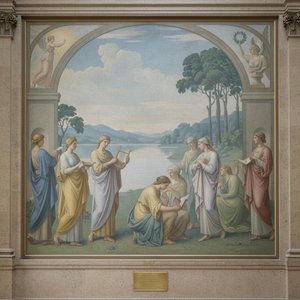
Pierre Puvis de Chavannes: Symbolism, Mural Painting, and the Pursuit of Ideal Beauty
Explore the life & work of Pierre Puvis de Chavannes, a pivotal Symbolist painter renowned for his monumental murals. Discover his aesthetic principles, key artworks like 'Hope,' and lasting influence on modern art. A deep dive into 19th-century French painting.

Maurice Quentin de La Tour: Light, Shadow & the Rococo Portrait
Explore the captivating world of Maurice Quentin de La Tour, a master of Rococo portraiture. Discover his innovative pastel techniques, intimate depictions of French aristocracy, and lasting artistic legacy. Learn more at OriginalUniqueArt.

O nas
Odkryj naszą historię! Wprowadzamy światowej klasy sztukę do Twojego życia dzięki starannie dobranym dziełom, personalizowanym kreacjom i bezpłatnym podglądom. Cenione przez osoby prywatne i firmy od 2000 roku.
Roger de la Fresnaye: Cubism, Tradition & the Search for Order in Early 20th-Century French Painting
Explore the captivating world of Roger de la Fresnaye, a pivotal French Cubist painter. Discover his unique blend of tradition & modernity, influences, and lasting legacy with OriginalUniqueArt.

Francisco Goya: 25 Arcydzieł Genialnego Malarza Hiszpańskiego | OriginalUniqueArt.pl
Odkryj 25 arcydzieł Francisco Goyi – od portretów królewskich po dramatyczne 'Czarne Malowidła'. Poznaj historię, technikę i emocje hiszpańskiego mistrza. Reprodukcje obrazów najwyższej jakości na OriginalUniqueArt.com! Eksploruj kolekcję online.
