Podgląd w skali 1:1
 Wyślij jako kartkę
 Udostępnij
 Szczegóły dzieła
 Przewodnik

 Pobierz obraz
 Podobne obiekty
 RTG
RTG Pokaz slajdów
 Pytania i odpowiedzi
 Statystyki
VUE D'ALTONA


 Rozwiń treść
Giclée / Wydruk artystyczny
Wydruki giclée lub płótna o jakości muzealnej, szybka realizacja i szeroki wybór opcji wykończenia. ( Zamów ręcznie malowaną reprodukcję Przejdź do wersji cyfrowej)




P118B zł10

P118H zł10

P118W zł10

P438Z zł10

P508JH zł12

P508YH zł12

P805H zł10

P805Z zł10

P919BZ zł10

P919G zł10

P919XJ zł10

P959ZH zł10

P968JZ zł12

W106C zł8

W218G zł10

W218JH zł8

W218Y zł10

W307PJ zł10

W316G zł10

W316PJ zł8

W316Y zł10

W398PJ zł8

W4111J zł10

W500HY zł15

W500JH zł15

W692G zł12

W849H zł8

W940BG zł15

W953PJ zł8




Wybierz spośród naszych standardowych rozmiarów, które zachowują oryginalne proporcje dzieła sztuki.

Wpisz wymaganą szerokość i wysokość, aby dopasować grafikę do ramy lub ściany. Wydruk można jedynie przyciąć, nigdy nie powiększając go poza oryginalny obraz, dlatego format o innych proporcjach spowoduje utratę części kompozycji. Przed rozpoczęciem druku prześlemy Ci cyfrowy podgląd do zatwierdzenia. Obraz wyświetlany na tej stronie nie pokazuje rzeczywistego przycięcia — jedynie podgląd oddaje ten efekt.
Dostawa na cały świat () w ciągu 2 tygodni zamiast standardowych 4/5 tygodni. (3 Listopad)

Bezpłatna ekspresowa wysyłka na cały świat

Wysokiej jakości płótno lniane

Pełne ubezpieczenie przesyłki

Gwarancja zwrotu należności celnych i podatków importowych

Gwarancja wiernego odwzorowania kolorów

100-dniowa polityka zwrotów (tylko w przypadku wad)

Gwarancja 100% zwrotu pieniędzy

Zniżka przy zakupie wielu sztuk
 Opcja ze szkłem jest dostępna wyłącznie w rozmiarach poniżej 110 cm

VUE D'ALTONA
Giclée / Wydruk artystyczny
Wymiary reprodukcji
-


Cena całkowita
zł 317
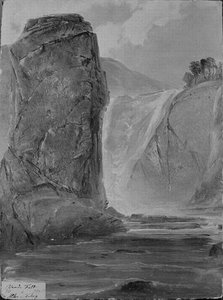
A Storm Unleashed: Peder Balke’s “VUE D’ALTONA”
Peder Balke's "VUE D’ALTONA," a dramatic seascape rendered in oil on canvas, isn’t merely a depiction of a coastal view; it’s an immersion into the raw, untamed heart of Norway. Painted around 1849, during a period of intense artistic and social change within the nation, this work embodies the Romantic spirit—a profound engagement with nature's power, coupled with a deep exploration of human emotion. The scene unfolds against a bruised and turbulent sky, dominated by swirling greys and blues that seem to writhe with an almost palpable energy. Below, the dark waters of the North Sea reflect this drama, punctuated by the distant silhouette of Altona, a Prussian fortress town nestled on a promontory – a strategic point caught in the eye of the storm. The inclusion of this fortified city hints at the political tensions simmering across Europe during Balke’s time, adding a layer of subtle commentary to the purely visual experience. The painting's scale is modest, yet its impact is monumental, drawing the viewer into the heart of the tempest.A Masterclass in Atmospheric Technique
Balke’s genius lies not just in his subject matter but in his masterful execution. He employs a loose, expressive brushstroke—an impasto technique where thick layers of paint are applied directly to the canvas—to create a remarkable sense of texture and movement. The sky isn't simply painted; it feels sculpted, with each cloud rendered as a dynamic mass of color and form. Notice how he uses atmospheric perspective – the subtle lightening and desaturation of colors in the distance – to convincingly convey depth and scale. This technique is particularly effective in depicting the distant cityscape, which appears almost spectral, swallowed by the swirling mist. The shoreline itself is treated with a more restrained hand, suggesting the ruggedness of the Norwegian coastline without overwhelming the drama of the sky. The careful layering of colors and the visible brushwork contribute to an immediate sense of immediacy, as if we are standing on that very shore, feeling the spray of the waves and the bite of the wind.Echoes of Romanticism and a Personal Journey
“VUE D’ALTONA” firmly places Balke within the tradition of Northern European landscape painting, echoing the works of J.M.W. Turner while retaining a distinctly Norwegian sensibility. Like Turner, Balke sought to capture not just the appearance of nature but its emotional resonance. However, unlike many of his contemporaries, Balke’s work is deeply rooted in the lived experience of Norway—a nation grappling with poverty, social upheaval, and the challenges of asserting its national identity. Born on a remote island in the middle of Lake Mjøsa, Balke's early life was marked by hardship and deprivation, experiences that profoundly shaped his artistic vision. His travels throughout Norway, meticulously documented through sketches and paintings like this one, were not merely expeditions but deeply personal journeys of discovery—a quest to understand and represent the soul of his homeland.Symbolism in Storm and Silhouette
Beyond its technical brilliance, “VUE D’ALTONA” is rich in symbolic meaning. The storm itself can be interpreted as a metaphor for inner turmoil or uncertainty – reflecting perhaps Balke's own struggles with poverty and artistic recognition. The distant silhouette of Altona, a Prussian fortress town, adds another layer of complexity. It represents the political tensions of the era, the threat of foreign invasion, and the precariousness of life in a small nation facing powerful empires. The painting’s overall mood is one of melancholy and awe—a reminder of humanity's vulnerability in the face of nature's overwhelming power. Yet, within this darkness, there’s also a sense of beauty and resilience – a testament to the enduring spirit of Norway.Bringing “VUE D’ALTONA” into Your Space
Today, "VUE D’ALTONA" stands as a powerful symbol of Norwegian Romanticism and a captivating example of Balke's unique artistic vision. OriginalUniqueArt offers high-quality reproductions that faithfully capture the painting’s dramatic intensity and atmospheric depth. Whether you are an art collector seeking to expand your collection or an interior designer looking for a statement piece, a reproduction of “VUE D’ALTONA” will bring a touch of Nordic drama and emotional resonance to any space. Consider its scale – a larger reproduction can dominate a wall, while a smaller one offers a more intimate connection to this evocative masterpiece. Explore the available sizes and formats on our website to find the perfect way to experience the power of Balke’s vision.Pytania i odpowiedzi
Gdzie mogę znaleźć statystyki dotyczące „VUE D'ALTONA” – Peder Balke?
Dla dzieła „VUE D'ALTONA” dostępna jest strona Statystyki wyświetleń. Przedstawia ona miesięczną liczbę odwiedzin tego dzieła oraz innych prac artysty, z podziałem na kraje i języki.
W jaki sposób „VUE D'ALTONA” – Peder Balke łączy Romanticism z krajem pochodzenia artysty?
"VUE D'ALTONA" łączy nurt Romanticism z Norwegia poprzez miejsce urodzenia jego twórcy.
Czy mogę zobaczyć podgląd „VUE D'ALTONA” – Peder Balke przed złożeniem zamówienia?
Podgląd dzieła „VUE D'ALTONA” – Peder Balke można znaleźć na stronie Podgląd w pomieszczeniu.
Biografia artysty
Peder Balke: A Visionary of the Nordic Sublime
Peder Andersen Balke, born in 1804 on the remote island of Helgøya in Hedmark, Norway, stands as a uniquely powerful voice within the landscape tradition of the 19th century. His life was one profoundly shaped by both artistic ambition and the harsh realities of rural existence – a duality that deeply informed his evocative paintings. From humble beginnings, marked by poverty and familial struggles, Balke’s innate talent for capturing the essence of nature ultimately propelled him to become a celebrated artist, recognized today as a pivotal figure in Norwegian art history.
Early Life and Artistic Foundations
Balke's childhood was far from idyllic. His family, simple farmers on the island of Helgøya, struggled with poverty, compounded by the devastating famine of 1812 following a blockade of Norwegian ports during the Napoleonic Wars. His father abandoned the family when Peder was young, leaving his mother to raise him and his brother amidst hardship. Despite these challenges, Balke’s maternal grandfather, an artisan and painter, instilled in him a love for art and provided early encouragement. Recognizing his son's potential, he secured him an apprenticeship with Heinrich August Grosch, a renowned engraver and artist in Christiania (now Oslo). Later, Balke studied under Jacob Munch, further honing his skills before embarking on formal training at the Royal Swedish Academy of Fine Arts in Stockholm, where he was influenced by the dramatic landscapes of Johan Christian Dahl. This diverse artistic education laid the foundation for Balke’s distinctive style – a synthesis of Romanticism and a deeply personal connection to the Norwegian wilderness.
The Shaping of a Unique Style: Light, Atmosphere, and Emotion
Balke's artistic development was characterized by an intense exploration of technique and expression. He wasn’t merely interested in replicating what he saw; instead, he sought to capture the *feeling* of nature – its power, its mystery, and its sublime beauty. His paintings are immediately recognizable for their dramatic use of light, often depicting scenes bathed in ethereal moonlight or shrouded in atmospheric darkness. This fascination with fleeting effects—particularly the interplay of light and shadow during twilight hours—became a defining feature of his work. His brushwork is notably textured and unconventional, creating a dreamlike quality that sets him apart from more conventional Romantic landscape painters. As he himself expressed, “I don’t paint what I see, but what I feel.” This emphasis on emotional resonance elevated his landscapes beyond mere depictions of scenery; they became windows into the soul of Norway.
Landscapes of Norway: A National Identity
Balke is most celebrated for his evocative portrayals of the Norwegian landscape – a subject he revisited repeatedly throughout his career. Works such as Vue de Christiania (1872) offer glimpses into the urban life of Oslo, yet even here, the natural world remains dominant, framing the cityscape and reminding viewers of its inextricable connection to the surrounding wilderness. The painting *The Harbor at Skjervøy* (1846) showcases his meticulous attention to detail alongside an ability to capture the bustling energy of a coastal port. Perhaps most powerfully, paintings like Old Trees (1840) and *Seascape* (1845), and especially *The North Cape by Moonlight* (1848), exemplify his mastery of mood and atmosphere – conveying the rugged beauty and untamed spirit of Norway’s coastline and northern reaches. These weren't simply picturesque views; they were statements about national identity, a passionate celebration of Norway’s unique natural heritage.
Beyond the Canvas: Social Activism and Legacy
Peder Balke was more than just an artist; he was a committed social reformer deeply invested in improving the lives of his fellow Norwegians. He recognized the vital role that art could play in society, advocating for financial support for artists – both men and women – arguing that creativity should be accessible to all. His most significant social initiative was the Balkeby project – a new suburb of Oslo designed to provide decent living conditions for workers. Balke personally oversaw the construction, enforcing strict building regulations and providing loans, demonstrating a practical commitment to social justice. Despite his considerable contributions, Balke’s work remained largely overlooked after his death in 1887. However, in recent decades, a renewed appreciation for his unique vision has emerged, culminating in major exhibitions at institutions like the National Gallery in London and the Metropolitan Museum of Art in New York. Today, Peder Balke is recognized as a pivotal figure in Norwegian art history – an artist whose dramatic landscapes and profound emotional depth continue to resonate with audiences worldwide.
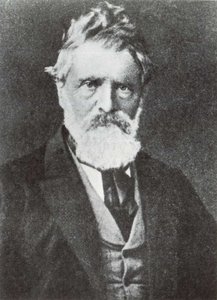
Peder Balke
1804 - 1887 , Norwegia
Krótka nota
- Artistic Movement Or Style: Krajobraz romantyczny
- Artists Or Movements Influenced By This Artist:
- Sztuka nordycka
- Romantyzm
- Artists Who Influenced This Artist:
- Heinrich Grosch
- Jacob Munch
- Carl Fahlcrantz
- Date Of Birth: 1804
- Date Of Death: 1887
- Full Name: Peder Andersen Balke
- Nationality: Norweskie
- Notable Artworks:
- Vue Christiania
- Port Skjervøy
- Drzewa stare
- Place Of Birth: Hegøy, Norwegia
Powiązane artykuły

Romantyczny Krajobraz w Malarstwie: 10 Arcydzieł, Które Zdefiniowały Epokę | OriginalUniqueArt.com
Odkryj 10 arcydzieł romantyzmu w malarstwie! Poznaj historie Caspara Davida Friedricha, Turnera i innych mistrzów. Inspiracje wnętrzarskie & reprodukcje obrazów najwyższej jakości na OriginalUniqueArt.com. Eksploruj kolekcję online!

John Constable: 25 Najlepszych Obrazów Mistrza Angielskiego Krajobrazu | OriginalUniqueArt
Odkryj 25 arcydzieł Johna Constable'a – mistrza angielskiego krajobrazu! Poznaj romantyczne pejzaże, technikę malarską i inspiracje z Dedham Vale. Reprodukcje obrazów najwyższej jakości na OriginalUniqueArt.com. Eksploruj pełną kolekcję online!
Capturing Stillness: A Curated Exploration of the Most Iconic Lake Landscapes in Art History
Journey through art history's most serene lake landscapes. From Romantic vistas to light-drenched Impressionist waters, discover the stories behind these iconic masterpieces and find museum-quality, hand-painted oil reproductions for your private collection.

Johan Christian Dahl: Pioneering Norwegian Romantic Landscape Painting
Explore the life & art of Johan Christian Dahl, Norway's first great Romantic painter. Discover his iconic landscapes, cultural impact, and lasting legacy with OriginalUniqueArt.

Evocations of Place: A Historical Journey Through Landscape Art
Explore the rich history of landscape art with OriginalUniqueArt. Discover renowned artists, movements like Impressionism & Romanticism, and expert guidance for collecting timeless pieces. Find your perfect serene escape today!