Expressionism
Self-portrait (Paula Modersohn-Becker)
Paula Modersohn-Becker (1876–1907) stworzył Self-portrait. Należy do nurtu Expressionism. Wykonano w technice Oil On Canvas. Przechowywane jest w Paula Modersohn-Becker Museum w Bremen, Germany.
- Oil On Canvas
- Paula Modersohn-Becker Museum, Bremen

 Podgląd w skali 1:1

 Ręcznie malowany obraz olejny
 Wyślij jako kartkę
 Udostępnij
 Karta informacyjna


 Pobierz obraz
 Podobne obiekty
 RTG
 Pokaz slajdów
 Pytania i odpowiedzi

 Statystyki
Self-portrait w skrócie
- Tytuł
- Self-portrait
- Artysta
- Paula Modersohn-Becker (1876–1907)
- Miejsce urodzenia artysty
- Drezno, Niemcy
- Technika wykonania
- Oil On Canvas
- Gdzie można je zobaczyć
- Paula Modersohn-Becker Museum, Bremen, Germany
- Ruch
- Expressionism
- Epoka
- Modern
- Temat
- woman, face, eyes, hair, skin, brown
Co przedstawia Self-portrait?
Identification of the Self-portrait
The work titled Self-portrait is a creation by the German Expressionist painter and draftswoman Paula Modersohn-Becker. It captures a moment of quiet intensity through the artist's own likeness. This specific piece belongs to a vast body of work produced during her active life, a period that saw the creation of more than 700 paintings and over 1000 drawings.
Born on 8 February 1876 in Dresden, Germany, the artist developed a singular visual language. Her life was brief, ending in Worpswede on 30 November 1907. In this self-representation, she turns her gaze toward the viewer, using her own features to explore the essence of her identity. The image remains a direct encounter with the artist's presence.
Composition and Visual Elements
The composition is a tight enclosure. It focuses on the face and the upper torso, cropping the view just below the collarbone. This close-up framing pushes the subject forward, leaving little room for the background to breathe. Because of this narrow focus and the lack of detail behind her, the painting feels largely flat. The woman meets the viewer with a direct and intense gaze that anchors the entire arrangement.
Color arrives in muted, earthy tones. Browns, creams, and whites settle alongside quiet greens. These hues do not compete; they exist in a state of restraint. Lines define the contours of the face and the hair, yet they refuse to remain sharp. Instead, they soften into the surrounding colors. The shapes are organic and flowing, following the natural curves of the human form without the interruption of hard edges.
Light falls across the skin in a diffused, even manner. There are no heavy shadows or bright highlights to disrupt the surface. This evenness contributes to the sense of quietude. The subject remains still within her muted, tonal world. A steady, searching eye looks out from the center.
Technique and Artistic Style
The paint clings to the canvas in a rough, impasto-like texture. It is an oil work where colors are blended directly upon the surface, leaving behind the evidence of the hand. Visible brushstrokes mark the skin and hair, suggesting a spontaneous and expressive approach. This tactile application gives the surface a raw, immediate quality.
The style leans toward Expressionism, favoring the weight of feeling over the precision of academic tradition. A deliberate flattening of perspective removes the illusion of deep space, pushing the subject forward. The forms are simplified and almost primal, stripped of unnecessary detail to reach a core essence. The composition relies on these organic shapes to define the contours of the face and torso.
The artist rejects the polished finish of the past. Instead, she uses a heavy, direct method to build the presence of the figure. The light remains even and diffused, avoiding sharp shadows to maintain a sense of quiet intensity. The work exists as a direct encounter between the artist and the medium.
Related Works by the Artist
The artist’s gaze often turned toward her own reflection, seeking a quiet truth in the glass. In 1906, she painted Self-Portrait Looking Slightly Left, a work that shares the same searching quality found in her other studies of identity. During that same year, she produced Self-Portrait at 6th Wedding Anniversary and Self-Portrait on the 6th Wedding Anniversary, capturing a specific moment of transition. These works exist alongside her 1906 Self-Portrait nude with amber necklace, where the jewelry rests against her skin. She also created Self-Portrait with Red Flower Wreath and Necklace, a somber composition that explores the weight of her own presence.
Flowers often appear as silent companions in her compositions. Between 1906 and 1907, she worked on Self Portrait with Camellia Branch, a piece that emphasizes the intersection of the female form and the natural world. This connects to Self Portrait with Two Flowers, where she cradles blossoms with a deliberate, steady intention. Earlier, around 1904, she produced Self-Portrait with a bowl and a glass, a work from a period of intense exploration. Each image remains a fragment of a life lived through the brush. The paint dries on the canvas, holding a steady, unblinking stare.
W którym muzeum znajduje się Self-portrait?
Paula Modersohn-Becker Museum
Bremen, Germany
The History of Paula Modersohn-Becker Museum Located in Bremen, Germany, the Paula Modersohn-Becker Museum holds a specific place in institutional history. It was established as a museum in 1927. This institution is the first in the world dedicated to the work of a female painter.
Zdjęcia w wysokiej rozdzielczości dzieła Self-portrait
Domena publiczna: artysta zmarł w 1907.
Paula Modersohn-Becker, Self-portrait, Paula Modersohn-Becker Museum. Domena publiczna
Odpowiedzi na pytania dotyczące Self-portrait
Gdzie można zobaczyć oryginał „Self-portrait” – Paula Modersohn-Becker?
Oryginał dzieła „Self-portrait” można zobaczyć w Paula Modersohn-Becker Museum, Bremen, Germany.
W jakiej technice wykonano „Self-portrait” – Paula Modersohn-Becker?
Technika wykonania dzieła „Self-portrait” – Paula Modersohn-Becker to Oil On Canvas. Reprodukcje mają na celu wierne oddanie wyglądu tej techniki.
Co przedstawia „Self-portrait” – Paula Modersohn-Becker?
„Self-portrait” – Paula Modersohn-Becker przedstawia: woman, face, eyes, hair, skin, brown, cream, white.
Czy obraz „Self-portrait” – Paula Modersohn-Becker można swobodnie reprodukować?
Status praw autorskich dla „Self-portrait” – Paula Modersohn-Becker: dzieło znajduje się w należy do domeny publicznej – autorskie prawa majątkowe wygasły. Określa to, czy reprodukcje obrazu mogą być sporządzane swobodnie.
Któremu artyście przypisuje się "Self-portrait"?
Autorstwo dzieła "Self-portrait" przypisuje się Paula Modersohn-Becker.
Do jakiego nurtu należy "Self-portrait"?
Nurt związany z „Self-portrait” – Paula Modersohn-Becker to Expressionism. Ta klasyfikacja sytuuje dzieło wśród pokrewnych artystów i dzieł sztuki.
Do którego okresu twórczości Paula Modersohn-Becker należy dzieło "Self-portrait"?
„Self-portrait” pochodzi z okresu Mature Period w twórczości Paula Modersohn-Becker. Klasyfikacja ta wiąże dzieło z rozwojem artysty.
Z czego wynika obecny status praw autorskich dzieła "Self-portrait"?
Dzieło "Self-portrait" autorstwa Paula Modersohn-Becker znajduje się w należy do domeny publicznej – autorskie prawa majątkowe wygasły. Okres ochrony praw autorskich liczony jest od daty śmierci artysty, a Paula Modersohn-Becker zmarł(a) w 1907.
Czy dzieło "Self-portrait" pozostało w ojczyźnie swojego artysty?
Nie – dzieło znajduje się poza granicami kraju artysty. Paula Modersohn-Becker urodził(a) się w Niemcy, a oryginał dzieła „Self-portrait” znajduje się w muzeum w Germany.
O artyście: Paula Modersohn-Becker

1876–1907, Niemcy
Paula Modersohn-Becker
Pionierka Wewnętrznej Wizji: Życie i Sztuka Pauli Modersohn-Becker Paula Modersohn-Becker, nazwisko rezonujące cichą siłą w annałach sztuki początku XX wieku, była artystką, która odważyła się spojrzeć do wnętrza siebie. Urodzona jako Minna Hermine Paula Becker 8 lutego 1876 roku w Dreźnie, zmarła tragicznie krótko – 30 listopada 1907 roku w Worpswede – a jednak w ciągu tych trzech dekad wykonała niezwykłą pracę, pełną innowacji artystycznych i osobistej odwagi. Jej historia to nie opowieść o natychmiastowym uznaniu czy powszechnej sławie za życia; jest raczej świadectwem trwałej siły indywidualnego głosu, który kwestionował konwencje i zgłębiał głębię ludzkiego doświadczenia z bezkompromisową szczerością. Pochodząca z relatywnie uprzywilejowanego środowiska, choć naznaczonego subtelnym cieniem – jej wuj próbował dokonać zamachu na króla Prus – Paula rozwijała swoje artystyczne inklinacje, choć nie bez presji społecznych oczekiwań.
O Paula Modersohn-Becker Najważniejsze dzieła Paula Modersohn-Becker
Inne prace Paula Modersohn-Becker
 Portrait of a young woman with red hat1900
 Half-length portrait of an old farmer1903
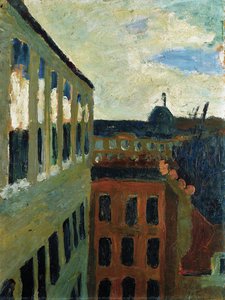 View from the studio window of the artist in Paris1900
 Still life with plant, lemon and orange1906
Eseje o Self-portrait
 Egon Schiele: 25 Arcydzieł Ekspresjonizmu dla Kolekcjonerów i Miłośników Sztuki | OriginalUniqueArt.comOdkryj 25 najbardziej znanych dzieł Egona Schiele – ikony ekspresjonizmu austriackiego. Poznaj historie, techniki i emocje ukryte w jego po…
 James Abbott McNeill Whistler: 25 Arcydzieł Sztuki Pejzażowej i Portretowej | OriginalUniqueArtOdkryj 25 arcydzieł Jamesa Abbotta McNeilla Whistler'a! Poznaj historię impresjonistycznych pejzaży, portretów i słynnych 'Nokturnów'. Repr…
 Polish artworks of the 1900sPolish Symbolism in the 1900s features masterpieces by Jacek Malczewski, Olga Boznańska, and Józef Mehoffer. View the full collection at Or…