
 Podgląd w skali 1:1
 Wyślij jako kartkę
 Udostępnij
 Szczegóły dzieła
 Przewodnik

 Pobierz obraz
 Podobne obiekty
 RTG
RTG Pokaz slajdów
 Q&A
Q&A Statystyki
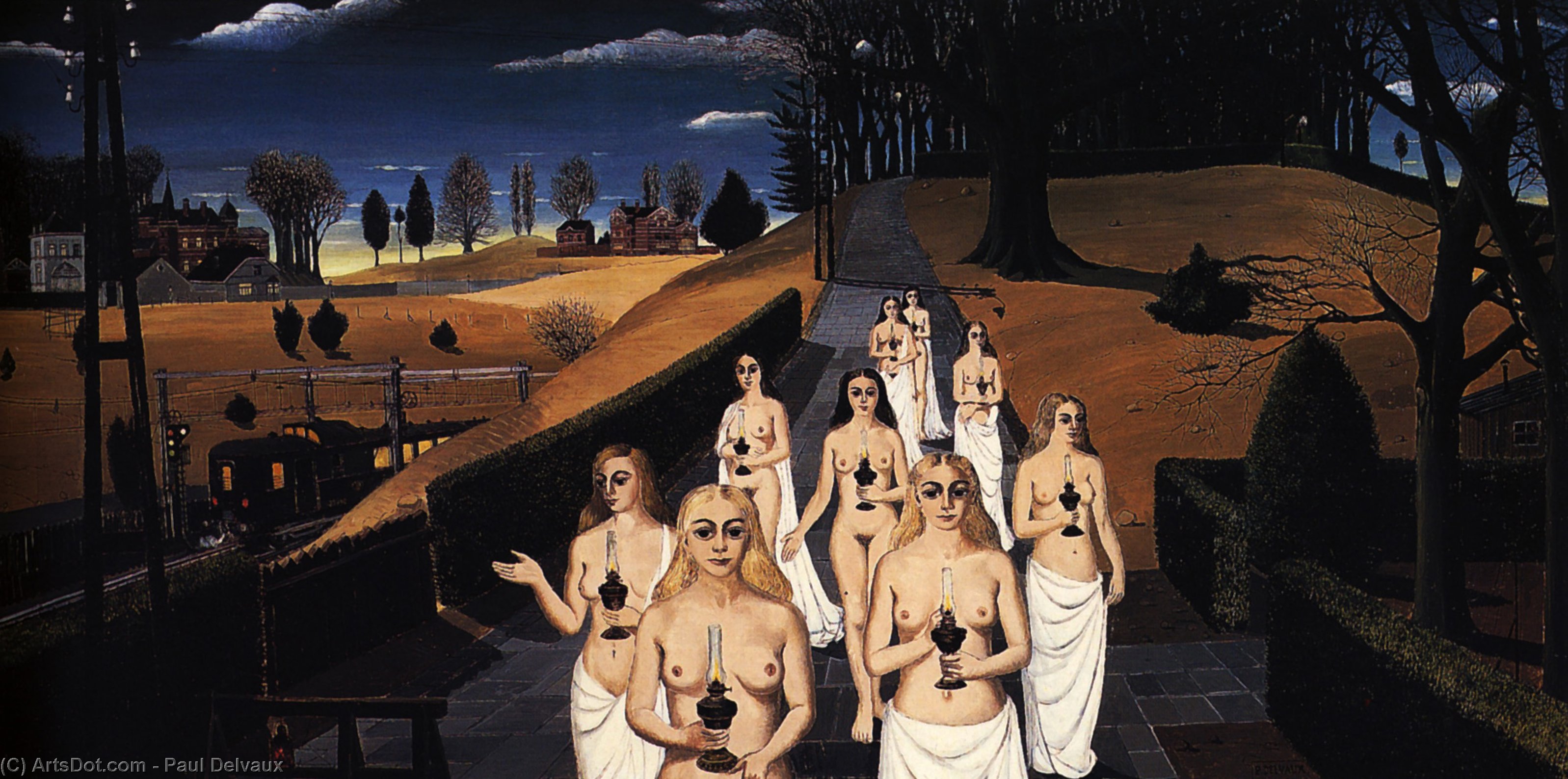
The Cortege
 Oil On Canvas
- WallArt
- Surrealism
 1963
1963 122.0 x 244.0 cm
 Rozwiń treść
Otrzymaj plik gotowy do druku, którego jakość znacznie przewyższa podgląd internetowy. Każdy sprzedawany przez nas obraz cyfrowy pochodzi z wysokorozdzielczego pliku wzorcowego w naszej bazie — zazwyczaj o szerokości od 5 000 do 15 000 pikseli — dzięki czemu możesz drukować w dużym formacie, mocno kadrować lub z pełnym przekonaniem odwzorowywać najdrobniejsze detale.
Żaden plik nie opuszcza naszego studia bez odpowiedniej obróbki. Ekspert ds. cyfrowej edycji sprawdza zgodność kolorów z oryginałem i w razie potrzeby je koryguje, a następnie za pomocą profesjonalnych narzędzi do retuszu poprawia ostrość oraz szczegółowość — zawsze zachowując wierność pociągnięciom pędzla i stylowi artysty. Rezultatem jest obraz, który wygląda jak prawdziwe dzieło, a nie jak przefiltrowany skan.
Zatwierdzasz przed finalizacją zamówienia: nasz ekspert prześle obraz drogą mailową w ciągu 72 godzin do Twojego wglądu. Nie jesteś zadowolony? Poproś o poprawki lub korektę, bądź o zwrot kosztów, jeśli jakość nie spełnia oczekiwań.
To jakość, na której polegają wydawcy, studia projektowe, galerie oraz drukarnie.
Obraz cyfrowy
Pobierz plik o wysokiej rozdzielczości do osobistego użytku, druku oraz projektów kreatywnych. ( Przełącz na wydania drukowane Zamów ręcznie malowaną reprodukcję)
W każdym zamówieniu na obraz cyfrowy znajduje się
Profesjonalna dostawa cyfrowa z gwarancją
Wybierając OriginalUniqueArt.com, nie otrzymujesz jedynie obrazu – otrzymujesz profesjonalnie udoskonalone cyfrowe dzieło sztuki, stworzone z najwyższą precyzją i objęte gwarancją satysfakcji. Oto wszystko, co automatycznie dołączane jest do Twojego zamówienia:

Błyskawiczna wysyłka e-mailowa
Plik z obrazem cyfrowym w wysokiej rozdzielczości zostanie przesłany na Twój adres e-mail w ciągu 72 godzin od złożenia zamówienia – gotowy do natychmiastowego użycia.

Plik cyfrowy wzbogacony przez AI
Twoja grafika została profesjonalnie zoptymalizowana przy użyciu zaawansowanych narzędzi AI oraz ręcznej edycji, co zapewnia maksymalną szczegółowość, klarowność i wierność kolorów.

Darmowe ponowne przesyłki dożywotnio
Przypadkowo usunąłeś lub zgubiłeś swój plik? Bez obaw – prześlemy go Tobie ponownie w dowolnym momencie, bez żadnych opłat.

Bez opłat importowych – zawsze
Ciesz się swoją sztuką natychmiast, bez żadnych opłat celnych, należności ani kosztów dostawy – pliki cyfrowe są zawsze wolne od podatku.

Gwarancja wierności kolorów
Dzięki zastosowaniu profesjonalnych narzędzi i procesów zarządzania barwą zapewniamy, że Twoje cyfrowe zdjęcie odzwierciedla oryginalne kolory tak wiernie, jak to tylko możliwe.

Gwarancja satysfakcji przez 100 dni
Jeśli nie będziesz zadowolony ze swojego cyfrowego obrazu, dokonamy jego poprawki lub zwrócimy 100% kosztów w ciągu 100 dni – bez zbędnych pytań.

100% Gwarancja zwrotu pieniędzy
Nie jesteś zadowolony? Otrzymaj pełny zwrot kosztów w ciągu 100 dni od otrzymania pliku cyfrowego – bez zbędnych pytań.

Rabaty przy zamówieniach hurtowych
Kup 3 obrazy, oszczędź 10% - Kup 5, oszczędź 15% - Kup 10+, oszczędź 20%. Idealne do projektów kreatywnych, galerii i agencji.
The Enigmatic Procession: Delvaux's Surreal Dreamscape
To stand before Paul Delvaux’s The Cortege is to step across the threshold into a meticulously rendered dream. Painted in 1963, this monumental canvas captures the essence of Surrealism not through jarring shock, but through an almost unsettling, beautiful tranquility. The scene unfolds upon a brick path that cleaves through a pastoral landscape—a place simultaneously familiar and utterly unreal. Nine figures, nude women draped delicately with white towels, proceed in a measured line, each one bearing aloft a flickering candle. This procession is more than just a gathering; it feels like a ritual, a journey into the depths of the subconscious mind that Delvaux so masterfully illuminated.
Mastery of Form and Color in Surrealist Technique
Delvaux’s technique here showcases a breathtaking duality: an almost academic precision applied to utterly fantastic subject matter. His brushwork is both bold and remarkably controlled, allowing the viewer to appreciate every fold of the white towel and every leaf on the surrounding trees. The palette itself sings with contrasts; vibrant blues and deep greens populate the background sky and foliage, providing a vivid counterpoint to the warm, earthy tones of the brick path and the figures' skin. This technical brilliance elevates the painting beyond mere illustration; it becomes a study in light, shadow, and idealized human form, hallmarks of his enduring genius.
Symbolism Whispered by Candlelight
The symbolism woven into The Cortege is as rich as its visual tapestry. The candles held aloft are perhaps the most potent symbols, suggesting not just illumination in the physical sense, but the guiding light of knowledge, memory, or spiritual awakening. The women themselves, partially veiled by white fabric, evoke mystery and timeless femininity—they are guides, muses, or perhaps allegories for the arts themselves. As one contemplates the depth suggested by the receding houses and trees in the background, the piece invites deep introspection, suggesting that every journey, even a beautiful procession, requires both light to see and mystery to explore.
Bringing the Dream Home: Owning a Piece of Belgian Surrealism
For the collector or designer seeking an anchor of profound artistic resonance for their space, The Cortege offers unparalleled depth. Reproducing this work allows one to incorporate a piece of high art history into contemporary life. The sheer scale of the original (122 x 244 cm) speaks to its monumental presence, and owning a reproduction means curating an atmosphere steeped in intellectual romance. It is a conversation starter, a visual poem that whispers tales of Belgian artistic heritage and the enduring power of the dream state.
Pytania i odpowiedzi
Do czego zaleca się wykorzystanie reprodukcji „The Cortege” – Paul Delvaux?
Sugerowanym zastosowaniem dla „The Cortege” – Paul Delvaux jest Focal, choć może on służyć również do innych celów.
Czy Paul Delvaux, twórca "The Cortege", jest znany pod innymi nazwiskami?
Paul Delvaux jest znany/a również pod pseudonimami: Jean Delvaux, Albert Delvaux, André Delvaux.
Jaki poziom luminancji ma „The Cortege” – Paul Delvaux?
Kolory dzieła "The Cortege" charakteryzują się luminancją na poziomie Dark.
Biografia artysty
A Dream Weaver: The Life and Art of Paul Delvaux
Paul Delvaux, a name synonymous with haunting beauty and unsettling mystery, was born in 1897 in the small Belgian village of Wanze – a place that would profoundly shape his artistic vision. His early life, steeped in both rigorous academic training and the fantastical worlds conjured by literature and myth, laid the foundation for his unique approach to Surrealism. Initially destined for a career in architecture by his parents, Delvaux’s passion for painting ultimately prevailed, leading him to enroll at the prestigious Académie Royale des Beaux-Arts in Brussels. While he struggled with the demanding structure of architectural design, the artistic training instilled within him a remarkable command of perspective and form – skills that would later be brilliantly employed in crafting his dreamlike landscapes. Early works, primarily landscapes painted in a post-impressionist style, hinted at the peculiar atmosphere that would become his signature, yet they also reflected a grounding in classical techniques.The Seeds of Surrealism: De Chirico and Early Influences
A pivotal moment arrived with Delvaux’s encounter with the paintings of Giorgio de Chirico. The Italian artist's metaphysical landscapes – stark, enigmatic scenes populated by shadows, classical architecture, and unsettling figures – resonated deeply within Delvaux’s soul, unlocking a new realm of possibilities. De Chirico’s ability to evoke a sense of unease and psychological depth profoundly influenced Delvaux’s artistic direction. He wasn't merely copying de Chirico; he was absorbing the *spirit* of his work, adapting it to his own unique sensibility. Alongside de Chirico, Delvaux also found inspiration in the works of Flemish Expressionists like Constant Permeke and Gustave De Smet, whose somber palettes and emotionally charged brushwork added another layer of complexity to his artistic vocabulary. The influence of Homer’s *Odyssey* and Jules Verne's adventurous tales further fueled his imagination, imbuing his paintings with a sense of timelessness and the allure of the unknown. This confluence of influences – classical precision, psychological depth, and fantastical imagery – began to coalesce into Delvaux’s distinctive style.The Language of Dreams: Recurring Motifs and Symbolism
Delvaux's artistic language is characterized by a rich tapestry of symbolism, though he consistently resisted attempts at reductive psychoanalytic interpretations. The female nude, a recurring motif in his work, rarely embodies simple sensuality; instead, she often appears passive, melancholic, or even haunted – embodying both desire and vulnerability. Trains and railway stations frequently serve as potent symbols of transition, displacement, and the anxieties inherent in modern life. Skeletons, far from being morbid reminders of death, are presented as spectral presences, subtly reminding us of our mortality while existing within idyllic scenes. Classical architecture provides a backdrop of order and permanence, yet it is often rendered strangely distorted or incomplete, suggesting a fragility beneath its imposing facade. These elements aren’t merely decorative; they are integral to the emotional and psychological impact of his paintings. Consider *Night Train*, for example – the anonymous figures, the looming architecture, and the palpable sense of impending doom create an unforgettable image that speaks to our deepest anxieties. The artist himself emphasized that his imagery stemmed from deeply personal memories and impressions, rather than deliberate attempts at decoding the subconscious.From Neo-Impressionism to Surrealist Recognition
Delvaux’s artistic journey wasn't a straightforward progression; he navigated various stylistic influences before fully embracing Surrealism. Initially working in a neo-impressionist style, characterized by meticulous detail and vibrant colors, his early landscapes reflected this academic grounding. However, after encountering the works of de Chirico and Magritte, Delvaux began to experiment with more irrational and dreamlike imagery. He traveled through Italy during World War II, immersing himself in the classical architecture and artistic traditions of that country, which further informed his style. He officially joined the Surrealist movement in 1934, participating in an exhibition organized by André Breton, though he maintained a degree of independence from the group’s rigid ideological framework. His paintings – such as *Sleeping Venus*, *The Summer*, and *Grise City* – became instantly recognizable for their haunting beauty and unsettling atmosphere. Major works like *Sleeping Venus* are now held in prestigious museums worldwide, cementing his place as one of the most important artists of the 20th century.Legacy and Enduring Influence
Paul Delvaux’s legacy extends far beyond his own lifetime. His paintings continue to captivate audiences with their haunting beauty and enigmatic atmosphere, prompting viewers to confront unsettling questions about reality, desire, and mortality. He demonstrated that Surrealism could exist beyond the confines of automatic writing and dream analysis, embracing instead a meticulous technique and a deeply personal vision. The Paul Delvaux Museum in Saint-Idesbald, Belgium, stands as a testament to his lasting impact, housing the world’s largest collection of his work and offering visitors an intimate glimpse into the captivating realm of his imagination. His influence can be seen in the works of countless contemporary artists who continue to explore themes of memory, desire, and the subconscious – ensuring that Delvaux's dreamlike visions will endure for generations to come.
Paul Delvaux
1897 - 1994 , Belgia
Krótka nota
- Artistic Movement Or Style: Surrealizm
- Artists Or Movements Influenced By This Artist:
- Neoimpresjonizm
- Ekspresjonizm
- Artists Who Influenced This Artist:
- De Chirico
- Magritte
- Date Of Birth: 23 września 1897
- Date Of Death: 20 lipca 1994
- Full Name: Paul Delvaux
- Nationality: Belgijski
- Notable Artworks:
- Śpiąca Wenus
- Nocny pociąg
- Miasto szarości
- Place Of Birth: Wanze, Belgia