
 Zobacz w skali 1:1
 Wyślij
 Udostępnij
 Szczegóły
 Przewodnik

 Pobierz plik obrazu
 Podobne obiekty
 RTG
RTG Pokaz slajdów
 Statystyki
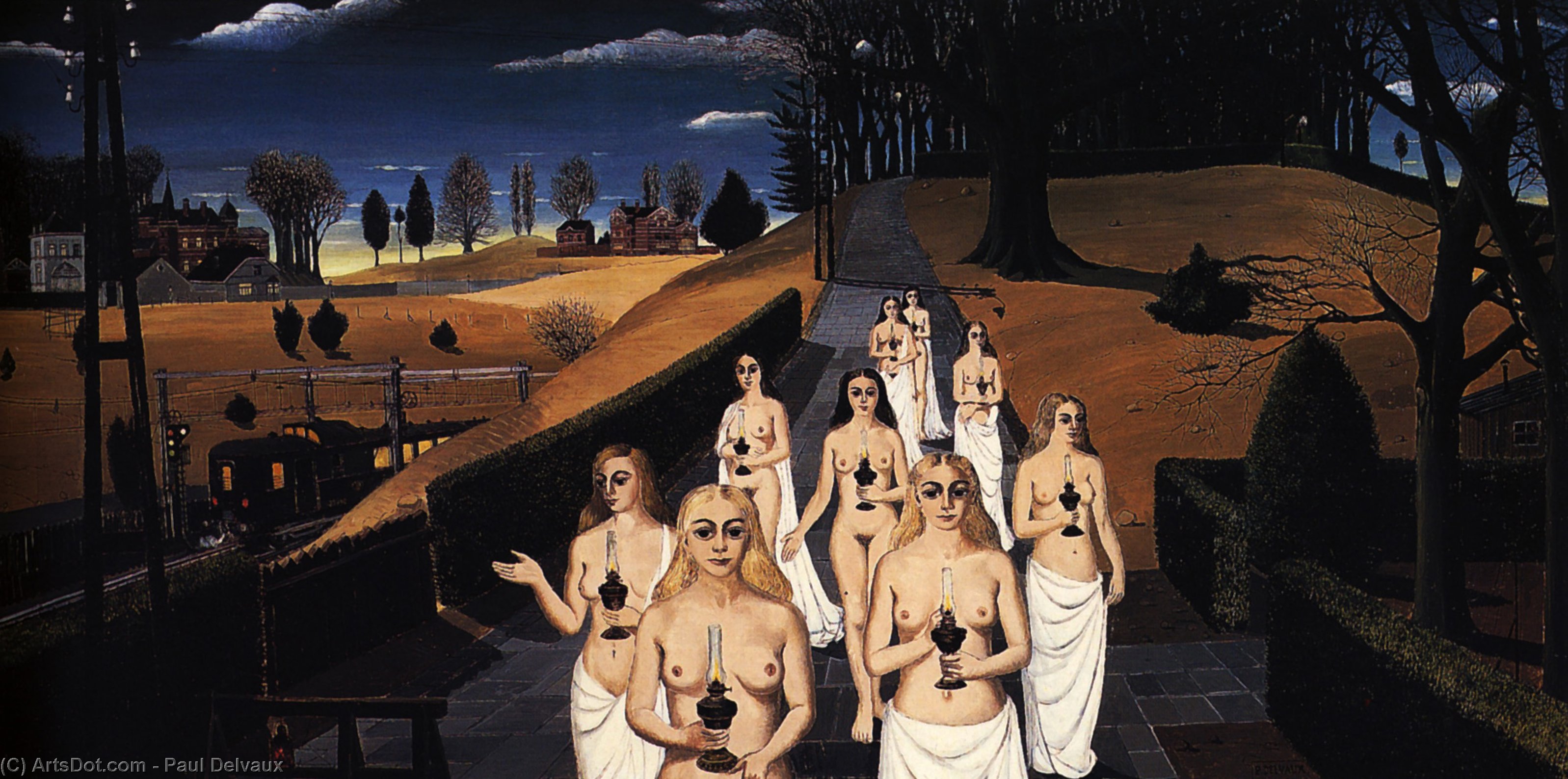
The Cortege
 Oil On Canvas
- WallArt
- Surrealism
 1963
1963 122.0 x 244.0 cm
 Czytaj więcej
Dzieło sztuki prezentowane na tej stronie podlega ochronie prawem autorskim, co oznacza, że nie mamy prawa do tworzenia ani sprzedaży jego identycznej reprodukcji. Ochrona ta jest egzekwowana na mocy umów międzynarodowych, takich jak Konwencja berneńska oraz przez przepisy prawa krajowego, w tym te określone w Prawo autorskie USA – Tytuł 17.
Jako pełną szacunku i legalną alternatywę oferujemy personalizowane, malowane ręcznie dzieła sztuki inspirowane oryginałem. Nasi wykwalifikowani i profesjonalni artyści starannie analizują styl, nastrój oraz artystyczną esencję pierwowzoru, aby stworzyć nowe, unikalne dzieło, które przywołuje te same emocje – pozostając jednocześnie w pełni oryginalną kreacją.
Metoda ta jest w pełni zgodna z przepisami prawa autorskiego, ponieważ nie polega na kopiowaniu ani powielaniu chronionego dzieła. Stanowi ona kreatywną reinterpretację – nowy obraz, który czerpie inspirację z oryginału, ale nie jest z nim tożsamy.
Ręcznie malowana reprodukcja olejowa
Ręcznie malowany obraz olejny na płótnie, wykonany na zamówienie przez naszych artystów w wybranym przez Ciebie wymiarze i oprawie. ( Przełącz na wersję drukowaną Przełącz na wersję cyfrową)




P118B zł10

P118H zł10

P118W zł10

P438Z zł10

P508JH zł12

P508YH zł12

P805H zł10

P805Z zł10

P919BZ zł10

P919G zł10

P919XJ zł10

P959ZH zł10

P968JZ zł12

W106C zł8

W218G zł10

W218JH zł8

W218Y zł10

W307PJ zł10

W316G zł10

W316PJ zł8

W316Y zł10

W398PJ zł8

W4111J zł10

W500HY zł15

W500JH zł15

W692G zł12

W849H zł8

W940BG zł15

W953PJ zł8




Wybierz spośród naszych standardowych rozmiarów, które zachowują oryginalne proporcje dzieła sztuki.

Wpisz wymaganą szerokość i wysokość, aby obraz pasował do Twojej ramy lub ściany. Ponieważ jest to dzieło malowane ręcznie, w przypadku rozmiaru o innym proporcji artysta może domalować nieco więcej wokół obrazu lub przyciąć fragmenty — wybór należy do Ciebie. Przed rozpoczęciem pracy prześlemy Ci cyfrową wizualizację do zatwierdzenia. Obraz widoczny na tej stronie nie przedstawia rzeczywistego efektu — jedynie wizualizacja oddaje realny rezultat.
Po złożeniu zamówienia zespół OriginalUniqueArt.com skontaktuje się z klientem drogą mailową w celu uzyskania instrukcji i prześle wizualizację projektu
Dostawa na całym świecie () w ciągu 3–4 tygodni zamiast standardowych 5 tygodni. (24 Październik). Bez kompromisów w kwestii jakości.

Bezpłatna ekspresowa wysyłka na cały świat

Wysokiej jakości płótno lniane

Pełne ubezpieczenie transportowe

Gwarancja zwrotu należności celnych i podatków importowych

Gwarancja idealnego odwzorowania barw

100-dniowy okres na zwrot dzieła w przypadku wykrycia wad produkcyjnych

Gwarancja 100% zwrotu pieniędzy

Oferta przy zakupie wielu sztuk
 Opcja ze szkłem jest dostępna wyłącznie w rozmiarach poniżej 110 cm

The Cortege
Technika wykonania
Rozmiar reprodukcji
-


Suma do zapłaty
zł 1151
The Enigmatic Procession: Delvaux's Surreal Dreamscape
To stand before Paul Delvaux’s The Cortege is to step across the threshold into a meticulously rendered dream. Painted in 1963, this monumental canvas captures the essence of Surrealism not through jarring shock, but through an almost unsettling, beautiful tranquility. The scene unfolds upon a brick path that cleaves through a pastoral landscape—a place simultaneously familiar and utterly unreal. Nine figures, nude women draped delicately with white towels, proceed in a measured line, each one bearing aloft a flickering candle. This procession is more than just a gathering; it feels like a ritual, a journey into the depths of the subconscious mind that Delvaux so masterfully illuminated.
Mastery of Form and Color in Surrealist Technique
Delvaux’s technique here showcases a breathtaking duality: an almost academic precision applied to utterly fantastic subject matter. His brushwork is both bold and remarkably controlled, allowing the viewer to appreciate every fold of the white towel and every leaf on the surrounding trees. The palette itself sings with contrasts; vibrant blues and deep greens populate the background sky and foliage, providing a vivid counterpoint to the warm, earthy tones of the brick path and the figures' skin. This technical brilliance elevates the painting beyond mere illustration; it becomes a study in light, shadow, and idealized human form, hallmarks of his enduring genius.
Symbolism Whispered by Candlelight
The symbolism woven into The Cortege is as rich as its visual tapestry. The candles held aloft are perhaps the most potent symbols, suggesting not just illumination in the physical sense, but the guiding light of knowledge, memory, or spiritual awakening. The women themselves, partially veiled by white fabric, evoke mystery and timeless femininity—they are guides, muses, or perhaps allegories for the arts themselves. As one contemplates the depth suggested by the receding houses and trees in the background, the piece invites deep introspection, suggesting that every journey, even a beautiful procession, requires both light to see and mystery to explore.
Bringing the Dream Home: Owning a Piece of Belgian Surrealism
For the collector or designer seeking an anchor of profound artistic resonance for their space, The Cortege offers unparalleled depth. Reproducing this work allows one to incorporate a piece of high art history into contemporary life. The sheer scale of the original (122 x 244 cm) speaks to its monumental presence, and owning a reproduction means curating an atmosphere steeped in intellectual romance. It is a conversation starter, a visual poem that whispers tales of Belgian artistic heritage and the enduring power of the dream state.
Pytania i odpowiedzi
Dla kogo "The Cortege" jest polecane jako prezent i do jakiego zastosowania?
Rekomendacja prezentowa dla „The Cortege” autorstwa Paul Delvaux łączy w sobie Anniversary z Focal.
Czy kolory w "The Cortege" wydają się intensywne czy łagodne?
„The Cortege” autorstwa Paul Delvaux charakteryzuje się Monochromatic intensywnością kolorów.
Gdzie mogę kupić wydruk „The Cortege” autorstwa Paul Delvaux?
„The Cortege” jest dostępny jako szlachetna odbitka na płótnie bawełnianym lub archiwalnym papierze płótnopodobnym. Zamówienia można składać na stronie Wydruk artystyczny, wybierając dowolny rozmiar.
Biografia artysty
A Dream Weaver: The Life and Art of Paul Delvaux
Paul Delvaux, a name synonymous with haunting beauty and unsettling mystery, was born in 1897 in the small Belgian village of Wanze – a place that would profoundly shape his artistic vision. His early life, steeped in both rigorous academic training and the fantastical worlds conjured by literature and myth, laid the foundation for his unique approach to Surrealism. Initially destined for a career in architecture by his parents, Delvaux’s passion for painting ultimately prevailed, leading him to enroll at the prestigious Académie Royale des Beaux-Arts in Brussels. While he struggled with the demanding structure of architectural design, the artistic training instilled within him a remarkable command of perspective and form – skills that would later be brilliantly employed in crafting his dreamlike landscapes. Early works, primarily landscapes painted in a post-impressionist style, hinted at the peculiar atmosphere that would become his signature, yet they also reflected a grounding in classical techniques.The Seeds of Surrealism: De Chirico and Early Influences
A pivotal moment arrived with Delvaux’s encounter with the paintings of Giorgio de Chirico. The Italian artist's metaphysical landscapes – stark, enigmatic scenes populated by shadows, classical architecture, and unsettling figures – resonated deeply within Delvaux’s soul, unlocking a new realm of possibilities. De Chirico’s ability to evoke a sense of unease and psychological depth profoundly influenced Delvaux’s artistic direction. He wasn't merely copying de Chirico; he was absorbing the *spirit* of his work, adapting it to his own unique sensibility. Alongside de Chirico, Delvaux also found inspiration in the works of Flemish Expressionists like Constant Permeke and Gustave De Smet, whose somber palettes and emotionally charged brushwork added another layer of complexity to his artistic vocabulary. The influence of Homer’s *Odyssey* and Jules Verne's adventurous tales further fueled his imagination, imbuing his paintings with a sense of timelessness and the allure of the unknown. This confluence of influences – classical precision, psychological depth, and fantastical imagery – began to coalesce into Delvaux’s distinctive style.The Language of Dreams: Recurring Motifs and Symbolism
Delvaux's artistic language is characterized by a rich tapestry of symbolism, though he consistently resisted attempts at reductive psychoanalytic interpretations. The female nude, a recurring motif in his work, rarely embodies simple sensuality; instead, she often appears passive, melancholic, or even haunted – embodying both desire and vulnerability. Trains and railway stations frequently serve as potent symbols of transition, displacement, and the anxieties inherent in modern life. Skeletons, far from being morbid reminders of death, are presented as spectral presences, subtly reminding us of our mortality while existing within idyllic scenes. Classical architecture provides a backdrop of order and permanence, yet it is often rendered strangely distorted or incomplete, suggesting a fragility beneath its imposing facade. These elements aren’t merely decorative; they are integral to the emotional and psychological impact of his paintings. Consider *Night Train*, for example – the anonymous figures, the looming architecture, and the palpable sense of impending doom create an unforgettable image that speaks to our deepest anxieties. The artist himself emphasized that his imagery stemmed from deeply personal memories and impressions, rather than deliberate attempts at decoding the subconscious.From Neo-Impressionism to Surrealist Recognition
Delvaux’s artistic journey wasn't a straightforward progression; he navigated various stylistic influences before fully embracing Surrealism. Initially working in a neo-impressionist style, characterized by meticulous detail and vibrant colors, his early landscapes reflected this academic grounding. However, after encountering the works of de Chirico and Magritte, Delvaux began to experiment with more irrational and dreamlike imagery. He traveled through Italy during World War II, immersing himself in the classical architecture and artistic traditions of that country, which further informed his style. He officially joined the Surrealist movement in 1934, participating in an exhibition organized by André Breton, though he maintained a degree of independence from the group’s rigid ideological framework. His paintings – such as *Sleeping Venus*, *The Summer*, and *Grise City* – became instantly recognizable for their haunting beauty and unsettling atmosphere. Major works like *Sleeping Venus* are now held in prestigious museums worldwide, cementing his place as one of the most important artists of the 20th century.Legacy and Enduring Influence
Paul Delvaux’s legacy extends far beyond his own lifetime. His paintings continue to captivate audiences with their haunting beauty and enigmatic atmosphere, prompting viewers to confront unsettling questions about reality, desire, and mortality. He demonstrated that Surrealism could exist beyond the confines of automatic writing and dream analysis, embracing instead a meticulous technique and a deeply personal vision. The Paul Delvaux Museum in Saint-Idesbald, Belgium, stands as a testament to his lasting impact, housing the world’s largest collection of his work and offering visitors an intimate glimpse into the captivating realm of his imagination. His influence can be seen in the works of countless contemporary artists who continue to explore themes of memory, desire, and the subconscious – ensuring that Delvaux's dreamlike visions will endure for generations to come.
Paul Delvaux
1897 - 1994 , Belgia
Najważniejsze informacje
- Artistic Movement Or Style: Surrealizm
- Artists Or Movements Influenced By This Artist:
- Neoimpresjonizm
- Ekspresjonizm
- Artists Who Influenced This Artist:
- De Chirico
- Magritte
- Date Of Birth: 23 września 1897
- Date Of Death: 20 lipca 1994
- Full Name: Paul Delvaux
- Nationality: Belgijski
- Notable Artworks:
- Śpiąca Wenus
- Nocny pociąg
- Miasto szarości
- Place Of Birth: Wanze, Belgia
Zobacz także powiązane artykuły

Paul Klee: 25 Arcydzieł Koloru i Formy | Reprodukcje Obrazów Online - OriginalUniqueArt
Odkryj 25 arcydzieł Paula Klee – od abstrakcji po ekspresjonizm. Poznaj historie, techniki i inspiracje malarza. Reprodukcje obrazów najwyższej jakości na OriginalUniqueArt.com. Eksploruj pełną kolekcję online!

The Enigmatic Realm of Paul Delvaux: Surrealism, Memory & the Poetics of Disquiet
Explore the haunting dreamscapes of Paul Delvaux, a master of Surrealism. Discover his iconic motifs, classical influences & enduring legacy with OriginalUniqueArt.com.
Beyond Reality: A Curated Guide to the Dreamlike World of Surrealist Landscapes
Embark on a visual journey through the subconscious. Explore our expert guide to Surrealist landscapes, uncovering the dreamlike techniques of masters like Dalí to deepen your appreciation for this captivating art movement.

Romantyczny Krajobraz w Malarstwie: 10 Arcydzieł, Które Zdefiniowały Epokę | OriginalUniqueArt.com
Odkryj 10 arcydzieł romantyzmu w malarstwie! Poznaj historie Caspara Davida Friedricha, Turnera i innych mistrzów. Inspiracje wnętrzarskie & reprodukcje obrazów najwyższej jakości na OriginalUniqueArt.com. Eksploruj kolekcję online!

Paul Cézanne: 25 Arcydzieł, które Zrewolucjonizowały Świat Sztuki | OriginalUniqueArt
Odkryj 25 arcydzieł Paula Cézanne'a – od impresjonizmu po postimpresjonizm. Poznaj historie, techniki i inspiracje malarza, który zrewolucjonizował sztukę. Reprodukcje obrazów najwyższej jakości na OriginalUniqueArt.com!

