
 Zobacz w skali 1:1
 Wyślij
 Udostępnij
 Szczegóły
 Przewodnik

 Pobierz plik obrazu
 Podobne obiekty
 RTG
RTG Pokaz slajdów
 Statystyki
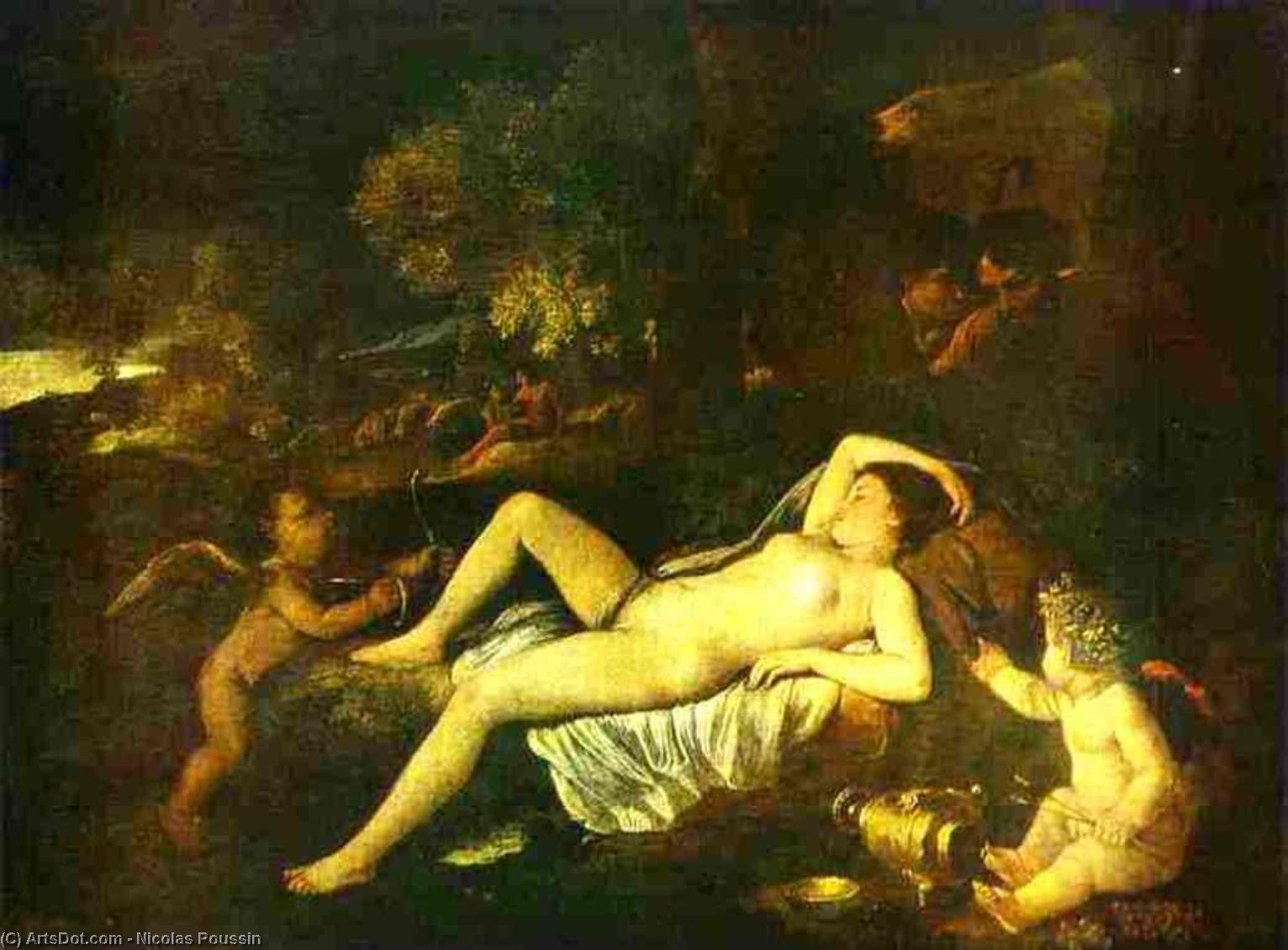
The Sleeping Venus and Cupid
 Olej na płótnie
- Sztuka ścienna
- Baroque
 1630
1630- – Wczesna nowożytność
 Staatliche Kunstsammlungen Dresden
 Czytaj więcej
Kup wysokiej rozdzielczości, ulepszony obraz cyfrowy o jakości znacznie przewyższającej podgląd online.
Każdy plik jest starannie przygotowywany przez naszych specjalistów przy użyciu zaawansowanych narzędzi oraz profesjonalnej, ręcznej retuszy. Dbamy o to, aby każdy obraz cechował się wyjątkową ostrością, precyzyjnym odwzorowaniem kolorów i subtelnymi detalami.
Ostateczny plik dostarczany jest drogą mailową w ciągu 72 godzin, zoptymalizowany do natychmiastowego wykorzystania w profesjonalnych zastosowaniach redakcyjnych i poligraficznych. To ta sama jakość, której ufają czołowe studia projektowe, wydawnictwa oraz galerie sztuki.
Obraz cyfrowy
Pobierz plik o wysokiej rozdzielczości do osobistego użytku, druku oraz projektów kreatywnych. ( Przełącz na wersję drukowaną Kup ręcznie malowany obraz)
W każdym zamówieniu na obraz cyfrowy znajduje się
Profesjonalna dostawa cyfrowa z gwarancją
Wybierając OriginalUniqueArt.com, nie otrzymujesz jedynie obrazu – otrzymujesz profesjonalnie udoskonalone cyfrowe dzieło sztuki, stworzone z najwyższą precyzją i objęte gwarancją satysfakcji. Oto wszystko, co automatycznie dołączane jest do Twojego zamówienia:

Błyskawiczna dostawa e-mailowa
Plik z obrazem cyfrowym w wysokiej rozdzielczości zostanie przesłany na Twój adres e-mail w ciągu 72 godzin od złożenia zamówienia – gotowy do natychmiastowego użycia.

Plik cyfrowy ulepszony przez AI
Twoja grafika została profesjonalnie zoptymalizowana przy użyciu zaawansowanych narzędzi AI oraz ręcznej edycji, co zapewnia maksymalną szczegółowość, klarowność i wierność kolorów.

Bezpłatna dożywotnia ponowna dostawa
Przypadkowo usunąłeś lub zgubiłeś swój plik? Bez obaw – prześlemy go Tobie ponownie w dowolnym momencie, bez żadnych opłat.

Bez opłat importowych – zawsze
Ciesz się swoją sztuką natychmiast, bez żadnych opłat celnych, należności ani kosztów dostawy – pliki cyfrowe są zawsze wolne od podatku.

Gwarancja odwzorowania kolorów
Dzięki zastosowaniu profesjonalnych narzędzi i procesów zarządzania barwą zapewniamy, że Twoje cyfrowe zdjęcie odzwierciedla oryginalne kolory tak wiernie, jak to tylko możliwe.

100 dni na satysfakcję
Jeśli nie będziesz zadowolony ze swojego cyfrowego obrazu, poprawimy go lub zwrócimy 100% kosztów w ciągu 100 dni – bez zbędnych pytań.

100% Gwarancja zwrotu pieniędzy
Nie jesteś zadowolony? Otrzymaj pełny zwrot kosztów w ciągu 100 dni od otrzymania pliku cyfrowego – bez zbędnych pytań.

Rabaty przy zamówieniach hurtowych
Kup 3 obrazy, oszczędź 10% - Kup 5, oszczędź 15% - Kup 10+, oszczędź 20%. Idealne do projektów kreatywnych, galerii i agencji.
A Realm of Slumber: Unveiling Nicolas Poussin’s *The Sleeping Venus and Cupid*
Nicolas Poussin's 1630 masterpiece, *The Sleeping Venus and Cupid*, is a captivating exploration of myth, beauty, and the tender bonds of family. Currently housed in the Staatliche Kunstsammlungen in Dresden, Germany, this oil on canvas invites viewers into a serene woodland scene steeped in classical allusion and Baroque artistry.Decoding the Composition & Narrative
The painting centers around Venus, the Roman goddess of love, lost in peaceful slumber amidst a lush forest setting. Beside her rests Cupid, her son, bow and arrow at the ready – hinting at the playful yet potent power of love. Poussin masterfully populates the scene with additional figures: observers concealed within the foliage, adding layers of narrative intrigue. These shadowy onlookers suggest both admiration and perhaps a hint of illicit desire, subtly complicating the idyllic atmosphere. An angelic presence on the far right introduces a celestial dimension, elevating the scene beyond the purely earthly realm. The composition isn’t merely decorative; it's a carefully constructed tableau that invites contemplation about love, beauty, vulnerability, and observation.Poussin’s Artistic Style & Technique
Poussin was a pivotal figure in the Classical Baroque style, and *The Sleeping Venus and Cupid* exemplifies his signature approach. He eschews the dramatic dynamism often associated with other Baroque masters, favoring instead clarity of form, balanced composition, and meticulous detail. His technique is characterized by precise draftsmanship and a restrained palette dominated by earthy tones – browns, greens, and golds – creating a sense of harmonious tranquility. Poussin’s use of light and shadow isn't overtly theatrical but rather serves to sculpt the figures and define their forms with subtle grace. The painting demonstrates his mastery of *linear perspective* and atmospheric effects, lending depth and realism to the woodland setting.Historical Context & Mythological Roots
Created during Poussin’s extended stay in Rome, this work reflects the artist's deep engagement with classical antiquity. The subject matter itself draws heavily from Greco-Roman mythology, specifically alluding to stories like that of Cupid and Psyche – a tale exploring love, trials, and ultimate union. Poussin was deeply influenced by Renaissance masters such as Raphael and Titian, whose depictions of Venus served as inspiration. However, Poussin infuses the traditional theme with his own unique sensibility, moving away from overt sensuality towards a more idealized and contemplative portrayal of divine beauty.Symbolism & Emotional Resonance
Beyond its aesthetic appeal, *The Sleeping Venus and Cupid* is rich in symbolic meaning. Venus, as the goddess of love, represents not only physical attraction but also spiritual connection and fertility. Cupid’s presence signifies the power of desire and the often-unpredictable nature of love. The surrounding forest can be interpreted as a symbol of the untamed wilderness of human emotion, while the observing figures hint at the complexities of perception and judgment. The overall emotional impact is one of serenity, contemplation, and gentle longing. It’s a scene that invites viewers to reflect on their own experiences with love, beauty, and the passage of time.Poussin's Legacy & Collecting Today
Nicolas Poussin remains one of the most influential French painters in history, inspiring generations of artists from Jacques-Louis David to Paul Cézanne. His works are highly sought after by collectors and institutions worldwide. Owning a reproduction of *The Sleeping Venus and Cupid* allows art enthusiasts to bring a piece of classical elegance into their homes or offices. The painting’s harmonious composition and timeless theme make it an ideal addition to any interior, evoking a sense of peace, beauty, and intellectual curiosity.Explore More Works by Nicolas Poussin
- Self-portrait of Nicolas Poussin from 1630, reflecting his personal journey.
- Assumption of the Virgin, a grand religious composition showcasing his mastery of scale and drama.
- Holy Family with Angels, a tender depiction of familial love and divine grace.
- The Companions of Rinaldo, an epic narrative scene brimming with action and intrigue.
Pytania i odpowiedzi
Do jakiego nurtu artystycznego należy „The Sleeping Venus and Cupid” autorstwa Nikola Poussin?
„The Sleeping Venus and Cupid” autorstwa Nikola Poussin należy do nurtu Baroque. Nurt ten stanowi stylistyczny kontekst dzieła.
Jak emocje i okazja do obdarowania łączą się w przypadku „The Sleeping Venus and Cupid” autorstwa Nikola Poussin?
Dzięki swojemu Sielankowy wydźwiękowi emocjonalnemu, „The Sleeping Venus and Cupid” autorstwa Nikola Poussin jest polecane jako prezent dla Rocznica.
Jaki poziom kontrastu prezentuje „The Sleeping Venus and Cupid” autorstwa Nikola Poussin?
„The Sleeping Venus and Cupid” autorstwa Nikola Poussin prezentuje Oświadczenie kontrast między jasnymi a ciemnymi partiami dzieła.
Biografia artysty
Nicolas Poussin - A Life Steeped in Classical Reverie
Nicolas Poussin, a name synonymous with the grandeur of French Baroque painting, was nonetheless a soul deeply rooted in Italian soil for much of his artistic life. Born in Les Andelys, Normandy, in June 1594, his early years remain somewhat veiled in mystery, yet they undoubtedly laid the foundation for a career that would become pivotal in shaping the classical tradition within French art. Though he briefly studied in Paris during the early 1610s, absorbing influences from lesser-known artists of the time—primarily Jean Baptiste Oudry and Nicolas Tourigny—it was his journey to Rome in 1624 that truly ignited his artistic destiny. This wasn’t merely a geographical relocation; it was an immersion into the heart of antiquity, a pilgrimage to the very source of inspiration that would define his aesthetic vision. Poussin's initial forays into painting were marked by a sensuous quality reminiscent of Venetian masters like Titian—particularly in his early landscapes—yet even in these works, a nascent sense of order and intellectual rigor began to emerge—a foreshadowing of the style he would so masterfully refine. He experimented with color palettes inspired by Venetian painters, capturing atmospheric effects with remarkable subtlety.The Roman Years: Forging a Classical Ideal
Rome proved to be more than just a studio for Poussin; it became his intellectual crucible. He found himself amidst a vibrant circle of scholars, archaeologists, and fellow artists, notably Cassiano dal Pozzo, whose profound understanding of classical antiquity profoundly influenced the artist’s approach. Dal Pozzo's dedication to meticulously documenting ancient remains instilled in Poussin a deep respect for historical accuracy and a desire to imbue his paintings with a sense of timelessness. This period saw Poussin move away from the flamboyant exuberance of some of his contemporaries, instead embracing a style characterized by clarity, balance, and a deliberate emphasis on linear composition. He meticulously studied Raphael’s works—particularly *The School of Athens*—absorbing their harmonious arrangements and graceful forms, while simultaneously drawing inspiration from ancient sculptures and literary sources like Ovid's *Metamorphoses*. His paintings began to populate with figures drawn from classical history and mythology, rendered not as mere decorative elements but as embodiments of moral virtues and philosophical ideals. He sought to emulate Raphael’s masterful use of perspective and idealized forms, striving for a visual elegance that transcended the conventions of his time.Influences and Artistic Development
Poussin's artistic development was shaped by several key influences. Initially drawn to Venetian painting—particularly Titian’s luminous color palettes—he quickly recognized the superiority of Raphael’s classical style as a model for achieving artistic excellence. He absorbed the principles of linear perspective, mastering techniques that allowed him to create illusionistic depth and convey a sense of grandeur. Furthermore, his engagement with humanist scholarship fostered an appreciation for moral philosophy and informed his thematic choices. The rediscovery of classical sculpture—particularly Michelangelo’s Pietà—provided him with visual references that would resonate throughout his oeuvre. He diligently studied the works of Agrippa Vespasiani and Andrea Palladio, incorporating architectural elements into his landscapes to heighten their sense of scale and harmony.Major Achievements: Mythological Narratives and Landscape Visions
Poussin’s artistic output was remarkably diverse, yet consistently united by his commitment to these core principles. He achieved international renown for his monumental mythological paintings—particularly *Et in Arcadia ego*, which became a symbol of humanist contemplation on mortality and the enduring power of memory. This masterpiece exemplifies his mastery of classical composition and his ability to convey profound philosophical ideas through visual imagery. Beyond mythology, he produced stunning landscapes that captured the beauty and sublimity of nature with unparalleled sensitivity. His series depicting the Seasons—a testament to his artistic virtuosity—demonstrated his command of color and light, creating vistas that evoked a sense of serenity and timelessness. He skillfully blended realism with idealized forms, elevating landscape painting to new heights of aesthetic achievement.A Lasting Legacy: Shaping French Art
Despite spending the majority of his career abroad—primarily in Rome—Poussin’s influence on French art was immense. He briefly returned to Paris in 1640 at the behest of Cardinal Richelieu, appointed as First Painter to the King—a position he held until his death in 1665—but found himself stifled by the demands and intrigues of court life. He soon returned to Rome, where he continued to paint until his final days, refining his style and exploring new artistic horizons. His dedication to classical principles helped establish a standard for artistic training and practice within France, influencing generations of artists who followed. Artists like Jacques-Louis David and Paul Cézanne openly acknowledged their debt to Poussin’s rigorous approach and intellectual depth—a testament to an artist who sought not simply to depict the world but to elevate it through the lens of reason and beauty. He became a cornerstone of French Classicism, securing his place as one of the most celebrated painters of his era.- Notable Works: *The Death of Germanicus*, *The Seven Sacraments Series*, *A Roman Road*, *Orion Blinded Searching for the Sun*, *The Seasons*.
- Key Characteristics: Classical Composition, Linearity, Historical and Mythological Themes, Serene Landscapes.

Nikola Poussin
1594 - 1665 , Francja
Najważniejsze informacje
- Artistic Movement Or Style: Barok Klasyczny
- Artists Or Movements Influenced By This Artist:
- Jacques-Louis David
- Paul Cézanne
- Artists Who Influenced This Artist:
- Raphael
- Titian
- Date Of Birth: 1594
- Date Of Death: 1665
- Full Name: Nicolas Poussin
- Nationality: Francuzi
- Notable Artworks:
- Święcenia
- Wenus prezentująca uzbrojenie dla Eneusza
- Zimowa Rozkosz
- Place Of Birth: Les Andelys, Francja