

 Podgląd w skali 1:1
 Wyślij jako kartkę
 Udostępnij
 Szczegóły dzieła
 Przewodnik

 Pobierz obraz
 Podobne obiekty
 RTG
RTG Pokaz slajdów
 Statystyki
Polikrates


 Rozwiń treść
Otrzymaj plik gotowy do druku, którego jakość znacznie przewyższa podgląd internetowy. Każdy sprzedawany przez nas obraz cyfrowy pochodzi z wysokorozdzielczego pliku wzorcowego w naszej bazie — zazwyczaj o szerokości od 5 000 do 15 000 pikseli — dzięki czemu możesz drukować w dużym formacie, mocno kadrować lub z pełnym przekonaniem odwzorowywać najdrobniejsze detale.
Żaden plik nie opuszcza naszego studia bez odpowiedniej obróbki. Ekspert ds. cyfrowych sprawdza kolory pod kątem zgodności z oryginałem i w razie potrzeby je koryguje, a następnie za pomocą profesjonalnych narzędzi do retuszu poprawia ostrość i szczegółowość — zawsze zachowując wierność pociągnięciom pędzla i stylowi artysty. Rezultatem jest obraz, który wygląda jak prawdziwy obraz, a nie jak przefiltrowany skan.
Zatwierdzasz przed finalizacją: nasz ekspert prześle obraz drogą mailową w ciągu 72 godzin do Twojego wglądu. Nie jesteś zadowolony? Poproś o poprawki lub korektę, bądź o zwrot kosztów, jeśli jakość nie spełnia oczekiwań.
To jakość, na której polegają wydawcy, studia projektowe, galerie oraz drukarnie.
Obraz cyfrowy
Pobierz plik o wysokiej rozdzielczości do osobistego użytku, druku oraz projektów kreatywnych. ( Przełącz na wydania drukowane Zamów ręcznie malowaną reprodukcję)
W każdym zamówieniu na obraz cyfrowy znajduje się
Profesjonalna dostawa cyfrowa z gwarancją
Wybierając OriginalUniqueArt.com, nie otrzymujesz jedynie obrazu – otrzymujesz profesjonalnie udoskonalone cyfrowe dzieło sztuki, stworzone z najwyższą precyzją i objęte gwarancją satysfakcji. Oto wszystko, co automatycznie dołączane jest do Twojego zamówienia:

Błyskawiczna wysyłka e-mailowa
Plik z obrazem cyfrowym w wysokiej rozdzielczości zostanie przesłany na Twój adres e-mail w ciągu 72 godzin od złożenia zamówienia – gotowy do natychmiastowego użycia.

Plik cyfrowy wzbogacony przez AI
Twoja grafika została profesjonalnie zoptymalizowana przy użyciu zaawansowanych narzędzi AI oraz ręcznej edycji, co zapewnia maksymalną szczegółowość, klarowność i wierność kolorów.

Darmowe ponowne przesyłki dożywotnio
Przypadkowo usunąłeś lub zgubiłeś swój plik? Bez obaw – prześlemy go Tobie ponownie w dowolnym momencie, bez żadnych opłat.

Bez opłat importowych – zawsze
Ciesz się swoją sztuką natychmiast, bez żadnych opłat celnych, należności ani kosztów dostawy – pliki cyfrowe są zawsze wolne od podatku.

Gwarancja wierności kolorów
Dzięki zastosowaniu profesjonalnych narzędzi i procesów zarządzania barwą zapewniamy, że Twoje cyfrowe zdjęcie odzwierciedla oryginalne kolory tak wiernie, jak to tylko możliwe.

Gwarancja satysfakcji przez 100 dni
Jeśli nie będziesz zadowolony ze swojego cyfrowego obrazu, dokonamy jego poprawki lub zwrócimy 100% kosztów w ciągu 100 dni – bez zbędnych pytań.

100% Gwarancja zwrotu pieniędzy
Nie jesteś zadowolony? Otrzymaj pełny zwrot kosztów w ciągu 100 dni od otrzymania pliku cyfrowego – bez zbędnych pytań.

Rabaty przy zamówieniach hurtowych
Kup 3 obrazy, oszczędź 10% - Kup 5, oszczędź 15% - Kup 10+, oszczędź 20%. Idealne do projektów kreatywnych, galerii i agencji.
Mikhail Kozlovsky’s Polycrates: A Titan Wrestled with Mortality
The sculpture of Polycrates by Mikhail Ivanovich Kozlovsky (1790) stands as a testament to the Romantic spirit of its time—a dramatic portrayal of human struggle against inevitable decay, rendered in meticulously crafted gypsum. More than just an aesthetically pleasing object, it embodies profound philosophical questions about life’s fleeting beauty and the confrontation with death itself, themes that resonated deeply within European intellectual circles during the Napoleonic era.- Subject Matter: Kozlovsky's depiction draws inspiration from classical mythology—specifically, the legend of Polycrates, Tyrant of Samos. The figure embodies a heroic posture, reaching upwards with one arm as if striving for divine grace, while his body twists downwards in a gesture of defeat and vulnerability. This juxtaposition powerfully communicates the paradox of human existence: ambition pursued relentlessly can ultimately lead to downfall.
- Style & Influence: Kozlovsky’s work firmly establishes itself within Neoclassical sculpture—a stylistic movement that sought to revive the ideals of ancient Greece and Rome, rejecting the excesses of Baroque ornamentation. The sculptor skillfully employs idealized forms and restrained emotion, prioritizing anatomical accuracy and sculptural dynamism over theatrical grandeur.
- Technique: Kozlovsky’s mastery lies in his meticulous carving technique. Gypsum was chosen for its ability to capture subtle nuances of form and texture—a deliberate decision reflecting the Romantic preoccupation with capturing the essence of nature and human experience. The sculptor achieved remarkable detail through painstaking chiseling and polishing, resulting in a surface that exudes both solidity and luminosity.
- Historical Context: Created during Napoleon’s reign, Polycrates reflects the anxieties surrounding mortality prevalent in the period. The sculpture serves as an allegorical response to contemporary events—the turbulent political landscape of Europe grappling with revolutionary fervor and imperial ambition. Kozlovsky's intention was to convey the urgency of confronting existential dilemmas.
- Symbolism: The upward reach of Polycrates’ arm symbolizes aspiration, hope, and defiance against fate—a visual representation of the human spirit’s yearning for transcendence. Simultaneously, his downward twist embodies vulnerability, defeat, and acceptance of mortality. These contrasting gestures underscore the sculpture's central message: life is a battle between ambition and inevitable decline.
Detailed Analysis of Form and Texture
The sculpture’s composition prioritizes conveying volume and form through masterful modeling—a technique that distinguishes Kozlovsky from earlier sculptors who favored more decorative approaches. Strong lines delineate the musculature and drapery, creating a sense of sculptural tension and movement. Cylindrical shapes dominate the torso and limbs, reinforcing the figure's stability while simultaneously emphasizing its dynamism. Careful attention to surface texture contributes significantly to the sculpture’s expressive power—the gypsum is polished to achieve an almost ethereal sheen, highlighting subtle variations in tone that enhance the illusion of realism. The sculptor skillfully captures the interplay between light and shadow, creating dramatic contrasts that accentuate the contours of the figure and heighten its emotional impact.A Legacy of Romantic Idealism
Kozlovsky’s Polycrates exemplifies the Romantic aesthetic—characterized by an emphasis on emotion, imagination, and individualism. Unlike the rational idealism championed by Enlightenment thinkers, Romantic art sought to explore the darker recesses of human experience—fear, sorrow, and despair—acknowledging the limitations of human understanding. Kozlovsky's sculpture transcends mere representation; it communicates a profound meditation on the human condition—a poignant reminder that even the most valiant efforts to conquer mortality are ultimately futile.The Sculpture’s Impact & Artistic Significance
“No one is happy, until alive,” as Greek historian Herodotus famously declared – these words encapsulate Kozlovsky's artistic vision and serve as an epigraph to Polycrates’ sculptural image. The sculpture stands as a cornerstone of Neoclassical art, influencing subsequent generations of sculptors and cementing Kozlovsky’s place among the foremost artists of his era. Its enduring appeal lies in its ability to provoke contemplation on fundamental questions about life, death, and human aspiration—a timeless masterpiece that continues to inspire awe and admiration.Pytania i odpowiedzi
Kto jest autorem dzieła "Polikrates"?
„Polikrates” zostało stworzone przez Michaił Iwanowicz Kozłowski. Informacje na tej stronie dotyczą oryginalnego dzieła autorstwa Michaił Iwanowicz Kozłowski.
Jakie emocje budzi „Polikrates” – Michaił Iwanowicz Kozłowski?
W "Polikrates" nastrojowi Dramatyczny towarzyszy emocja Dramatyczny.
Ile światła zdają się odbijać kolory dzieła "Polikrates"?
Jasność zarejestrowana dla „Polikrates” – Michaił Iwanowicz Kozłowski wynosi Najciemniejszy.
Biografia artysty
The Sculptor of Enlightenment Ideals
Mikhail Ivanovich Kozlovsky stands as a preeminent figure in the landscape of Russian Neoclassical sculpture, a master whose hands shaped the very essence of the Age of Enlightenment. Born in Saint Petersburg, Russia, his artistic journey began within the prestigious halls of the Imperial Academy of Arts. Under the tutelage of Anton Losenko, Kozlovsky embarked on a path that would eventually lead him far beyond the borders of his homeland, seeking inspiration in the great art capitals of Europe. His travels to Rome and Paris were not merely educational excursions but transformative odysseys that allowed him to absorb the burgeoning Neoclassical spirit sweeping through the continent.
The evolution of Kozlovsky’s style is a fascinating study in artistic maturation. His earliest endeavors retained a lingering connection to the dramatic, emotive sensibilities of the Baroque period. However, as he matured, his work underwent a profound metamorphosis, shedding ornamental excess in favor of Neoclassical monumentality and clarity. This transition saw him embracing the ideals of reason, order, and anatomical precision, mirroring the intellectual shifts of his era. By the time he returned to Paris in 1788 to supervise Russian students abroad, he had emerged as a sculptor capable of translating complex mythological narratives into enduring, dignified forms.
Mastery of Form and Mythological Narrative
Kozlovsky’s oeuvre is characterized by an extraordinary ability to breathe life into bronze and marble, capturing both the physical prowess of heroes and the ethereal grace of the divine. His works often serve as profound emblems of classical mythology, utilized to convey contemporary values of strength and wisdom. In pieces such as Hercules on Horseback, one observes a masterclass in realism; the meticulous rendering of equine and human musculature creates a sense of dynamic vitality that draws the viewer into the heart of the legend. His use of composition, often employing powerful diagonal thrusts, directs the eye through scenes of intense action and heroic struggle.
Beyond the depiction of raw power, Kozlovsky possessed a delicate touch for allegorical subjects. His sculpture Minerva and the Genius of the Arts, commissioned during the reign of Catherine II, exemplifies his ability to embody Enlightenment thought. Through the figures of the Roman goddess of wisdom and her artistic companion, he sculpted more than just myth; he captured the very aspiration of human intellect toward higher truth and order. His technical repertoire was equally diverse, ranging from the dramatic, gilded bronze of Samson Rending the Lion's Jaws—a centerpiece for the Grand Cascade at Peterhof Palace—to the expressive, martial character of the Suvorov Monument.
Legacy and Artistic Significance
The historical significance of Mikhail Kozlovsky lies in his role as a bridge between eras and a foundational pillar of Russian sculptural tradition. As a professor at the Academy of Arts, he played a crucial role in shaping the next generation of sculptors, ensuring that the principles of Neoclassicism would flourish in Saint Petersburg long after his passing. His contributions to the decorative splendor of imperial sites like Pavlovsk and Peterhof helped define the visual identity of the Russian Empire during a period of immense cultural growth.
His life's work remains a testament to the power of classical influence when wedded to technical mastery. Through his ability to adapt his manner from Baroque sensibility to Neoclassical grandeur, Kozlovsky achieved a level of permanence that transcends time. His sculptures continue to be celebrated for their:
- Anatomical Precision: A remarkable skill in rendering the complexities of human and animal forms with photographic realism.
- Symbolic Depth: The use of mythological figures to represent the enduring ideals of heroism, wisdom, and national triumph.
- Technical Versatility: An expert command over diverse media, including bronze casting and marble carving.
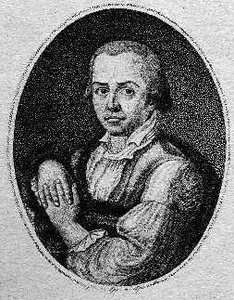
Michaił Iwanowicz Kozłowski
1753 - 1802 , Rosja