Naive Art · 1983
Poppy (Marija Prymaczenko, 1983)
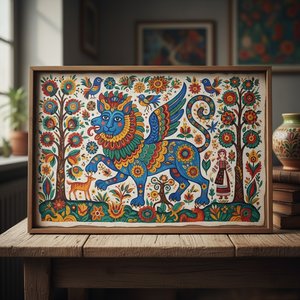
Marija Prymaczenko (1908–1997) stworzył Poppy. Dzieło pochodzi z 1983. Należy do nurtu Naive Art. Wykonano w technice Gouache. Wymiary to 86 × 61 cm.
- 1983
- Gouache
- 86 × 61 cm

 Podgląd w skali 1:1

 Ręcznie malowany obraz olejny
 Wyślij jako kartkę
 Udostępnij
 Karta informacyjna


 Pobierz obraz
 Podobne obiekty
 RTG
 Pokaz slajdów
 Pytania i odpowiedzi

 Statystyki
Poppy w skrócie
- Tytuł
- Poppy
- Artysta
- Marija Prymaczenko (1908–1997)
- Miejsce urodzenia artysty
- Obwód kijowski, Ukraina
- Data powstania
- 1983
- Technika wykonania
- Gouache
- Wymiary
- 86 × 61 cm
- Ruch
- Naive Art
- Epoka
- Modern
- Temat
- poppies, flowers, floral design, nature, folk art, vibrant colors
Co przedstawia Poppy?
A Symphony of Folkloric Vibrancy
In the enchanting realm of Naive Art, few works capture the rhythmic pulse of life as tenderly as Maria Primachenko’s Poppy. Created in 1983, this masterpiece serves as a window into a world where the boundaries between reality and folklore dissolve into a tapestry of color. The painting presents a breathtaking floral arrangement, where vibrant red poppies and sun-drenched yellow blooms dance across the canvas. It is not merely a depiction of flora, but a celebration of existence itself, rendered with a charming simplicity that bypasses the complexities of formal academic training to touch the very soul of the viewer. Each petal and stem seems to vibrate with an innate energy, inviting anyone from the passionate collector to the discerning interior designer to lose themselves in its whimsical, flat-rendered beauty.
The technique employed by Primachenko is as much a part of the story as the subject matter. Utilizing gouache, the artist achieved a luminous, saturated quality that gives the piece an almost tactile presence. The medium allows for a crispness in detail—seen in the intricate variety of at least thirteen different flower types—while maintaining the characteristic flatness of the Primitivism style. This lack of traditional perspective does not diminish the work; rather, it enhances its rhythmic arrangement, creating a decorative flow that guides the eye through a lush, botanical dreamscape. For those looking to infuse a living space with warmth and character, the high-contrast palette of reds and yellows offers an unparalleled focal point that breathes life into any room.
The Soul of Ukrainian Heritage
To understand Poppy, one must look toward the roots of Maria Primachenko’s inspiration. Born in the small village of Bolotnya, her artistic language was forged in the crucible of Ukrainian folk traditions. Her early exposure to the symbolic embroidery of her mother and grandmother infused her work with a deep sense of cultural memory. In this painting, the poppies are more than just seasonal blooms; they are symbols of resilience, beauty, and the enduring connection to the earth. The artist’s ability to translate the textures of village life—the natural pigments, the ceramics, and the seasonal rhythms—into a sophisticated visual language makes this piece a profound historical document of Ukrainian Naive Art.
For the art enthusiast or decorator, acquiring a high-quality reproduction of this work means bringing home a piece of a living legacy. The emotional impact of Poppy lies in its ability to evoke nostalgia and joy simultaneously. It is a painting that does not demand attention through grandiosity, but earns it through sincerity and charm. Whether placed in a contemporary gallery setting or a cozy, traditional study, this work stands as a testament to the power of the self-taught vision, offering a timeless aesthetic that transcends borders and eras.
Zdjęcia w wysokiej rozdzielczości dzieła Poppy

Chronione prawem autorskim: pliki te służą wyłącznie do osobistego wglądu i nie stanowią licencji na ich powielanie.
Marija Prymaczenko, Poppy (1983).
Odpowiedzi na pytania dotyczące Poppy
W którym roku powstało „Poppy” – Marija Prymaczenko?
„Poppy” – Marija Prymaczenko powstało w 1983.
W jakiej technice wykonano „Poppy” – Marija Prymaczenko?
„Poppy” wykonano w technice Gouache.
Jakie są wymiary oryginalnego dzieła „Poppy” – Marija Prymaczenko?
Oryginalny utwór „Poppy” – Marija Prymaczenko ma wymiary 86 x 61 cm.
Co przedstawia „Poppy” – Marija Prymaczenko?
Tematyka obecna w „Poppy” – Marija Prymaczenko obejmuje poppies, flowers, floral design, nature, folk art, vibrant colors, still life. Razem stanowią one podsumowanie tematyki dzieła.
Czy „Poppy” – Marija Prymaczenko znajduje się w domenie publicznej?
„Poppy” – Marija Prymaczenko znajduje się w domenie publicznej (nadal objęte ochroną prawa autorskiego). Status ten określa zasady reprodukcji obrazu tego dzieła.
Kto jest autorem dzieła "Poppy"?
„Poppy” zostało stworzone przez Marija Prymaczenko. Informacje na tej stronie dotyczą oryginalnego dzieła autorstwa Marija Prymaczenko.
Do jakiego nurtu należy "Poppy"?
„Poppy” – Marija Prymaczenko należy do nurtu Naive Art. Nurt ten stanowi stylistyczny kontekst dzieła.
Do którego etapu twórczości Marija Prymaczenko należy dzieło „Poppy”?
"Poppy" reprezentuje Late Period twórczości Marija Prymaczenko.
Ile lat miał(a) Marija Prymaczenko, tworząc "Poppy" w 1983 roku?
Marija Prymaczenko stworzył/a "Poppy" w wieku 75 lat. Artysta urodził/a się w 1908, a datowanie dzieła to 1983.
O artyście: Marija Prymaczenko

1908–1997, Ukraina
Marija Prymaczenko
Życie zakorzenione w ukraińskiej ziemi Maria Aksentiewna Primachenko, urodzona w 1908 roku w małej wiosce Bołotnja niedaleko Kijowa, wyłoniła się jako jedna z najbardziej celebrowanych i wyjątkowych artystek Ukrainy – prawdziwa wizjonerka, której twórczość wymyka się wszelkim klasyfikacjom. Jej życie było głęboko splecione z rytmami wiejskiej egzystencji, światem przesiąkniętym dawnym folklorem, barwnymi tradycjami i intymną więzią z naturą. Od najmłodszych lat ścieżka Marii odbiegała od konwencjonalnych oczekiwań; zachorowanie na polio w dzieciństwie uwięziło ją w domu na długie okresy, jednak ta izolacja okazała się nieoczekiwanie żyznym gruntem dla artystycznego rozkwitu. Jej matka i babcia, biegłe hafciarki, przekazały jej misterne techniki oraz symboliczny język ukraińskiej sztuki ludowej – dziedzictwo, które stało się fundamentem jej unikalnego stylu.
O Marija Prymaczenko Najważniejsze dzieła Marija Prymaczenko
Inne prace Marija Prymaczenko
 Three Parrots on a Soldier's Grave1982
 I Give My Little Stars to Children1983
 The Little Elephant Who Wanted to Be a Sailor1973
 Corncob Horse in Outer Space1978
Eseje o Poppy
 Resilience and Heritage: A Curated Journey Through the Soul of Ukrainian Art HistoryExplore the profound legacy of Ukrainian art from Baroque grandeur to Repin's realism. Discover this rich cultural journey now.
 Maria Primachenko: A Legacy of Ukrainian Folk Art & Naive ExpressionDiscover the captivating world of Maria Primachenko, Ukraine's celebrated naive artist. Explore her vibrant paintings, unique style, and en…
 Abstract Expressionism vs. Pop Art: A Comparison of Two American MovementsCompare the visceral brushstrokes of Abstract Expressionism with the bold irony of Pop Art. Master the history of these two iconic movement…