Surrealism · 1951
The Dance (Marc Chagall, 1951)
Marc Chagall (1887–1985) stworzył The Dance. Dzieło pochodzi z 1951. Należy do nurtu Surrealism. Wykonano w technice Oil On Canvas.
- 1951
- Oil On Canvas

 Podgląd w skali 1:1

 Ręcznie malowany obraz olejny
 Wyślij jako kartkę
 Udostępnij
 Karta informacyjna


 Pobierz obraz
 Podobne obiekty
 RTG
 Pokaz slajdów
 Pytania i odpowiedzi

 Statystyki
The Dance w skrócie
- Tytuł
- The Dance
- Artysta
- Marc Chagall (1887–1985)
- Miejsce urodzenia artysty
- Łoźna, Białoruś
- Data powstania
- 1951
- Technika wykonania
- Oil On Canvas
- Ruch
- Surrealism
- Epoka
- Modern
- Temat
- dance, figures, flowers, animals, fantasy, color
Co przedstawia The Dance?
The Dance: A Surrealist Symphony of Color and Emotion
Marc Chagall’s “The Dance” stands as a cornerstone of surrealist art, embodying the artist's singular vision—a harmonious fusion of dreamlike fantasy and tangible reality. Executed in 1951, this oil on canvas masterpiece transcends mere depiction; it invites contemplation and evokes profound feelings about human connection and transcendence. Its enduring appeal lies not only in its visual beauty but also in the intricate layers of symbolism woven into its composition.Composition and Symbolism: Gravity Defying Grace
At first glance, “The Dance” presents a joyous tableau of figures engaged in movement—a celebration of communal experience. However, astute observation reveals a rich tapestry of symbols that elevate the painting beyond a simple visual narrative. Dominating the canvas is a vibrant yellow hue, establishing an atmosphere charged with optimism and imbued with the ethereal quality characteristic of surrealism. The dancers themselves appear to defy gravity, hovering effortlessly above the ground—a deliberate gesture signifying liberation from earthly constraints and embracing spiritual aspiration. Notably, one figure holds aloft a bouquet of flowers, symbolizing fertility, beauty, and remembrance, while another rests upon the shoulders of his companion, representing interdependence and support.Artistic Influences: Matisse’s Legacy and Surrealist Roots
Chagall's artistic journey was profoundly shaped by movements like Expressionism and Cubism, yet he ultimately found his voice within the embrace of Surrealism—a movement championed by luminaries such as Henri Matisse. Chagall’s distinctive style, marked by fantastical imagery and bold color palettes, reflects a deep fascination with the subconscious mind and its capacity to generate visions unbound by logic. “The Dance” draws inspiration from Matisse's seminal work "The Dance" (1909-1910), mirroring their shared commitment to spontaneity and conveying the essence of human movement—a testament to Matisse’s influence on Chagall’s artistic sensibilities.Context in 20th Century Art: Avant-Garde Innovation
“The Dance” occupies a pivotal position within the broader context of 20th-century Western painting, which witnessed an explosion of experimental creativity and challenged conventional aesthetic standards. Alongside fellow Surrealist artists like Giorgio de Chirico and Salvador Dalí, Chagall spearheaded this transformative movement—a reaction against rationalism and realism—and championed new artistic approaches that prioritized emotion and imagination. The Museum of Dartmoor Life in Devon, South West England, houses a remarkable collection of artworks reflecting the region’s cultural heritage; while “The Dance” isn't featured prominently within its galleries, it exemplifies the spirit of innovation that defined this era of artistic exploration.Conclusion: An Enduring Masterpiece
Marc Chagall’s “The Dance” remains an unforgettable achievement in surrealist art—a captivating portrayal of human joy and spiritual yearning. Its luminous colors, intricate symbolism, and masterful technique continue to inspire artists and connoisseurs alike. As a symbol of artistic boldness and visionary imagination, "The Dance" secures its place as one of the most celebrated paintings of the 20th century.- Marc Chagall - The Dance (Surrealism, Oil On Canvas)
- Marc Chagall - The Rooster (81 x 65 cm, Surrealism, Oil On Canvas)
- Marc Chagall - The Sky inflames (47 x 56 cm, Surrealism, Oil On Canvas)
- Marc Chagall - A rooster (Surrealism, Oil On Canvas)
- Painting by 'Marc Chagall' | Marc Chagall:The Dance
- Museum of Dartmoor Life - Discovering the Artworks of Museum of Dartmoor Life, United Kingdom
- 20th-century Western painting
- Abstract expressionism
- Paul Klee - Paul Klee (German: [paʊ̯l ˈkleː]; 1879–1940)
Zdjęcia w wysokiej rozdzielczości dzieła The Dance

Chronione prawem autorskim: pliki te służą wyłącznie do osobistego wglądu i nie stanowią licencji na ich powielanie.
Marc Chagall, The Dance (1951).
Odpowiedzi na pytania dotyczące The Dance
W którym roku powstało dzieło "The Dance"?
Powstanie „The Dance” – Marc Chagall datuje się na 1951.
W jakiej technice wykonano „The Dance” – Marc Chagall?
„The Dance” wykonano w technice Oil On Canvas.
Co przedstawia "The Dance"?
„The Dance” – Marc Chagall przedstawia: dance, figures, flowers, animals, fantasy, color, symbolism.
Czy „The Dance” – Marc Chagall znajduje się w domenie publicznej?
Jeśli chodzi o prawa autorskie, "The Dance" znajduje się w nadal objęte ochroną prawa autorskiego.
Kto stworzył "The Dance"?
Autorem dzieła „The Dance” jest Marc Chagall. Praca ta figuruje w katalogu pod nazwiskiem Marc Chagall.
Do jakiego nurtu w sztuce należy „The Dance” – Marc Chagall?
„The Dance” to dzieło należące do nurtu Surrealism. Nurt ten określa tradycję artystyczną, w której osadzone jest dzieło.
Do którego okresu twórczości Marc Chagall należy dzieło „The Dance”?
W dorobku artystycznym Marc Chagall dzieło „The Dance” przypada na Mature Period. Ten etap pozwala zestawić je z innymi pracami twórcy.
Ile lat miał(a) Marc Chagall, tworząc "The Dance" w 1951 roku?
Gdy w 1951 roku powstało dzieło „The Dance”, Marc Chagall – urodzony/a w 1887 – miał/a 64 lat.
Czy dzieło „The Dance” autorstwa Marc Chagall znajduje się w domenie publicznej i dlaczego?
„The Dance” – Marc Chagall jest nadal objęte ochroną prawa autorskiego. Okres ochrony praw autorskich liczony jest od śmierci artysty, która nastąpiła w 1985.
O artyście: Marc Chagall
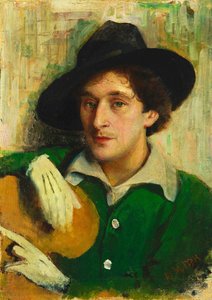
1887–1985, Białoruś
Marc Chagall
Wczesne lata, rodzina i kształcenie Marc Chagall przychodzi na świat 7 lipca 1887 roku w Witebsku, w Imperium Rosyjskim, jako Moishe Segal. Jest pierwszym z dziewięciorga dzieci w skromnej żydowskiej rodzinie. Jego wczesne życie wyznaczane jest przez rytm pracy i drobnego handlu. Ojciec, Khatskel Segal, pracuje jako konserwator śledzi w magazynie, podczas gdy matka, Feïga-Ita Tchernina, prowadzi mały sklep spożywczy.
Inne prace Marc Chagall
 Ja i wioska1911
 Biała Ukrzyżowanie1938
 Urodziny1915
 Nad miastem1918
Eseje o The Dance
 Dreaming in Color: The 25 Most Iconic Masterpieces by Marc ChagallStep into the dreamlike world of Marc Chagall. Explore 25 iconic masterpieces, from vibrant surrealist tales to soulful folklore. Find insp…
 Belarusian artworks of the 1960sIconic Belarusian artworks of the 1960s, including masterpieces by Marc Chagall. Explore the full collection online at OriginalUniqueArt.co…
 Belarusian artworks of the 1950s1950s Belarusian art features masterpieces by Marc Chagall, including works like The Prophet. Find museum-quality reproductions on Original…