Surrealist Dreamscape · 1947
A rooster (Marc Chagall, 1947)
Marc Chagall (1887–1985) stworzył A rooster. Dzieło pochodzi z 1947. Należy do nurtu Surrealist Dreamscape. Wykonano w technice Tempera.
- 1947
- Tempera

 Podgląd w skali 1:1

 Ręcznie malowany obraz olejny
 Wyślij jako kartkę
 Udostępnij
 Karta informacyjna


 Pobierz obraz
 Podobne obiekty
 RTG
 Pokaz slajdów
 Pytania i odpowiedzi

 Statystyki
A rooster w skrócie
- Tytuł
- A rooster
- Artysta
- Marc Chagall (1887–1985)
- Miejsce urodzenia artysty
- Łoźna, Białoruś
- Data powstania
- 1947
- Technika wykonania
- Tempera
- Epoka
- Modern
- Temat
- rooster symbolism, fantasy imagery, sphere composition, jewish folklore, dreamlike quality, color palette
Co przedstawia A rooster?
A Visionary Dance of Color and Spirit
In the quiet, profound depths of Marc Chagall's 1947 masterpiece, "A Rooster Among Spheres," we encounter more than a mere depiction of nature; we step into a dreamscape where the boundaries between reality and the subconscious dissolve. This evocative work serves as a cornerstone of Chagall’s distinctive surrealist language, acting as a distillation of memory, folklore, and raw emotion. The painting presents a striking, deceptively simple composition: a vibrant rooster perched atop a luminous sphere, set against an enveloping dark backdrop. Yet, beneath this surface simplicity lies a complex tapestry of meaning that invites the viewer to linger within its celestial atmosphere. For the collector or the enthusiast of fine art, this piece offers a window into a universe where gravity is optional and color speaks the language of the soul.
Chagall’s technique in this work is nothing short of poetic. Utilizing tempera on canvas, he achieved a remarkable luminosity that allows the central figures to glow with an ethereal light, as if illuminated from within. His brushstrokes are bold and purposeful, characteristic of his ability to blend the structural lessons of Cubism with the raw, emotive energy of Fauvism. The contrast between the deep, shadowy background and the brilliant, saturated hues of the rooster creates a dramatic tension that commands attention in any space. This interplay of light and dark does more than provide depth; it creates a sense of cosmic theater, making the artwork an ideal focal point for sophisticated interior designs that seek to evoke mystery and intellectual depth.
Symbolism and the Surrealist Soul
To understand "A Rooster Among Spheres," one must look beyond the physical forms to the symbolic weight Chagall carries within his imagery. The sphere, a recurring motif in his oeuvre, serves as a powerful emblem of wholeness, unity, and perhaps even spiritual transcendence. By placing the rooster atop this orb, Chagall suggests a state of dominance that is simultaneously fragile and elevated. This tension reflects the artist's own life—a journey shaped by the cultural crucible of Vitebsk and the profound influence of his Hasidic Jewish heritage. The rooster itself, often a symbol of dawn and renewal in folklore, stands as a sentinel of hope amidst the darkness.
Historically, this painting emerged from a period of immense global upheaval. Created in the aftermath of World War II, the work resonates with the burgeoning Surrealist movement's desire to liberate art from the constraints of rational thought. Influenced by figures like André Breton, Chagall embraced the irrational and the dreamlike as a sanctuary from the anxieties of the era. For those looking to adorn their homes with a piece that transcends mere decoration, this artwork offers an enduring optimism. It is a testament to the resilience of the human imagination—a vibrant, floating ballet of color that promises that even in the darkest of nights, there is a light that refuses to be extinguished.
Zdjęcia w wysokiej rozdzielczości dzieła A rooster
Chronione prawem autorskim: pliki te służą wyłącznie do osobistego wglądu i nie stanowią licencji na ich powielanie.
Marc Chagall, A rooster (1947).
Odpowiedzi na pytania dotyczące A rooster
W którym roku powstało dzieło „A rooster” – Marc Chagall?
„A rooster” – Marc Chagall powstało w 1947.
W jakiej technice wykonano „A rooster” – Marc Chagall?
„A rooster” wykonano w technice Tempera.
Co przedstawia „A rooster” – Marc Chagall?
Tematyka obecna w „A rooster” – Marc Chagall obejmuje rooster symbolism, fantasy imagery, sphere composition, jewish folklore, dreamlike quality, color palette, biblical allusion. Razem stanowią one podsumowanie tematyki dzieła.
Czy dzieło "A rooster" znajduje się w domenie publicznej?
Status praw autorskich dla „A rooster” – Marc Chagall: dzieło znajduje się w nadal objęte ochroną prawa autorskiego. Określa to, czy reprodukcje obrazu mogą być sporządzane swobodnie.
Kto jest autorem dzieła "A rooster"?
Autorem dzieła „A rooster” jest Marc Chagall. Praca ta figuruje w katalogu pod nazwiskiem Marc Chagall.
Do jakiego nurtu należy "A rooster"?
„A rooster” to dzieło należące do nurtu Surrealist Dreamscape. Nurt ten określa tradycję artystyczną, w której osadzone jest dzieło.
Do którego etapu twórczości Marc Chagall należy dzieło „A rooster”?
W dorobku artystycznym Marc Chagall dzieło „A rooster” przypada na Mature Surrealism. Ten etap pozwala zestawić je z innymi pracami twórcy.
Ile lat miał(a) Marc Chagall, tworząc "A rooster" w 1947 roku?
Gdy w 1947 roku powstało dzieło „A rooster”, Marc Chagall – urodzony/a w 1887 – miał/a 60 lat.
Czy dzieło „A rooster” autorstwa Marc Chagall znajduje się w domenie publicznej i dlaczego?
„A rooster” – Marc Chagall jest nadal objęte ochroną prawa autorskiego. Okres ochrony praw autorskich liczony jest od śmierci artysty, która nastąpiła w 1985.
O artyście: Marc Chagall
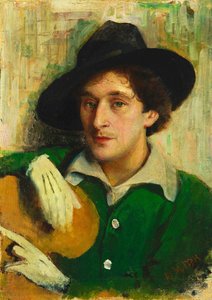
1887–1985, Białoruś
Marc Chagall
Wczesne lata, rodzina i kształcenie Marc Chagall przychodzi na świat 7 lipca 1887 roku w Witebsku, w Imperium Rosyjskim, jako Moishe Segal. Jest pierwszym z dziewięciorga dzieci w skromnej żydowskiej rodzinie. Jego wczesne życie wyznaczane jest przez rytm pracy i drobnego handlu. Ojciec, Khatskel Segal, pracuje jako konserwator śledzi w magazynie, podczas gdy matka, Feïga-Ita Tchernina, prowadzi mały sklep spożywczy.
Inne prace Marc Chagall
 Ja i wioska1911
 Biała Ukrzyżowanie1938
 Urodziny1915
 Nad miastem1918
Eseje o A rooster
 Belarusian artworks of the 1960sIconic Belarusian artworks of the 1960s, including masterpieces by Marc Chagall. Explore the full collection online at OriginalUniqueArt.co…
 Dreaming in Color: The 25 Most Iconic Masterpieces by Marc ChagallExplore 25 iconic Marc Chagall masterpieces. Discover the dreamlike stories behind his colors on OriginalUniqueArt.com.
 Belarusian artworks of the 1950s1950s Belarusian art features masterpieces by Marc Chagall, including works like The Prophet. Find museum-quality reproductions on Original…