

 Zobacz w skali 1:1
 Wyślij
 Udostępnij
 Szczegóły

 Pobierz plik obrazu
 Podobne obiekty
 RTG
RTG Pokaz slajdów
 Statystyki
Portrait of Anna Codde
 Oil On Canvas
- WallArt
- Renaissance
 1529
1529 86.0 x 66.0 cm
 Rijksmuseum
 Czytaj więcej
Ręcznie malowana reprodukcja olejowa
Ręcznie malowany obraz olejny na płótnie, wykonany na zamówienie przez naszych artystów w wybranym przez Ciebie wymiarze i oprawie. ( Przełącz na wersję drukowaną Przełącz na wersję cyfrową)




P118B $10

P118H $10

P118W $10

P438Z $10

P508JH $12

P508YH $12

P805H $10

P805Z $10

P919BZ $10

P919G $10

P919XJ $10

P959ZH $10

P968JZ $12

W106C $8

W218G $10

W218JH $8

W218Y $10

W307PJ $10

W316G $10

W316PJ $8

W316Y $10

W398PJ $8

W4111J $10

W500HY $15

W500JH $15

W692G $12

W849H $8

W940BG $15

W953PJ $8




Wybierz spośród naszych standardowych rozmiarów, które zachowują oryginalne proporcje dzieła sztuki.

Możesz wprowadzić własne wymiary, aby dopasować obraz do konkretnej ramy lub przestrzeni. Jeśli wybrany rozmiar nie będzie odpowiadał proporcjom oryginału, przytniecie dzieło sztuki lub rozszerzymy je o dodatkowe elementy, ręcznie domalowane przez artystę. Przed rozpoczęciem produkcji wyślemy projekt cyfrowy do Twojej akceptacji.
Należy pamiętać, że podgląd na ekranie nie odzwierciedla rzeczywistego przycinania ani rozszerzania obrazu. Tylko projekt dokładnie pokaże ostateczną kompozycję.
Choć oferujemy możliwość zamówienia niestandardowych rozmiarów, zalecamy wybór wymiaru z gotowej listy, aby zachować oryginalne proporcje dzieła.
Po złożeniu zamówienia zespół OriginalUniqueArt.com skontaktuje się z klientem drogą mailową w celu uzyskania instrukcji i prześle wizualizację projektu
Dostawa na całym świecie () w ciągu 3–4 tygodni zamiast standardowych 5 tygodni. (17 Wrzesień). Bez kompromisów w kwestii jakości.

Bezpłatna ekspresowa wysyłka na cały świat

Wysokiej jakości płótno lniane

Pełne ubezpieczenie transportowe

Gwarancja zwrotu należności celnych i podatków importowych

Gwarancja idealnego odwzorowania barw

100-dniowy okres na zwrot dzieła w przypadku wykrycia wad produkcyjnych

Gwarancja 100% zwrotu pieniędzy

Oferta przy zakupie wielu sztuk
 Opcja ze szkłem jest dostępna wyłącznie w rozmiarach poniżej 110 cm

Portrait of Anna Codde
Technika wykonania
Rozmiar reprodukcji
-


Suma do zapłaty
$ 300
A Window into the Dutch Renaissance: The Portrait of Anna Codde
Maerten van Heemskerck’s “Portrait of Anna Codde,” painted in 1529, isn't merely a likeness; it’s a meticulously crafted tableau vivant – a snapshot of life within the burgeoning world of early Dutch Renaissance society. More than just a portrait, this work offers a rare glimpse into the domestic sphere, revealing a woman engaged in a timeless activity: spinning wool. The scene unfolds with quiet dignity and understated elegance, capturing not only Anna’s physical appearance but also her role as a skilled artisan and devoted wife – a common yet increasingly valued ideal within the Dutch merchant class of the era.
The painting immediately draws the eye to Anna herself, seated comfortably in a simple chair. Her long, flowing hair is partially arranged, suggesting a deliberate effort towards presentation, while her gaze is direct and engaging, inviting the viewer into her world. The spindle she holds isn’t just an object of craft; it's a symbol of domesticity, industry, and the woman’s vital contribution to the household economy. Her dress, though modest in style, speaks volumes about her status – a subtle indication of wealth and refinement. Notice the careful attention to detail in the rendering of her hands, demonstrating Heemskerck’s mastery of capturing texture and form.
The Painter's Palette: Technique and Style
Heemskerck’s style is immediately recognizable as a masterful blend of Italian Renaissance ideals with distinctly Dutch sensibilities. The influence of Jan van Scorel, his former teacher, is evident in the use of light and shadow – a technique known as *chiaroscuro* – which creates a sense of depth and volume within the composition. However, Heemskerck departs from the purely idealized forms often found in Italian portraits, opting for a more naturalistic approach that reflects the growing interest in portraying individuals with greater realism.
The painting’s color palette is restrained yet sophisticated, dominated by earthy tones – browns, ochres, and muted greens – which evoke the textures of the wool and the surrounding domestic environment. The background, featuring a chair and a clock on the wall, provides context without overwhelming the central figure. Heemskerck's skill lies not just in depicting individual features but also in creating a harmonious whole, where every element contributes to the overall narrative.
A Portrait of an Era: Historical Context
“Portrait of Anna Codde” was painted during a period of significant social and economic transformation in the Netherlands. The rise of merchant families like the Coddes fueled a burgeoning economy and a growing emphasis on wealth, status, and family lineage. Portraits became increasingly important as a means of documenting these achievements and solidifying one’s place within society. The inclusion of domestic scenes like this one was not uncommon; it served to portray the subject as both a successful businesswoman and a devoted wife – qualities highly valued in 16th-century Dutch culture.
Furthermore, the painting reflects the growing interest in secular portraiture during this time. While religious subjects remained important, artists began experimenting with depicting everyday life and capturing the personalities of their patrons. The meticulous detail and realistic portrayal of Anna Codde demonstrate Heemskerck’s commitment to portraying his subject with honesty and dignity.
Symbolism and Emotional Resonance
Beyond its technical merits, “Portrait of Anna Codde” is rich in symbolism. The spinning wheel represents not only her craft but also the woman's role as a provider for her household – a vital contribution to the family’s well-being. The clock on the wall serves as a reminder of time and the passage of life, subtly emphasizing the importance of cherishing each moment. The birds in the background, one near the top right corner and another towards the bottom left of the painting, may represent good fortune or simply add to the idyllic scene.
Ultimately, “Portrait of Anna Codde” is a poignant reminder of a bygone era – a time when domesticity was intertwined with prosperity and artistry. It’s a testament to Heemskerck's skill as a painter and his ability to capture not just a likeness but also the essence of a human being within her historical context. Reproductions of this captivating work offer a beautiful window into the heart of the Dutch Renaissance.
Biografia artysty
wczesne lata i kształcenie
maerten van heemskerck, wybitny holenderski malarz portrecista i twórca scen religijnych, przyszedł na świat 1 czerwca 1498 roku w wiosce heemskerk, w północnej holandii. jego artystyczna wędrówka rozpoczęła się pod okiem corneliusa willemsza w haarlem, po czym nastąpił krótki pobyt w delft u boku jan lucasza. ostatecznie stał się uczniem jan van scorel, przejmując od swojego mistrza styl silnie inspirowany sztuką włoską.najważniejsze momenty w karierze
- twórczość maerten van heemskerck charakteryzuje się nowatorskim połączeniem wpływów niderlandzkich i włoskich, co doskonale widać w jego słynnym portrecie rodzinnym, uznawanym za pierwszy tego rodzaju w długiej tradycji holenderskiego malarstwa rodzinnego.
- jego współpraca z antonio da sangallo młodszym, battista franco oraz francesco de' rossi (il salviati) przy dekoracji porta san sebastiano w rzymie – łuku triumfalnego ku czci karola v – ukazuje jego niezwykłą sprawność i szybkość ręki jako malarza dekoracji ściennych.
- rysunki heemsckercka przedstawiające klasyczną rzeźbę i architekturę, które obecnie znajdują się w dwóch szkicownikach w kupferstichkabinett berlin, stanowią dowód jego niezwykłego talentu w chwytaniu samej esencji sztuki włoskiej.
wybitne dzieła i dziedzictwo
- darczyńca i święta maria magdalena (zobacz w OriginalUniqueArt)
- madonna i święty jan ewangelista (zobacz w OriginalUniqueArt)
- samson kruszący filary świątyni, maarten van heemskerck (zobacz w OriginalUniqueArt)
podsumowanie
maerten van heemskerck wywarł niezaprzeczalny, głęboki wpływ na świat sztuki. jego dzieła, będące dziś częścią licznych kolekcji muzealnych, w tym rijksmuseum, nieustannie inspirują artystów i pasjonatów piękna. aby odkryć więcej jego arcydzieł, odwiedź stronę maerten van heemskerck w OriginalUniqueArt. po głębsze zrozumienie jego życia i twórczości, zapoznaj się z jego biografią na wikipedia.
Maerten Van Heemskerck
1498 - 1574 , Holandia
Najważniejsze informacje
- Artistic Movement Or Style: Manieryzm
- Artists Who Influenced This Artist:
- Jan van Scorel
- Antonio da Sangallo Młodszy
- Date Of Birth: 1 czerwca 1498
- Date Of Death: 1 października 1574
- Full Name: Maerten Jacobsz van Heemskerck
- Nationality: Holender
- Notable Artworks:
- Opłakiwanie zmarłego Chrystusa
- Pieter Jan Foppeszoon i jego rodzina
- Chrystus jako Człowiek Boleści
- Place Of Birth: Heemskerk, Holandia
Zobacz także powiązane artykuły

Rembrandt van Rijn: 25 Najwybitniejszych Dzieł Sztuki – Reprodukcje i Inspiracje do Wnętrz
Poznaj 25 arcydzieł Rembrandta van Rijn! Odkryj fascynujące historie, techniki i wpływ holenderskiego mistrza baroku na świat sztuki. Reprodukcje obrazów najwyższej jakości – inspiracje do wnętrz na OriginalUniqueArt.com

Jan van Goyen: Master of Dutch Landscape & Atmospheric Perspective
Discover Jan van Goyen, the master of Dutch landscape painting. Explore his subtle technique, atmospheric realism & lasting influence on art history. Learn about this 17th-century pioneer at OriginalUniqueArt.
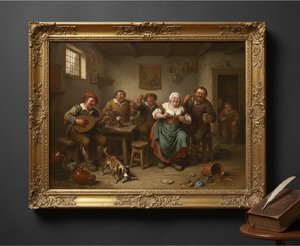
Adriaen van Ostade: A Master of Dutch Genre Painting & Social Commentary
Explore the life & work of Adriaen van Ostade, a leading Dutch Golden Age painter. Discover his realistic genre scenes, social commentary, and lasting influence on art history. Learn more at OriginalUniqueArt.

Willem van de Velde the Elder: Master of Maritime Painting & Chronicler of the Dutch Golden Age
Discover the captivating maritime paintings of Willem van de Velde the Elder, a master chronicler of the Dutch Golden Age. Explore his unparalleled realism and lasting influence on naval art history.

Maerten van Heemskerck: Bridging Mannerism & Renaissance Ideals
Explore the captivating world of Maerten van Heemskerck, a pivotal Dutch Renaissance painter bridging Mannerism & Italian influence. Discover his masterpieces and legacy with OriginalUniqueArt.
