Neoclassicism · 1786
Thomas Witter (Jan Ramage, 1786)
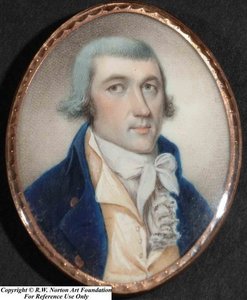
Jan Ramage (1748–1802) stworzył Thomas Witter. Dzieło pochodzi z 1786. Należy do nurtu Neoclassicism. Wykonano w technice Watercolor. Przechowywane jest w Metropolitan Museum of Art w Nowy Jork, Stany Zjednoczone Ameryki. Wymiary to 4 × 4 cm.
- 1786
- Watercolor
- 4 × 4 cm
- Metropolitan Museum of Art, Nowy Jork

 Podgląd w skali 1:1

 Ręcznie malowany obraz olejny
 Wyślij jako kartkę
 Udostępnij
 Karta informacyjna


 Pobierz obraz
 Podobne obiekty
 RTG
 Pokaz slajdów
 Pytania i odpowiedzi

 Statystyki
Thomas Witter w skrócie
- Tytuł
- Thomas Witter
- Artysta
- Jan Ramage (1748–1802)
- Miejsce urodzenia artysty
- Dublin, Irlandia
- Data powstania
- 1786
- Technika wykonania
- Watercolor
- Wymiary
- 4 × 4 cm
- Gdzie można je zobaczyć
- Metropolitan Museum of Art, Nowy Jork, Stany Zjednoczone Ameryki
- Ruch
- Neoclassicism
- Epoka
- Early Modern
- Temat
- man, portrait, mustache, white hair, cravat, grayscale
Co przedstawia Thomas Witter?
Identification of the Portrait of Thomas Witter
The gaze of Thomas Witter meets the viewer through this intimate watercolor portrait, a work that captures a quiet moment of reflection. Painted by John Ramage in 1786, the piece presents a man caught in a state of contemplation. He appears as a gentleman of his era, his presence rendered with a delicate touch that suggests a life of dignity and perhaps a touch of melancholy. The portrait focuses closely on his head and shoulders, creating a sense of immediate, personal encounter.
This small-scale watercolor painting offers a glimpse into the character of the subject. Ramage, an artist known for his ability to capture individual presence, uses the medium to define the contours of Witter's face and the subtle textures of his attire. The man's white hair and prominent mustache are rendered with precision, framing a face that seems to hold a silent story. Every line and shade works to preserve the likeness of Thomas Witter, ensuring his image remains present and palpable.
Composition and Visual Elements
The portrait centers on the head and shoulders of the subject, all contained within the gentle curves of an oval frame. He gazes downward, his eyes cast toward something unseen, wearing an expression of quiet melancholy or deep contemplation. His white hair is styled with neat precision, and a prominent mustache defines his face. He wears a formal suit, the details of which are anchored by a tie or cravat wrapped carefully around his neck.
A grayscale palette governs the entire scene, moving through a full range of tones from the deepest blacks to the brightest whites. This monochromatic approach creates a sense of stillness. Soft, diffused lighting washes over the man, illuminating his features evenly and avoiding any harsh or jarring shadows. The light settles upon his face, revealing the subtle contours of his features and the texture of his clothing without disrupting the calm atmosphere of the moment.
Technique and Artistic Materials
The artist works within a delicate 4 x 4 cm space, utilizing watercolor on paper to build a quiet, grayscale world. Through the careful layering of gray paint washes, a sense of volume emerges from the flat surface. These tonal variations create a soft, diffused light that settles across the subject, building depth through subtle shifts in shadow rather than harsh lines. The monochromatic palette relies entirely on these gradations to define the form of the man's face and the structure of his attire.
Fine, deliberate lines define the character of the portrait. The artist uses precise strokes to render the details of the mustache and the subtle wrinkles of the skin, capturing a sense of lived experience. These same linear techniques extend to the clothing, where lines trace the heavy folds of the fabric. A tactile contrast exists between the different surfaces; the skin appears smooth under the light, while the texture of the clothing feels slightly more rugged and coarse.
W którym muzeum znajduje się Thomas Witter?
Metropolitan Museum of Art
Nowy Jork, Stany Zjednoczone Ameryki
Początki i historia Metropolitan Museum of Art Historia Metropolitan Museum of Art bierze swój początek w wizji podzielanej przez grupę przedsiębiorców, finansistów oraz czołowych artystów i myślicieli. Po oficjalnym zarejestrowaniu instytucji w 1870 roku, zaczęła ona poszukiwać stałego miejsca, które mogłoby pomieścić jej stale powiększające się zbiory. Zanim muzeum osiadło w swojej obecnej lokalizacji, przez krótki czas mieściło się w posiadłości Douglas Mansion przy West 14th Street.


Zdjęcia w wysokiej rozdzielczości dzieła Thomas Witter
Domena publiczna: artysta zmarł w 1802.
Jan Ramage, Thomas Witter (1786), Metropolitan Museum of Art. Domena publiczna
Odpowiedzi na pytania dotyczące Thomas Witter
W którym muzeum znajduje się oryginał "Thomas Witter"?
„Thomas Witter” – Jan Ramage znajduje się w zbiorach Metropolitan Museum of Art, Nowy Jork, Stany Zjednoczone Ameryki. Informacja o muzeum dotyczy oryginału, a nie reprodukcji.
W którym roku powstało „Thomas Witter” – Jan Ramage?
Powstanie „Thomas Witter” – Jan Ramage datuje się na 1786.
Z jakiej techniki wykorzystano "Thomas Witter"?
Jan Ramage wykorzystał/a technikę Watercolor w pracy „Thomas Witter”. Technika ta definiuje materię oryginalnego dzieła.
Jakie są wymiary oryginału "Thomas Witter"?
Oryginalne wymiary dzieła „Thomas Witter” to 4 x 4 cm. Znajomość pierwotnej skali może być pomocna przy wyborze odpowiedniego rozmiaru reprodukcji.
Co przedstawia "Thomas Witter"?
Tematyka obecna w „Thomas Witter” – Jan Ramage obejmuje man, portrait, mustache, white hair, cravat, grayscale. Razem stanowią one podsumowanie tematyki dzieła.
Czy „Thomas Witter” – Jan Ramage znajduje się w domenie publicznej?
„Thomas Witter” – Jan Ramage znajduje się w domenie publicznej (należy do domeny publicznej – autorskie prawa majątkowe wygasły). Status ten określa zasady reprodukcji obrazu tego dzieła.
Kto stworzył "Thomas Witter"?
Autorstwo dzieła "Thomas Witter" przypisuje się Jan Ramage.
Do jakiego nurtu artystycznego należy „Thomas Witter” – Jan Ramage?
Nurt związany z „Thomas Witter” – Jan Ramage to Neoclassicism. Ta klasyfikacja sytuuje dzieło wśród pokrewnych artystów i dzieł sztuki.
Do którego okresu twórczości Jan Ramage należy dzieło "Thomas Witter"?
W dorobku artystycznym Jan Ramage dzieło „Thomas Witter” przypada na Mature Period. Ten etap pozwala zestawić je z innymi pracami twórcy.
O artyście: Jan Ramage
1748–1802, Irlandia
Jan Ramage
A Life Bridging Worlds: The Story of John Ramage Born in Dublin, Ireland, in 1748, John Ramage’s life was one of remarkable transition and artistic dedication, a journey that carried him from the refined world of Irish goldsmithing to the burgeoning art scene of colonial America. Details surrounding his early family life remain elusive, yet it is known he received formal training at the Dublin Society of Artists in 1763, laying a foundation in drawing and painting techniques that would serve as the bedrock for his future endeavors. Ramage’s initial career path was notably versatile; he skillfully combined the precision of a goldsmith with the delicate artistry of a miniaturist—a testament to his inherent talent for detail and decorative arts. This early period instilled within him not only technical proficiency but also an appreciation for craftsmanship that would distinguish his work throughout his life.
Inne prace Jan Ramage
 Portrait of a Gentleman1780
 Governor George Clinton1785
 Major Greene, B.A1777
 Gilbert Van Cortlandt1785
Eseje o Thomas Witter
 25 Masterpieces by Jean-Antoine Watteau: The Essence of Rococo EleganceExplore 25 iconic Rococo masterpieces by Jean-Antoine Watteau. Discover the full collection online at OriginalUniqueArt.com.
 Holenderski Barok: 10 Arcydzieł, Które Zdefiniowały Epokę | OriginalUniqueArtPoznaj 10 arcydzieł holenderskiego baroku! Odkryj historie Rembrandta, Vermeera i innych mistrzów XVII wieku. Reprodukcje obrazów najwyższe…
 Monochromatic Form: Integrating Black, White, and Gray Abstract Art into Modern Architectural SpacesMaster the art of integrating monochromatic abstraction into modern architecture with expert curation. Elevate your space today.