

 Zobacz w skali 1:1
 Wyślij
 Udostępnij
 Szczegóły
 Przewodnik

 Pobierz plik obrazu
 Podobne obiekty
 RTG
RTG Pokaz slajdów
 Statystyki
Untitled (D2XALP)
 Oil On Canvas
- WallArt
 1872
1872- 19th Century
 39.0 x 78.0 cm
 Metropolitan Museum of Art
 Czytaj więcej
Giclée / Wydruk artystyczny
Wydruki giclée lub płótna o jakości muzealnej, szybka realizacja i szeroki wybór opcji wykończenia. ( Kup ręcznie malowany obraz Przełącz na wersję cyfrową)




P118B zł10

P118H zł10

P118W zł10

P438Z zł10

P508JH zł12

P508YH zł12

P805H zł10

P805Z zł10

P919BZ zł10

P919G zł10

P919XJ zł10

P959ZH zł10

P968JZ zł12

W106C zł8

W218G zł10

W218JH zł8

W218Y zł10

W307PJ zł10

W316G zł10

W316PJ zł8

W316Y zł10

W398PJ zł8

W4111J zł10

W500HY zł15

W500JH zł15

W692G zł12

W849H zł8

W940BG zł15

W953PJ zł8




Wybierz spośród naszych standardowych rozmiarów, które zachowują oryginalne proporcje dzieła sztuki.

Możesz wprowadzić własne wymiary, aby dopasować dzieło do konkretnej ramy lub przestrzeni. Jeśli wybrany rozmiar nie będzie odpowiadał proporcjom oryginalnego obrazu, przytniecie dzieło lub rozszerzymy obraz za pomocą odbicia lustrzanego lub jednolitego wypełnienia krawędzi. Przed rozpoczęciem produkcji prześlemy cyfrową wizualizację do Twojej akceptacji.
Prosimy pamiętać, że podgląd na ekranie nie odzwierciedla faktycznego przycinania ani rozszerzania. Tylko wizualizacja dokładnie pokaże końcową kompozycję.
Mimo dostępności niestandardowych rozmiarów, zalecamy wybór wymiaru z listy zdefiniowanej, aby zachować oryginalne proporcje.
Dostawa na cały świat () w ciągu 2 tygodni zamiast standardowych 4/5 tygodni. (11 Październik)

Bezpłatna ekspresowa wysyłka na cały świat

Wysokiej jakości płótno lniane

Pełne ubezpieczenie transportowe

Gwarancja zwrotu należności celnych i podatków importowych

Gwarancja idealnego odwzorowania barw

100-dniowy okres na zwrot dzieła w przypadku wykrycia wad produkcyjnych

Gwarancja 100% zwrotu pieniędzy

Oferta przy zakupie wielu sztuk
 Opcja ze szkłem jest dostępna wyłącznie w rozmiarach poniżej 110 cm

Untitled (D2XALP)
Giclée / Wydruk artystyczny
Rozmiar reprodukcji
-


Suma do zapłaty
zł 298
John Frederick Kensett: A Pioneer of Luminism
John Frederick Kensett (March 22, 1816 – December 14, 1872) was an American landscape painter and engraver born in Cheshire, Connecticut. He stands as a pivotal figure within the second generation of the Hudson River School of artists—a movement that championed the transcendental beauty of America’s natural landscapes and sought to capture their ethereal light. Unlike his predecessors who often employed dramatic compositions and rich color palettes, Kensett distinguished himself through a refined Luminist style characterized by subtle brushstrokes and an unwavering focus on atmospheric illumination – a technique profoundly influenced by Dutch masters like Jacob Maris and Isaac Israelson. His artistic vision aimed to convey not merely what the eye perceives but also what the soul feels when confronted with the sublime grandeur of nature.The Essence of Tranquility: Lake George
Kensett’s “Lake George,” completed in 1872, exemplifies this Luminist aesthetic perfectly. The painting depicts a serene expanse of Lake George nestled amidst rolling hills and snow-capped mountains—a scene that immediately transports the viewer to the Adirondack wilderness during autumn. Rather than striving for theatrical grandeur, Kensett meticulously rendered the lake’s surface with an almost imperceptible shimmer, achieved through delicate glazing techniques – applying thin layers of translucent paint over underlying colors to create depth and luminosity. This masterful manipulation of light is paramount to conveying the painting's mood: a profound sense of peace and contemplation.Composition and Color Palette: Restraint and Resonance
The horizontal orientation of “Lake George” emphasizes the vastness of the lake, mirroring the expansive horizon line which dominates approximately one-third of the canvas. The lower right section is anchored by a rocky outcrop—a grounding element that balances the airy expanse above. Kensett’s color palette leans heavily on cool tones – blues and greens – reflecting the dominant hues of the lake and surrounding foliage. Subtle reds appear in the rocks, providing visual warmth against the coolness of the overall composition. These colors aren't vibrant or assertive; instead, they blend seamlessly to create a harmonious effect that resonates with tranquility.Technique and Materials: Brushstrokes as Vessels of Light
Kensett’s brushwork is remarkably understated—almost invisible to the untrained eye. He employed loose, blended strokes to build up layers of color, prioritizing tonal gradations over precise delineation. Glazes – thin washes of translucent pigment – played a crucial role in achieving atmospheric perspective and enhancing the painting's luminous quality. These meticulous techniques underscore Kensett’s dedication to capturing not just the visual appearance of Lake George but also its intangible essence—the feeling of stillness and connection with the natural world.Symbolism and Legacy: Transcendental Vision
“Lake George” transcends mere representation; it embodies the Luminist philosophy's belief in perceiving nature as a conduit for spiritual insight. The painting’s quiet grandeur invites viewers to pause, observe, and contemplate—a deliberate response to the transcendentalist movement’s emphasis on experiencing the sublime beauty of God’s creation. Kensett’s enduring legacy lies in his unwavering commitment to capturing light and atmosphere with unparalleled sensitivity—a contribution that continues to inspire artists and collectors alike. His masterpiece remains a testament to the power of observation and the transformative potential of art.Pytania i odpowiedzi
W jaki sposób mogę obejrzeć „Untitled (D2XALP)” autorstwa John Frederick Kensett w formie pokazu slajdów?
Prezentację slajdów dzieła "Untitled (D2XALP)" można obejrzeć na stronie Pokaz slajdów tego utworu.
Kto stworzył "Untitled (D2XALP)"?
Dzieło "Untitled (D2XALP)" przypisuje się John Frederick Kensett.
Jak postrzegana jasność prezentuje „Untitled (D2XALP)” autorstwa John Frederick Kensett?
Postrzegana jasność dzieła „Untitled (D2XALP)” autorstwa John Frederick Kensett wynosi brilliant. Można ją dopasować do oświetlenia w docelowym pomieszczeniu.
Jaka jest data powstania dzieła „Untitled (D2XALP)” autorstwa John Frederick Kensett?
Powstanie „Untitled (D2XALP)” autorstwa John Frederick Kensett datuje się na 1872.
W jakim wieku John Frederick Kensett stworzył(a) "Untitled (D2XALP)"?
John Frederick Kensett miał 56 lat, tworząc „Untitled (D2XALP)” w 1872. Wiek ten został obliczony na podstawie roku urodzenia artysty, 1816.
Z czego wykonano "Untitled (D2XALP)"?
Technika wykonania dzieła „Untitled (D2XALP)” autorstwa John Frederick Kensett to Oil On Canvas. Reprodukcje mają na celu wierne oddanie wyglądu tej techniki.
Do jakiego wnętrza polecane jest dzieło „Untitled (D2XALP)” autorstwa John Frederick Kensett?
Zalecaną przestrzenią dla „Untitled (D2XALP)” autorstwa John Frederick Kensett jest Living Room. Sugestia ta może zostać oczywiście dostosowana do Twojego wnętrza.
Biografia artysty
A Life Dedicated to Capturing Serene Landscapes
John Frederick Kensett, an American artist and engraver, was born on March 22, 1816, in Cheshire, Connecticut. As a member of the second generation of the Hudson River School of artists, his signature works are characterized by their serene and luminous qualities, celebrating the transcendental aspects of nature. His artistic journey began with an apprenticeship in engraving under his father, Thomas Kensett, and his uncle, Alfred Daggett – both skilled banknote engravers. This early training instilled a meticulous attention to detail and a deep appreciation for line work, skills that would later inform his landscape paintings.Early Life and Artistic Development
Kensett’s initial career path led him to New Haven, where he worked as an engraver until 1838. However, a growing desire to pursue painting ultimately steered him away from the precision of engraving. In 1840, he embarked on a transformative journey to Europe, seeking artistic refinement and inspiration. During his time in England, France, and Switzerland, Kensett immersed himself in the works of master artists, studying techniques and absorbing the prevailing aesthetic sensibilities of the era. He particularly admired the landscapes of the Dutch Masters, whose use of light and shadow profoundly influenced his own approach to painting. His travels also introduced him to Benjamin Champney, a fellow American artist who would become a lifelong friend and collaborator.Establishing a Studio and Luminist Style
Upon returning to New York in 1847, Kensett established a studio and quickly gained recognition for his evocative depictions of the Northeast’s landscapes. He began to develop what is now known as the “luminist” style – a distinctive approach characterized by delicate brushstrokes, an emphasis on atmospheric light, and a subtle, almost ethereal quality. Unlike the more dramatic and detailed renderings of some Hudson River School artists, Kensett sought to capture the fleeting effects of sunlight and shadow, conveying a sense of tranquility and spiritual connection with nature. His palette was often muted, favoring soft grays, blues, and greens, which enhanced the luminous effect of his paintings.Notable Works and Legacy
Kensett’s artistic output spanned several decades, encompassing scenes from the White Mountains, the Adirondack Mountains, Long Island Sound, and the Colorado Rockies. Among his most celebrated works are *Mount Washington from the Valley of Conway* (1851), which was purchased by the American Art Union and distributed to 13,000 subscribers, and *Eaton’s Neck, Long Island* (1872), now housed in the collection of the Metropolitan Museum of Art. These paintings exemplify his mastery of capturing atmospheric perspective and conveying a profound sense of place. Beyond his artistic achievements, Kensett was also a significant figure in the cultural landscape of New York City. He co-founded the Metropolitan Museum of Art in 1870, demonstrating his commitment to fostering an appreciation for art among the public. His work continues to be studied and admired for its beauty, technical skill, and evocative portrayal of America’s natural heritage.Associated Artists
John Frederick Kensett's artistic development was deeply influenced by several key figures: Thomas Cole, a founder of the Hudson River School; Benjamin Champney, with whom he maintained a close professional relationship during his European travels; and Asher B. Durand, another prominent member of the Hudson River School. These collaborations exposed Kensett to diverse perspectives and techniques, shaping his own artistic vision and contributing to the evolution of American landscape painting.
John Frederick Kensett
1816 - 1872 , Stany Zjednoczone
Najważniejsze informacje
- Artistic Movement Or Style: Hudson River School, Luminizm
- Artists Or Movements Influenced By This Artist: ['Luminizm']
- Artists Who Influenced This Artist:
- Thomas Cole
- Benjamin Champney
- Date Of Birth: 22 marca 1816
- Date Of Death: 14 grudnia 1872
- Full Name: John Frederick Kensett
- Nationality: Amerykański
- Notable Artworks:
- Mount Washington
- Eaton's Neck
- Place Of Birth: Cheshire, USA
Zobacz także powiązane artykuły
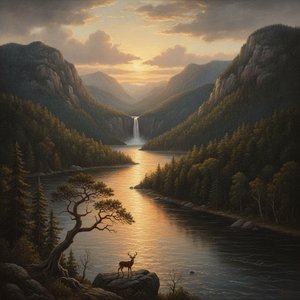
Epic Landscapes & Wild Nature: The Power of the Hudson River School's Sublime Artistry
Explore the breathtaking power of the Hudson River School. Journey through epic American landscapes, from Thomas Cole's sublime vistas to Luminist light, and discover how these timeless masterpieces continue to inspire modern collectors and art lovers worldwide.
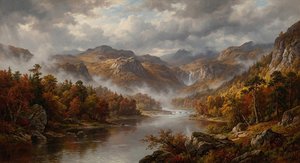
Szkoła Rzeki Hudson: 10 arcydzieł, które ukształtowały pejzaż amerykańskiej sztuki | OriginalUniqueArt
Odkryj 10 arcydzieł Szkoły Rzeki Hudson – malarstwo krajobrazowe Cole'a, Churcha i Bierstadta. Poznaj historię artystów i inspiracje romantyzmu amerykańskiego. Reprodukcje obrazów najwyższej jakości na OriginalUniqueArt.com! Eksploruj kolekcję online.
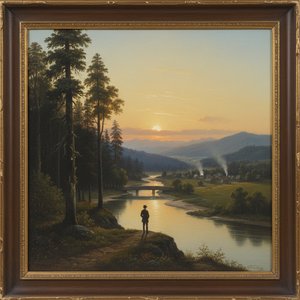
Robert Spencer: Luminism, Narrative & the American Landscape Tradition
Explore the captivating world of Luminism & the Hudson River School with our expert analysis. Discover the history, artists, and enduring beauty of 19th-century American landscape painting. Find museum-quality reproductions at OriginalUniqueArt.
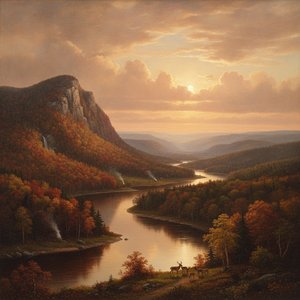
The Hudson River School: A Definitive Guide to America's Romantic Landscape Tradition
Explore the profound legacy of the Hudson River School. Discover how masters like Thomas Cole captured the American sublime through Romanticism and Luminism. A definitive guide for art historians and collectors seeking to understand America's wild beauty.

Sublime Krajobrazy: Narodziny Amerykańskiej Tożsamości Artystycznej i Rola Szkoły Hudson River
Odkryj fascynującą historię Szkoły Hudson River i narodziny amerykańskiej tożsamości artystycznej. Poznaj kluczowych artystów, techniki malarskie i inspiracje. Reprodukcje najwyższej jakości na OriginalUniqueArt.com!


