() ·

A painting made for you, by hand

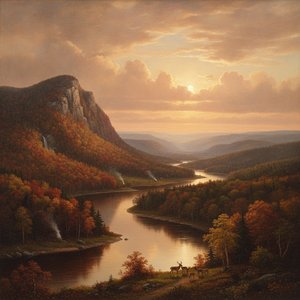
Widok na Hudson

Ręcznie malowana reprodukcja olejowa

Ręcznie malowany obraz olejny na płótnie, wykonany na zamówienie przez naszych artystów w wybranym przez Ciebie wymiarze i oprawie. ( Przełącz na wydania drukowane Przejdź do wersji cyfrowej)

Opis obiektu

John Frederick Kensett - Widok na Hudson: Klasyka amerykańskiej szkoły Hudson i Luminizmu – spokojny krajobraz górski odbijający się w zachodzącym słońcu, doskonały przykład mistycznej piękności natury.

Biografia artysty

John Frederick Kensett (1816-1872) – amerykański malarz pejzażysta z Hudson River School i luminizmu. Jego spokojne, pełne światła obrazy uchwycą piękno Ameryki, w tym Mount Washington i Eaton's Neck. Odkryj jego unikalny styl!

from ·

Chapter 1

How large should it be?

Slide to change the size; the picture on the left shows the frame at its real width. The proportions of the original are kept.

Standardowy format
personalizowane
CM
INCH

Wybierz spośród naszych standardowych rozmiarów, które zachowują oryginalne proporcje dzieła sztuki.

szerokość
wysokość

Wpisz wymaganą szerokość i wysokość, aby obraz pasował do Twojej ramy lub ściany. Ponieważ jest to dzieło malowane ręcznie, w przypadku rozmiaru o innych proporcjach artysta może domalować nieco więcej wokół obrazu lub przyciąć jego fragmenty — wybór należy do Ciebie. Przed rozpoczęciem pracy prześlemy Ci cyfrową wizualizację do zatwierdzenia. Obraz widoczny na tej stronie nie przedstawia rzeczywistego efektu — jedynie wizualizacja oddaje realny rezultat.

Chapter 2

How should it arrive?

Choose the edges of the stretched canvas

Choose your frame

Corner sample of the WhiteWrap canvas edge finish, stretched on lite drewno bars
White zł1
Corner sample of the BlurSideWrap canvas edge finish, stretched on lite drewno bars
Blurside zł1
Corner sample of the ExtendedWrap canvas edge finish, stretched on lite drewno bars
Extended zł1
Corner sample of the P118B picture frame: polistyren formowany, 5 cm wide and 3 cm thick
P118B zł10
Corner sample of the P118H picture frame: polistyren formowany, 5 cm wide and 3 cm thick
P118H zł10
Corner sample of the P118W picture frame: polistyren formowany, 5 cm wide and 3 cm thick
P118W zł10
Corner sample of the P438Z picture frame: polistyren formowany, 5.5 cm wide and 3.5 cm thick
P438Z zł10
Corner sample of the P508JH picture frame: polistyren formowany, 7 cm wide and 3.5 cm thick
P508JH zł12
Corner sample of the P508YH picture frame: polistyren formowany, 7 cm wide and 3.5 cm thick
P508YH zł12
Corner sample of the P805H picture frame: polistyren formowany, 5 cm wide and 3.5 cm thick
P805H zł10
Corner sample of the P805Z picture frame: polistyren formowany, 5 cm wide and 3.5 cm thick
P805Z zł10
Corner sample of the P919BZ picture frame: polistyren formowany, 7 cm wide and 3.5 cm thick
P919BZ zł10
Corner sample of the P919G picture frame: polistyren formowany, 7 cm wide and 3.5 cm thick
P919G zł10
Corner sample of the P919XJ picture frame: polistyren formowany, 7 cm wide and 3.5 cm thick
P919XJ zł10
Corner sample of the P959ZH picture frame: polistyren formowany, 5 cm wide and 3 cm thick
P959ZH zł10
Corner sample of the P968JZ picture frame: polistyren formowany, 6 cm wide and 4 cm thick
P968JZ zł12
Corner sample of the W106C picture frame: lite drewno, 5 cm wide and 3 cm thick
W106C zł8
Corner sample of the W218G picture frame: lite drewno, 5 cm wide and 3 cm thick
W218G zł10
Corner sample of the W218JH picture frame: lite drewno, 5 cm wide and 3 cm thick
W218JH zł8
Corner sample of the W218Y picture frame: lite drewno, 5 cm wide and 3 cm thick
W218Y zł10
Corner sample of the W307PJ picture frame: lite drewno, 6 cm wide and 3 cm thick
W307PJ zł10
Corner sample of the W316G picture frame: lite drewno, 6 cm wide and 3 cm thick
W316G zł10
Corner sample of the W316PJ picture frame: lite drewno, 6 cm wide and 3 cm thick
W316PJ zł8
Corner sample of the W316Y picture frame: lite drewno, 6 cm wide and 3 cm thick
W316Y zł10
Corner sample of the W398PJ picture frame: lite drewno, 5 cm wide and 3 cm thick
W398PJ zł8
Corner sample of the W4111J picture frame: lite drewno, 6.5 cm wide and 3.5 cm thick
W4111J zł10
Corner sample of the W500HY picture frame: lite drewno, 7 cm wide and 5 cm thick
W500HY zł15
Corner sample of the W500JH picture frame: lite drewno, 7 cm wide and 5 cm thick
W500JH zł15
Corner sample of the W692G picture frame: lite drewno, 8 cm wide and 4 cm thick
W692G zł12
Corner sample of the W849H picture frame: lite drewno, 5 cm wide and 3 cm thick
W849H zł8
Corner sample of the W940BG picture frame: lite drewno, 7.5 cm wide and 4.5 cm thick
W940BG zł15
Corner sample of the W953PJ picture frame: lite drewno, 6 cm wide and 3.5 cm thick
W953PJ zł8
Corner sample of the H24-GOLD picture frame: rzeźbione drewno pokryte gipsem, 10 cm wide and 6 cm thick
H24-GOLD zł30
Corner sample of the H24-SILVER picture frame: rzeźbione drewno pokryte gipsem, 10 cm wide and 6 cm thick
H24-SILVER zł30
Corner sample of the H36-GOLD picture frame: rzeźbione drewno pokryte gipsem, 15 cm wide and 6.5 cm thick
H36-GOLD zł45
Corner sample of the H36-SILVER picture frame: rzeźbione drewno pokryte gipsem, 15 cm wide and 6.5 cm thick
H36-SILVER zł45

Moulding: . Overall size with the frame: .

Chapter 3

Who paints it, and should anything change?

Examples of what can be changed: Replace face with customer photo; Add pet (e.g., replace cat with dog); Include hidden message in background; Change background landscape or elements.
After order, OriginalUniqueArt.com team will email client for instructions and provide a mockup preview

Dostawa na całym świecie () w ciągu 3–4 tygodni zamiast standardowych 5 tygodni. (31 Październik). Bez kompromisów w kwestii jakości.

Chapter 4

The finishing touches

A nameplate, as in a museum?

Szczegóły grawerowanej brązowej tabliczki

This elegant plaque features the artist's name and the title of the artwork, finely engraved for a timeless presentation.

It is made from bronze with a refined, elegant finish. The text is precisely laser-engraved for a sharp and permanent result. Measuring 9x2 cm, the plaque is compact yet easy to read. It's built to be durable and scratch-resistant, offering a professional, museum-quality look. Mounting is simple thanks to the included adhesive backing.

Szczegóły przezroczystej tabliczki akrylowej

The plaque includes essential engraved details such as the artist's name, the title of the artwork, the date it was created, the type of media used-like oil on canvas or watercolor-a brief description of the piece, and a QR code that links to the complete artwork information.

It is crafted from clear acrylic, offering a sleek, modern appearance. The text is UV-engraved in black to ensure strong visual contrast. With a size of 10x15 cm, it ensures optimal readability. It comes equipped with two metal hooks for secure wall mounting. The plaque is designed to be weather-resistant, making it suitable for various environments, and it includes interactive features that work seamlessly with smartphone scanning.

Szczegóły czarnej tabliczki akrylowej

This elegant plaque includes engraved information such as the artist's name, the title of the artwork, the date it was created, the type of media used (like oil on canvas or watercolor), a short description of the artwork, and a QR code for quick access to more information.

The plaque itself is made from refined black acrylic with a premium finish. The text is laser-engraved in white for high contrast and readability. Its size is 10x15 cm, designed to be easy to read. It comes with two metal hooks for professional mounting. The design is sleek and fits any interior style. It is also weather-resistant and durable, with built-in digital integration for mobile compatibility.

A protective varnish?

When do you need it?

Chapter 5

Your painting, as you ordered it

Widok na Hudson

Technika reprodukcji

Wymiary reprodukcji

-

Wybitny mistrz artystyczny

Większa szczegółowość, finezja i dodatkowy czas na realizację

-

Opcje oprawy reprodukcji

-

-

W przypadku dzieł sztuki lub reprodukcji, których którykolwiek z boków przekracza 105 cm (około 41 cali), rama zostanie wysłana w formie zestawu do samodzielnego montażu. Metoda ta zapewnia bezpieczną dostawę i zapobiega uszkodzeniom podczas transportu.

Wymagany profesjonalny montaż – nie jest to produkt typu DIY.
Zestaw musi zostać złożony, a płótno naciągnięte przez doświadczonego profesjonalnego ramiarza, przy użyciu kleju do drewna (brak w zestawie), kleszczy do naciągania płótna oraz ścisków, które utrzymają krosna w równej pozycji podczas schnięcia kleju. Nieprawidłowy montaż lub nierównomierne napięcie płótna może trwale uszkodzić dzieło sztuki i nie podlega naszej gwarancji.

  • W zestawie znajdują się wszystkie listwy z litego drewna, precyzyjnie docięte do wymiarów.

  • Montaż odbywa się przy użyciu dołączonych wkrętów oraz kleju do drewna do łączenia narożników, którego zestaw nie zawiera i który musi zostać dostarczony przez ramiarza.

  • Wymagane są profesjonalne narzędzia, których nie ma w zestawie: kleszcze do naciągania płótna (napinacz) oraz zaciski, które pozwolą utrzymać listwy w równej pozycji podczas schnięcia kleju.

Ważne:
Do połączenia narożników niezbędny jest klej do drewna, listwy należy unieruchomić za pomocą ścisków do momentu całkowitego wyschnięcia kleju, a naciągnięcie płótna na złożoną ramę wymaga użycia kleszczy do naciągania płótna. Żaden z tych elementów nie jest dołączony do zestawu. Przed zamówieniem tego rozmiaru zalecamy konsultację z doświadczonym ramiarzem.

Etykieta obiektu

-

-

Lakier ochronny

Lakier z połyskiem (pogłębia kolory, chroni przed światłem i wilgocią)

-

Personalizacja dzieła

Przykłady możliwości personalizacji: zastąp twarz zdjęciem klienta; dodaj zwierzę domowe (np. zamień kota na psa); umieść ukrytą wiadomość w tle; zmień krajobraz lub elementy tła.

-

Ekspresowa

Dostawa na cały świat () w ciągu 3–4 tygodni zamiast standardowych 5 tygodni. (31 Październik). Bez kompromisów w kwestii jakości.

-

Przesyłka ekspresowa

Dostawa na cały świat () w ciągu 5 tygodni. (7 Listopad).

W cenie

Cena całkowita

zł 1167

Suma całkowita zł 1167

Opcja ze szkłem jest dostępna wyłącznie w rozmiarach poniżej 110 cm

Included with every order

  • Bezpłatna ekspresowa wysyłka na cały świat
  • Wysokiej jakości płótno lniane
  • Pełne ubezpieczenie przesyłki
  • Gwarancja zwrotu należności celnych i podatków importowych
  • Gwarancja wiernego odwzorowania kolorów
  • 100-dniowa polityka zwrotów (tylko w przypadku wad)
  • Gwarancja 100% zwrotu pieniędzy
  • Zniżka przy zakupie wielu sztuk

A Moment Captured: John Frederick Kensett’s “View on the Hudson”

John Frederick Kensett's "View on the Hudson," completed in 1865, stands as an emblem of Luminist art – a movement that prioritized observation and tonal subtlety to convey the profound beauty of natural landscapes. More than just a picturesque depiction of scenery, it’s an invitation into a contemplative space where viewers can experience the stillness and grandeur of the Hudson River Valley at twilight. This painting transcends mere visual representation; it embodies a philosophical stance rooted in transcendentalist ideals – a desire to connect with nature's sublime power and find solace within its serene embrace.

Subject Matter and Composition

Kensett meticulously rendered the Hudson River Estuary as it appeared during sunset, capturing a scene that epitomizes Luminist precision. Dominating the canvas is a majestic mountain range—the Catskill Mountains—silhouetted against a fiery sky ablaze with hues of orange, crimson, and violet. Below, the river flows serenely, reflecting the celestial glow, dotted with small boats gliding across its surface. Two figures stand on the shore, seemingly absorbed in observing the unfolding spectacle – their presence adds a human element to this otherwise solitary vista. The artist’s compositional choices prioritize clarity and balance, guiding the eye through the scene with careful placement of elements; he deliberately avoids dramatic chiaroscuro—the bold contrasts of light and dark favored by Romantic painters—instead opting for diffused tonal palettes that heighten the atmosphere's tranquility.

Technique and Style: Luminist Precision

Kensett adhered rigorously to Luminist principles, rejecting theatrical lighting effects in favor of a nuanced approach to color and texture. He achieved this remarkable luminosity through painstaking layering of thin glazes – translucent washes of pigment applied over multiple coats – allowing the underlying color to subtly influence the final hue. This technique resulted in an astonishingly luminous quality, capturing not just what was seen but also how it felt: a palpable sense of warmth and serenity. The artist’s meticulous attention to detail is evident in the rendering of textures—the rugged peaks of the mountains, the ripples on the water's surface, and even the subtle folds of clothing worn by the figures—demonstrating Kensett’s unwavering commitment to capturing the essence of nature with uncompromising accuracy.

Historical Context: The Hudson River School

“View on the Hudson” emerged during a pivotal period in American artistic history – the Hudson River School. This influential group of painters, including Frederic Church and Asher Durand, rejected European academic conventions and instead sought inspiration directly from the American wilderness. They championed scientific observation alongside aesthetic appreciation, reflecting the burgeoning transcendentalist movement that emphasized intuition and spiritual experience. Kensett’s work embodies this ethos, mirroring the broader artistic currents of his time and securing its place as a cornerstone of Luminist art—a style that profoundly impacted subsequent generations of landscape painters.

Symbolism and Emotional Impact

Beyond its visual splendor, “View on the Hudson” carries deep symbolic resonance. The sunset represents both closure and renewal – marking the end of one day’s journey and anticipating the dawn of a new one. The mountains symbolize strength and permanence, anchoring the scene in timeless grandeur—a visual metaphor for resilience and enduring beauty. More profoundly, however, the painting evokes a feeling of profound peace and contemplation; it invites viewers to step away from the pressures of daily life and reconnect with the restorative power of nature – mirroring Luminist ideals and resonating powerfully with audiences who seek inspiration and solace in landscapes that inspire awe and serenity.

Conclusion: An Enduring Legacy

John Frederick Kensett’s “View on the Hudson” remains a masterpiece of Luminist art, securing its place as one of America's most treasured landscape paintings. Its masterful technique—characterized by luminous glazes and meticulous textural detail—combined with its evocative depiction of twilight beauty and its underlying philosophical message—a celebration of transcendental experience—ensures that it continues to captivate audiences today—a testament to Kensett’s unparalleled ability to transform observation into enduring artistic expression.

Pytania i odpowiedzi

Jak nasycona jest paleta kolorystyczna dzieła "Widok na Hudson"?

Paleta dzieła "Widok na Hudson" charakteryzuje się Przygaszone nasyceniem kolorów.

Kto stworzył "Widok na Hudson" i w jakim roku?

"Widok na Hudson" – autorstwa John Frederick Kensett, rok powstania: 1865.

Kiedy powstało i w jakim nurcie utrzymane jest dzieło „Widok na Hudson” – John Frederick Kensett?

Dzieło "Widok na Hudson" powstało w 1865 roku i reprezentuje nurt Hudson River Luminism.

More about this painting

Podgląd w skali 1:1 Podgląd AR Przełącz na wydania drukowane Przejdź do wersji cyfrowej Wyślij jako kartkę
Szczegóły dzieła Przewodnik Dodaj do ulubionych Pobierz obraz Podobne obiekty RTG Pokaz slajdów Q&A Statystyki

In numbers

  • 1865the year it was painted
  • 29frames to choose from
  • standard sizes, in its own proportions
  • 5weeks to paint and deliver it
John Frederick Kensett

John Frederick Kensett

1816 - 1872, Stany Zjednoczone

Quick facts about John Frederick Kensett

  • Artistic Movement Or Style: Hudson River School, Luminizm
  • Artists Or Movements Influenced By This Artist: ['Luminizm']
  • Artists Who Influenced This Artist:
    • Thomas Cole
    • Benjamin Champney
  • Date Of Birth: 22 marca 1816
  • Date Of Death: 14 grudnia 1872
  • Full Name: John Frederick Kensett
  • Nationality: Amerykański
  • Notable Artworks:
    • Mount Washington
    • Eaton's Neck
  • Place Of Birth: Cheshire, USA

Biografia artysty

A Life Dedicated to Capturing Serene Landscapes

John Frederick Kensett, an American artist and engraver, was born on March 22, 1816, in Cheshire, Connecticut. As a member of the second generation of the Hudson River School of artists, his signature works are characterized by their serene and luminous qualities, celebrating the transcendental aspects of nature. His artistic journey began with an apprenticeship in engraving under his father, Thomas Kensett, and his uncle, Alfred Daggett – both skilled banknote engravers. This early training instilled a meticulous attention to detail and a deep appreciation for line work, skills that would later inform his landscape paintings.

Early Life and Artistic Development

Kensett’s initial career path led him to New Haven, where he worked as an engraver until 1838. However, a growing desire to pursue painting ultimately steered him away from the precision of engraving. In 1840, he embarked on a transformative journey to Europe, seeking artistic refinement and inspiration. During his time in England, France, and Switzerland, Kensett immersed himself in the works of master artists, studying techniques and absorbing the prevailing aesthetic sensibilities of the era. He particularly admired the landscapes of the Dutch Masters, whose use of light and shadow profoundly influenced his own approach to painting. His travels also introduced him to Benjamin Champney, a fellow American artist who would become a lifelong friend and collaborator.

Establishing a Studio and Luminist Style

Upon returning to New York in 1847, Kensett established a studio and quickly gained recognition for his evocative depictions of the Northeast’s landscapes. He began to develop what is now known as the “luminist” style – a distinctive approach characterized by delicate brushstrokes, an emphasis on atmospheric light, and a subtle, almost ethereal quality. Unlike the more dramatic and detailed renderings of some Hudson River School artists, Kensett sought to capture the fleeting effects of sunlight and shadow, conveying a sense of tranquility and spiritual connection with nature. His palette was often muted, favoring soft grays, blues, and greens, which enhanced the luminous effect of his paintings.

Notable Works and Legacy

Kensett’s artistic output spanned several decades, encompassing scenes from the White Mountains, the Adirondack Mountains, Long Island Sound, and the Colorado Rockies. Among his most celebrated works are *Mount Washington from the Valley of Conway* (1851), which was purchased by the American Art Union and distributed to 13,000 subscribers, and *Eaton’s Neck, Long Island* (1872), now housed in the collection of the Metropolitan Museum of Art. These paintings exemplify his mastery of capturing atmospheric perspective and conveying a profound sense of place. Beyond his artistic achievements, Kensett was also a significant figure in the cultural landscape of New York City. He co-founded the Metropolitan Museum of Art in 1870, demonstrating his commitment to fostering an appreciation for art among the public. His work continues to be studied and admired for its beauty, technical skill, and evocative portrayal of America’s natural heritage.

Associated Artists

John Frederick Kensett's artistic development was deeply influenced by several key figures: Thomas Cole, a founder of the Hudson River School; Benjamin Champney, with whom he maintained a close professional relationship during his European travels; and Asher B. Durand, another prominent member of the Hudson River School. These collaborations exposed Kensett to diverse perspectives and techniques, shaping his own artistic vision and contributing to the evolution of American landscape painting.

Najważniejsze informacje

  • Influences: Hudson River School
  • Artist: John Frederick Kensett
  • Movement: Hudson River Luminism
  • Title: View on the Hudson
  • Location: Private Collection

Quiz o sztuce

Do każdego pytania dotyczy tylko jedna poprawna odpowiedź.

Pytanie 1:
Jaką szkołą sztuki jest John Frederick Kensett?
Pytanie 2:
O której godzinie obraz przedstawia zachód słońca?
Pytanie 3:
Jaką atmosferę przekazuje obraz?
Pytanie 4:
Co robią łódki na wodzie w obrazie?
Pytanie 5:
Styl Luministyczny Kensetta charakteryzuje się skupieniem na:
Odkryj dzieła sztuki uporządkowane według tematów, stylów i cech charakterystycznych.