

 Podgląd w skali 1:1
 Wyślij jako kartkę
 Udostępnij
 Szczegóły dzieła
 Przewodnik

 Pobierz obraz
 Podobne obiekty
 RTG
RTG Pokaz slajdów
 Statystyki
Shrewsbury River
 Oil On Canvas
- WallArt
- Hudson River School
 1856
1856- 19th Century
 75.0 x 105.0 cm
 Marsh-Billings-Rockefeller National Historical Park
 Rozwiń treść
Giclée / Wydruk artystyczny
Wydruki giclée lub płótna o jakości muzealnej, szybka realizacja i szeroki wybór opcji wykończenia. ( Zamów ręcznie malowaną reprodukcję Przejdź do wersji cyfrowej)




P118B zł10

P118H zł10

P118W zł10

P438Z zł10

P508JH zł12

P508YH zł12

P805H zł10

P805Z zł10

P919BZ zł10

P919G zł10

P919XJ zł10

P959ZH zł10

P968JZ zł12

W106C zł8

W218G zł10

W218JH zł8

W218Y zł10

W307PJ zł10

W316G zł10

W316PJ zł8

W316Y zł10

W398PJ zł8

W4111J zł10

W500HY zł15

W500JH zł15

W692G zł12

W849H zł8

W940BG zł15

W953PJ zł8




Wybierz spośród naszych standardowych rozmiarów, które zachowują oryginalne proporcje dzieła sztuki.

Wpisz wymaganą szerokość i wysokość, aby dopasować grafikę do ramy lub ściany. Wydruk można jedynie przyciąć, nigdy nie powiększając go poza oryginalny obraz, dlatego format o innych proporcjach spowoduje utratę części kompozycji. Przed rozpoczęciem druku prześlemy Ci cyfrowy podgląd do zatwierdzenia. Obraz wyświetlany na tej stronie nie pokazuje rzeczywistego przycięcia — jedynie podgląd oddaje ten efekt.
Dostawa na cały świat () w ciągu 2 tygodni zamiast standardowych 4/5 tygodni. (27 Październik)

Bezpłatna ekspresowa wysyłka na cały świat

Wysokiej jakości płótno lniane

Pełne ubezpieczenie przesyłki

Gwarancja zwrotu należności celnych i podatków importowych

Gwarancja wiernego odwzorowania kolorów

100-dniowa polityka zwrotów (tylko w przypadku wad)

Gwarancja 100% zwrotu pieniędzy

Zniżka przy zakupie wielu sztuk
 Opcja ze szkłem jest dostępna wyłącznie w rozmiarach poniżej 110 cm

Shrewsbury River
Giclée / Wydruk artystyczny
Wymiary reprodukcji
-


Cena całkowita
zł 307
A Luminous Window into the Hudson River School
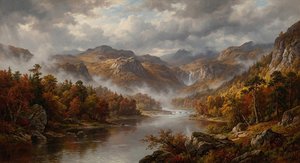
In the quietude of John Frederick Kensett’s Shrewsbury River, one finds more than just a depiction of a New Jersey coastline; one encounters a profound meditation on light and tranquility. Painted in 1856, this exquisite oil sketch captures a moment of absolute stillness at the mouth of the river. The composition is masterfully balanced, anchored by a soft, verdant bluff that rises gently from the water’s edge, while the right side of the canvas opens into an expansive, ethereal seascape. Tiny sailboats drift upon the calm surface, their forms softened by a delicate atmospheric haze, acting as silent witnesses to the vastness of the horizon. The scene is punctuated by the graceful movement of birds in flight, adding a subtle, rhythmic vitality to an otherwise motionless landscape.
Kensett, a distinguished figure of the second generation of the Hudson River School, employs a technique that borders on Luminism—a style defined by its preoccupation with the effects of light on the atmosphere. Through the careful layering of thin, translucent washes of oil paint, he achieves a glowing, pearlescent quality that seems to emanate from within the canvas itself. His brushwork is remarkably fluid and expressive; rather than sharp, clinical lines, Kensett utilizes soft edges and blended tones to create a sense of depth through atmospheric perspective. This technique allows the distant elements of the landscape to recede into a pale, dreamlike mist, inviting the viewer to step into a world where the boundaries between water, sky, and land are harmoniously blurred.
A Personal Legacy Captured in Paint
Beyond its aesthetic brilliance, Shrewsbury River carries a deeply moving historical narrative. This particular work was not merely an artistic exercise but a cherished keepsake, inscribed on the reverse with a tender dedication: “To Miss Julia Parmly / from J.F.K. / May 30th ’56.” The painting served as a gift within a sophisticated circle of New York artists and socialites, connecting Kensett to the prominent Parmly family. The location itself—near “Bingham Place” in Oceanic, New Jersey—was a site of personal significance, representing a summer retreat and a landscape of shared memories. This intimate connection transforms the painting from a mere landscape into a vessel of human affection and social history, embodying the era's romantic connection to the natural world.
For the discerning collector or interior designer, this artwork offers an unparalleled sense of serenity and timeless elegance. The muted, tonal palette and the balanced, organic composition make it a versatile masterpiece capable of anchoring a room with its peaceful energy. Whether placed in a sun-drenched gallery or a sophisticated study, the Shrewsbury River evokes a feeling of contemplative grace. It is an invitation to pause, to breathe, and to reconnect with the sublime beauty of nature—a high-quality reproduction of this work allows one to bring the luminous spirit of the American landscape into the modern home, preserving a fragment of 19th-century tranquility for generations to come.
Pytania i odpowiedzi
Jaki jest dominujący kolor w „Shrewsbury River” – John Frederick Kensett?
Kolorem, który najbardziej wyróżnia się w "Shrewsbury River", jest Rosy Brown (#beb895). Dominujący kolor ułatwia dopasowanie dzieła sztuki do wnętrza.
Czy w „Shrewsbury River” – John Frederick Kensett zastosowano silne kontrasty czy raczej łagodne harmonie?
Kompozycja kolorystyczna „Shrewsbury River” – John Frederick Kensett łączy w sobie Bold kontrast z Unified Palette harmonią.
Czy kolory dzieła „Shrewsbury River” – John Frederick Kensett są żywe czy stonowane?
Dzieło „Shrewsbury River” – John Frederick Kensett charakteryzuje się nasyceniem na poziomie Subtle Color oraz intensywnością Balanced.
Biografia artysty
A Life Dedicated to Capturing Serene Landscapes
John Frederick Kensett, an American artist and engraver, was born on March 22, 1816, in Cheshire, Connecticut. As a member of the second generation of the Hudson River School of artists, his signature works are characterized by their serene and luminous qualities, celebrating the transcendental aspects of nature. His artistic journey began with an apprenticeship in engraving under his father, Thomas Kensett, and his uncle, Alfred Daggett – both skilled banknote engravers. This early training instilled a meticulous attention to detail and a deep appreciation for line work, skills that would later inform his landscape paintings.Early Life and Artistic Development
Kensett’s initial career path led him to New Haven, where he worked as an engraver until 1838. However, a growing desire to pursue painting ultimately steered him away from the precision of engraving. In 1840, he embarked on a transformative journey to Europe, seeking artistic refinement and inspiration. During his time in England, France, and Switzerland, Kensett immersed himself in the works of master artists, studying techniques and absorbing the prevailing aesthetic sensibilities of the era. He particularly admired the landscapes of the Dutch Masters, whose use of light and shadow profoundly influenced his own approach to painting. His travels also introduced him to Benjamin Champney, a fellow American artist who would become a lifelong friend and collaborator.Establishing a Studio and Luminist Style
Upon returning to New York in 1847, Kensett established a studio and quickly gained recognition for his evocative depictions of the Northeast’s landscapes. He began to develop what is now known as the “luminist” style – a distinctive approach characterized by delicate brushstrokes, an emphasis on atmospheric light, and a subtle, almost ethereal quality. Unlike the more dramatic and detailed renderings of some Hudson River School artists, Kensett sought to capture the fleeting effects of sunlight and shadow, conveying a sense of tranquility and spiritual connection with nature. His palette was often muted, favoring soft grays, blues, and greens, which enhanced the luminous effect of his paintings.Notable Works and Legacy
Kensett’s artistic output spanned several decades, encompassing scenes from the White Mountains, the Adirondack Mountains, Long Island Sound, and the Colorado Rockies. Among his most celebrated works are *Mount Washington from the Valley of Conway* (1851), which was purchased by the American Art Union and distributed to 13,000 subscribers, and *Eaton’s Neck, Long Island* (1872), now housed in the collection of the Metropolitan Museum of Art. These paintings exemplify his mastery of capturing atmospheric perspective and conveying a profound sense of place. Beyond his artistic achievements, Kensett was also a significant figure in the cultural landscape of New York City. He co-founded the Metropolitan Museum of Art in 1870, demonstrating his commitment to fostering an appreciation for art among the public. His work continues to be studied and admired for its beauty, technical skill, and evocative portrayal of America’s natural heritage.Associated Artists
John Frederick Kensett's artistic development was deeply influenced by several key figures: Thomas Cole, a founder of the Hudson River School; Benjamin Champney, with whom he maintained a close professional relationship during his European travels; and Asher B. Durand, another prominent member of the Hudson River School. These collaborations exposed Kensett to diverse perspectives and techniques, shaping his own artistic vision and contributing to the evolution of American landscape painting.
John Frederick Kensett
1816 - 1872 , Stany Zjednoczone
Krótka nota
- Artistic Movement Or Style: Hudson River School, Luminizm
- Artists Or Movements Influenced By This Artist: ['Luminizm']
- Artists Who Influenced This Artist:
- Thomas Cole
- Benjamin Champney
- Date Of Birth: 22 marca 1816
- Date Of Death: 14 grudnia 1872
- Full Name: John Frederick Kensett
- Nationality: Amerykański
- Notable Artworks:
- Mount Washington
- Eaton's Neck
- Place Of Birth: Cheshire, USA
Powiązane artykuły

John Singer Sargent: 25 Arcydzieł Pełnych Elegancji i Światła | OriginalUniqueArt.com
Odkryj 25 arcydzieł Johna Singera Sargenta – mistrza portretu i impresjonizmu. Poznaj historie, techniki i inspiracje za jego najsłynniejszymi obrazami. Reprodukcje najwyższej jakości na OriginalUniqueArt.com. Eksploruj pełną kolekcję online!

Sublime Krajobrazy: Narodziny Amerykańskiej Tożsamości Artystycznej i Rola Szkoły Hudson River
Odkryj fascynującą historię Szkoły Hudson River i narodziny amerykańskiej tożsamości artystycznej. Poznaj kluczowych artystów, techniki malarskie i inspiracje. Reprodukcje najwyższej jakości na OriginalUniqueArt.com!
Szkoła Rzeki Hudson: 10 arcydzieł, które ukształtowały pejzaż amerykańskiej sztuki | OriginalUniqueArt
Odkryj 10 arcydzieł Szkoły Rzeki Hudson – malarstwo krajobrazowe Cole'a, Churcha i Bierstadta. Poznaj historię artystów i inspiracje romantyzmu amerykańskiego. Reprodukcje obrazów najwyższej jakości na OriginalUniqueArt.com! Eksploruj kolekcję online.

John Constable: 25 Najlepszych Obrazów Mistrza Angielskiego Krajobrazu | OriginalUniqueArt
Odkryj 25 arcydzieł Johna Constable'a – mistrza angielskiego krajobrazu! Poznaj romantyczne pejzaże, technikę malarską i inspiracje z Dedham Vale. Reprodukcje obrazów najwyższej jakości na OriginalUniqueArt.com. Eksploruj pełną kolekcję online!

John Frederick Kensett: Luminosity, Landscape & the American Identity
Explore the luminous landscapes of John Frederick Kensett, a master of Luminism and key figure in the Hudson River School. Discover his serene paintings & enduring legacy with OriginalUniqueArt.


